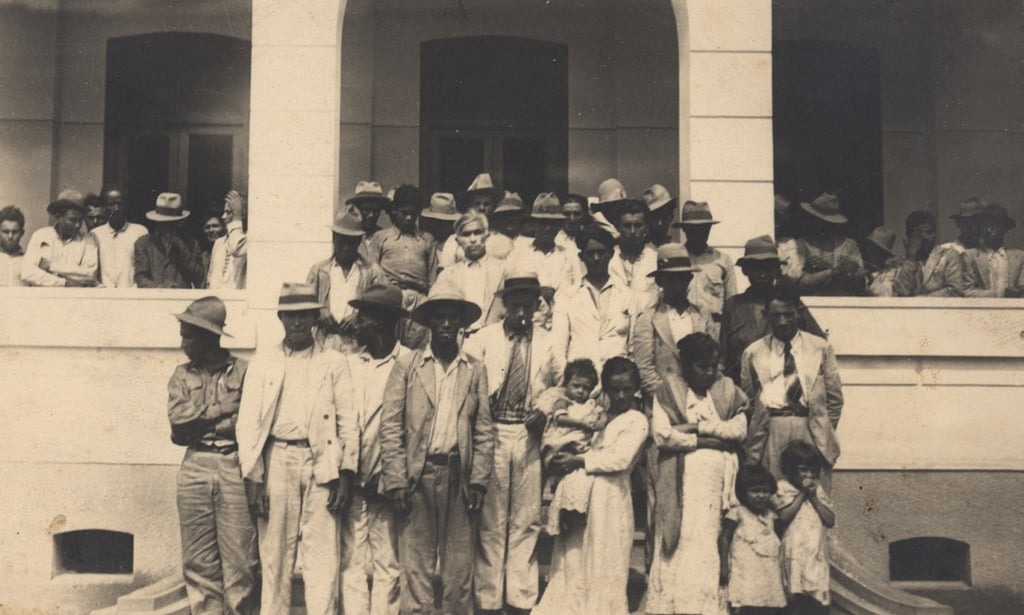
Northeastern immigration in São Paulo became the strong arm that made the state stand out in Brazil and build the main metropolis in Latin America
Since the mid-20th century, waves of northeasterners have arrived in the city, driven by drought, historical inequality and state abandonment. They didn't come looking for glamour. They came to seek survival. And they ended up building one of the largest urban machines on the planet. While the São Paulo elite is proud of mirrored buildings and slogans in English, it was Northeastern hands that built these buildings, cooked in these restaurants, cleaned these offices, drove these buses and kept this city functional. The real São Paulo, not the one on the billboard, speaks with a mixed accent.
In 1930, Brazil was deeply unequal. The Northeast was already suffering from decades of latifundia, recurring drought and state abandonment. It wasn't occasional misery. It was structural. At the same time, São Paulo began to transform into what we today call “Brazil’s locomotive”. Coffee, nascent industry, railway, accelerated urbanization. The city was growing faster than its ability to support its own workforce. This mismatch created the perfect scenario for migration.
The first stories are raw because they are not born of ambition, but of exhaustion. It wasn’t “I’m going to try life in São Paulo”, it was “I can’t do it here anymore”. Reports from the 1930s tell of entire families selling what little they had, crossing states on overcrowded trains, often without knowing exactly where they would end up, arriving in the capital of São Paulo with a simple suitcase, a letter of appointment and no real guarantee of work or housing. In many cases, only the first member of the family came, almost always the strongest or youngest; If it worked, I would call the others later. This chain movement, silent and risky, is repeated in dozens of oral reports preserved to this day and reveals that the northeastern migration to São Paulo did not begin as a dream, but as a last rational alternative in the face of the complete absence of a future at the point of origin. In the late 1920s and early 1930s, northeastern migration to São Paulo began to form organically, long before any official speech or explicit policy. It is born in everyday life, in word of mouth, in handwritten letters, in the news brought by those who returned to visit their family or sent some money for the first time. Information circulated slowly but strongly: there was work in São Paulo. Hard work, poorly paid, but continuous. In regions where instability was the rule, this made all the difference.
This initial movement did not involve entire masses at once. It almost always started with an individual, usually a young or working-age man, who set out alone. If he managed to get a job, he would rent a room, share a house, and establish himself minimally. Then came the letter. Then, the call to a brother, a cousin, the wife, the children. This pattern was repeated countless times and was responsible for creating family and community networks that sustained migration over the following decades.
The first northeastern states to feed this flow were those most affected by the combination of recurrent drought, land concentration and lack of economic alternatives. Pernambuco, Paraíba, Ceará, Alagoas and Bahia appear frequently in records and reports. In the case of Bahia, it is important to highlight that, for a long time, “Bahian” was used in São Paulo as a generic label for all Northeastern migrants, regardless of their state of origin, which helps to understand both the visibility and the prejudice associated with this group. While this displacement began to take shape, Brazil was going through a decisive political rupture. Getúlio Vargas came to power in 1930, after the Revolution that put an end to the so-called Old Republic. His speech is built around national modernization, the centralization of the State and the construction of an industrial and urban country. In the following years, especially after the establishment of the Estado Novo in 1937, this narrative intensified: Brazil needed to abandon its backwardness, organize work and accelerate economic growth.
In practice, this project materialized in a much more concrete way in the Southeast, and particularly in São Paulo, where industrialization advanced, urbanization expanded and the demand for labor increased rapidly. At the same time, the structural problems of the Northeast remained practically untouched. There was no consistent regional development policy capable of offering conditions for the population to remain in the countryside or in the northeastern cities. The contrast between the discourse of national progress and the reality experienced in the Northeast became increasingly evident.
It is in this context that migration stops being just a one-off response to the crisis and starts to consolidate itself as a survival strategy. Travel, although still hard and long, becomes more predictable. The most used routes begin to repeat themselves. Destinations in São Paulo are no longer completely unknown. There are neighborhoods, pensions, factories, works and contacts that are frequently mentioned. Travel remains risky, but it is no longer done in an absolute void of information.
From the end of the 1930s onwards, this process was already intense enough to produce visible effects in the city. São Paulo is growing, but it is growing in a disorganized way. It absorbs the workforce, but does not offer adequate housing, services or social integration. Northeastern migrants become an essential part of the economic mechanism, at the same time that they begin to be seen as an urban problem, associated with poverty, informality and the occupation of precarious spaces.
This period marks the beginning of a contradiction that would span the following decades: the city is deeply dependent on northeastern migration, but resists recognizing it as a legitimate part of its identity. What began with letters, messages and promises of work transformed, at the end of the 1930s, into a continuous flow, supported by family networks and by the development model adopted by the Brazilian State. Between 1930 and 1940, the city of São Paulo experienced accelerated population growth, estimated at around 70% throughout the decade. This increase cannot be explained solely by the vegetative growth of the urban population. It is directly linked to the intensification of internal migration, especially the displacement of workers from the Northeast. During this period, São Paulo was already consolidating itself as the country's main industrial hub, concentrating factories, infrastructure works and continuous work opportunities, albeit precarious. Most of these migrants came from states such as Pernambuco, Paraíba, Ceará, Alagoas and Bahia, regions marked by recurrent droughts, land concentration and the absence of public policies capable of offering economic stability. The flow was fed by informal information networks, based on letters, referrals and family ties, and quickly became a structural component of São Paulo's growth. Thus, the city's expansion in the 1930s was not just urban or industrial, but deeply social, anchored in the arrival of thousands of people from the Northeast who became part of the workforce responsible for sustaining this new economic cycle.
The migration is still in the consolidation phase. The absolute number of migrants is smaller compared to subsequent decades, but the impact is significant because São Paulo was still a relatively small city. It is during this period that the flow begins to be structured, supported by family networks, letters and job recommendations.
The movement intensifies and stabilizes. Industrialization advances, the urban job market expands and migration is no longer episodic. Northeastern displacement starts to occur continuously, with families starting to settle permanently in the city, and not just send a temporary representative.
Here the urban explosion itself occurs. Industrialization accelerates, large projects and factories demand large-scale labor, while the Northeast faces severe crises, combining recurrent droughts and structural delay. São Paulo is now seen as a definitive destination, no longer as a provisional attempt.
Migration reaches massive scale. There are already entire neighborhoods made up of northeastern families, consolidated community networks and a visible cultural presence. Prejudice intensifies precisely because this population stops being invisible and starts to occupy social, urban and symbolic space in the city.
Consolidating this process, it becomes impossible to separate the physical growth of São Paulo from the migration from the Northeast. The city that grew vertical throughout the 20th century, which built bridges, viaducts, roads, factories and skyscrapers, relied decisively on this workforce. It was Northeastern workers who occupied construction sites, carried out heavy civil construction, opened roads, expanded the outskirts and supported the great urban transformations that shaped the metropolis. This work rarely appears on commemorative plaques or official books, but it is inscribed in the city's concrete.
For those who have a family from the Northeast, this story is neither abstract nor distant. It appears in the accounts of the grandfather who worked on construction sites, the father who helped build buildings, the uncle who participated in the construction of roads, dams or housing complexes. Stories of long journeys, hard work and little recognition, but also of pride in having participated in the material construction of the city. These are memories passed down from generation to generation, almost always outside of formal records, but present in the daily lives of millions of families in São Paulo.
Northeastern migration was a pillar of the urban economy. It guaranteed the workforce necessary for São Paulo to grow at the pace it did. Without this contingent, industrialization would have been slower, urban expansion would have been more limited and the image of São Paulo as a city of work and production would have been difficult to sustain. Recognizing this role is not a symbolic gesture, but a historical adjustment: the city was built by many hands, and a fundamental part of them came from the Northeast. It was not just a population shift, it was a profound process of collective reinvention. A people who left a territory marked by scarcity and abandonment did not arrive empty. He arrived carrying culture, memory, work and a rare ability to adapt. Faced with a hostile environment, he reinvented ways of living, working and belonging.
Even facing prejudice, stigmatization and a type of structural racism that often disguises itself as a joke or label, the northeastern people were not passively absorbed by the city. He transformed São Paulo at the same time he was transforming himself. He built buildings and bridges, but he also built families, neighborhoods, support networks and identity. Where there was a lack of structure, it created a path. Where recognition was lacking, it remained.
The wealth of these people is not only in what they produced economically, but in what they knew how to preserve and adapt. The food, the music, the way of speaking, celebrating and resisting have passed through generations and are now part of the very idea of São Paulo. The city became bigger, more complex and more alive because it was crossed by these stories.
What began as an escape from drought and lack of opportunities has consolidated as a definitive presence. Migration stopped being momentary survival and became belonging. The children and grandchildren of those who arrived with a suitcase and a letter today occupy every space in the city, carrying forward a legacy that was not lost along the way.
Recognizing this is understanding that the strength of the Northeast is neither the past nor an exception. It is a structural part of the present. A people who crossed the country, faced rejection, reinvented themselves countless times and, even so, left deep, lasting and unavoidable marks.
Is Batman Alley worth visiting at night? Understand how the climate changes after sunset and what to expect from the nighttime experience in Vila Madalena.
See the easiest ways to get to Beco do Batman using public transport or transport apps in São Paulo.
Find out when the fair takes place at Beco do Batman and how it is part of the cultural experience of Vila Madalena.
Understand why Beco do Batman sometimes floods and how the history of the old Rio Verde, which runs beneath the neighborhood, influences rainfall in the Vila Madalena region.
A piece of Brazil served with affection, flavors and soul. From Beco to the world. 🌎
Do you know Becoartes? We have over 700 reviews on Google Maps
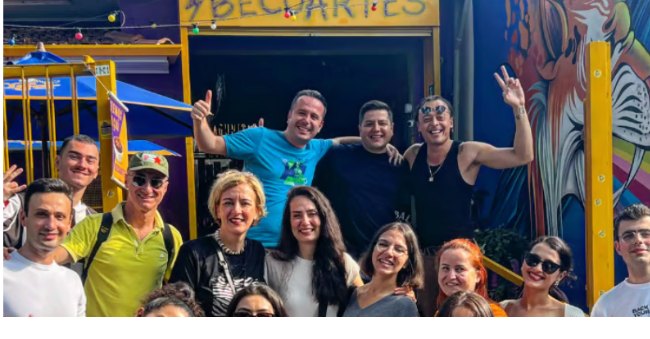
Did you enjoy reading? Then turn theory into experience. Located in the heart of Vila Madalena, Becoartes is the obligatory stop for those who want to take a break from the tour in comfort. Whether you want to cool off with a cold drink, admire the pulsating art or taste our classics, join thousands of visitors who have already made our space part of their history.