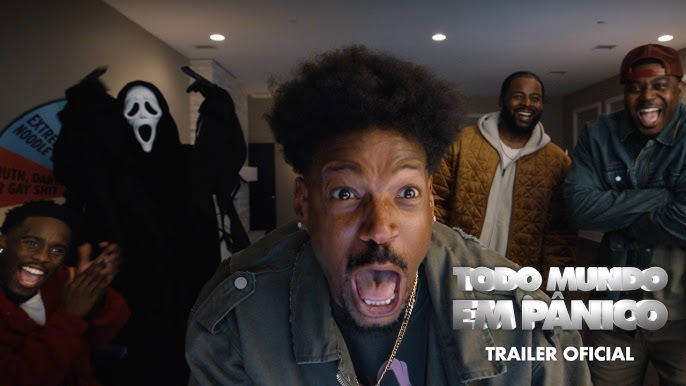
The Everybody in Panic franchise marked the 2000s with exaggerated humor and parodies of famous films. The announcement of a new chapter rekindles comedy nostalgia.
Gui Mameluco
3/10/20268 min read
Introduction to the "Scary World" Franchise
The "Scary Movie" franchise emerged as a cultural phenomenon in the early 2000s, marking a new era of cinematic parodies with a strong emphasis on horror films. The first feature film, released in 2000, was directed by Keenen Ivory Wayans and quickly stood out for its fun and irreverent approach, combining references to box office hits with shrewd social criticism.
In the following years, the franchise grew and expanded, generating sequels such as "Scary Movie 2" (2001), "Scary Movie 3" (2003) and "Scary Movie 4" (2011). Each of these films continued the tradition of challenging the conventions of the horror and comedy genres by creating comedic sketches that reinterpreted familiar narratives, often with a dose of exaggeration that became the series' signature.
Audience reception was largely positive, with many fans praising the franchise's ability to mix laughs and scares, as well as its ability to make sly references to contemporary cultural trends. The films were not only entertaining, but also inaugurated a new method of making parodies, which influenced other audiovisual projects of the time. The popularity of "Todo Mundo em Pânico" contributed significantly to its longevity on the entertainment scene, creating a solid fan base and solidifying its presence in pop culture.
The Franchise's Style of Humor
The "Todo Mundo em Pânico" franchise launched a new paradigm for the comedy genre in the 2000s, characterized by a style of humor that stands out for parody, scatological humor and cultural references. The satirical approach proposes a critique of the horror genre itself, redefining the scope of comedies released in previous years. Through exaggerated imitations and plots that distort classic situations, the audience is made to laugh reflexively, realizing how horror films often turn out to be formulaic.
The use of scatological humor is one of the distinctive features of this franchise. By incorporating scenes that allude to embarrassing or profane situations, the series achieves a comedic effect that, despite being polarizing, nevertheless resonates with a significant segment of the public. This technique, which in other contexts could be considered in bad taste, in the franchise is applied in order to enhance the irony present in the narratives, giving each scene an unexpected and captivating tone.
Furthermore, cultural references present in films often connect contemporary stories to pop culture events or icons, increasing the jokes' relevance and appeal. This integration not only serves to place the narratives in time, but also offers an experience of identification for the viewer, who becomes actively involved in the analysis of the comic situations. It is important to note that the franchise's humor also differs from other comedies of the time due to its boldness and the way it provokes reflections on what is considered comedy, leading the viewer to revisit their own cultural references and the limits of humor itself.
Parody in Cinema: Definition and Importance
Parody in cinema is a genre characterized by the comedic imitation of specific films, styles or genres, with the aim of amusing and entertaining the audience by exaggerating recognizable elements. This style of comedy not only aims to make people laugh, but also provokes reflections on the works being parodied, contributing to critical and cultural dialogue. Through the use of references, puns and absurd situations, parodies challenge conventional narrative and aesthetic standards in cinema.
The relevance of parodies in the film industry lies in their ability to attract different audiences, expanding discussions around entertainment. "Todo Mundo em Pânico", released in 2000, appears as a milestone in this context, mixing elements of horror films and comedies, transforming the way stories were told. This film not only entertained, but also made a good-natured critique of the conventions of the genre, revealing the flaws and clichés present in horror productions of the time.
Furthermore, "Todo Mundo em Pânico" influenced a series of other film productions that emerged after its release, creating a subgenre that explored parody in a bold way. Films such as "The White Girls" and "A Morte Cai Bem" continued the tradition of satirizing elements of pop culture, highlighting the importance of parody as an art form that challenges norms and engages the viewer in a conviction that is, at the same time, fun and incisive.
The Cultural Impact of "Everybody in Panic"
The "Todo Mundo em Pânico" franchise played a significant role in the popular culture of the 2000s, reflecting and influencing the behaviors and social trends of a generation. With their satirical and parodic humor, the films addressed contemporary themes, reflecting society and its peculiarities. The first film in the series, released in 2000, was not only notable for its humorous criticism of horror films, but also for its ability to capture the collective unconscious of the time.
Over the course of its run, the franchise introduced a variety of iconic memes and phrases, which quickly became part of popular parlance. The way the characters behaved and spoke, often exaggerating stereotypes perceived in pop culture, generated a wave of references that are still used on social media and in everyday encounters. This influence is a testament to how comedy can shape and reinforce social norms, contributing to a cultural dialogue around topics ranging from relationships to questions of identity.
Additionally, the Scary Movie films helped democratize film criticism, allowing audiences to develop an awareness of Hollywood's genre formulas. They show, in a comical way, how clichés often used in the film industry can be recognized and subverted. This type of analysis, albeit in a light way, encouraged a more critical perception of films and their content, promoting discussions about originality and creativity in cinema. Therefore, the franchise not only generated entertainment, but also stimulated a cultural shift that has reverberated throughout the years, cementing its place in pop culture.
Analysis of Iconic Characters
The "Scary Movie" franchise is widely recognized for its memorable characters, who play a crucial role in building the narrative and delivering humor. Among the protagonists, Cindy Campbell and Shorty Meeks stand out, functioning as exaggerated representations of character stereotypes found in horror films. Cindy, for example, is a parody of the typical damsel in distress, but her evolution throughout the series transforms her into a strong and cunning heroine, subverting the expectations of the genre.
Shorty, in turn, is an example of how the comedy of "Scary Movie" often mixes physical humor and cultural references. Its inclusion not only adds much-needed comic relief, but also points to a critique of consumerism and pop culture trends of the time. Shorty's eccentric behaviors and striking lines capture the essence of a generation that watched these films without knowing that, often, laughing at oneself was the greatest of ironies.
Another iconic character is Brenda Meeks, who not only provides humor, but also questions several racial stereotypes associated with African-American characters in horror films. Their presence and interactions often refer to a broader social critique that permeates the series. The dynamics between the characters help create moments that are both hilarious and reflective, exploring the superficiality of some cinematic conventions.
In short, each character that makes up "Todo Mundo em Pânico" is a fundamental piece in the dynamics of the series, contributing to the mix of humor and social criticism. This analysis of the protagonists shows how the franchise used these figures to not only entertain, but also provoke reflections on culture and cinema. Thus, the evolution of these characters throughout the films reflects a change in cinematic perceptions of the 2000s.
The Announcement of the New Film: Expectations and Reactions
The recent announcement of a new film in the "Scary Movie" franchise generated significant buzz among fans and critics. The series, which gained notoriety in the 2000s for its satirical approach to horror films, is widely remembered for its irreverent humor and its ability to capture the genre's clichés. With today's new technologies and trends, many wonder how the next film will adapt and innovate these classic elements to capture the attention of a new generation.
Initial reactions to the news were mixed. Older fans are eager to revisit the familiar world of "Scary Movie," while many critics have expressed doubts about the sustainability of the franchise's formula in the contemporary film landscape. Expectations revolve around how the new film will balance nostalgic humor with contemporary references, using a new approach without disappointing loyal followers who grew up with the previous films.
Especially, there is a curiosity about which horror movie characters or clichés will be chosen to be parodied. The previous films were known for their criticism of productions such as "Scream" and "The Exorcist"; therefore, the choice of new humorous targets may determine the acceptance of the film. Additionally, the production will face the difficult task of capturing the spirit of the original series while aligning with the tastes and challenges of modern audiences.
Considering the evolution of cinema, the new project can not only pay homage to the franchise's tradition, but also serve as a vehicle to discuss relevant cultural themes, providing a new perspective within the comic narrative. It's an exciting and potentially transformative time for "Scary Movie," which has the opportunity to revitalize its presence and relevance in today's cinema.
Conclusion: Legacy of "Everybody in Panic"
The "Scary Movie" franchise, launched in the early 2000s, established itself as a significant milestone in cinematic comedy and popular culture. His legacy transcends simple parody, influencing both the way comedies are produced and the public's reception of these works. By satirizing not only horror and thriller films, but also aspects of society, the series contributed to the evolution of comedic narratives in the film industry.
The importance of "Todo Mundo em Pânico" lies in its ability to combine irreverent humor with social criticism, opening space for new generations of comedians to experiment and explore relevant themes. The parody structure used by "Todo Mundo em Pânico" became a reference that many subsequent productions sought to emulate, demonstrating its lasting influence. This can be observed in contemporary projects that use the format to address current themes and pop culture, refracting the franchise's original proposal.
The series' elements and aesthetics, as well as its iconic jokes, continue to resonate in current works, highlighting the relevance of parody as a tool of criticism and entertainment. As the film landscape transforms, the challenge for new comedians is to balance humor, sensitivity and originality, a task that Scary Movie has made more accessible to the mainstream. The franchise's cultural impact, therefore, is reflected not only in its box office, but also in the creative practices that shape contemporary comedy. In short, the legacy left by "Todo Mundo em Pânico" is indisputably profound and continues to resonate in modern productions.
A piece of Brazil served with affection, flavors and soul. From Beco to the world. 🌎
Events
Newsletter
contato@becoartes.com
Do you know Becoartes? We have over 700 reviews on Google Maps

Did you enjoy reading? Then turn theory into experience. Located in the heart of Vila Madalena, Becoartes is the obligatory stop for those who want to take a break from the tour in comfort. Whether you want to cool off with a cold drink, admire the pulsating art or taste our classics, join thousands of visitors who have already made our space part of their history.