Barcelona 7, Racing Santander 2. The result on 16 September appears to confirm, all by itself, the familiar story of the leaders against a newly promoted club. Yet the match offers a more useful reading: Barça turned their dominance into a rout, while Racing scored twice and showed why they had arrived at Camp Nou with seven points from five rounds. The contest exposed an enormous gap in output, but it also included moments when the Santander side managed to attack and respond.

The score says a great deal, but not everything
Barcelona opened the scoring after eight minutes through João Cancelo, before Raphinha converted a penalty for 2–0. Maguette Gueye pulled one back for Racing in the 30th minute. An Asier Villalibre own goal and another Raphinha strike made it 4–1 at half-time.
Raphinha completed his third goal after the break, while Gabriel Jesus and Lamine Yamal also scored. Yassir Zabiri supplied the visitors’ second. The official LaLiga match page also records a saved Lamine Yamal penalty before half-time. That sequence shows that the rout did not result from one late collapse: Barcelona established their advantage early and kept creating after making substitutions.
The numbers measure the imbalance
The clearest comparison comes from the match statistics. Barcelona had 69.4% possession, took 30 shots and won 18 corners. Racing had 30.6% of the ball, five shots and no corners. Those figures describe a game largely played in the visitors’ defensive territory.
There is an important nuance: Racing scored with two of their five attempts, an efficiency rate listed by LaLiga as 40%. Barcelona’s was 29.2%. That does not make the performances equivalent — Barça held overwhelming advantages in volume and control — but it explains why the promoted club’s actions after escaping pressure deserve attention. Such openings may occur more often against less dominant opponents; that is something to monitor, not a conclusion guaranteed by one evening.
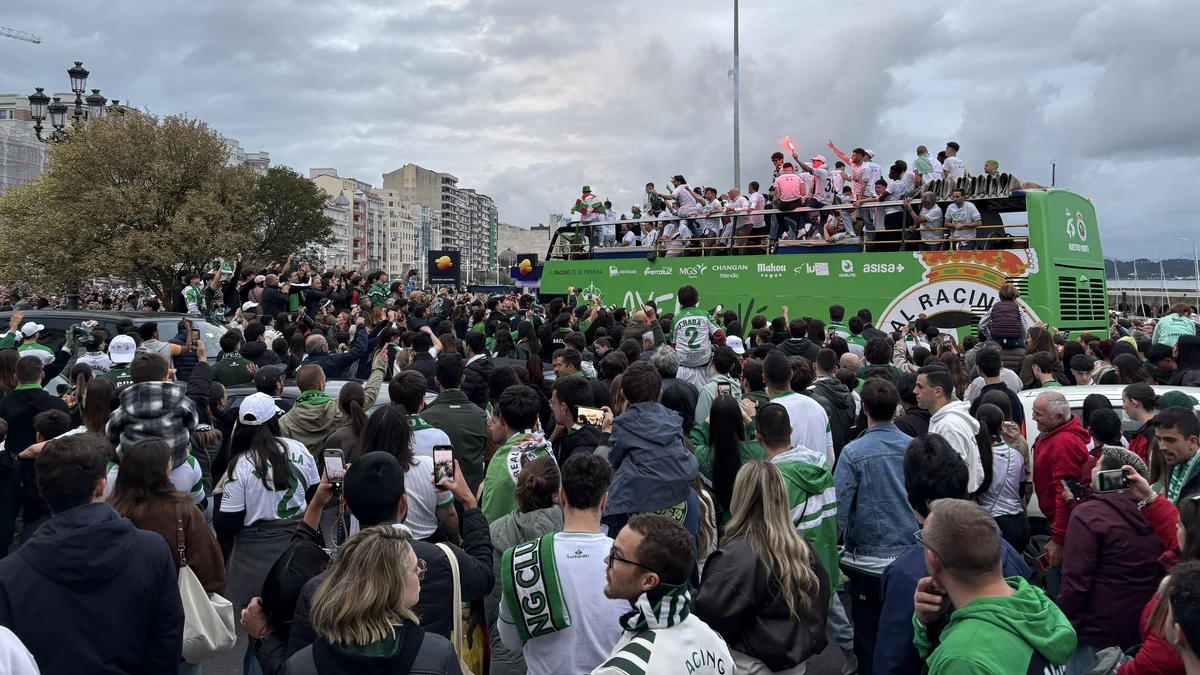
The Racing side that arrived at Camp Nou
Racing did not arrive still searching for their first evidence of top-flight competitiveness. Four days earlier, they had come from behind to beat Deportivo Alavés 2–1, with two goals from Zabiri. According to the club’s official report on the fifth-round match, the result left them on seven points and unbeaten at El Sardinero through their opening five fixtures.
The same report says Zabiri already had four league goals before the trip to Barcelona. His Camp Nou goal was therefore connected to a productive start rather than an isolated event. For anyone following the promoted team, the more useful question is not whether it can match Barça’s possession or shot count. It is whether Racing can keep creating for its forward against teams at other levels and remain competitive at home.
The sample still demands caution
Five rounds were too few to turn seven points, an unbeaten home record or Zabiri’s output into definitive trends. Nor should a 7–2 loss erase everything that preceded it. Away matches against the leaders can magnify differences that will not appear in the same form throughout a full season.
There was also calendar pressure. Barcelona’s published September schedule contained five matches in 14 days, including the Champions League opener and three LaLiga games in six days. Racing’s official preparation update described a two-match week, with a trip to Celta three days later; Andrés and Eriksson were injured, while Almeida was suspended for the Barcelona fixture.
That context neither changes the winner’s merit nor provides an automatic excuse. It helps readers assess team selection, substitutions and physical output without treating every match as an isolated event.
What to watch next
Three comparisons will reveal more about Racing’s adaptation than the Camp Nou score alone: performances at El Sardinero versus away matches; the number of chances created when the team has less possession; and whether Zabiri maintains his attacking efficiency. These questions begin with the available evidence, but need more rounds before producing a sound diagnosis.
For Barcelona, 30 shots and 18 corners demonstrate extreme territorial dominance. Conceding twice, however, shows that control did not mean an impenetrable defence. The rout confirms the leaders’ strength on that night; it does not remove questions that closer contests may test.
A note for those who attended
The match was played at Spotify Camp Nou. For this specific fixture, Barcelona issued mobility and accessibility information, covering pedestrian access, wheelchair-user entrances and restrictions on certain items. Because those rules were tied to the 16 September event, they should not be treated as permanent guidance for future visits. Conditions and access arrangements for any new match should be checked through the club’s current official channels.
The 7–2 result was unequivocal, but it does not reduce Racing to a supporting role. It shows the gap the promoted team must manage and provides concrete criteria for assessing whether its early competitiveness can survive the demands of the top-flight calendar.
Continue the conversation on football and the city
For more perspectives on culture, sport and urban life, follow Becoartes. The space is at Rua Gonçalo Afonso, 99, Vila Madalena, São Paulo.
Becoartes - Beco do Batman
99 Gonçalo Afonso Street, Vila Madalena, São Paulo
Sources and credits
- Gabon100 — CC BY-SA 4.0
- Gabon100 — CC BY-SA 4.0
- LaLiga — página oficial da partida, com classificação e estatísticas comparáveis após cinco rodadas
- Real Racing Club — vitória sobre o Alavés, sete pontos e invencibilidade em El Sardinero
- Real Racing Club — preparação, desfalques e sequência de jogos antes da visita ao Barcelona
- FC Barcelona — calendário de setembro e identificação do Racing como recém-promovido
- FC Barcelona — orientações oficiais de mobilidade e acessibilidade no Camp Nou para a partida