BATMAN ALLEY
Discover Batman Alley in Vila Madalena, São Paulo. An open-air graffiti gallery.
Batman Alley is one of São Paulo's most iconic places, a true open-air museum.
More than a tourist attraction, Batman Alley is a symbol of the city's vibrant and multicultural soul.
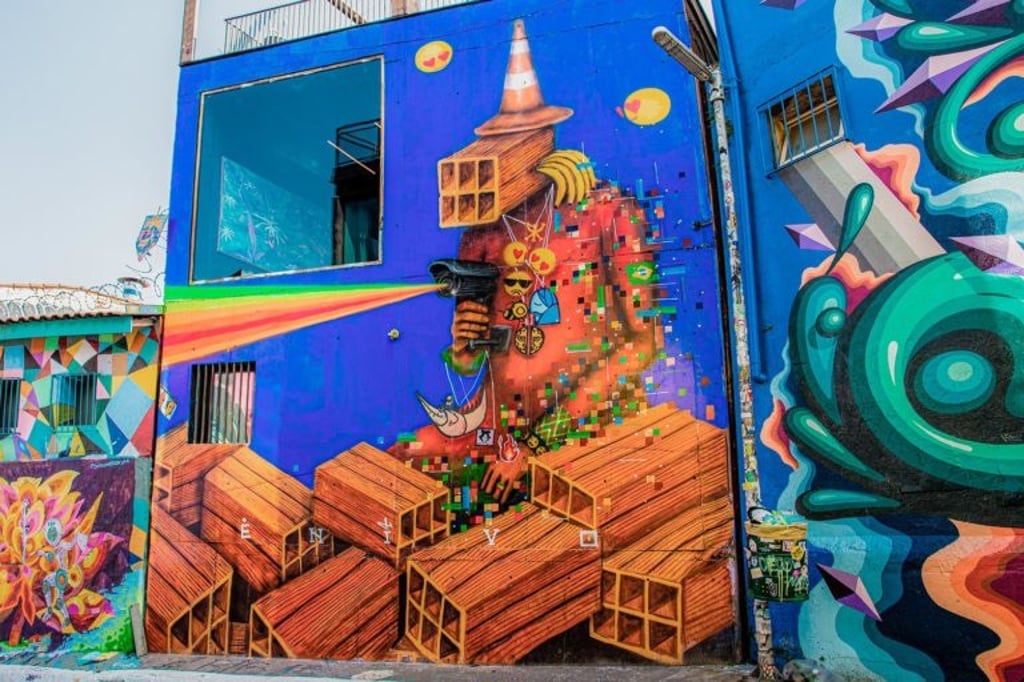
Vila Madalena in the 1900s: farms, tramlines and transformation
At the dawn of the 20th century, the area now known as Vila Madalena was a mosaic of small farms and rural plots, marked by dirt paths and streams such as Rio Verde and Corujas. The region was mostly rural, with residents growing vegetables and raising animals in their yards.
Urbanization began to gain strength in the 1910s, pushed forward by the arrival of the Light tramline, which made access easier and attracted workers and immigrants, especially Portuguese families. These new residents helped the neighborhood grow by opening essential shops and services. Even so, Vila Madalena still kept a peripheral, simple and intensely communal character.
Over the decades, Vila Madalena left behind its rural landscape and became one of São Paulo's most singular neighborhoods. In the 1910s and 1920s, land subdivision, new streets and modest houses welcomed Portuguese, Italian and Northeastern Brazilian families. The neighborhood grew around strong bonds of everyday life: sidewalks, bakeries, street parties and close neighbors.
In the 1960s and 1970s, this calm neighborhood began to attract young artists and students looking for an alternative way of life. Its creative and accessible atmosphere encouraged old houses to become studios, cultural groups and collectives. In that fertile climate, art began to slip through the cracks: first in backyards, then on sidewalks. Vila Madalena's free spirit was preparing the ground for something bigger.
In the 1980s, a Batman graffiti appeared in one of the neighborhood's alleys, starting a visual revolution: the birth of Batman Alley. From that point on, the walls became manifestos, and graffiti transformed the neighborhood into a living gallery. In the following decades, urban art consolidated Vila Madalena's identity as a place where the city breathes creativity and the whole world stops to look.
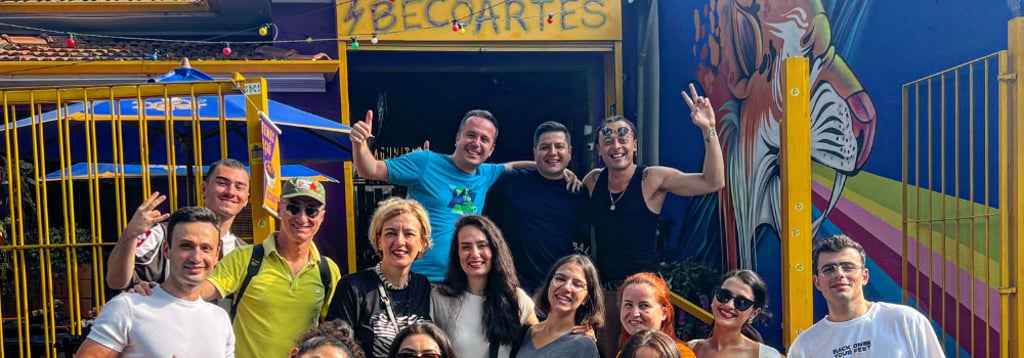
Rio Verde and Batman Alley: art over hidden waters
Long before becoming an open-air art gallery, Batman Alley was part of the bed of Rio Verde, one of the many streams that crossed Vila Madalena. As São Paulo grew, especially from the 1940s onward, the stream was channeled and covered, disappearing from the visible landscape while continuing to flow silently beneath the asphalt.
The trace of the old river can still be sensed in the curves of the streets and in areas prone to flooding, such as Rua Medeiros de Albuquerque. In 2012, for example, a manifesto called Existe Rio em SP walked the route of Rio Verde, highlighting its hidden presence and proposing the creation of a linear park along its course.
Today, Batman Alley symbolizes the transformation of a once-natural space into a center of artistic expression. Where Rio Verde once flowed, colors, shapes and messages now flow, reflecting the creativity and diversity of the city. Urban art filled the void left by the river, creating a new current made of paint and ideas that continues to shape Vila Madalena's identity.
The first manifestations of graffiti in Brazil
Graffiti, as a form of urban artistic expression, began to gain space in Brazil in the 1970s, amid the military dictatorship. During that period, censorship and political repression pushed artistic expression into the streets as a form of protest and demand for freedom. The first graffiti expressions emerged in São Paulo, influenced by international counterculture movements and by the local art and music scene.
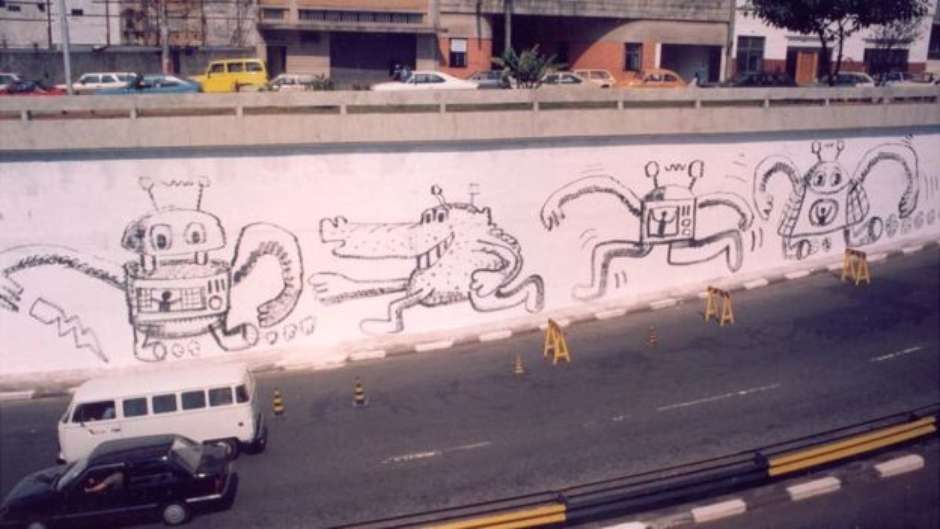
The seed of transformation: Projeto Aprendiz and the inspiration for Batman Alley
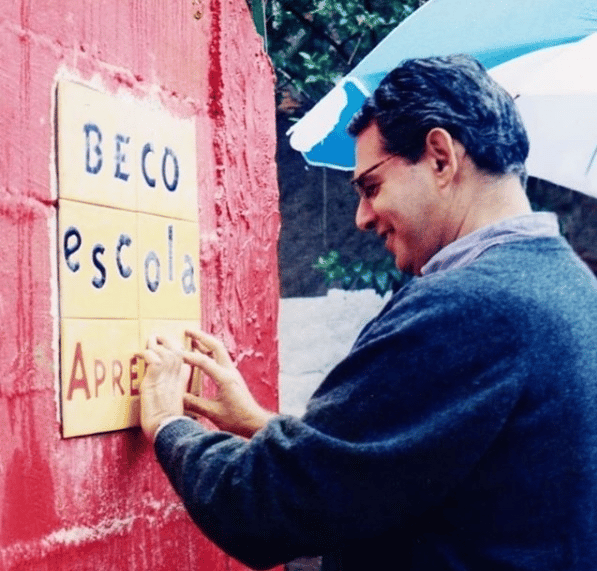
In 1998, journalist Gilberto Dimenstein launched Projeto Aprendiz, an initiative that connected education, art and community in Vila Madalena. The project transformed a degraded alley between Belmiro Braga and Padre João Gonçalves streets into a space for artistic expression and learning, known as Beco do Aprendiz. That experience of urban revitalization and community engagement inspired other artistic interventions in the area, including Batman Alley. The idea that public space can become a platform for expression and inclusion spread across the neighborhood walls, turning paint into language and sidewalks into stages.
Over the years, Projeto Aprendiz was responsible for a series of transformative actions in Vila Madalena. It implemented art-education programs, built connections between public schools and the community, and promoted theater, journalism, music, dance and graffiti workshops for local young people. One milestone was the creation of Cidade Escola Aprendiz, which expanded the original proposal into a model of education integrated with the territory, where the street becomes an extension of the classroom and residents become active agents of learning.
Among the many talents involved in those actions, some became references in Vila Madalena's urban art and remain active on Batman Alley's walls today. Graffiti artists such as Binho Ribeiro (Binho 3M), Enivo, Highraff, Milo Chais and many others who became references in world graffiti took part in initiatives connected to the project and helped shape the neighborhood's visual identity with unique lines and powerful messages.
Their works go beyond aesthetics: they tell stories, provoke reflection and reaffirm the urban space as a territory of expression and belonging. They are part of the generation that consolidated Batman Alley as one of the largest open-air urban art galleries in the world, a living symbol of Brazilian graffiti's power.
Vila Madalena had already carried an alternative atmosphere since the mid-20th century, with a strong presence of students, artists and intellectuals. In the 1980s, that spirit found a new medium: graffiti. It was in this context that a Batman drawing, made by students from the School of Fine Arts, appeared in one of the neighborhood alleys. That drawing became a landmark, and over time other artists began to occupy the surrounding walls, transforming the alley into a creative laboratory.
Origin of the name Batman Alley
Few people know it, but the true origin of the name Batman Alley is not exactly the way people usually tell it. Here, for the first time, we share the story that remained hidden between the lines of Vila Madalena's popular memory.
With the channeling of Rio Verde, several alleys and passageways appeared in the area, usually corresponding to the backs of houses. Each of these paths received a nickname used by residents to refer to everyday events. When something happened, people would say: it happened in that alley. And someone would always ask: which alley?
In the 1980s, a man who owned a black Maverick lived in one of those alleys. Whenever he entered or left with the car, especially at night, when the place was poorly lit, neighbors would comment: look, Batman has arrived, or Batman has left. Since the area was also leafy and full of bats flying at dusk, the rumors grew. The nickname Batman's alley spread through the neighborhood and settled into the collective imagination.
In that same period, a group of students from the School of Fine Arts decided to make a joke: they painted Batman on the wall in front of the house where that resident lived. The figure of the hero could be seen right from the entrance on Rua Harmonia. The joke became art, the nickname became the official name, and Batman, once just a neighborhood legend, became the eternal symbol of the place.
The old house that inspired the legend now holds a bar. The resident is gone, but his story remains written on the walls. What was once a passage became a gallery. What was once a legend became a symbol. And that is how Batman Alley was born and became established.
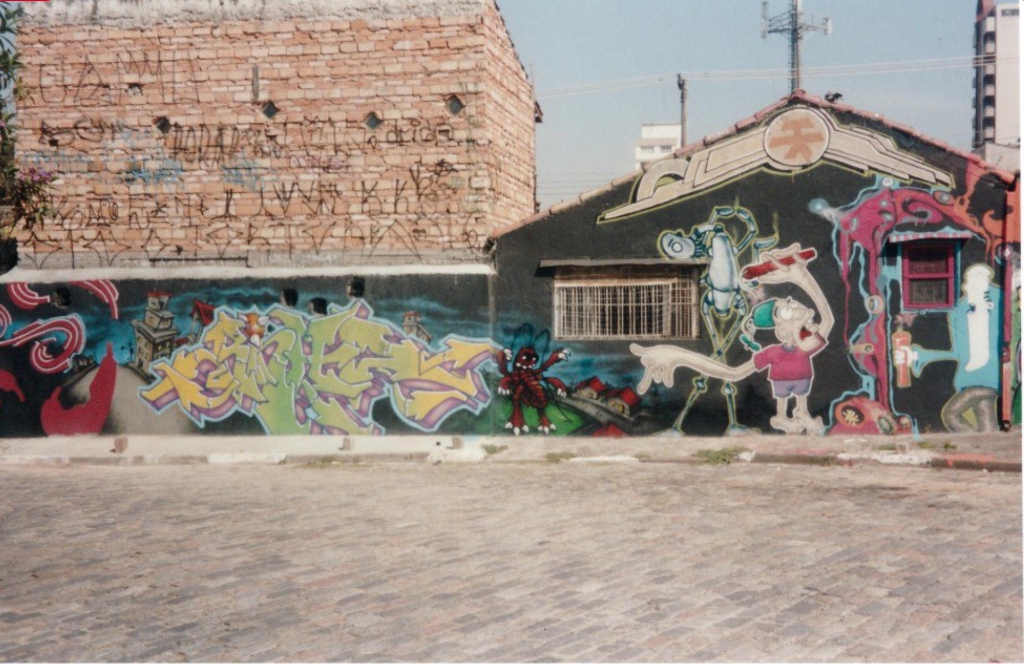
Parque do Beco: the urban utopia that almost flourished
In 2014, journalist Gilberto Dimenstein played a crucial role in the transformation of Batman Alley. He took then-mayor Fernando Haddad to the site during the implementation of the Ruas Abertas program, which encouraged streets to be closed on Sundays for pedestrian use. Taking advantage of that context, Dimenstein proposed the permanent closure of the alley to cars, transforming it into a space dedicated to art, culture and coexistence.
That initiative gave rise to the concept of Parque do Beco, a visionary project that, although never fully implemented, resulted in significant improvements, such as the installation of LED lighting, increasing safety and comfort for visitors.
I confess my crime. Yes, I helped close Batman Alley to cars. And I am very happy about it.
(Gilberto Dimenstein, 2016)
The action was decisive in consolidating Batman Alley as a vibrant public space, where urban art gained freedom and the neighborhood gained a new identity. Closing the streets was more than an urban measure; it was a symbolic gesture of returning the city to people. The result was immediate: what had once been a forgotten alley became one of São Paulo's most emblematic places and, why not say it, one of Brazil's. Today, the alley is synonymous with tourism, culture and economic vitality.
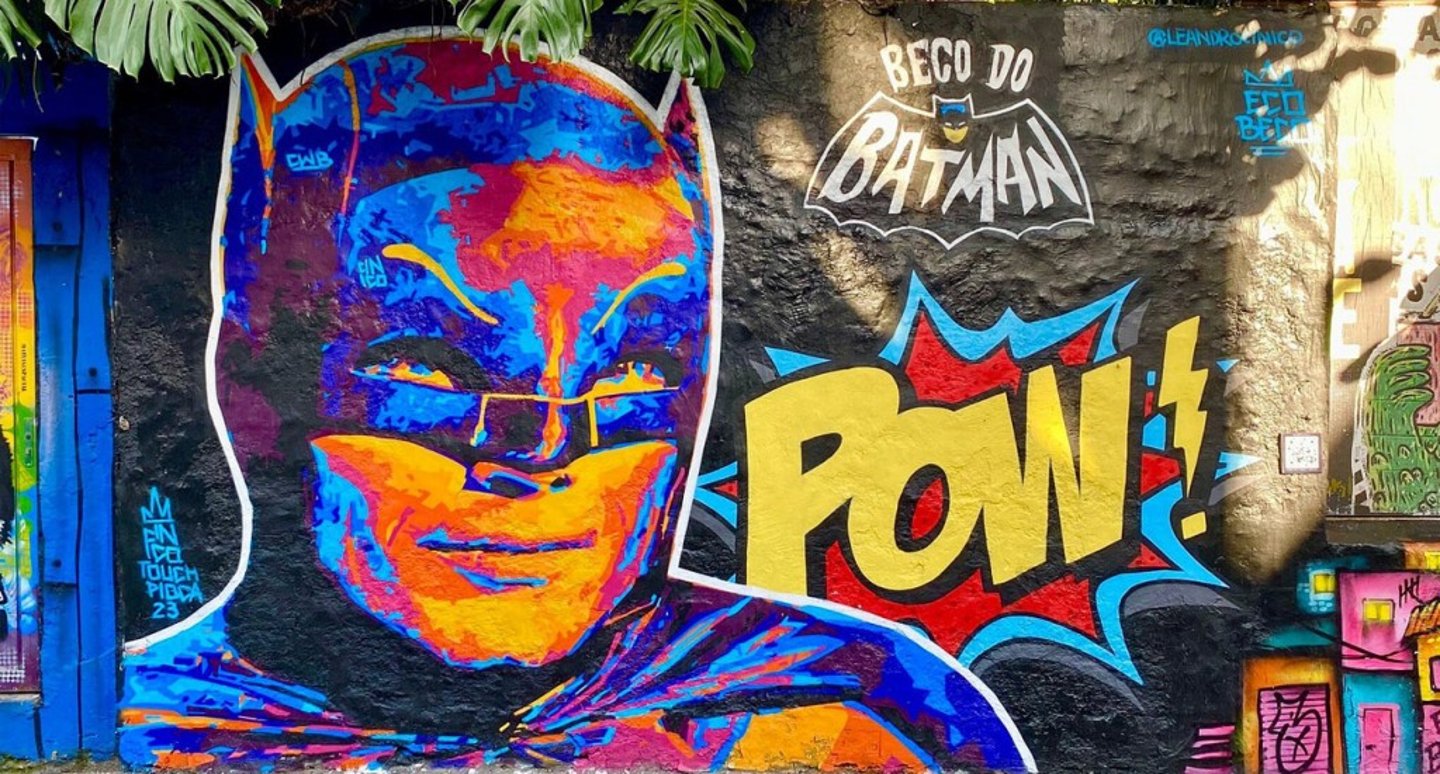
A living heritage of urban art
Batman Alley is a true contemporary open-air museum, where urban art appears in many forms: graffiti, posters and murals that are constantly renewed. Located in Vila Madalena, it is a free and accessible space that has become a symbolic cultural heritage site of São Paulo. It receives visitors from all over the world, with estimates of more than 10,000 people per week, drawn by the vibrant artistic scene and the unique atmosphere of the place.
Its transformation, from a forgotten alley into one of the city's most emblematic points, shows how public policies that value urban space as a place of coexistence and expression can generate real impact. The closure of streets to vehicles and the promotion of street art revitalized the area, boosted the local economy and attracted bars, restaurants, galleries and fairs around it.
More than a tourist attraction, Batman Alley is a creative organism in constant renewal. Free, democratic and alive, it attracts visitors through its colors, messages and the collective soul that lives there. Its history proves that when streets are returned to people, the city flourishes.
Visiting Batman Alley?
After the murals, make Becoartes your stop inside Batman Alley itself: Brazilian food, drinks, music and a meeting point to experience Vila Madalena without rushing.
BECOARTES - BATMAN ALLEY
Rua Gonçalo Afonso, 99 - Jardim das Bandeiras
São Paulo - SP, 05436-100
Curiosities about Batman Alley
- In the 1970s, the alley was popularly known by some residents as the "larguinho".
- Cars are not allowed in Batman Alley; Gonçalo Afonso and Medeiros de Albuquerque streets are fully closed and exclusive to pedestrians.
- Batman Alley has its own residents association.
- The graffiti in the alley is periodically renewed.
- It is one of the most photographed places in São Paulo.
Frequently asked questions
Is it worth visiting at night?
Yes. The nightlife and the special lighting bring a new dimension to the murals.
How do I get there?
It is a short walk from the nearest metro stations and works well as part of a Vila Madalena walking route.
When are the street fairs?
Street fairs and extra movement usually happen on weekends and holidays.
Why does the alley flood?
Because it was built over the old course of Rio Verde, a hidden stream beneath the neighborhood.
What is there to see?
Murals by major Brazilian and international graffiti artists, galleries, small studios and a lot of street culture.
What is the best day to go?
Weekends are more vibrant and crowded. Weekdays are calmer for cleaner photos of the walls.