Beco do Batman is in Vila Madalena, on São Paulo’s west side. A visit can begin in the painted alleys, continue to Escadaria do Patápio and reach nearby galleries. The area is accessible by subway or bus, but routes and fares should be checked before departure. One more caveat: the city announced redevelopment work in May 2026 involving drainage, sidewalks and paving. The available source records the launch and projected duration, not the project’s completion.
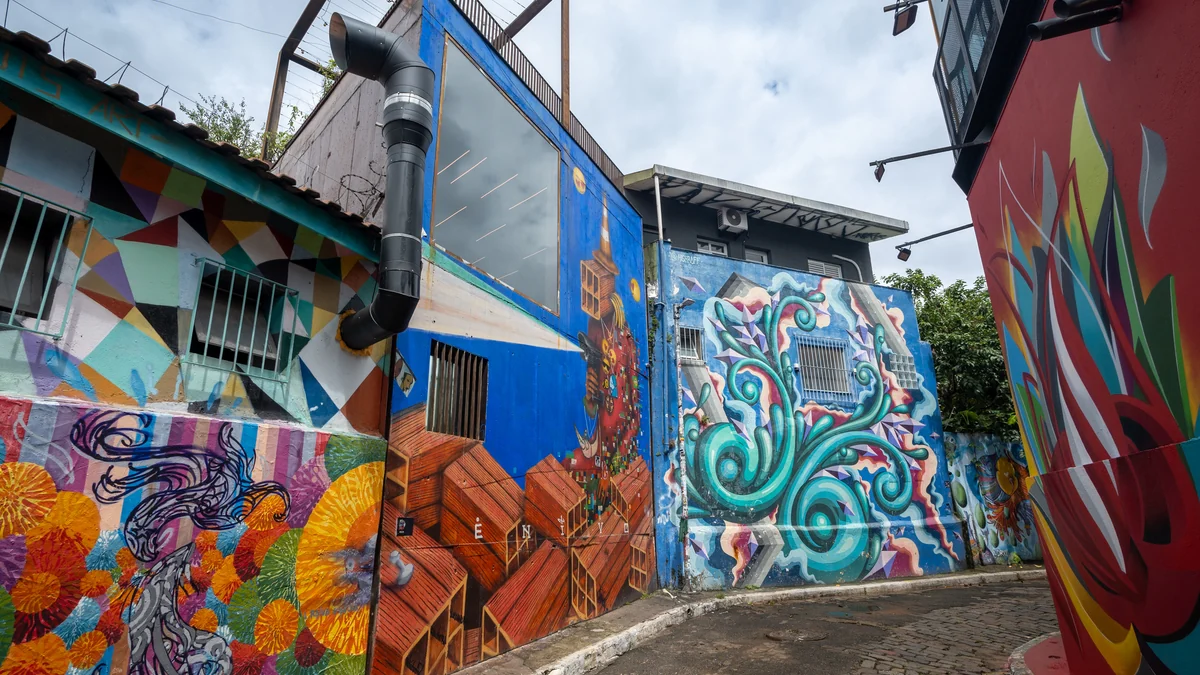
Getting there by public transport
The Pinheiros Borough Administration identifies three reference stations: Santuário Nossa Senhora de Fátima–Sumaré on Line 2–Green, 1.3 km away; Fradique Coutinho on Line 4–Yellow, 1.4 km away; and Faria Lima, also on Line 4, 1.7 km away. These distances help visitors choose a starting point, but the source does not describe sidewalk conditions between the stations and the alley.
In April 2025, the Municipal Tourism Department listed buses including 177H/21, 177Y/10, 208M/10, 701A/10, 719P/10, 778J/10 and 847P/10. The page also linked Sunday visits to Domingão Tarifa Zero, a municipal fare-free Sunday program created in December 2023. Routes, itineraries and fare rules can change, so verify them through official transport channels.
A route that accounts for changing murals
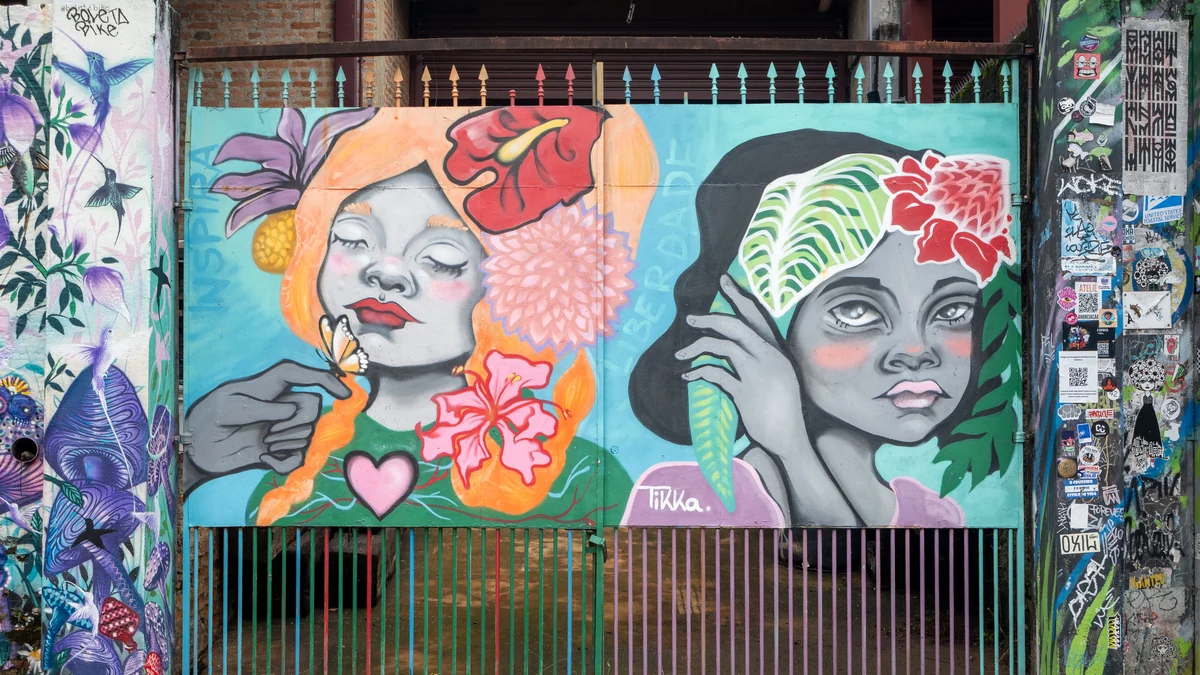
Start in the painted passages and examine colors, characters, lettering, gates and overlapping layers. Do not organize the visit around one particular work: paintings and graffiti are regularly replaced, while weather also alters the surfaces. The photographs in this article record moments at the site and do not guarantee that the same works remain visible.
Next, consider Escadaria do Patápio. The borough administration describes it as a 350-meter route with 96 steps, covered in tiles featuring art and poetry. The steps are relevant information for visitors with limited mobility; the page does not present an accessible alternative for this section.
Nearby, the source names Ziv Gallery, Alma da Rua and A7MA as spaces associated with urban art. Exhibitions, opening arrangements and access conditions may vary and should be confirmed directly with each venue.
The origin of Beco do Batman
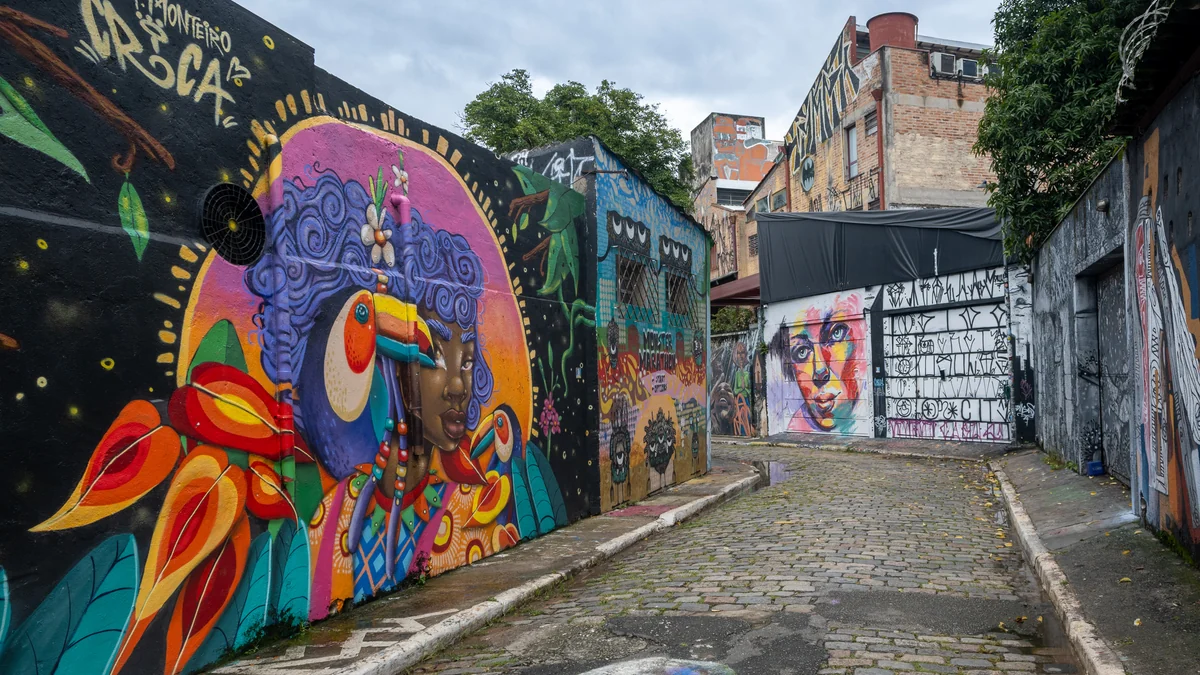
In the 1970s, the area was known as the “larguinho,” or little open space, and served as a meeting place for children and young people. According to the history published by the borough administration, its transformation intensified in the 1980s, when University of São Paulo students frequented the area and walls began to be used as artistic surfaces.
The current name emerged late in that decade after a drawing of Batman was found on a wall. Its creator remains unknown, and the image no longer exists. Art students began producing works influenced mainly by Cubism and psychedelia. The municipal account also records the pioneering role of the Tupinaodá collective and the past presence of Os Gêmeos, Speto and Milo Tchais. These are historical references; they do not establish that works by those artists are displayed today.
Extending the reading of the area
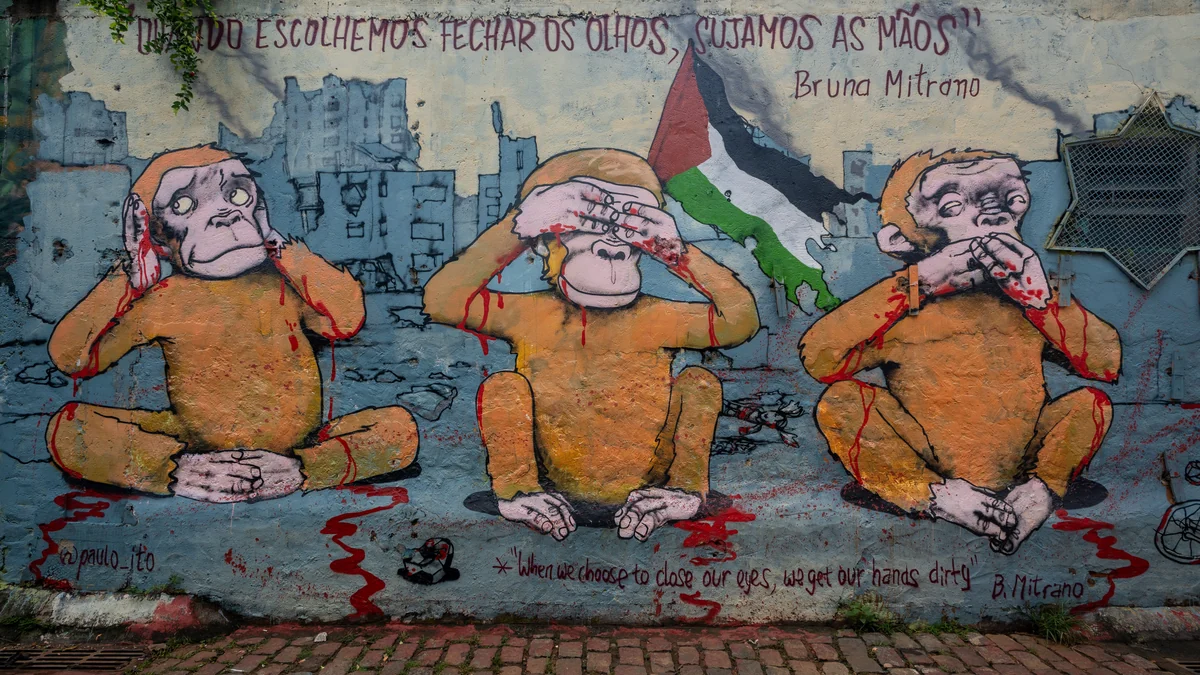
Instead of looking only for photo backdrops, observe three scales: the details of each painting; the relationship between murals, windows, gates, paving and vegetation; and the connection between the alleys, galleries and nearby streets. This approach presents Beco as a changing urban space rather than a permanent collection.
The Tourism Department suggests continuing the street-art theme at Elevado João Goulart, known as Minhocão, where panels occupy building sidewalls. This is another part of the city, and the source gives no distance, travel time or direct connection from Beco do Batman. The extension must be planned separately.
The borough administration’s July 2025 publication also listed a craft market on weekends and public holidays from 9 a.m. to 6 p.m. Since that schedule may change, do not base a visit on those hours without current official confirmation.
The redevelopment project announced in 2026
On May 19, 2026, the City of São Paulo reported that interventions had begun on May 11, initially on the drainage system. The plan included six rain gardens, sidewalk renovation focused on accessibility, adjustments to the cobblestones, pedestrian improvements, street furniture, benches, landscaping and a lookout point.
The gardens were designed to help absorb water in the area of the channeled Rio Verde. Sphagneticola, dietes and lilies were among the plants selected. At the time, the city estimated approximately five months of work. That initial announcement does not confirm subsequent delivery or provide information about possible closures, detours or present circulation conditions. Visitors should not assume that the planned features are available or that a fully accessible route exists.
Plan without treating images as operational information
Choose a route compatible with your mobility and allow room for adjustments. A promise of more accessible sidewalks is not proof of present conditions; murals, services and schedules may also change.
The photographs belong to the Beco do Batman category on Wikimedia Commons. Each file has its own licensing information. The images document the artistic setting but do not establish that the site is open, that work is complete or that any mural remains in place.
To complete the cultural route, discover Becoartes at Rua Gonçalo Afonso, 99, Vila Madalena. Consult its own website before visiting.
Discover Becoartes
Rua Gonçalo Afonso, 99, Vila Madalena. Check the official Becoartes website before visiting.
Becoartes - Beco do Batman
99 Gonçalo Afonso Street, Vila Madalena, São Paulo
Sources and credits
- xiquinhosilva — CC BY 4.0
- xiquinhosilva — CC BY 4.0
- xiquinhosilva — CC BY 4.0
- xiquinhosilva — CC BY 4.0
- Prefeitura de São Paulo — requalificação, acessibilidade e jardins de chuva
- Secretaria Municipal de Turismo — acesso por ônibus e Domingão Tarifa Zero
- Subprefeitura de Pinheiros — história, atrações próximas e estações de metrô
- Wikimedia Commons — categoria Beco do Batman para verificar arquivos e licenças