Jude Bellingham has had a hand in a goal in five different Real Madrid games this November. If you only have time for the most spectacular, pick the volley against PSV Eindhoven. If you want to understand why Madrid value him, the one game in which he did not score may be more revealing. At Valencia it was Arda Güler who supplied the finish, after Bellingham had driven into the box. Those two moves are a useful way into his month: one ends with a goal almost no one else would try to score; the other ends with a teammate taking the shot.
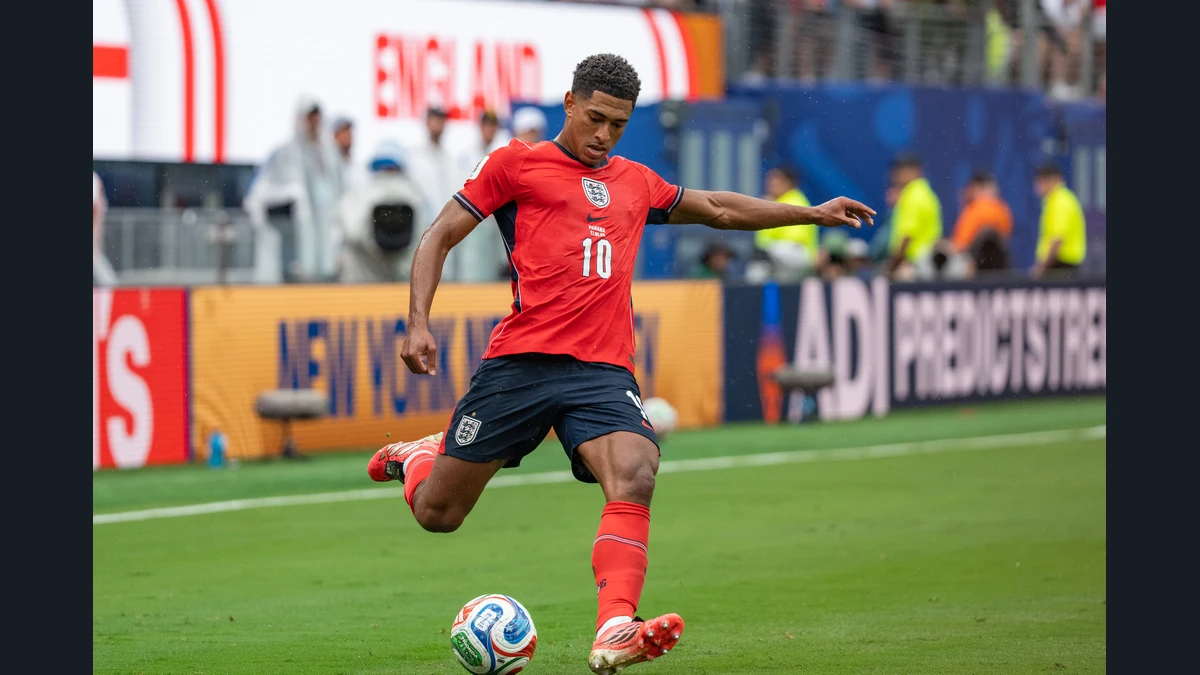
Four finishes, two competitions and an important distinction
Real Madrid’s November review credits the England midfielder with goals against Racing Santander, AEK Athens, Celta and PSV. That is two in the Spanish league and two in the Champions League. He was involved in another two that teammates scored, but that does not mean two assists. Madrid explicitly credit him with setting up Vini Jr. against PSV. At Mestalla they describe his involvement in the build-up to Güler’s goal. The distinction matters: a player can help open a defence without necessarily making the final pass.
The score when the ball goes in matters too. Against Racing his solo effort put Madrid two up on the way to a 3–0 away win. In Athens his backheel brought the teams level in a game Madrid eventually won 3–2. The low shot against Celta also made it level, ahead of a 2–1 home victory. A goals column treats those finishes as identical units. For the team playing the next five minutes, extending a lead and finding a way back into a game are quite different propositions.
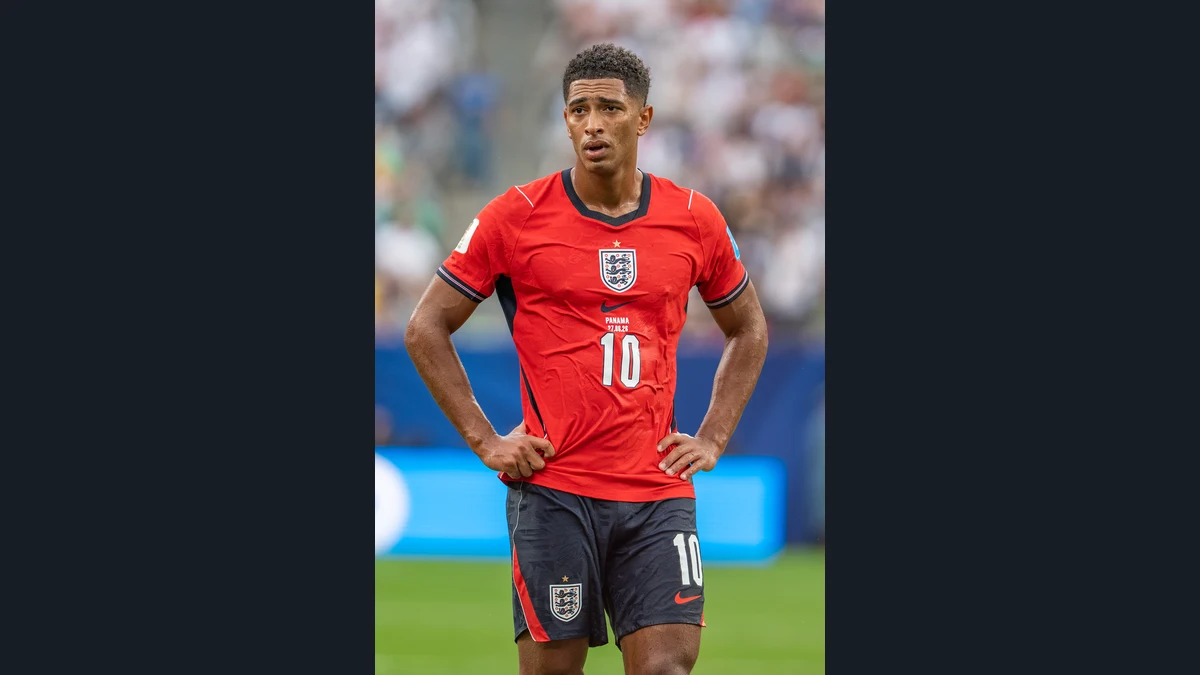
What a backheel can do that a conventional finish cannot
Put the Athens and Celta goals side by side. A backheel can be the economical option rather than the showy one. Turning to face the net takes another touch, or at least another fraction of a second, and a defender may only need that long. In Madrid against Celta the solution was almost the opposite: no extravagant flick, just a low finish. Both count as evidence of Bellingham’s appetite for the penalty area. Neither is particularly good evidence that he ought to spend the entire match stationed there.
Consider the defender’s choice when a midfielder arrives late. Follow him all the way and there is a gap behind you. Hand him over to a centre-back and both of you have to agree on the precise instant that responsibility changes. That is part of what makes a run from deep different from a centre-forward waiting for service. The goal in Santander adds a further complication: Bellingham can carry the ball and fashion a shot himself. A defender cannot always solve the problem simply by cutting off the supply.
Bernardo Silva saw something the highlights barely capture
Madrid were a goal down when Bellingham came on at half-time against PSV. In UEFA’s technical analysis, Bernardo Silva drew attention to what the Englishman did under pressure: protect the ball long enough for someone else to challenge for the second one. It sounds a modest achievement beside a spectacular volley. But if the first contact with a defender does not immediately end the attack, the next player can move forward to support rather than turn and chase.
There is an easy way to see what Bernardo means. Watch the people closest to the duel, rather than watching the ball every second. Where can a teammate get to if the receiver buys him one extra stride? The observation also helps avoid treating the comeback as a one-man show. Kylian Mbappé scored twice and took the player-of-the-match award. Saying that Bellingham altered the rhythm after the interval and that Mbappé delivered the outstanding performance over 90 minutes is not a contradiction. One assessment concerns a change; the other concerns a whole game.
A viewing guide for the visit of Alavés
Madrid’s final fixture of the month is at home to Alavés on Saturday 28 November, with a 9pm local kick-off. Instead of waiting to see whether Bellingham scores again, watch the first few times Madrid play out. Who offers to receive with a defender on his back? When Vini accelerates, does Bellingham demand the ball straight away or let the runner go and arrive later? Those decisions are visible well before either side has managed a shot. They tell you what kind of work he has taken on that afternoon or evening.
Finally, follow a move for one pass after the Englishman releases the ball. The name on the scoresheet at Valencia was Güler; the scorer of Madrid’s fifth against PSV was Vini. In Athens, in contrast, the player arriving to finish was Bellingham himself. His November offers no formula for predicting the next result. It does offer three different places to look for him: the move that starts the attack, the pass that leaves someone else to finish, and the touch that puts the ball in the net.
Image credits. Images resized, framed with margins and converted to WebP without cropping. Bryan Berlin / WikiPortraits (CC BY-SA 4.0); Bryan Berlin / WikiPortraits (CC BY-SA 4.0).
Sources for this story
Original documents are linked in the article.
Becoartes - Beco do Batman
99 Gonçalo Afonso Street, Vila Madalena, São Paulo