Foot Locker has returned to sales growth on one important measure. But depending on which part of the sneaker business you are looking at, the number might be half a percent, more than four percent or even a decline. The third-quarter figures that parent company DICK’S Sporting Goods released on November 24 explain why. The strongest number belongs to the U.S. stores carrying the Foot Locker name. The smallest gain describes the much larger business DICK’S bought last year.
There is a useful way to picture the scale. For every $100 the combined company sold during the 13 weeks through October 31, about $35 came from the Foot Locker business. That does not mean $35 was spent on sneakers: the company reports revenue by business, not pairs by model or dollars by shoe brand. What it does show is why picking the right comparison matters so much more than the headline growth rate.
The missing five weeks in last year’s comparison
DICK’S reported $5.13 billion in sales against $4.17 billion in the same fiscal quarter a year ago, a 23.2% increase. If those were two identical sets of stores operating for the same length of time, it might sound like something dramatic had happened at the cash register. They were not. DICK’S bought Foot Locker on September 8, 2025. Last year’s accounts picked up about eight weeks of that business. This year's picked up all thirteen.
The segment breakdown makes the effect visible. The original DICK’S business recorded roughly $3.34 billion in sales, up from $3.24 billion. Foot Locker contributed about $1.80 billion, compared with $931 million booked in the earlier quarter. It would be wrong to say Foot Locker nearly doubled the merchandise it sold to shoppers. A full stretch of trading is being compared with a partial one.
The company also provided a closer approximation of a like-for-like contest. It treated Foot Locker as though DICK’S had owned it from the beginning of both periods, used a consistent comparable-sales method and held exchange rates constant. Under that measure, comparable sales across the combined business rose 1.8%. The figure was 2.6% for the original DICK’S operation and 0.5% for the acquired Foot Locker business.
One name on the door, several names on the books
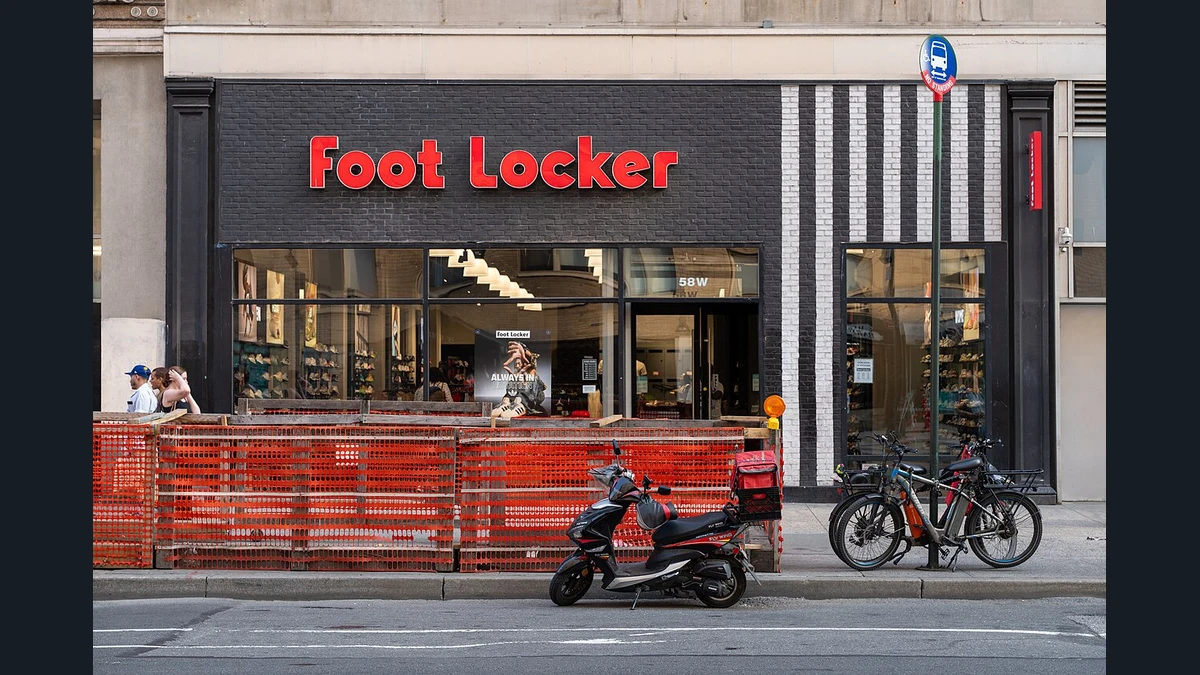
That last figure pools a number of chains. Besides Foot Locker itself, the segment includes Kids Foot Locker, Champs Sports, WSS and atmos. It also crosses continents. Executive chairman Ed Stack said comparable sales rose more than 4% at the U.S. Foot Locker banner. That is meaningful for the stores with that name over the door, but it is not a measure of every American store in the division. Nor can it tell a particular sneaker maker how its line performed.
There is another way to slice the same business. Across North America, defined in the report as the United States and Canada, the division's comparable sales rose 1.3%. International operations, in Europe and Asia-Pacific, posted a 1.8% decline. Both can sit comfortably beside a small worldwide gain: these are parts of a larger total, not alternative estimates for the same shoppers.
The view changes again if the window is widened. Across the first 39 weeks of the fiscal year, Foot Locker's comparable sales were still down 0.9%. One positive quarter matters precisely because it looks different from the year to date. It does not erase the preceding months or establish how the business will finish the holidays.
Why an opening need not mean one more store
While the sneaker chains work through that uneven performance, DICK’S is changing the idea of a trip to one of its sporting goods stores. Six House of Sport locations and three Field House locations opened in the quarter, bringing the two formats to 47 and 55 stores respectively. An opening and a net addition to the chain are not interchangeable. The company's store tables track locations converted from an earlier format separately from newly added stores.
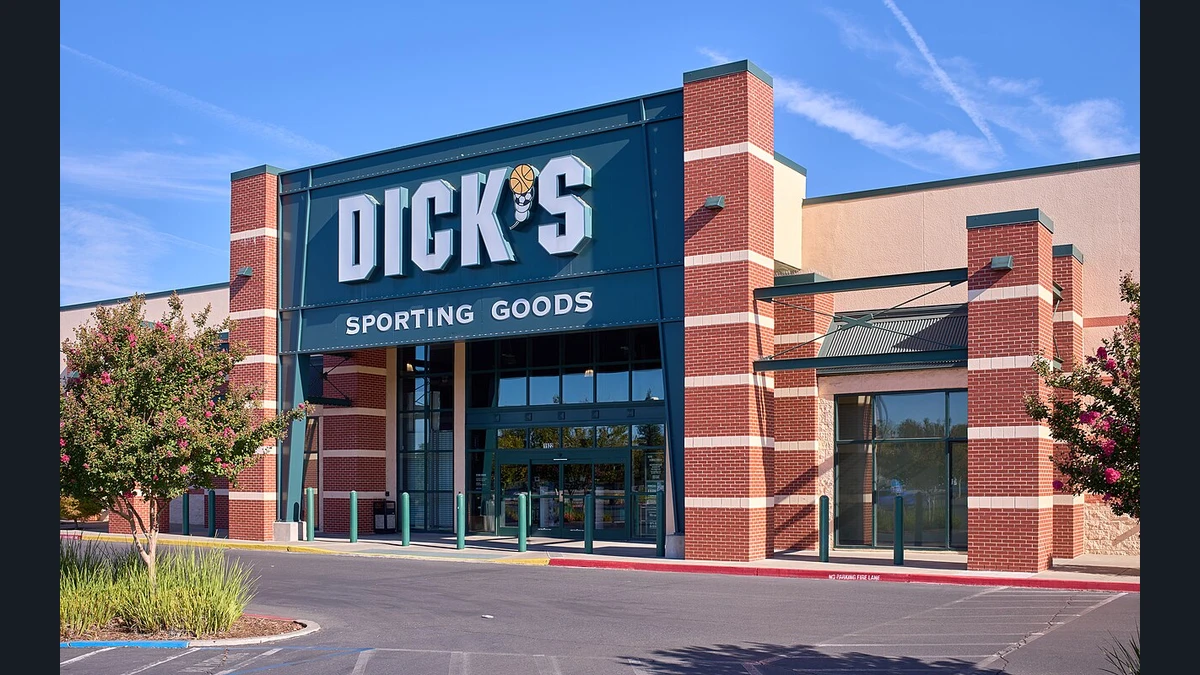
For a shopper the distinction is less about the building than what can happen inside. The company’s House of Sport activities pages describe climbing walls, batting cages and golf simulators among the experiences available at selected locations. A customer might arrive to practise a swing rather than to buy a club. The offer differs by location. The DICK’S storefront pictured in Chico, California, illustrates the wider chain; it is not identified as one of the newly opened House of Sport sites.
The test comes after back-to-school season
Chief executive Lauren Hobart singled out a strong back-to-school season for the original DICK’S business. The numbers stop on October 31, however. They include neither Black Friday nor the weeks of gift shopping that follow it. For the full fiscal year, management’s outlook still puts Foot Locker comparable sales somewhere between a 2% decline and flat. That is a forecast, not a score already on the board.
When the next figures land, a useful question will be whether the improvement spreads beyond the U.S. Foot Locker banner and outlasts one quarter. The answer will say more about demand at sneaker stores than comparing thirteen weeks of receipts with eight.
Image credits. Context photographs resized, framed with margins and converted to WebP without cropping. Frank Schulenburg (CC BY-SA 4.0); Ajay Suresh (CC BY 2.0).
Sources for this story
Original documents are linked in the article.
Becoartes - Beco do Batman
99 Gonçalo Afonso Street, Vila Madalena, São Paulo