Two different versions of Manchester City emerged from Erling Haaland’s assessment of Tuesday’s 2-2 draw with Napoli. One was a team he could be proud to captain: behind twice at the Etihad Stadium, it found a way back on both occasions. The other was a side that had let the visitors into the game too easily and struggled to attack on its own terms. Asked about the supply of chances to his feet, the striker rejected what might have been the most convenient explanation of the night. In his view, he is getting plenty.
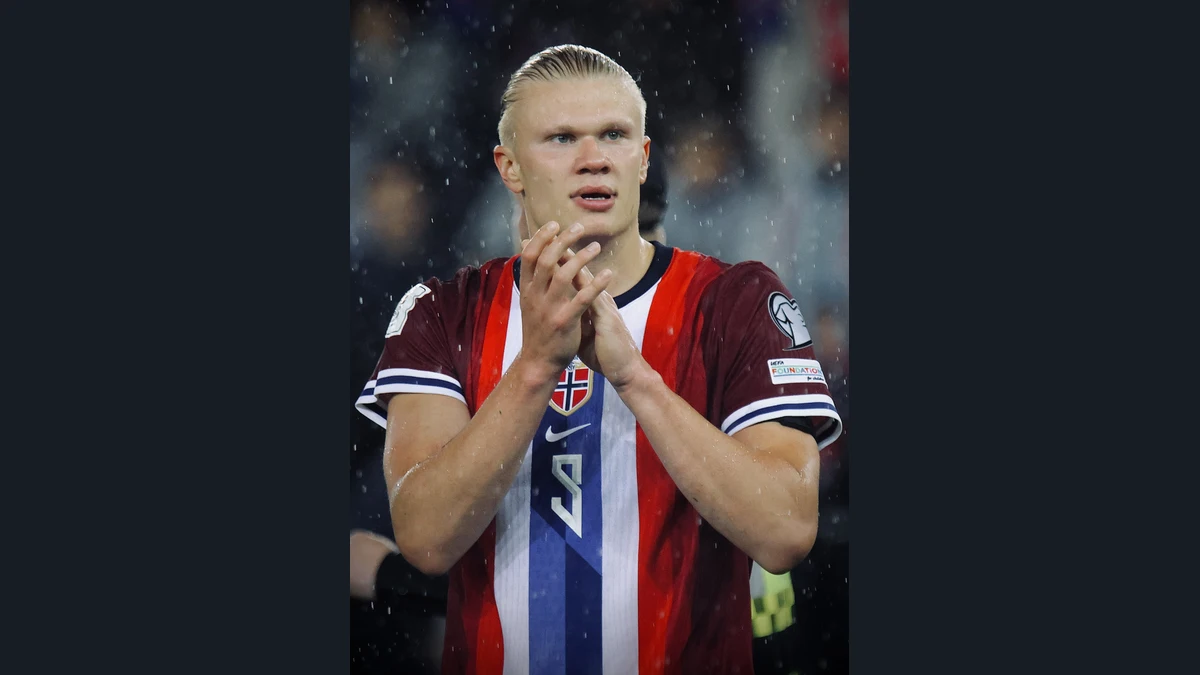
Coming back is not the same as taking control
Consider the sequence rather than the final score. Rasmus Højlund put Napoli ahead, Ayyoub Bouaddi drew City level, Noa Lang restored the visitors’ advantage and Rayan Cherki made it two apiece. Each City goal changed the state of the contest in the same particular way: it brought the two sides back to where they had started. Neither forced Napoli to come out and chase an equaliser of their own. City found two answers on 24 November but did not get to ask that question.
That distinction helps make sense of Haaland’s interview with City’s media team. He appreciated the fight, yet felt the team had failed to control the match or to attack as it had intended. He did not single out a teammate or blame a particular change of shape. This was about the kind of game City found themselves having to play. The ability to recover a deficit is useful. Having to demonstrate it twice in front of your own supporters is not necessarily a sign that everything is going to plan.

The explanation Haaland would not offer
For a player so closely associated with putting the ball in the net, his shortest answer might have been his most revealing. Haaland believes he is getting more than enough opportunities. That rules out one account of his evening without proving another: he was not claiming every attack had worked, that he alone should have won the game or that there was nothing wrong with City’s play because a few chances reached him. Simply put, he did not treat supply to the centre-forward as the root of the problem.
His longer answer dealt with the decisions that precede a shot. When a team is winning, he suggested, players know what to do almost without thinking. When victories stop coming, familiar choices suddenly invite second thoughts. His proposed response was to bring energy onto the pitch and draw more from the quality already in the squad. It was less a call for different personnel than an account of why the same footballers can look so different from one run of matches to another.
Two equalisers, two very different achievements
The player singled out by City’s own match coverage was not the one fielding questions about the team’s mentality. At 19, Bouaddi scored his first goal for the club. City also credited him with 45 completed passes and eight defensive contributions. Those figures describe different parts of his job: one intervention changed the score, another set kept the ball moving, and the defensive work mattered when the visitors had possession. The first goal is a personal milestone irrespective of what happened after it.
Cherki’s equaliser, by contrast, ultimately decided what both clubs would take away. He could reasonably claim to have secured a point, but when speaking to TNT after the match he emphasised the win that never came. The distinction is worth keeping for anyone who first encountered the result through Haaland’s interview: the Norwegian explained why the comeback mattered; Bouaddi and Cherki were the two players who actually put the ball in for City. The interview and the scoresheet tell complementary stories, not identical ones.
Ten points are settled; the ranking was not
Enzo Maresca’s verdict started with a different measure. City had ten points after five league-phase matches. Although three had been available on Tuesday, the manager saw value in avoiding defeat when his side could not win. He felt Napoli were particularly clinical with the chances they got. That is not quite a contradiction of Haaland’s view: a coach can think his side conceded relatively few opportunities while the captain dislikes how readily the opponents made the important ones count.
There was a useful caveat for anyone checking the standings immediately after full time. City’s own live report put them provisionally sixth on Tuesday evening, before Wednesday’s programme had been played. Their points total could no longer change in this round; their place still could. The same care is needed with Haaland’s remarks. A confirmed score is not a prediction, and respect for the response is not an endorsement of the performance. City had proved they could find their way back twice. What they still wanted to know was how to stop falling behind in the first place.
Image credits. Context photographs resized, framed with margins and converted to WebP without cropping. MichaelEmilio (CC BY 4.0); Bryan Berlin (CC BY-SA 4.0).
Sources for this story
Original documents are linked in the article.
Becoartes - Beco do Batman
99 Gonçalo Afonso Street, Vila Madalena, São Paulo