Charles Leclerc received a five-second penalty because he left the track and retained a lasting advantage over Lewis Hamilton, but that sanction was not the same as immediately returning the lead. By the time Ferrari had to assess a swap, Max Verstappen had passed Hamilton and placed himself between the two cars. Leclerc stayed ahead, served the penalty at his pit stop and lost the lead to the Red Bull driver, who won the Mexico City Grand Prix on November 1, 2026.
The start put both Ferraris at the front
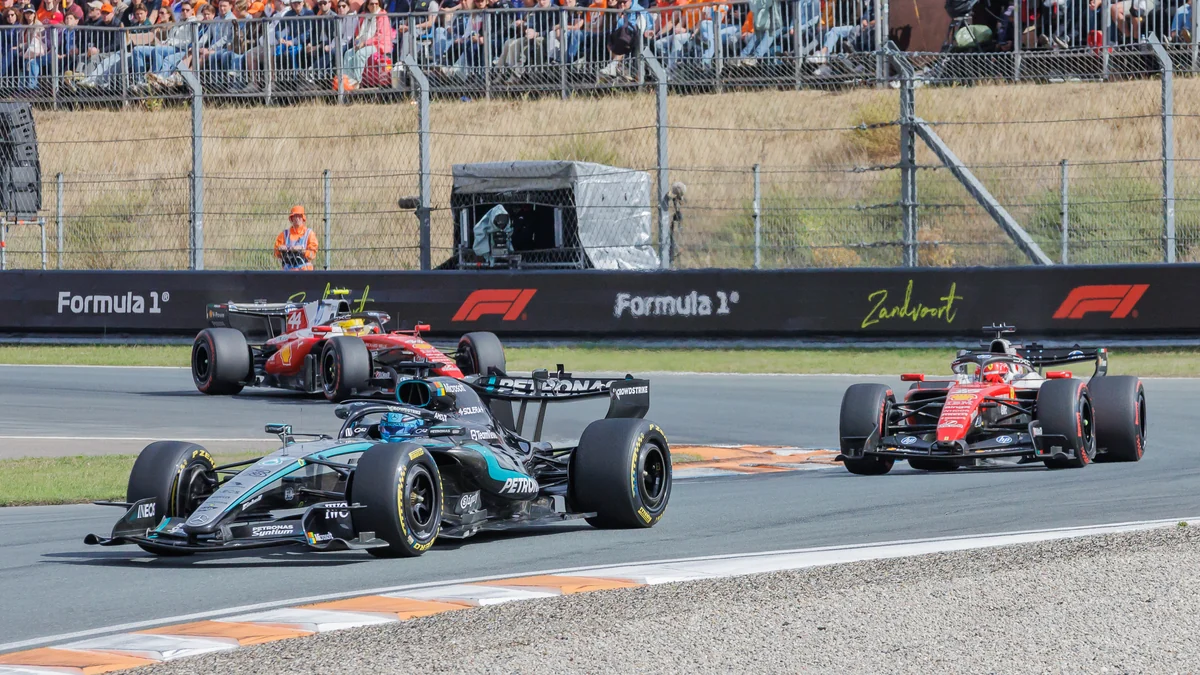
Hamilton started from pole and retained first place off the line. Leclerc, starting third, passed George Russell and reached Turn 4 in second. Ferrari therefore held the top two positions before its drivers contested the same piece of road.
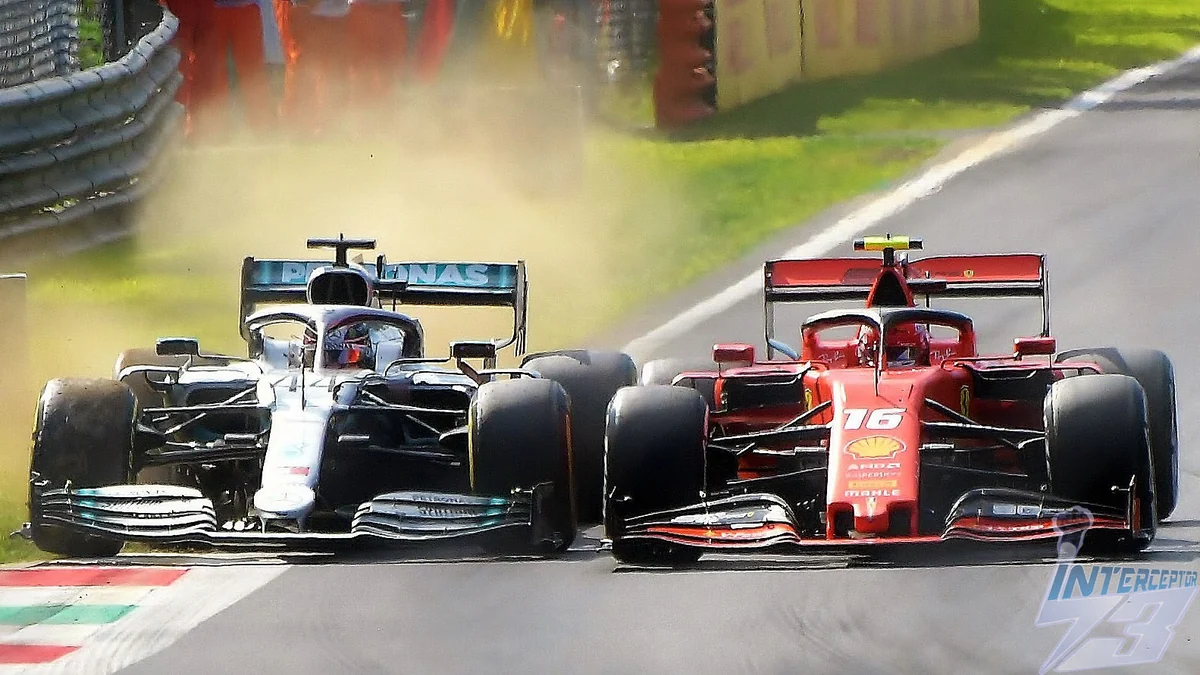
Both went off track while fighting at Turn 4. Leclerc crossed the grass and rejoined ahead of Hamilton. The British driver lost momentum on re-entry, allowing Verstappen to pass into second. That sequence, described in Formula 1’s post-race analysis, created the complication hidden by the simple phrase “give the position back”: Hamilton was no longer directly behind Leclerc.
What the stewards penalized
The FIA document index lists Document 69 as an infringement by car 16 for leaving the track and gaining a lasting advantage. Leclerc was given five seconds.
According to the reasoning reproduced in Formula 1’s follow-up with Leclerc, the baseline guideline for the incident was ten seconds. The stewards reduced it because Hamilton was also off track on the inside of Leclerc and because the incident occurred early on the opening lap.
The penalty addressed the advantage retained after leaving the circuit. It did not automatically rearrange the cars on track or award Hamilton the lead. A time penalty is added to a result or served during a pit stop; voluntarily returning the position would have required an immediate decision by Ferrari and Leclerc.
Why Leclerc did not return the position
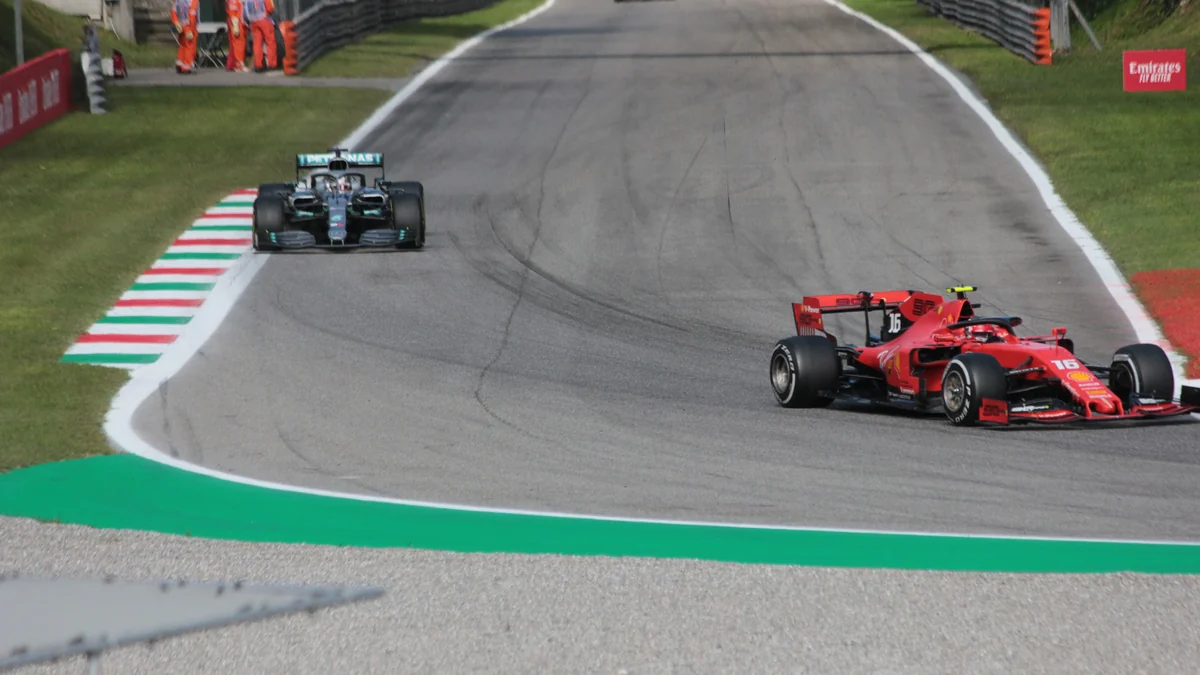
Leclerc said the situation became confusing because neither Ferrari negotiated Turn 4 normally and Verstappen passed Hamilton before a solution was reached. He asked the team what he should do, continued in front and later acknowledged that the penalty was deserved.
Frédéric Vasseur added that there was a delay between the video feed and the live situation, while any instruction needed to be carried out before Turn 11. The Ferrari team principal also said the drivers had agreed before the race to handle any position return themselves.
Giving Hamilton the place at that stage would not simply have reversed the Ferraris. With Verstappen between them, Leclerc also had to account for the Red Bull’s position. That explains the operational difficulty, but it does not erase the infringement: Leclerc kept the advantage and accepted the resulting sporting penalty.
How Verstappen converted the conflict into victory
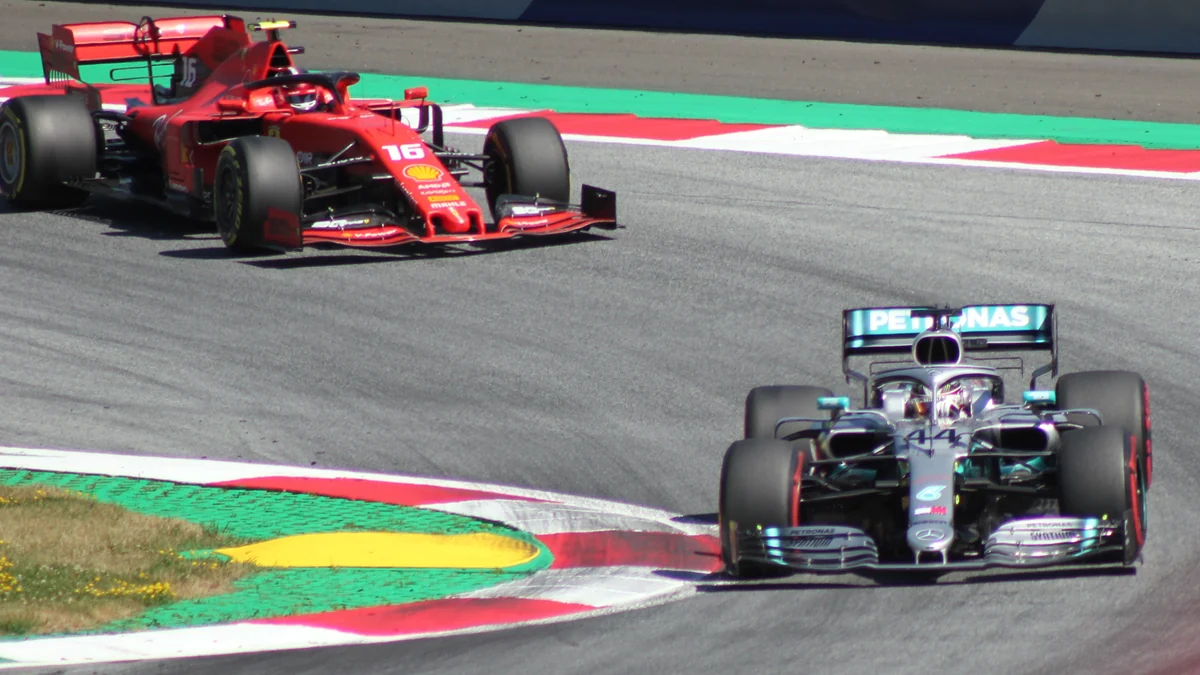
The intra-team fight cost Hamilton momentum and opened the door for Verstappen. Leclerc tried to build a gap before his stop, but lost the lead while serving the five seconds. Following a red flag and restart, Hamilton recovered positions to finish second, while Leclerc ended the race fourth.
The official result records Verstappen as the winner after 71 laps, 0.799 seconds ahead of Hamilton. Kimi Antonelli finished third, while Leclerc was 10.707 seconds behind the winner. Those figures confirm Ferrari’s lost opportunity, but they do not prove that a one-two finish was guaranteed without the incident. Strategy, the restart and temperature management remained part of the race.
Frustration is not proof of an internal crisis
Vasseur noted that Ferrari had been first and second on the approach to Turn 4 and framed the incident as a matter of respect for the wider team. His assessment was severe: the car had the pace to fight for victory, and the contest between the drivers proved costly.
That supports the existence of internal talks and a disagreement over the opening-lap conduct. It is not enough to establish a breakdown between Hamilton and Leclerc. Vasseur himself declined to interpret the radio message in which Hamilton referred to “big problems.” Leclerc likewise described the clash as part of racing for a win, even as he accepted the penalty.
What to watch in São Paulo
The question for the next round is more operational than personal: how Ferrari will respond quickly if its drivers contest a position again on the opening lap. Vasseur said the team would discuss Mexico before turning its attention to São Paulo.
The official timetable schedules the São Paulo Grand Prix for November 8, 2026 at 2 p.m. local time, three hours behind UTC, and notes that the schedule is subject to change. Rather than looking for a “war” between the drivers, the useful test will be whether Ferrari has clarified who makes the call — and how quickly — when an advantage must be returned.
Discover Becoartes
Visit [Becoartes](https://becoartes.com/) at Rua Gonçalo Afonso, 99, Vila Madalena, São Paulo.
Becoartes - Beco do Batman
99 Gonçalo Afonso Street, Vila Madalena, São Paulo
Sources and credits
- Steffen Prößdorf — CC BY-SA 4.0
- Interceptor73 — CC BY 2.0
- Eustace Bagge — CC BY-SA 4.0
- Lukas Raich — CC BY-SA 4.0
- FIA — documentos oficiais e decisão sobre o carro 16 no GP do México
- Fórmula 1 — resultado oficial do GP da Cidade do México de 2026
- Fórmula 1 — Leclerc reconhece que a punição foi merecida
- Fórmula 1 — avaliação de Frédéric Vasseur sobre a disputa interna
- Fórmula 1 — programação oficial do GP de São Paulo de 2026