Rui Amaral took part in the interventions that shaped Batman Alley in the 1980s, but the available sources do not support the claim that he created the space alone or drew the Batman that gave it its name. His documented role is that of a pioneering artist working alongside other members of São Paulo’s art scene, in a history built collectively and subject to repeated repainting.
This distinction matters to visitors: recognizing Amaral’s contribution does not require turning a shared experience into individual authorship. The records reviewed also provide no basis for claiming that a painting he made there during that period remains visible on the walls today.
What is documented about Rui Amaral in the alley
A 2014 report by Folha de S.Paulo identifies Amaral as responsible for an intervention in Batman Alley during the 1980s. In the same article, the artist recalls that graffiti spread through Vila Madalena in that period and includes himself among a group that began painting the site.
The report confirms his participation, the period and his connection to the expansion of graffiti in the neighborhood. It does not, however, document a formal founding of the alley or credit Amaral with the first Batman image. “Intervention” describes the available evidence more accurately than “creation”: it was artistic activity in a space that received contributions from different people.
The artist’s account adds John Howard to the story
In an interview published by A Vida no Centro, Amaral says that he lived two blocks from the alley in the early 1980s and began painting graffiti there with John Howard. The interview places them in a Vila Madalena where artists and studios were gathering and new interventions were appearing in the streets.
His own account therefore does not describe a solitary act. By naming Howard as a partner and acknowledging his extensive production across the city, Amaral places the alley within a network of relationships and practices. The interview also records his growing proximity to, and later membership in, the Tupinãodá collective after nighttime graffiti outings and contact with local artists.
This recollection is valuable testimony from someone who participated in the scene. It should nevertheless be understood as a personal account, not as sufficient proof of exclusive authorship over an urban space formed through multiple interventions.
Pioneering work is not sole authorship
The sources support describing Rui Amaral as a pioneering participant in São Paulo urban art and connecting him to the early paintings in Batman Alley. They do not support turning that pioneering role into authorship of the entire site.
There are three clear limits. First, Amaral’s own narrative includes another artist in the initial painting activity. Second, his involvement with Tupinãodá shows that part of his career developed in collective settings. Third, none of the sources reviewed identifies the maker of the original Batman, provides a verified date for that image or demonstrates that Amaral made it.
Phrases such as “one of the first-generation participants” or “an artist connected to the 1980s interventions” are therefore more precise. “Sole creator of the alley” and “artist behind the original Batman” go beyond what the reviewed documentation proves.
A career that continued beyond the alley
Amaral’s later activity helps establish his presence in São Paulo urban art, but it is not evidence about the alley’s origin. In 2006, the City of São Paulo listed him as a curator for the Circuit of Open-Air Art Galleries. The project received entries from 201 graffiti artists and assessed work using criteria including representation within street culture, use of space, color and line quality.
Another example is found at Buraco da Paulista. A photograph taken on March 18, 2011 and preserved by Wikimedia Commons identifies graffiti by Rui Amaral on the connection between Avenida Paulista and Avenida Doutor Arnaldo. It documents a different artwork from a different period and should not be presented as an image of Batman Alley.
What the photographs actually show
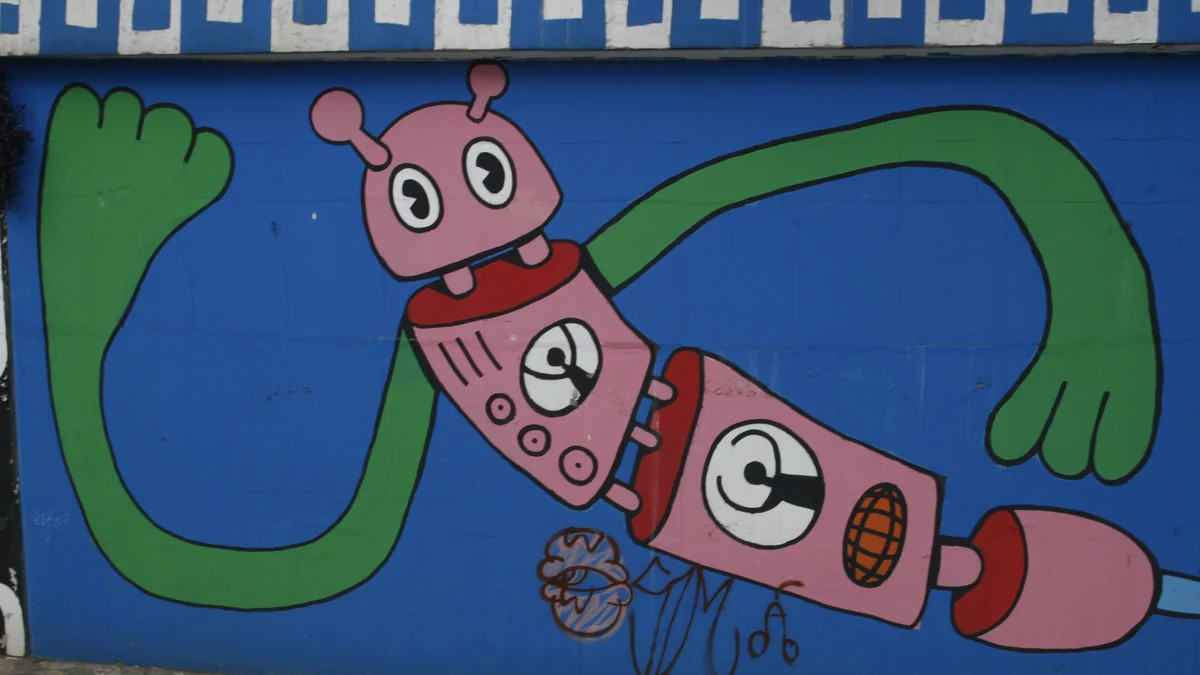
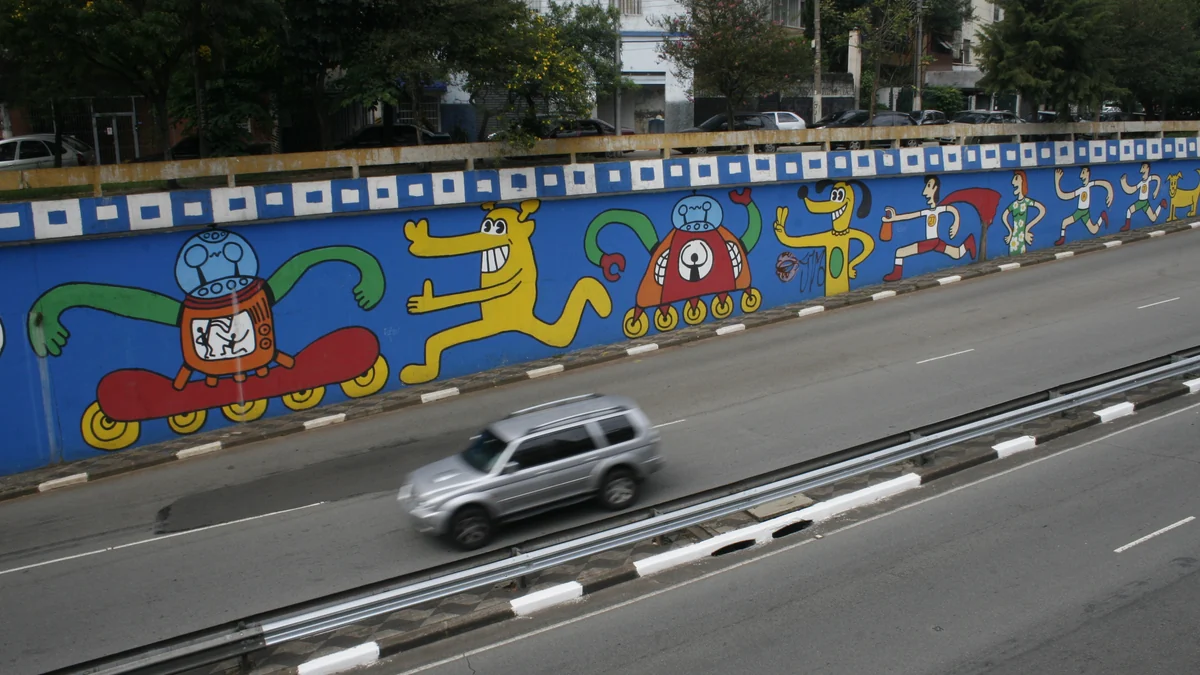
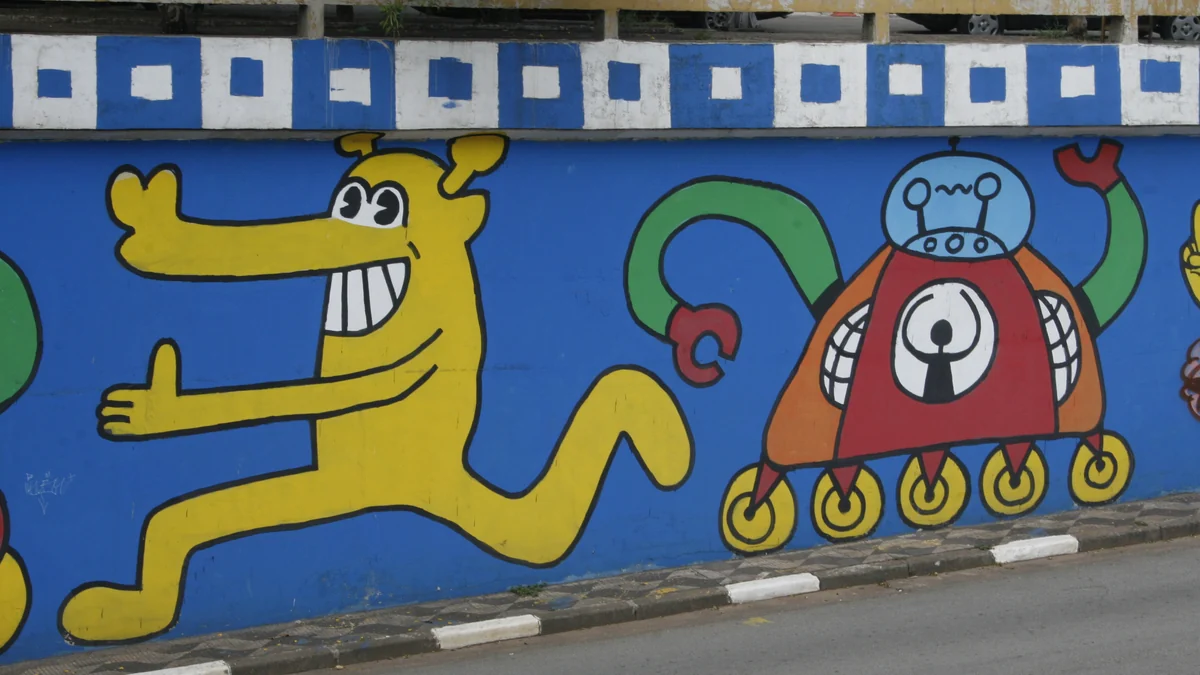
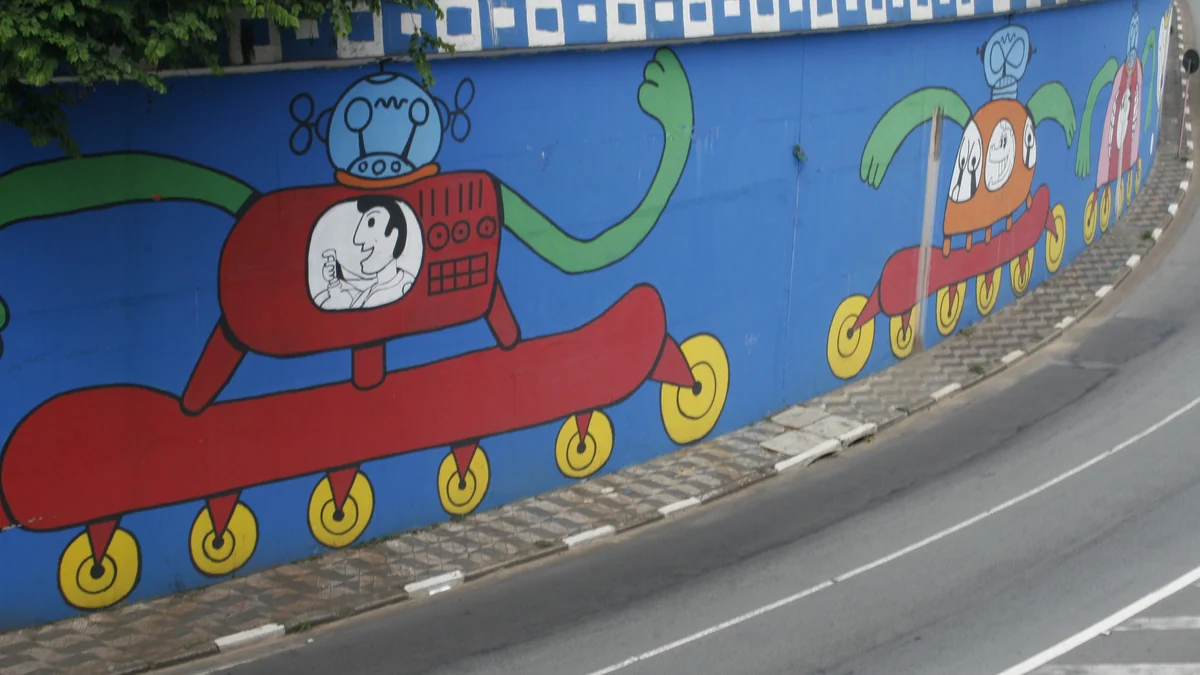
The photographs in this article show sections of the mural attributed to Rui Amaral at Buraco da Paulista, recorded in 2011. They help viewers recognize figures, colors and visual approaches associated with a documented work by the artist, but they do not reconstruct his 1980s interventions in Batman Alley.
Keeping those contexts separate prevents two common errors: using work from another location as visual proof of the alley’s history, and assuming that a mural photographed in the past remains unchanged today. Urban art can be altered, covered or removed. A historical photograph proves what stood before the camera on that date, not the wall’s present condition.
Bringing this context to a visit
When looking at Batman Alley, it is more accurate to think in layers than in terms of a single signature. Rui Amaral belongs to the documented history of the 1980s interventions, while the wider site reflects the presence of different artists and changes over time. Walls seen during a visit should not automatically be attributed to him without specific, current identification.
To continue exploring urban art in Vila Madalena, visit Becoartes at Rua Gonçalo Afonso, 99. It offers an opportunity to consider each work on its own terms and to treat authorship, date and continued presence as details that require confirmation.
Discover Becoartes
Continue your encounter with art at Rua Gonçalo Afonso, 99, Vila Madalena. Check the official Becoartes website before visiting.
Becoartes - Beco do Batman
99 Gonçalo Afonso Street, Vila Madalena, São Paulo
Sources and credits
- Arte Fora do Museu — CC BY 2.0
- Arte Fora do Museu — CC BY 2.0
- Arte Fora do Museu — CC BY 2.0
- Andre Deak — CC BY-SA 2.0 br
- Folha de S.Paulo — participação de Rui Amaral no Beco durante os anos 1980
- Prefeitura de São Paulo — registro institucional da atuação posterior de Rui Amaral na arte urbana
- A Vida no Centro — entrevista de Rui Amaral sobre as intervenções com John Howard no começo dos anos 1980
- Wikimedia Commons — fotografia identificada de obra de Rui Amaral, CC BY-SA 2.0 BR