The first man across the line in Sunday’s Nordic combined race in Ruka will have won precisely one thing: the right to jump last. The contest itself will still be open. Had he crossed that same line first in Friday’s or Saturday’s combined event, he would already be the winner. That reversal is a good reason to follow the opening of the men’s Nordic Combined World Cup in Finland on November 27–29. Three days put the same two skills to three quite different tests.
The leading names make the distinction between tests particularly interesting. Austria’s Johannes Lamparter is the defending overall World Cup champion. Norway’s Jens Lurås Oftebro won both individual titles at the 2026 Winter Olympics and took a third gold in the team sprint. One skier made his case across a whole winter, the other on the biggest individual race days. At Ruka last season Lamparter won the first two competitions. The federation’s November 25 preview names them as expected contenders; the start list, not a preview, confirms who is due to jump. Past medals bring no head start.
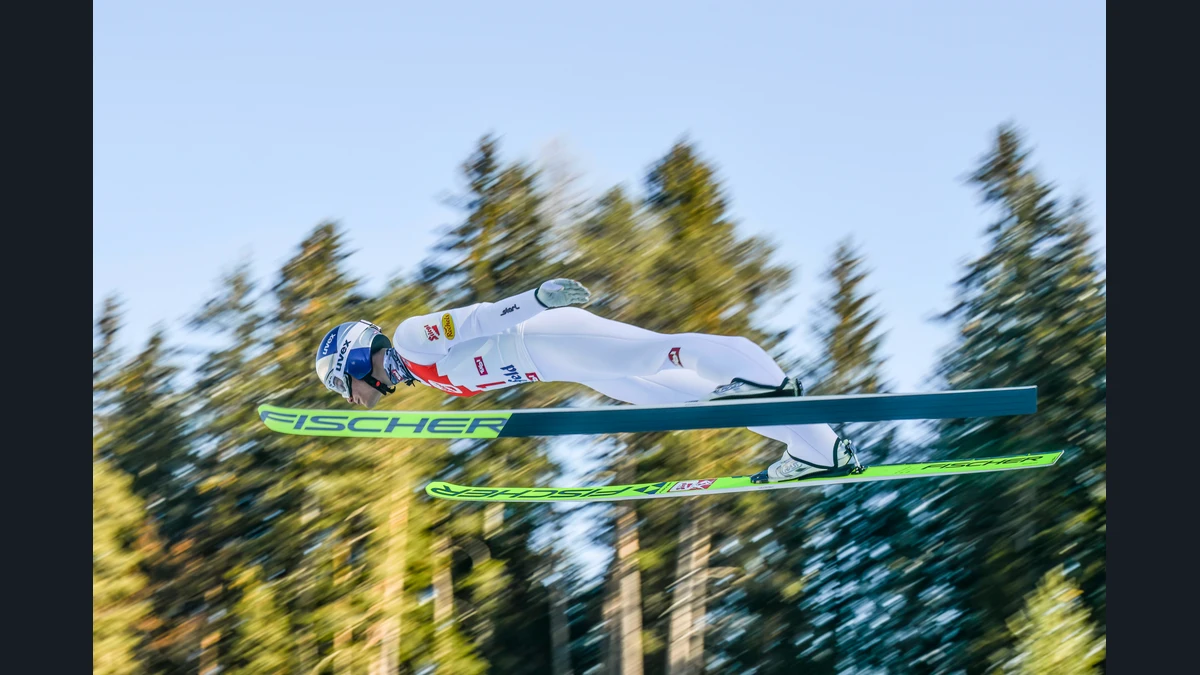
Friday: one place can matter more than a large margin
The opening event is an Individual Compact. The jumping starts at 13:00 Finnish time, followed at 16:30 by a 7.5-kilometre cross-country race. The jump results determine the order of departure for that race, but the *size* of the points gap between jumpers does not directly determine the size of the time gap. Under the federation’s format, the best jumper starts first, the runner-up six seconds later and the third another six seconds behind the second.
Imagine the winner of the jumping round beats the runner-up by the smallest of margins. Now imagine a spectacular leap puts that same winner comfortably clear on points. Provided the ranking is unchanged, the second skier still has the same six seconds to make up. That makes the landing score worth watching for a particular reason: overtaking somebody in the standings can buy an advantage that simply extending your existing lead cannot. Once the skiers leave the stadium, the first across the line wins.
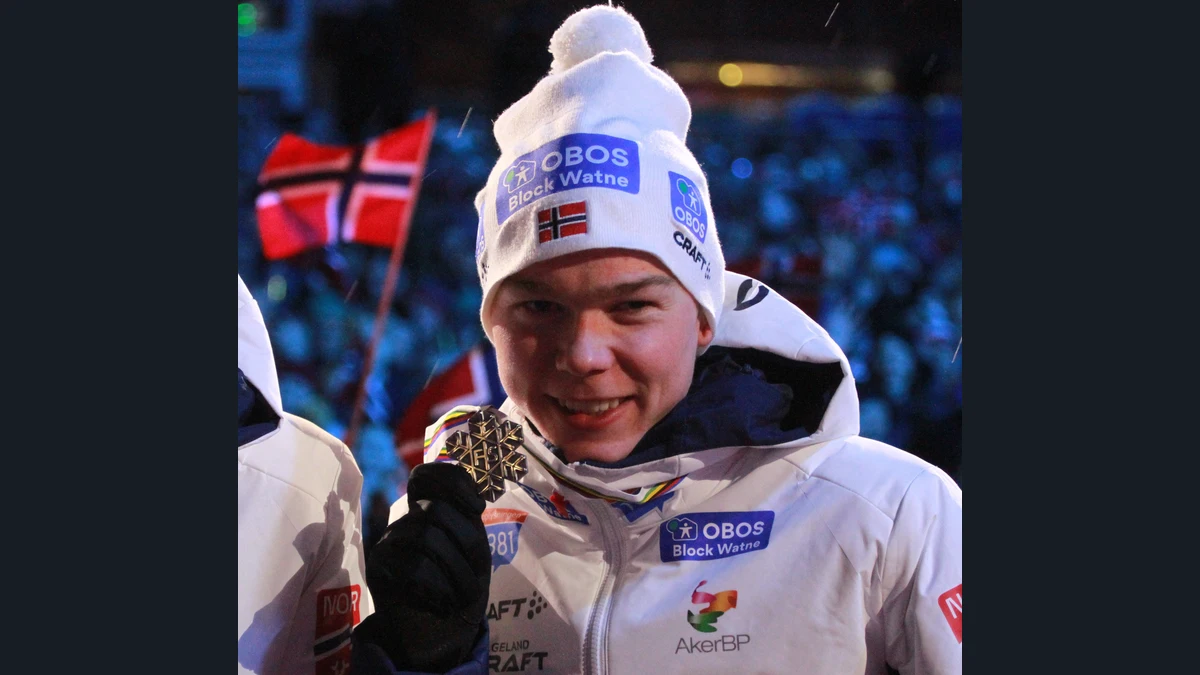
Saturday: five points become twenty seconds
The Individual Gundersen returns the points margin to the equation. The jumping is scheduled for 11:15 local time on Saturday, with a 10-kilometre race at 15:30. The conversion is four seconds per point. If the leader has five points in hand, the nearest challenger starts twenty seconds later. That number is an illustration, not a forecast about either favourite. It shows why two apparently similar jumps can set up a very different afternoon from Friday’s.
It also gives the intermediate times some meaning. A skier starting twenty seconds down who gets within five seconds of the leader has closed three quarters of the original deficit. Finishing second would not mean he was the slower skier on the course. It would mean he failed to make up all the time lost on the hill. Anyone joining only for the final kilometre can get a better picture by comparing the starting sheet with the latest split rather than relying on the finish order alone.
Sunday: the race ends on the hill
The combined athletes set off together at 10:00 local time on Sunday. This time the clock produces points rather than the other way around. Gaps at the end of the skiing leg are converted for the jump, scheduled for noon; the fastest skier jumps last. For a spectator, the moment to look away emphatically is not the moment the ski race ends. By then one athlete has established an advantage, but has not yet had to defend it in the air.
Nor is the longest jump necessarily the winning one. Distance matters, as do the judges’ style marks. Wind and changes of starting gate can also affect the score. If a jumper lands beyond an opponent but fails to go ahead, the scoreboard need not be wrong: the two came into the round with different points, and metres are only one part of the jump. Look at the overall total after the last competitor, not just the longest distance posted beside the hill.
Three disciplines share the venue, not a scoreboard
Ruka also hosts stand-alone cross-country skiing and ski jumping. On Sunday the men’s 20-kilometre freestyle mass start at 11:00 local time actually falls *between* the two halves of the Nordic combined event. The women’s 20-kilometre race starts at 12:55. Neither race determines the combined jumping order. And the separate men’s large-hill jumping event at 15:20 produces its own result. The discipline name on the live timing page matters more than the fact that familiar snow and grandstands appear in the background.
If there is room for one more name on the watchlist, Finland offers two: Ilkka Herola and Eero Hirvonen both took individual Olympic bronze medals this year and now race at home. To follow the title contenders or the hosts without missing a decisive round, select Nordic Combined on the federation’s results portal and match the event name to the day: Compact, Gundersen, Mass Start. The organiser lists times in Finland, two hours ahead of UTC in November; the order and times are subject to change.
Image credits. Images resized, framed with margins and converted to WebP without cropping. Granada (CC BY-SA 4.0); Stein Langørgen (CC BY 4.0).
Sources for this story
Original documents are linked in the article.
Becoartes - Beco do Batman
99 Gonçalo Afonso Street, Vila Madalena, São Paulo