Selton Mello's tribute at the 54th Gramado Film Festival is not just another red-carpet ritual. In a festival that has crossed decades as a showcase, symbolic arena and meeting point for Brazilian audiovisual culture, the Crystal Kikito given to the actor and director marks a specific kind of consecration: that of an artist who came from television, insisted on cinema, became a popular face, took on directing, sustained auteur projects and now circulates through international productions without detaching himself from Brazilian cultural memory.
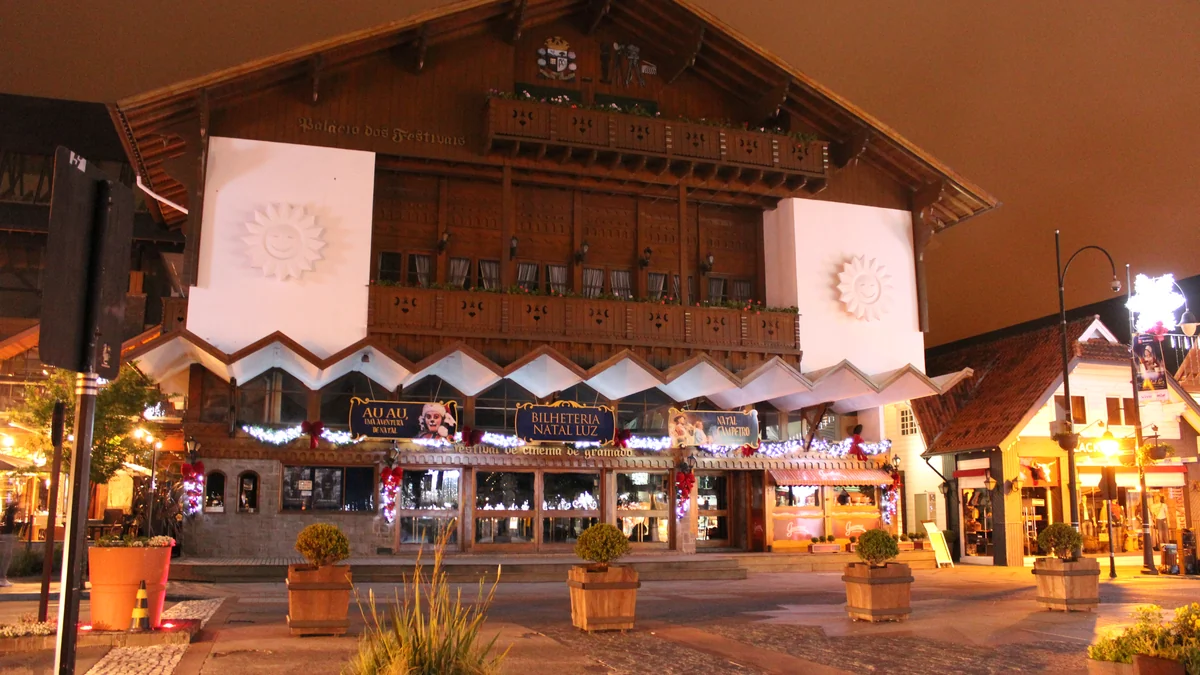
The confirmed fact is simple: Selton Mello received the Crystal Kikito at the Palácio dos Festivais during the 2026 edition of the Gramado Film Festival. The context, however, is broader. According to the official organization, the 54th edition runs from August 12 to 22, 2026, with 96 films in 10 sections. The tribute arrives as Gramado reaffirms its role as the emotional capital of national cinema, while Selton himself appears as a character in a larger story: that of a generation that learned to dispute prestige without abandoning the public.

The Confirmed Fact in Gramado
Information published by outlets such as UOL, Folha de S.Paulo, GZH and Correio do Povo converges on central points. Selton Mello was honored with the Crystal Kikito for his body of work. The ceremony took place at the Palácio dos Festivais in Gramado, within the 54th edition of the festival. The distinction recognizes a career of more than four decades across television, cinema, directing, production and voice acting.
It is also a fact that the 2026 edition of the festival has a broad structure. The official website records 96 films, 10 sections and programming from August 12 to 22. This is therefore not an isolated prize at a minor event, but a tribute within one of the most traditional platforms of Brazilian cinema.
Another confirmed detail is that Maria Fernanda Cândido also received the Crystal Kikito in this edition. GZH highlighted that, for the first time since the tribute was created in 2007, two artists received the trophy in the same edition. This matters because it shifts the award away from a purely individual logic and toward a reading of a cycle: Gramado seems to be looking at careers that connect national cinema, television, internationalization and endurance.
Why Selton Mello Matters Beyond the Prize
Selton Mello's cultural relevance comes from a rare combination. He is popular without being only televisual, auteur-driven without being inaccessible, recognized by cinephilia without losing his place in the mass imagination. For many viewers, his face recalls widely known characters; for Brazilian cinema, his signature also passes through directed works, acting choices and a persistent defense of audiovisual language as a form of memory.
The tribute in Gramado condenses that path. Selton does not represent only the awarded actor. He embodies the passage from a Brazilian audiovisual culture organized by broadcast television to a landscape fragmented by platforms, festivals, co-productions and international circulation. His career crosses soap operas, popular films, prestige dramas, film directing and new experiences abroad.
The editorial interpretation here is clear: the Crystal Kikito works as recognition of a body of work, but also as a comment on the place of Brazilian cinema in 2026. In an environment where public attention disperses quickly, honoring a long trajectory is a way of remembering that culture is not made only by premieres, box office performance or virality. It is also made by continuity.
Gramado as a Stage for Memory and Dispute
The Gramado Film Festival has a particular symbolic weight because it mixes celebration, market, criticism and memory. The red carpet brings visibility, but the festival has never been only a celebrity showcase. Its history is connected to the formation of canons, the circulation of films beyond the immediate commercial release circuit and the construction of a repertoire of Brazilian cinema.
For that reason, the tribute to Selton gains another layer. When an artist with strong popular presence is consecrated in Gramado, the festival updates its own function: to show that Brazilian cinema does not fit into the rigid separation between auteur work and work with popular reach. Selton moves precisely in that interval. He can be remembered for characters known to broad audiences, for works linked to Brazilian literary and theatrical tradition, for auteur directing and for appearances in recent productions with wider circulation.
The presence of tributes to names such as Cris Vianna, Helena Ranaldi, Maria Fernanda Cândido, Glória Menezes and Laura Cardoso, recorded in the week's news coverage, also widens the picture. The 2026 festival seems marked by an insistence on the memory of artists who helped shape television, cinema and theater in the country. In times of accelerated consumption, that insistence is a political choice in the cultural sense: preserving names, trajectories and references before the algorithm reduces everything to a novelty of a few days.

Between Television, Cinema and International Circulation
One of the most interesting points in Selton's career is the refusal of a simple hierarchy between television and cinema. In Brazil, that border has always been porous. Television formed performers, consolidated faces and brought drama to millions of people. Cinema, in turn, offered another scale of risk, language and permanence.
Selton became an exemplary case of that passage. The coverage of the tribute recalls his television training, his entry into cinema and his affirmation as a director. It also points to his presence in recent international productions. What is confirmed is the movement: a Brazilian artist who does not abandon his local repertoire while experimenting with other languages, markets and formats.
The strongest interpretation is that this circulation does not erase origin. On the contrary, it can reinforce it. When a Brazilian actor reaches foreign productions after consolidating a recognizable filmography in the country, he carries with him a background of acting, rhythm, orality and memory. The risk would be to turn internationalization into a seal of superior validation. The fairer reading is different: it broadens the field of work, but does not replace the importance of the work built here.
The Crystal Kikito and the Idea of Legacy
The Crystal Kikito does not reward only one specific performance. It recognizes a body of work. That changes the meaning of the tribute. Instead of asking which role was the best, the question becomes: what kind of permanence did this trajectory create?
In Selton's case, the answer passes through three dimensions. The first is emotional: there are characters and films that entered the Brazilian domestic repertoire, rerun, quoted and recognized by audiences from different generations. The second is artistic: his acting and directing show an interest in displaced, vulnerable, ironic characters or people searching for belonging. The third is institutional: his presence in Gramado signals continuity between the generation that came from television and the new paths of national cinema.
It is important to separate fact from interpretation. The fact is the official tribute and the broad trajectory recognized by the sources. The interpretation is that this tribute helps reposition Selton as a figure of cultural memory, not merely as a celebrity. That difference matters for Becoartes' editorial filter: this is not a story about fame, but about how a career becomes a collective reference.
What This Consecration Says About Brazilian Cinema Now
The tribute arrives at a time when Brazilian cinema needs to dispute attention on several fronts: theaters, streaming, festivals, social networks, co-productions and public policies. The Gramado Film Festival, by bringing together competitive sections, special screenings and tributes, works as a reminder that the cultural life of cinema is not limited to opening weekend.
Selton Mello symbolizes exactly that duration. His career shows that an artist can cross formats without becoming hostage to a single market. He can speak to the general public and, at the same time, sustain questions of language. He can accept institutional recognition without losing the image of a worker of the scene, someone who keeps seeking roles, directions and encounters.
For younger audiences, the tribute can serve as an entry point. Not because Selton needs to be turned into a monument, but because a long career allows Brazilian cinema to be mapped from the inside: television, adapted literature, humor, drama, directing, festivals, political memory and internationalization. In that sense, the prize is less a full stop than a map.
Why This Story Matters to Becoartes
Becoartes looks at culture as circulation: of people, images, sounds, memories and territories. The tribute to Selton Mello in Gramado matters because it crosses precisely those fields. It speaks of cinema, but also of audience formation. It speaks of a festival outside São Paulo, but with a direct impact on the cultural conversation that reaches theaters, bars, universities, film clubs and urban spaces in the São Paulo capital.
São Paulo has always been a decisive point in that circulation. Many artists build careers among shoots, stages, movie theaters, showcases and encounters in the city. Vila Madalena and Beco do Batman, in turn, receive visitors every day who photograph murals, talk about films, arrive from exhibitions, leave for concerts and turn a walk into repertoire. When Gramado consecrates a trajectory like Selton Mello's, the news does not remain trapped in the southern mountains. It travels to where Brazilian culture is debated in the street. In São Paulo, that debate finds painted walls, full tables and attentive eyes. It is at this crossing that Becoartes recognizes the story: cinema as living memory, walking alongside the city.
Continue on Becoartes
Read more perspectives on cinema, music and urban culture connected to São Paulo, Vila Madalena and Beco do Batman.
Becoartes - Beco do Batman
99 Gonçalo Afonso Street, Vila Madalena, São Paulo
Sources and credits
- Adam Chitayat — CC BY-SA 4.0
- Mvbohrer — CC BY-SA 3.0
- Ajmcbarreto — CC BY-SA 4.0
- Slyronit — CC BY-SA 4.0
- Festival de Cinema de Gramado — Site Oficial
- UOL — Selton Mello recebe Kikito de Cristal no Festival de Gramado
- Folha de S.Paulo — Selton Mello se emociona ao receber prêmio no Festival de Gramado
- GZH — Selton Mello recebe Kikito de Cristal em Gramado
- Google Trends — Trending Now Brasil, últimas 48 horas