The word Sundance has returned to Brazilian searches with force not because of an isolated celebrity, nor because of an empty controversy, but because of a move that says a great deal about independent cinema in 2026. The festival that helped launch films, directors, and key debates of recent decades is preparing its first edition in Boulder, Colorado, scheduled for January 21 to 31, 2027. The change of city, previously announced by the Sundance Institute, gained new contours in recent days with practical information about the debut, the expansion of programs, and the closer relationship with the University of Colorado Boulder.
The confirmed fact is simple: Sundance will no longer hold its main edition in Utah and will occupy Boulder from 2027 onward. The cultural interpretation is broader: when a festival of this scale changes territory, it also tests another way of circulating films, forming audiences, and connecting industry, criticism, artists, and city. For those who follow cinema from Brazil, the news matters less as luxury tourism and more as a symptom. At a moment when theaters, streaming platforms, and events compete for attention, Sundance is trying to protect the idea of collective discovery.

The Fact: Sundance Will Hold Its First Boulder Edition in January 2027
According to the Sundance Institute, the 2027 edition will take place from January 21 to 31 in Boulder, Colorado. World premieres are scheduled for January 21 to 26, and the online program for remote audiences is expected to run from January 28 to 31. The organization also stated that press and industry professionals will have online access to the at-home program one day earlier, on January 27.
These dates matter because they show that the change is not merely geographic. The festival preserves the ritual of the in-person premiere, where filmmakers present works before commercial circulation, while keeping a digital layer that expands access for those who will not be in Colorado. This is especially relevant for audiences outside the United States. In Brazil, where many independent films arrive late, in limited release, or directly through platforms, following Sundance remains a way to anticipate aesthetic and political debates that later appear in showcases, awards seasons, and streaming catalogs.
The choice of Boulder was also accompanied by a spatial reorganization. The official announcement cites a concentrated circulation area, with venues around the University of Colorado Boulder and city points such as Macky Auditorium, Roe Green Theatre, Muenzinger Auditorium, Boulder High School, and the Pearl Street area. The festival, therefore, is not merely renting theaters: it is designing an urban experience.
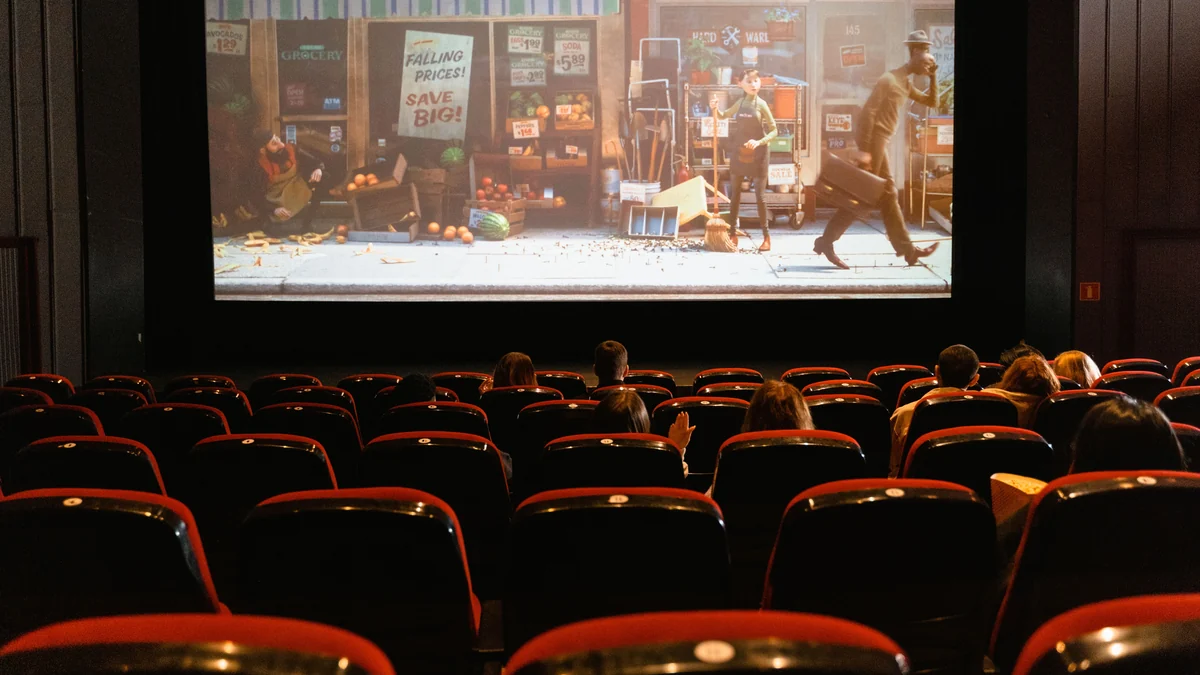
The Change of City Changes the Meaning of the Festival
Sundance was born tied to a very specific idea of creative refuge: mountains, winter, industry encounters, and a symbolic distance from Hollywood. By leaving Park City and moving to Boulder, the festival must prove that its identity did not depend only on Utah’s postcard image. This is the most interesting cultural point.
What is confirmed is that Boulder will be the festival’s new home beginning in 2027. What can be interpreted is that Sundance is trying to turn the move into an argument: a walkable university city, with cultural life and infrastructure for debate, can reinforce its vocation as a public laboratory for independent cinema. It is not only about watching films. It is about creating an environment where directors, critics, students, technicians, programmers, and spectators cross repertoires.
This decision also appears in a context of pressure on festivals. Film events need to justify travel, cost, environmental impact, curatorial relevance, and the ability to form new audiences. A festival does not survive by tradition alone. It needs to produce real encounter. Boulder enters this equation as a promise of more integrated scale: university, theaters, streets, restaurants, volunteering, local circulation, and online programming.
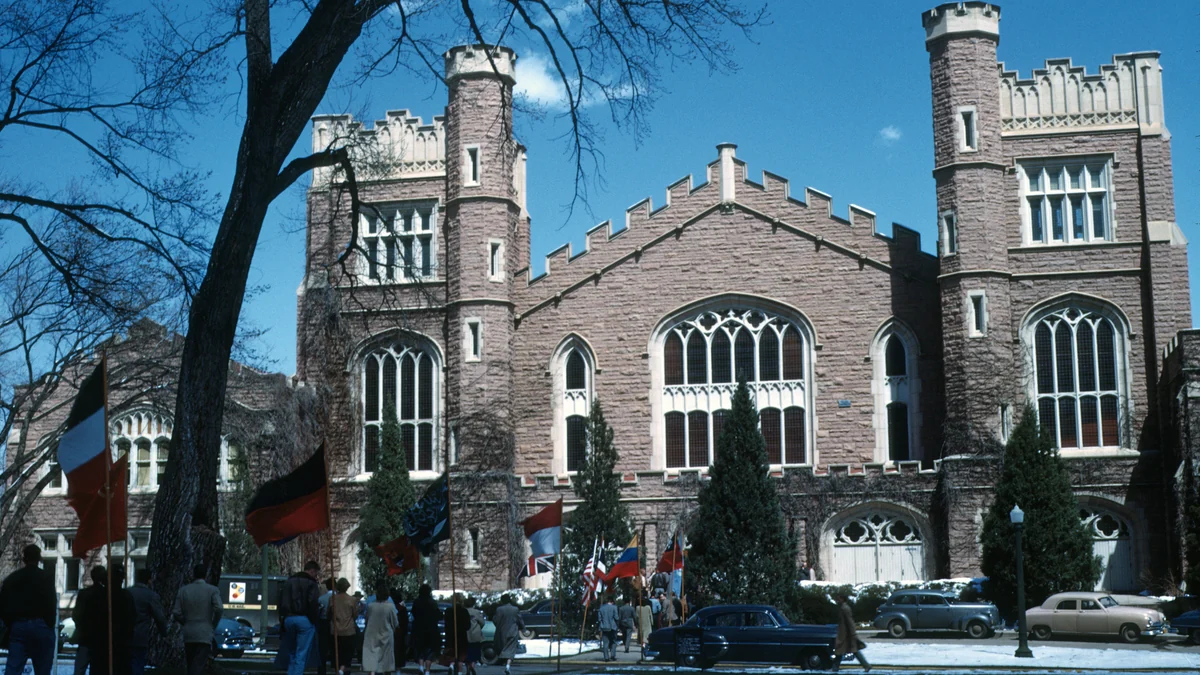
University as Cultural Infrastructure
The most recent news that helps explain the interest in Sundance is the deepened partnership with the University of Colorado Boulder. In August 2026, the Sundance Institute announced an agreement that expands academic, volunteer, internship, and community engagement opportunities ahead of the festival’s debut in the city. Axios Boulder also highlighted the integration with students and university programs, including actions connected to the film industry and environmental initiatives.
This point is decisive. When a festival moves closer to a university, it expands the meaning of training. It is not only a showcase for finished films. It can become a temporary school of production, criticism, programming, sustainability, and cultural policy. For young filmmakers, this matters because entering cinema does not happen only through the camera. It also happens through networks, conversation, audience reading, access to professionals, and an understanding of how a film circulates.
In Brazil, where much audiovisual training happens among public universities, independent courses, collectives, film clubs, and showcases, this connection is familiar. The difference is scale. Sundance turns this relationship into an international structure. The question for São Paulo is direct: how many cultural events here still treat students and local audiences as peripheral spectators, when they could treat them as part of the creative machinery?
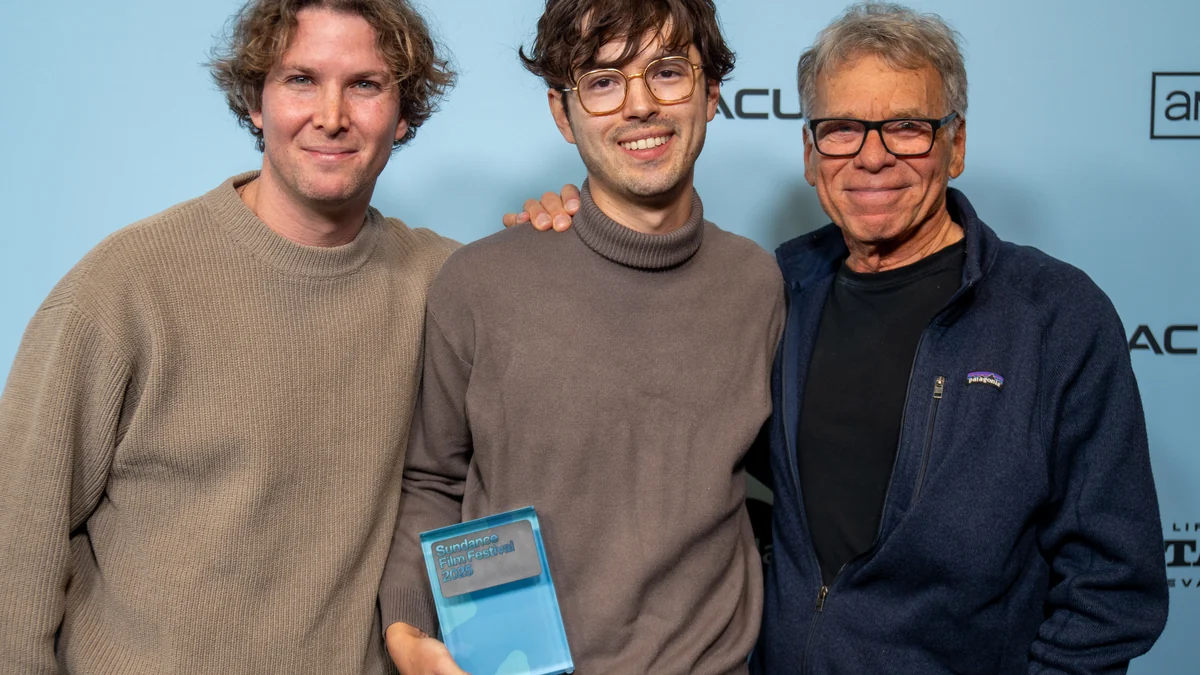
Program Expansion and the Fight for Attention
The Sundance Institute stated that in 2027 the four central competitions will grow to 12 films each: U.S. Dramatic, World Cinema Dramatic, U.S. Documentary, and World Cinema Documentary. Other sections, such as Premieres, NEXT, Midnight, and Family Matinee, are also expected to expand. The Offscreen program, formerly known as Beyond Film, will include conversations, events, and live podcast recordings.
Confirmed fact: there will be expansion. Interpretation: the expansion works as a response to an environment in which independent cinema needs to compete with algorithms, franchises, and hyperprogrammed global releases. Instead of shrinking, Sundance is betting on more films, more encounters, and more layers of mediation.
That carries risk. Larger programs can dilute attention and make curation less legible. But they can also open space for cinemas, themes, and formats that would otherwise be left out. The editorial question is not to celebrate growth for its own sake. It is to observe whether expansion will be accompanied by real discovery. A relevant festival is not one that merely accumulates titles; it is one that helps audiences understand why certain works need to be seen now.
The Impact for Those Following Cinema From Brazil
For Brazilian audiences, Sundance usually works as a radar. Many films that pass through the festival later reach art-house circuits, platforms, awards conversations, or critical debate. The festival has been associated with the projection of works that crossed borders and created vocabulary to discuss identity, politics, memory, youth, technology, and violence.
The search trend in Brazil shows curiosity, but it does not explain the reason by itself. Part of this interest may come from the Sundance brand as a synonym for independent cinema. Part may be linked to the news about the festival’s new home. What matters is not to confuse search volume with cultural understanding. The search points to a door; journalism needs to walk through it with context.
In this case, the story passes Becoartes’ filter because it talks about cinema as territory. A festival is not only a list of screenings. It shapes routes, economies, conversations, reputations, and ways of looking. The move to Boulder allows us to discuss the future of cultural events in cities that want to be more than scenery. For São Paulo, where festivals, showcases, street cinemas, cultural centers, and independent occupations coexist with real estate pressure and competition for attention, the conversation is immediate.
City, Cinema, and Physical Presence
The most interesting data point may be the simplest: Sundance is still betting on presence. Even with online programming, the organization describes an experience concentrated in theaters, campus, and streets. This runs against the idea that the cultural future will be only remote. Digital access expands reach, but it does not completely replace the energy of a city reorganized by an event.
Boulder will be tested on this point. The city will have to absorb audiences, industry, press, artists, and residents without turning the festival into an inaccessible bubble. Lodging, transportation, circulation, prices, and environmental impact will be part of the criticism, even when they do not appear on red carpets. The university partnership and sustainability initiatives indicate that the organization knows these issues are not secondary.
For independent cinema, physical presence still matters because it creates productive friction. A film seen in a theater, discussed in line, defended by a critic, questioned by a student, and bought by a distributor does not have the same trajectory as a title silently released on a platform. Sundance is trying to preserve that chain of events.
What to Watch From Now On
Until the January 2027 edition, there are concrete points to follow: the sale of passes and packages expected in October, individual tickets in January, the lineup announcement in December, and the practical execution of the spaces in Boulder. It will also be important to observe how the festival balances in-person and remote access, industry and public, tradition and new city.
So far, there is no list of films for the 2027 edition. Any bet on titles, guests, or winners would be speculation. What exists are institutional decisions already communicated: dates, city, section expansion, venues, university partnership, and hybrid access design. The analysis must rest on those facts.
Sundance’s move matters because it reveals a larger tension in contemporary culture: every event wants to be global, but it still needs to prove that it belongs somewhere. Boulder will be more than an address if it can turn its local life into part of the cinematic experience. São Paulo knows this dispute between international circulation and urban ground well. In Beco do Batman, where the city is read on the walls before becoming content, Becoartes follows Sundance for the same reason: culture only gains strength when it finds territory, audience, and real conversation.
Stay on the Becoartes Radar
Follow our readings on cinema, music, festivals, and urban culture with context, sources, and a São Paulo perspective.
Becoartes - Beco do Batman
99 Gonçalo Afonso Street, Vila Madalena, São Paulo
Sources and credits
- Frank Schulenburg — CC BY-SA 4.0
- Tima Miroshnichenko / Pexels — Pexels License
- C. Kelly Roberts — CC BY 2.0
- Bryan Berlin — CC BY-SA 4.0
- Sundance Institute - What to Know About the 2027 Sundance Film Festival
- Sundance Institute - partnership with University of Colorado Boulder
- Axios Boulder - Colorado students get in on Sundance action
- Sundance Institute - Boulder announced as new home beginning in 2027