Anyone wondering why the Pinacoteca de São Paulo occupies three buildings will find the answer less in the number of galleries than in the division of labor. Pina Luz, Pina Estação and Pina Contemporânea are not three versions of the same museum: together, they make it possible to conserve, study, document, educate, remember and exhibit at different scales.
This perspective also places the institution within a broader cultural discussion. As museums consider how to reconcile historic buildings, preservation and new forms of presentation, the Pinacoteca responds through an architectural network. According to the institutional page about the expansion, the complex has become one of Latin America’s largest museums of Brazilian art. The point here is therefore not to choose the “best building,” but to understand what each one adds to the organism.
Pina Luz: the historic home also works out of sight
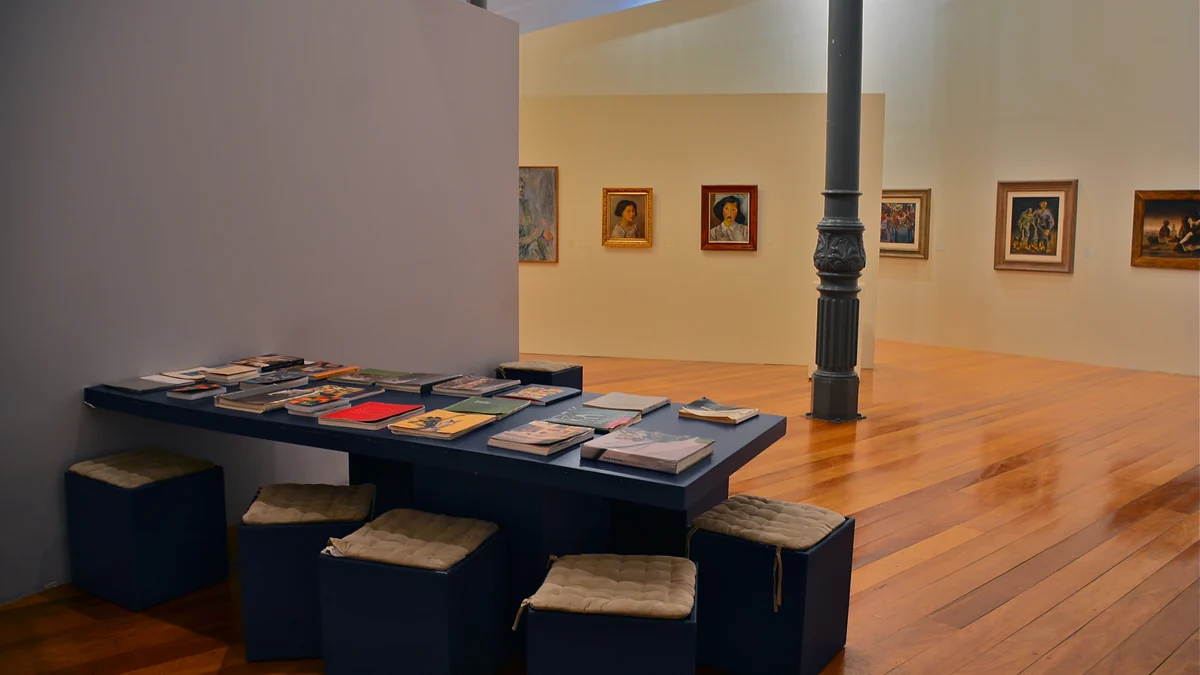
Pina Luz is the Pinacoteca’s first home. Designed in the late nineteenth century by the office of Ramos de Azevedo, the building was occupied by the Liceu de Artes e Ofícios and underwent a major renovation completed in the late 1990s, according to the official Pina Luz profile. Paulo Mendes da Rocha designed the adaptation.
Its monumental architecture and galleries are the most visible public face, but the crucial detail for understanding its role lies backstage: the building houses one of Brazil’s principal conservation and restoration laboratories. There, the idea of permanence becomes practical. A collection does not cross generations simply because it has been stored; specialized teams must examine, document and treat it.
The institution’s chronology gives that continuity a clearer scale. In 1997, during the renovation, the laboratory team worked on about one hundred pieces in front of the public as part of the Pinacoteca no Parque project. The renovated building reopened in 1998, and its second floor received a long-term presentation of the collection. In 2020, that presentation was reorganized with more than one thousand works and a non-chronological approach. These records explain a historic vocation of the unit; current programming should be checked on the official website.
Pina Estação: exhibitions, storage and political memory
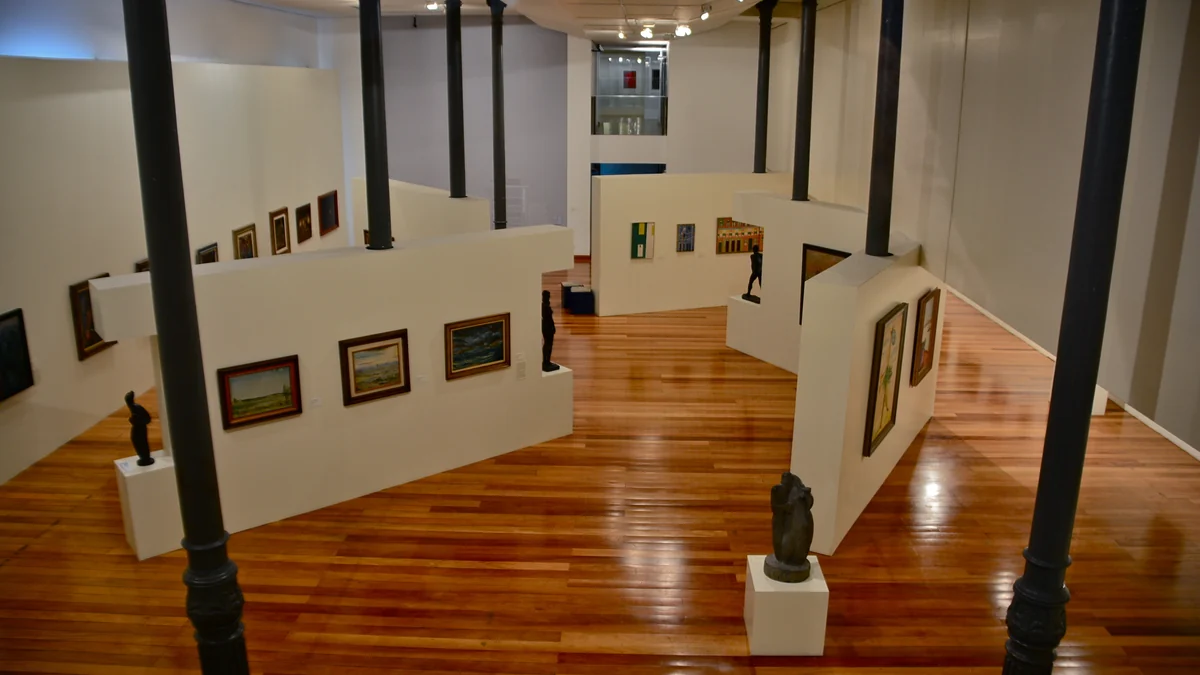
Pina Estação gave the museum infrastructure with a different set of responsibilities. It occupies the former Central Warehouse of the Sorocabana Railway, built in 1914 by Ramos de Azevedo. The same building housed the Department of Political and Social Order, known as DEOPS, from 1942 to 1983. Haron Cohen renovated it to accommodate part of the Pinacoteca in 2004.
According to the Pina Estação page, its six floors and approximately 8,000 square metres contain collection storage, offices and two floors devoted to temporary exhibitions. Collection storage is not merely a gallery closed to visitors: it is the infrastructure required to house and manage works that are not on display.
The other floors accommodate the Memorial da Resistência de São Paulo, an institution devoted to human rights through the preservation and museum interpretation of memories of political repression and resistance in republican Brazil. Here, the building itself participates in the historical reading. Art, documentation and political memory coexist without becoming interchangeable.
Pina Contemporânea: more room for scale, education and research
Opened on 4 March 2023, Pina Contemporânea expanded the museum’s physical possibilities. It offers two galleries designed for large-format works, educational studios, the Visual Arts Library, an auditorium, a viewpoint, a shop, a reception area and a public square intended for artistic and cultural activities, according to the building overview.
The architectural project description shows how these functions were arranged. A 1,339.2-square-metre covered square connects two existing blocks. The Galeria Praça pavilion measures 200 square metres, while the Grande Galeria below ground covers 1,000 square metres. Arquitetos Associados developed the project with Silvio Oksman and retained the volumes of earlier buildings already on the site.
A timber roof filters light over the central square. The building received LEED Silver environmental certification, related, according to the institution, to its construction method, materials, use of solar energy and rainwater collection. More than an exhibition annex, this unit creates conditions for artistic experimentation, education and spending time in the museum.
The library reveals the logic of the whole
The library’s trajectory encapsulates the reorganization of the three units. Officially created in 1971 in the historic building, it was unified with the Documentation and Memory Centre in the contemporary building in 2023. In 2024, it was renamed the Visual Arts Library, consolidating the Pinacoteca’s Reference Centre.
The transfer does not erase the history of the other buildings. It shows that expansion also redistributes expertise: it creates room to bring books, documents and research closer together, while conservation remains connected to Luz and collection storage forms part of Estação’s structure. Visitors see exhibitions; the institution must sustain connections among objects, records, professionals and knowledge.
Three addresses, one institutional reading
The official addresses are Pina Luz, Praça da Luz, 2, Bom Retiro; Pina Estação, Largo General Osório, 66, Santa Efigênia, within the Complexo Cultural Júlio Prestes; and Pina Contemporânea, Avenida Tiradentes, 273, Luz. The Estação page says the complex is connected to Sala São Paulo and São Paulo Escola de Dança and mentions access through the Luz CPTM/Metro station.
Opening hours, tickets, programming and visiting conditions may change, so check the official pages before setting out. For students, heritage professionals and travelers interested in institutional work, the most useful key is to notice the verbs distributed across the complex: restore at Luz, store and remember at Estação, experiment, educate and research at Contemporânea. Exhibiting is only the visible part of a working museum.
Continue exploring São Paulo’s culture
After discovering the Pinacoteca’s different functions, follow Becoartes for other ways of reading the city from Rua Gonçalo Afonso, 99, Vila Madalena.
Becoartes - Beco do Batman
99 Gonçalo Afonso Street, Vila Madalena, São Paulo
Sources and credits
- Alejandro from Mexico City, MEXICO — CC BY 2.0
- Alejandro from Mexico City, MEXICO — CC BY 2.0
- Pinacoteca — Edifício Pina Luz
- Pinacoteca — Edifício Pina Estação
- Pinacoteca — Edifício Pina Contemporânea
- Pinacoteca — projeto, estrutura e sustentabilidade da Pina Contemporânea
- Pinacoteca — cronologia institucional e transferência da Biblioteca/CEDOC