There is a good reason not to plan a scavenger hunt for the *original* Batman in São Paulo’s Batman Alley: the drawing is gone. A better thing to look for is much smaller than a mural. At 68 Rua Harmonia, the city records a blue memory plaque for Beco do Batman. Here is an address that can outlast a picture, and an unusually good starting point for understanding why an alley still bears the name of an image no visitor can photograph today.
Open the city’s Memória Paulistana inventory and look for entry 82. The address given is Rua Harmonia, 68; the status is *instalada*, or installed. November 17, 2026, is the date of the updated list, not an unveiling date. The distinction matters if you are planning a visit: this is a documented point to look for, not an announcement about a new attraction opening this week.
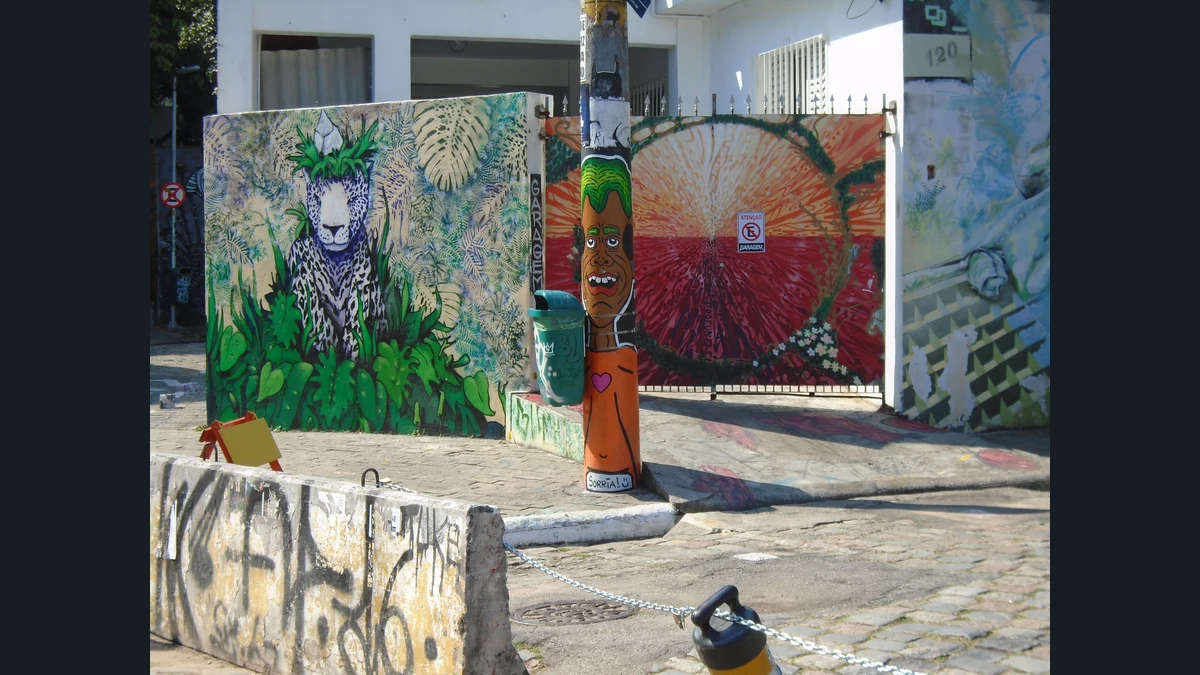
Why a small sign is worth looking for
A big painted wall is easy to spot even before you have chosen a side of the street. Reading a small round sign is a different kind of activity. The city heritage department describes the program’s plaques as blue enamelled iron discs, 35 centimetres in diameter, with a heading and a short account of the subject. Look for something closer in size to a large dinner plate than to a noticeboard. Its job is to give you a name and a story, not to compete with the painting.
If you are meeting someone, send them the street address rather than a picture of a particular wall. Two friends can have photographs of the same place that look quite different, and an old social post gives no guarantee that its background is still there. Once you are together, try the opposite exercise: turn away from the address on your phone and pick out something in the street that you would like to remember precisely because it might change.
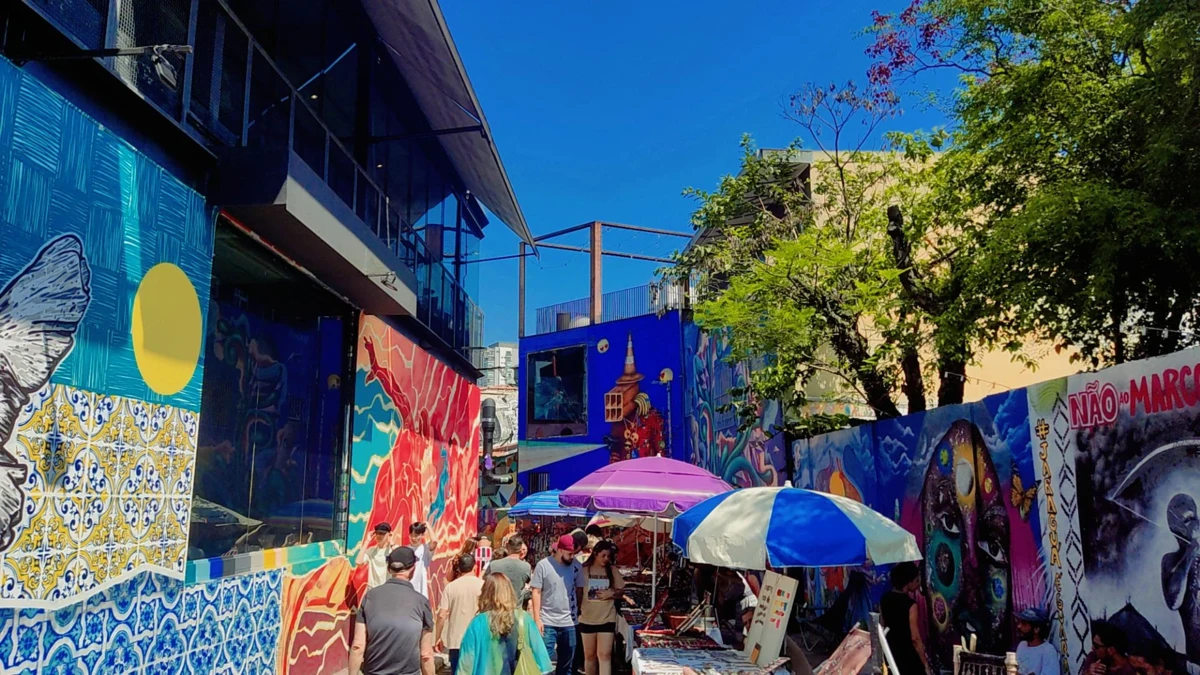
The image that gave a street its name
According to São Paulo’s tourism department, a drawing of Batman appeared in the alley in the 1980s. The artist is unknown, and that original image is no longer there. A depiction of the character that you might spot on a later visit is therefore no reason to label your photograph “the original Batman.” The interesting survival is the nickname, passed along by people who may never have seen its source.
That makes this an unusually satisfying place to visit with somebody who does not particularly follow street art. You do not need to recognise an artist’s lettering or know the date a wall was painted to follow the story. Start with a character most people know, then consider the stranger proposition: a city can remember a picture without preserving the picture itself. The name you typed into your map is one piece of evidence; the little disc recorded by the city is another.
Make a three-picture record of the walk
For the first picture, choose a detail that answers “where?” The plaque’s heading or a clearly readable street sign will do. For the second, step back far enough to show the relationship between an image and its surroundings: a curve, a doorway, the pavement or the next stretch of wall. For the last, find a detail that answers “what caught my eye?” It might be a clean edge between colours rather than a whole finished figure. None of the three shots has to do every job at once.
Write the street and the month in your notes before the photographs disappear into your camera roll. Record a signature as it actually appears rather than guessing an artist’s identity from a familiar style. Ask before making a portrait of somebody nearby. If the best line of sight would block a doorway, take a few steps to the side. This is a street people use, which is precisely why it tells you more than an isolated picture on a screen.
Two numbers to take away
82 is the inventory entry; 68 is the house number on Rua Harmonia. Use the first when pointing a student or a fellow traveller to the official source and the second when choosing a meeting place. Neither is a catalogue number for an individual painting. The inventory does not tell you who painted the wall that morning or promise that a photograph taken years ago can be recreated.
When you look back at your images, start with the wide one. It puts the colours back in a working city street. Then look again at the close-up: that is the detail someone else might have passed without noticing. Between those two views sits the reason to look for the plaque in the first place. You came to see what artists have put on the walls; the name on a small piece of blue iron tells you something about what people kept after a wall changed.
Image credits. Context photographs resized, framed with margins and converted to WebP without cropping. Eugenio Hansen, OFS / Wikimedia Commons (CC BY-SA 4.0); Agent010 / Wikimedia Commons (CC BY-SA 4.0).
Sources for this story
Original documents are linked in the article.
Becoartes - Beco do Batman
99 Gonçalo Afonso Street, Vila Madalena, São Paulo