Walk through Beco do Batman and you can look at one wall, turn across the street and still miss half the scene. A phone camera handles the problem by picking a direction. For Beco 360°, the LabArteMídia team at the University of São Paulo tried the opposite approach. Instead of leaving everything behind the camera out of sight, it placed an alley in Vila Madalena at the centre of an image that reaches all the way around the viewer. The piece runs about four minutes, according to the university's 2019 X-Reality programme. That is long enough for a familiar corner to start demanding a different kind of attention.
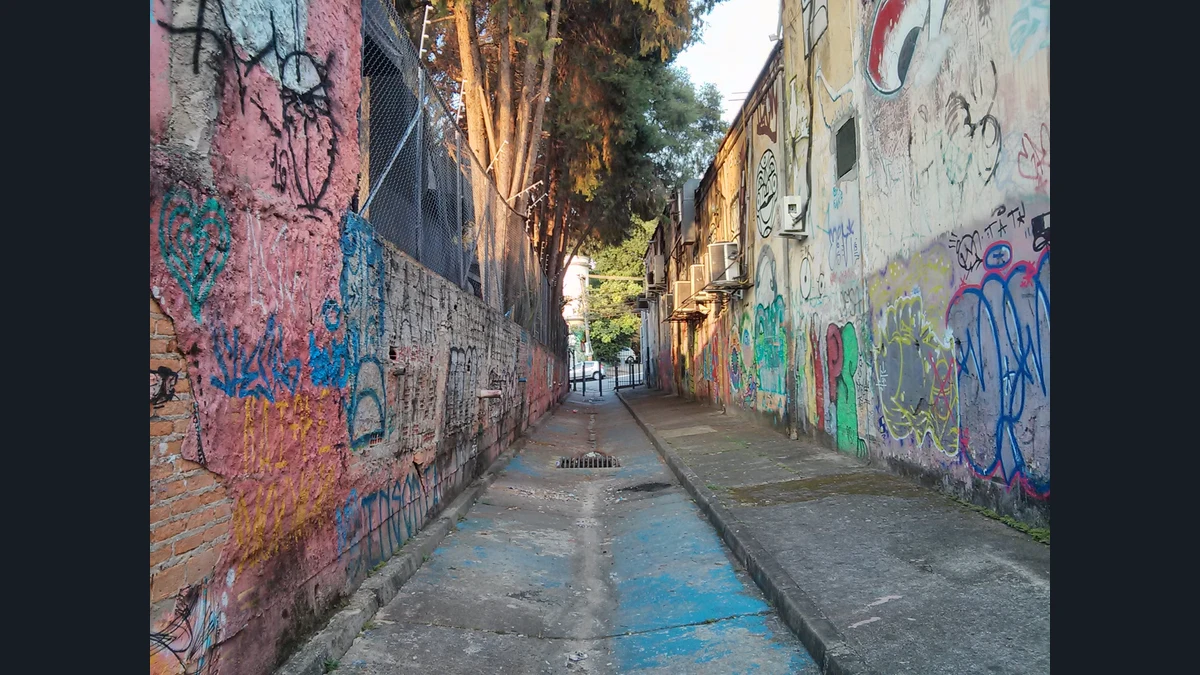
A scene that doesn't fit inside a frame
In conventional cinema, the edges of the shot tell you where to look for answers. When the film cuts to a new place, you take the cut as a signal that something there matters. In a 360-degree video, a viewer can keep looking at the wall while a scene of equal interest plays out on the other side. Which slice of the picture you can see depends on where you point your view. The pleasure isn't in trying to see everything at once. It comes from knowing that something you missed is still there to find when you return.
On its project page, the laboratory describes a continuous shot involving the painting and erasure of walls, alongside performers acting out urban situations in sync. It is not a guided tour or a list of murals to tick off. The team starts with a real place to ask a filmmaking question: if viewers are free to look away, how do you make the whole space worth looking at? Keeping the parts of the scene together in time, rather than selecting one with a cut, gives the alley a more active role than a backdrop would normally have.
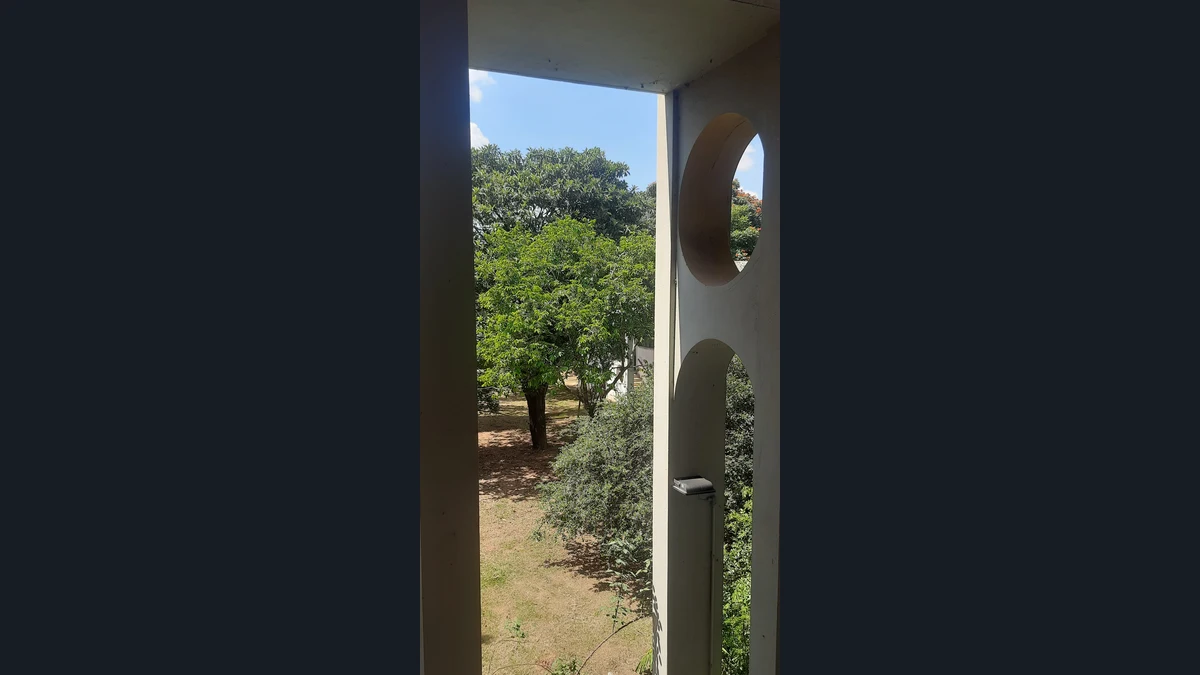
What goes on beyond the centre
The team worked across four quadrants. One of the challenges it identifies is coordinating interactions among the performers. A viewer can turn halfway through a gesture, so the timing on one side has to coexist with action on the other sides. The researchers also describe combining studio footage with the rest of the imagery and creating sound for the piece. The project took more than putting a camera in the middle of the lane and letting it record. Performers, technicians and artists all had to help make the different points of attention work in the same scene.
From Vila Madalena to a research lab
The project also explored how to combine video in 360 degrees with software called Orad. You don't need to know the program to appreciate why the experiment matters. It was part of figuring out what the format could actually do, not a badge of novelty for a familiar kind of shot. By the time the piece appeared in the 2022 X-Reality showcase, the programme credited LabArteMídia with collective direction and production, and identified the work as a Portuguese-language 360-degree video.
That is a useful distinction for anyone making video today. With no cut to announce what matters, something can begin as background and only later become the centre of the viewer's attention. Giving people a choice of direction isn't the same as giving up on directing. It means building more than one route through a scene and accepting that viewers may discover those routes in different orders.
A way to watch that rewards a replay
The project page links to the film. If your player supports spherical navigation, try following just one thing the first time. Whenever something holds your attention, stay with it for a moment. Then play the video again and choose the direction you neglected before. Even though the recording hasn't changed, you might describe a different scene afterwards. Headphones offer another exercise: notice whether a sound makes you want to turn before you know what produced it. It is a simple way to consider how hearing directs sight.
Treat the piece as the alley the filmmakers worked with, not a live inventory of the graffiti on display today. There is a difference between the freedom to turn inside a carefully arranged shot and a walk down a street that has changed since your last visit. The film gives that difference some clarity. It also suggests a good reason to revisit one of São Paulo's most photographed places: not to bring back the same picture as last time, but to see what was always outside it.
Photo credits. Images resized and fitted with margins; the derivatives retain the licences below. M. B., Jr. / Wikimedia Commons (CC BY-SA 4.0); Arigarota / Wikimedia Commons (CC0 1.0).
Explore the USP project
Read the LabArteMídia project notes for Beco 360°. Screening availability may vary.
Becoartes - Beco do Batman
99 Gonçalo Afonso Street, Vila Madalena, São Paulo