The news that Dave Bautista will take on the role of Kratos in the live-action God of War series looks, at first glance, like a casting solution. An actor with rare physical presence steps in for Ryan Hurst, who left the production after a biceps injury. But the story grew because it touches something larger than the backstage mechanics of a series: the contemporary dispute over who has the authority to translate video games for television.
On Google Trends Brazil, the search for "dave bautista" appeared as an active trend, linked to "kratos", with 2,000 searches. The volume is below the preferred threshold of 10,000 searches, but the story was chosen because the trends above that cutoff were concentrated in soccer, lotteries, politics, or topics recently used by Becoartes. Within the editorial filter, Bautista and God of War form a stronger story: cinema, streaming, games, body, masculinity, fatherhood, and the cultural industry intersect in the same movement.
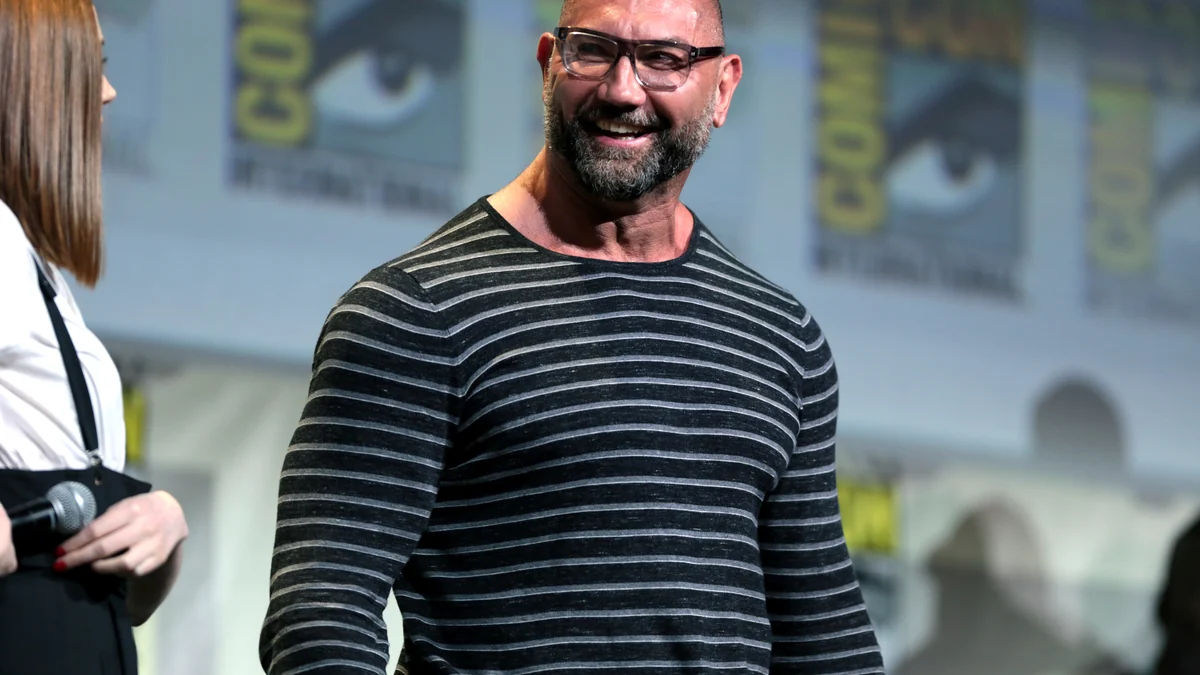
The confirmed fact is simple. According to Variety, Dave Bautista has been set as Kratos in Prime Video's God of War series, co-produced by Amazon and Sony. Ryan Hurst had previously been announced, but suffered a biceps tear during production. The series has a two-season order, with filming planned back to back. The production, which began in Vancouver, is expected to redo material already shot with Hurst and resume work with Bautista. No premiere date is confirmed in the sources consulted.
What is confirmed so far
Variety's confirmation, echoed by outlets such as the Los Angeles Times, Folha, UOL, and UPI, establishes three central points. First: Bautista officially takes over the lead. Second: the change follows Ryan Hurst's injury-related exit, not a creative shift announced as the original plan. Third: the adaptation targets God of War's Norse phase, in which Kratos travels with his son Atreus to fulfill Faye's final wish.
It is also confirmed that the cast reported by the sources includes Callum Vinson as Atreus and names such as Mandy Patinkin, Ed Skrein, Max Parker, Ólafur Darri Ólafsson, Teresa Palmer, Alastair Duncan, Jeff Gulka, Danny Woodburn, and Sonya Walger in roles tied to the franchise's Norse universe. Ronald D. Moore appears as showrunner in reporting on the production, and Frederick E.O. Toye was cited by the Los Angeles Times as director of the first two episodes.
The interpretation begins when we ask why this change matters. In any series, replacing the lead after filming has started is a practical problem. In God of War, it is also symbolic, because Kratos is not merely a character recognizable by silhouette, beard, marked skin, and axe. He is an archive of expectations accumulated since the PlayStation 2 era, transformed in 2018 by a dramatic reinvention that traded linear rage for a story about responsibility.
Bautista arrives as more than a body
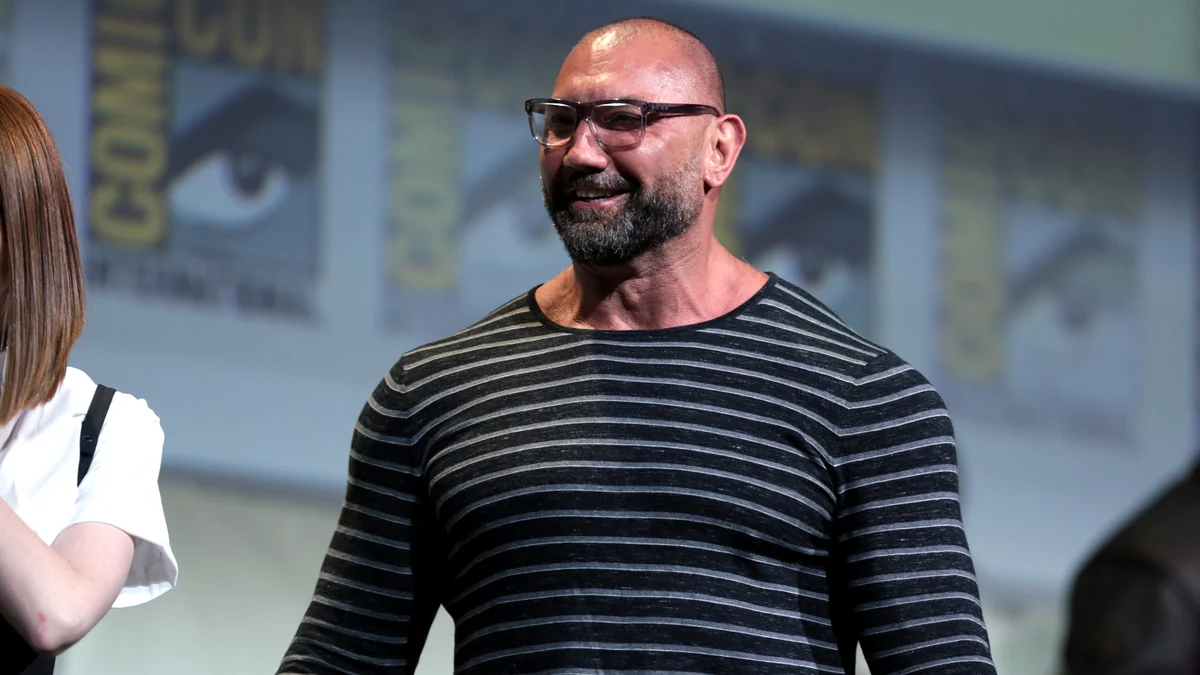
The choice of Dave Bautista is easily read through the obvious: physical build, action experience, and the popular memory of Drax in Guardians of the Galaxy. That reading is correct, but incomplete. Bautista has spent the last decade trying to move his image from former wrestler to actor with dramatic presence. In Blade Runner 2049, Dune, Glass Onion, and Knock at the Cabin, he explored silence, vulnerability, contained threat, and strangeness. Those elements matter to Kratos more than the simple ability to look invincible.
The Kratos the series is expected to adapt is not the same revenge hero who crossed Greek mythology as a destruction machine. The game's Norse phase, especially 2018's God of War, repositioned the character as a father. PlayStation describes this stage as a new beginning in which Kratos must control the rage that defined him while guiding Atreus through a hostile world. The emotional engine is not defeating gods. It is preventing his son from inheriting the same ruins.
That is why the cultural question is not whether Bautista can carry the axe. It is whether the series can film the weight of someone who spent his life being recognized for strength and now has to learn restraint. On that point, Bautista may be a more interesting choice than online debate suggests. His recent career has insisted precisely on the contrast between bodily mass and moral fragility.
The risk of game adaptations
God of War comes to television at a moment when video game adaptations have stopped being exceptions and become a central entertainment strategy. The Last of Us helped change critical perception of the format. Fallout proved that a game universe can yield television without merely retelling a campaign. Cyberpunk: Edgerunners showed, in anime, that an adaptation can expand a franchise's imagination.
But recent success also raises expectations. Games are not just scripts waiting for actors. They are systems of experience: rhythm, agency, repetition, combat, exploration, death, trial, learning. When they become series, they lose the player's direct participation and must find another grammar. What worked because the audience held the controller comes to depend on editing, performance, sound, cinematography, and writing.
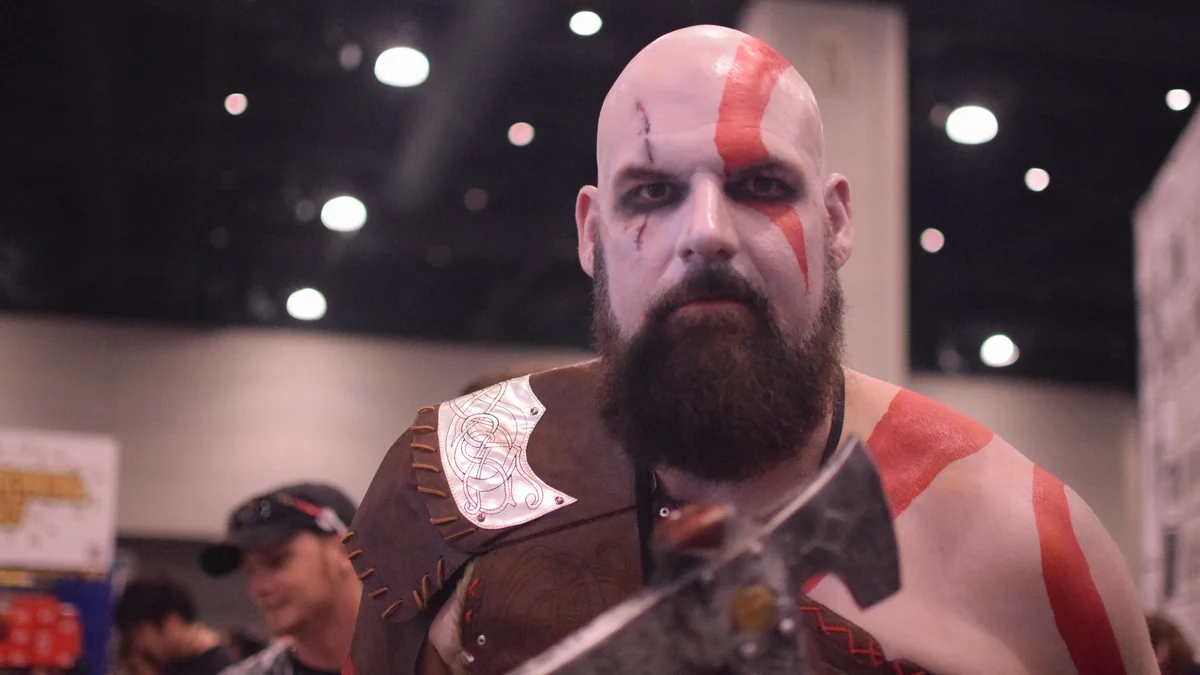
In God of War, the challenge is even more delicate. The 2018 game became known for the relationship between camera, combat, and family bond. The continuous camera, control over Kratos, and presence of Atreus created a feeling of physical intimacy. Television cannot simply reproduce that. If it only tries to copy scenes, it risks looking like expensive cosplay. If it abandons too much of the original experience, it may lose what made the work recognized.
Kratos, masculinity, and grief
The force of God of War, in its Norse phase, lies in turning an icon of violence into a character crossed by grief. Faye is already dead when the journey begins, but her absence organizes everything. Kratos and Atreus walk to scatter her ashes, and the journey forces them to negotiate fear, anger, silence, and affection. PlayStation sums up this axis as a deeply personal journey between father and son.
This dimension matters because pop culture still negotiates the figure of the strong man poorly. Many narratives sell vulnerability as a tagline, but continue filming their protagonists as machines without cracks. 2018's God of War found another path: it kept the epic scale, monsters, and gods, but placed the domestic question at the center. How do you raise a child when you are ashamed of your own history? How do you protect someone without repeating violence? How do you love when you do not know how to speak?
Bautista, because of his public biography as a wrestler turned actor and because of his recent filmography, makes that tension legible. His body carries a promise of action, but his best film work often appears when action does not solve everything. This does not guarantee the quality of the series. Casting is a condition, not a result. But it explains why the news moved from the gamer niche into cultural conversation.
What the series needs to preserve
The adaptation does not need to be reverent in every visual detail. It does, however, need to preserve the shift in axis that made God of War matter again. The franchise was born as a spectacle of mythological fury. The Norse phase became relevant because it treated fury as dangerous inheritance. Television will have to understand that difference.
That means Atreus cannot be just a companion, nor Faye just a narrative trigger. The boy is the mirror that forces Kratos to see himself differently. The absent mother is the presence that gives the road meaning. The Norse gods do not function only as bosses, but as forces that test what Kratos tries to hide. If the series reduces everything to battles and grave lines, it will miss the point.
It will also be important to separate expectation from confirmation. So far, no premiere date has been disclosed in the sources consulted. There is no final trailer. There is no possible assessment yet of Bautista's performance as Kratos. What exists is a lead recast, a reorganized production, and a franchise weighty enough to turn casting news into a debate about adaptation.
Why this speaks to Brazil
Brazilian interest in God of War is not new. The franchise is part of the memory of LAN houses, rental stores, modified PlayStation 2 consoles, forums, gameplay YouTube, and generations that learned pop mythology through controllers. When a search such as "dave bautista" rises on Trends linked to "kratos", it does not only point to celebrity curiosity. It points to a community watching how its gaming repertoires are being converted into global streaming product.
There is also a status change. For a long time, games were treated as secondary material by film and television. Today, major studios compete for these stories because they know they carry worlds, communities, and affections ready to circulate. The risk is turning everything into catalog. The opportunity is recognizing that games have produced their own language, characters, and dilemmas.
For Brazilian audiences, this discussion matters because pop culture consumption here has always been remixed: cinema at the mall, streaming on the phone, commented gameplay, cosplay at events, funk in character edits, memes as criticism. God of War does not arrive as a distant object. It already circulates in Portuguese, in TikTok cuts, in casting debates, in the emotional memory of shared consoles.
The alley as a reading of visual culture
Bautista's choice as Kratos deserves attention not because every Hollywood casting is automatically important, but because this one condenses a cultural turn. Video games have stopped asking cinema for permission. Now they demand negotiation as equals. The God of War series will have to answer to fans, critics, players, and viewers who may never have held the controller, but recognize when an image has lost its soul.
In São Paulo, this conversation naturally passes through places where visual culture is read in the street: painted facades, reappropriated characters, bodies transformed into symbols, urban mythologies born on the wall and then circulated globally. Beco do Batman understands this passage between image, public, and dispute over meaning. That is where Bautista as Kratos stops being only streaming news and enters Becoartes' radar: as a sign of pop culture redrawing itself between screen, street, and collective memory.
Continue with Guia Cultural Becoartes
Follow our readings on cinema, music, games, urban art, and the cultural movements crossing São Paulo.
Becoartes - Beco do Batman
99 Gonçalo Afonso Street, Vila Madalena, São Paulo
Sources and credits
- Gage Skidmore from Peoria, AZ, United States of America — CC BY-SA 2.0
- Gage Skidmore from Peoria, AZ, United States of America — CC BY-SA 2.0
- Super Festivals — CC BY 2.0
- Official GDC — CC BY 2.0
- Google Trends Brasil - Trending Now
- Variety - Dave Bautista Officially Set as Kratos in God of War TV Series
- Los Angeles Times - God of War casts Dave Bautista as Kratos after Ryan Hurst injury
- Folha F5 - Dave Bautista é confirmado na série de God of War como Kratos
- PlayStation - God of War PS4 game overview
- PlayStation Blog - God of War 2018 story recap before Ragnarök