Where should a viewer begin with two such different careers? The short answer is three Ellen Burstyn films and three George Clooney films, watched for distinct qualities: her emotional transformations and his movement among acting, writing, and directing.
The 83rd Venice International Film Festival, held from September 2 to 12, 2026, announced both artists as recipients of the Golden Lion for Lifetime Achievement. The official page about Clooney says the honor was awarded at the opening ceremony on September 2. The Burstyn announcement, although dated September 7, still describes the presentation in the future tense. Without a subsequent source, it is more accurate to say that her ceremony was scheduled for that date, not that its occurrence has been confirmed.
The contrast guiding this journey
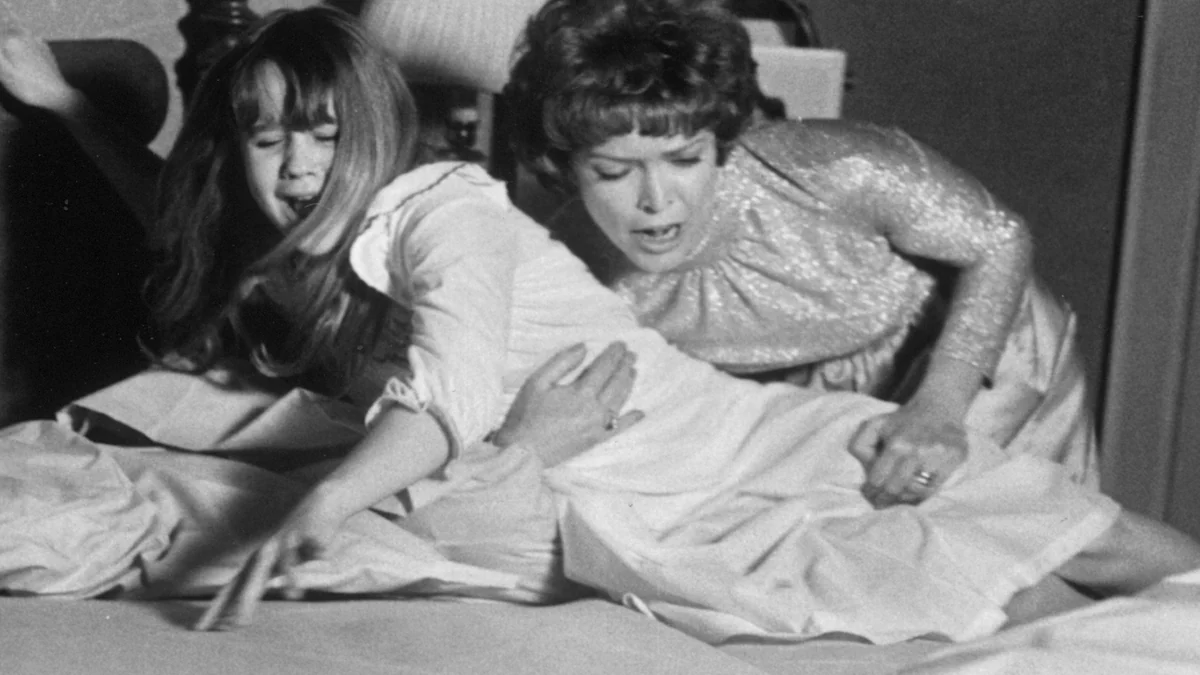
Venice presents Burstyn primarily through the rigor of her acting: intensity, discipline, and emotional truth applied to complex characters. Its official overview moves through *The Last Picture Show*, *The Exorcist*, *Alice Doesn’t Live Here Anymore*, *Requiem for a Dream*, and *Interstellar*.
Clooney is described as an actor, director, and producer whose career crosses genres and responsibilities. This is therefore not a ranking of their “best” work. It is a viewing framework: with Burstyn, follow how body, voice, and silence express change; with Clooney, identify what belongs to performance and what emerges from writing or staging.

1. *The Last Picture Show*: Burstyn’s presence
La Biennale identifies Peter Bogdanovich’s film as the work that revealed Burstyn and records Academy Award and Golden Globe nominations. It is a useful first screening because it shows an actress capable of changing a scene’s emotional weight without permanently occupying its center.
Watch the pauses, shifts of attention, and the way a reaction can say more than dialogue. This prepares the viewer for later characters in which vulnerability is no longer merely suggested but begins to drive the narrative.
2. *Alice Doesn’t Live Here Anymore*: a protagonist in transformation
Martin Scorsese’s film provides this guide’s clearest institutional milestone. The Academy’s 1975 record, covering films released in 1974, confirms Ellen Burstyn as the Best Actress winner. The film also received nominations for Diane Ladd in supporting actress and Robert Getchell’s original screenplay.
Rather than searching for an “awards scene,” follow how Burstyn sustains a character in motion. Her performance changes with the circumstances and resists reducing the protagonist to one emotional state. That makes the film the center of the proposed route.
3. *Requiem for a Dream*: acting through deterioration
La Biennale’s biography records that Darren Aronofsky’s film brought Burstyn another Best Actress Oscar nomination. After the restraint of *The Last Picture Show* and the transformation of *Alice*, the exercise here is to notice a performance built through deterioration.
Compare voice, posture, and rhythm from the beginning through the character’s later stages. The three-film sequence reveals range without relying on an inventory of awards: every work demands a different relationship between fragility and control.
4. *Syriana*: Clooney within the ensemble
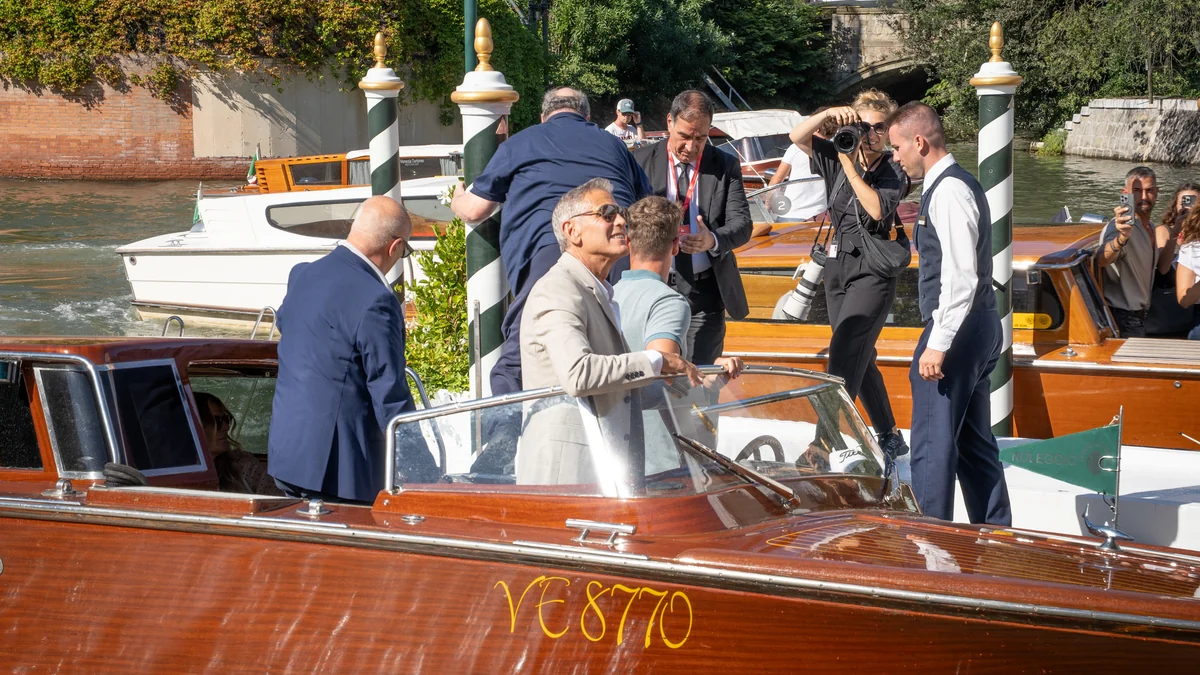
Clooney’s route begins with acting alone. In the Academy’s 2006 record, covering films released in 2005, he is the Supporting Actor winner for *Syriana*.
The choice helps suspend the star image and focus on his contribution within an ensemble. The useful question is: how does he serve the whole when he does not occupy the dramatic center alone? Venice cites the film while discussing his versatility across genres.
5. *Good Night, and Good Luck.*: directing and writing
This is where his responsibilities expand. The Academy records nominations for Clooney’s direction and for the original screenplay, the latter shared with Grant Heslov. The film earned six nominations, including Best Picture, Actor for David Strathairn, cinematography, and art direction.
Watch the organization of the scenes before concentrating on the performances. The result frames authorship as the coordination of choices, not solitary control: the screenplay officially belongs to Clooney and Heslov, while Strathairn gives the central performance.
6. *The Ides of March*: three roles in one film
According to La Biennale, Clooney acted in, co-wrote, and directed *The Ides of March*. The source also records an adapted-screenplay Oscar nomination and Golden Globe nominations for directing, screenplay, and drama film.
Separate the jobs in three passes: first the acting, then the placement and rhythm of scenes, and finally the screenplay’s construction. This method prevents distinct responsibilities from dissolving into a vague notion of the “total auteur.”
How to build the marathon
To follow each career separately, watch all three Burstyn films before Clooney’s three. For direct comparison, create pairs: *The Last Picture Show* and *Syriana* for acting within ensembles; *Alice Doesn’t Live Here Anymore* and *Good Night, and Good Luck.* for protagonists and institutional recognition; *Requiem for a Dream* and *The Ides of March* to contrast acting transformation with multiple creative roles.
The Academy records confirm categories and results; La Biennale’s texts present the curatorial argument behind the honors. Awards do not replace the experience of watching the films. Because dates and conditions can change, consult the official links for the latest record.
If the screenings inspire conversation, Becoartes is at Rua Gonçalo Afonso, 99, Vila Madalena, the address listed on its official website.
Continue the film conversation
Visit Becoartes at Rua Gonçalo Afonso, 99, Vila Madalena, and check its official website for current information.
Becoartes - Beco do Batman
99 Gonçalo Afonso Street, Vila Madalena, São Paulo
Sources and credits
- 12 Feb 1974 — Public domain
- Colleen Sturtevant — CC BY-SA 4.0
- CaseyJNewell — CC BY-SA 4.0
- La Biennale — Ellen Burstyn recebe o Leão de Ouro pelo conjunto da obra (7 de setembro de 2026)
- La Biennale — George Clooney recebe o Leão de Ouro pelo conjunto da obra (2 de setembro de 2026)
- Academy of Motion Picture Arts and Sciences — Oscar de Ellen Burstyn por Alice Doesn't Live Here Anymore
- Academy of Motion Picture Arts and Sciences — Oscar de Clooney por Syriana e indicações de Good Night, and Good Luck