If thunderstorms are forecast in France, do not decide whether to attend a concert, festival, amateur match or excursion solely from the color assigned to the department. Open the Météo-France weather-warning service, select the correct period, read the orages bulletin and confirm the situation with the organizer. Adjust or abandon the activity when there is no rapid access to a substantial building, when authorities or site managers restrict the location, or when a storm is already approaching.
The official page was consulted for this article on November 10, 2026, at 3:46 p.m. CET (mainland France time). The retrieved content does not establish which departments were under warning at that moment. Colors, areas and times can change, so check again immediately before leaving.
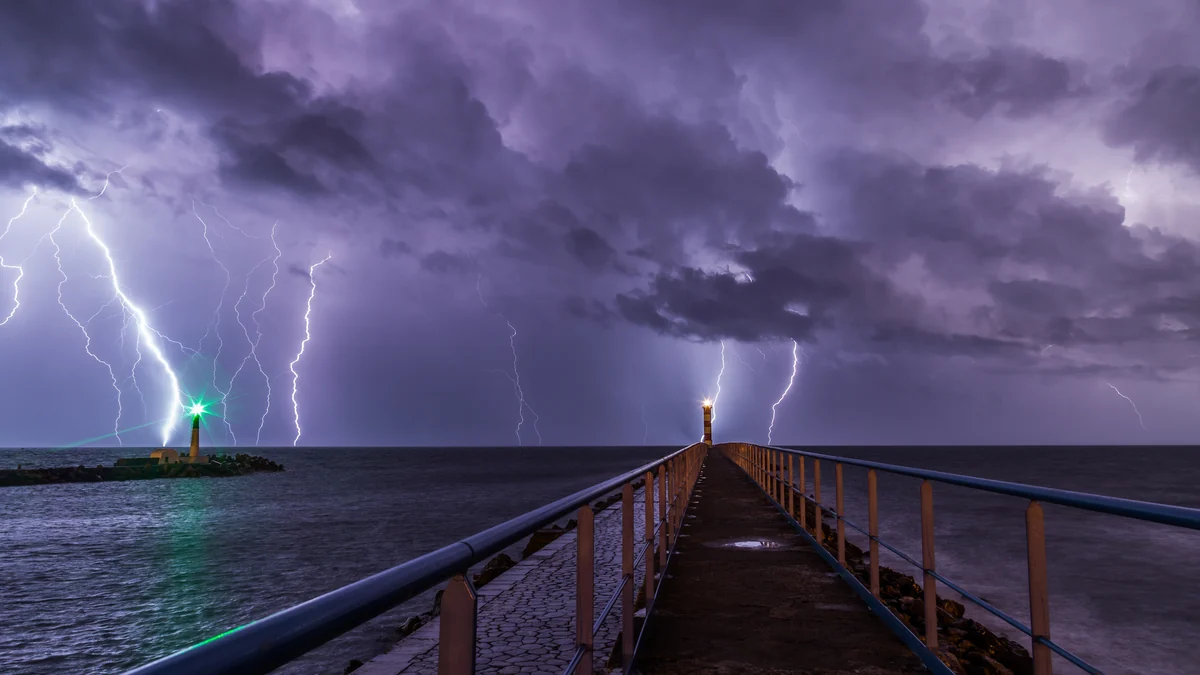
Forecasts and Vigilance serve different purposes
A forecast describes expected weather. Vigilance adds an assessment of potential dangers, consequences and protective measures. According to Météo-France’s explanation, the system uses green, yellow, orange and red and identifies the highest forecast danger level for each department and phenomenon.
In mainland France, separate maps cover the current and following day. The official description of the system says they are updated at least at 6 a.m. and 4 p.m., local French time, and more frequently when necessary. Bulletins show an episode’s expected beginning and end. An old screenshot or a check made many hours earlier is not sufficient.
A quick Météo-France glossary
Vigilance météorologique: the official system that flags forecast weather dangers and provides protective guidance. It is not the same as a standard forecast and does not, by itself, confirm an event’s status.
Orages: thunderstorms with thunder and lightning that may also bring intense rain, gusts and hail. Éclair is the flash or observed discharge; foudre is lightning when the discharge reaches the ground, according to the thunderstorm overview.
Département: the territorial division used as the map’s basis. Information infra-départementale: more localized information displayed when confidence is sufficient to distinguish areas where expected consequences are more or less severe.
A department’s color does not describe every street
Vigilance shows the highest danger considered across a broad area; it does not guarantee that a storm will reach every municipality. Thunderstorms affect limited areas and are difficult to locate precisely in advance. Part of a warned department may remain dry, while an activity outside the initially most threatened sector may still need to stop if a storm cell approaches.
The color is therefore the beginning of the decision. The exact address, bulletin timing, prefecture notices and organizer communications complete the picture. Vigilance is not automatically a cancellation order either: authorities and site managers may issue their own restrictions.
A three-stage check
Before leaving: consult the map for the correct day, open the bulletin and identify the phenomenon—not every color concerns thunderstorms. Ask whether the organizer has kept the activity scheduled, moved it indoors or canceled it. For visitors, France.fr’s guidance also recommends checking prefecture notices and local access conditions.
On arrival: identify a substantial building that can be reached quickly. A tent, temporary stage, isolated tree or lightweight structure does not provide equivalent protection. Follow staff instructions even if rain has not begun.
During the activity: treat thunder, lightning, sudden gusts and official messages as reasons to reassess the plan. Do not wait for rain to start. If the organizer suspends the program or an authority closes the site, follow the indicated route.
When to continue, adapt or abandon the plan
Continue only when there is no restriction from authorities or the organizer, current information supports the activity and a substantial shelter is accessible. Conditions must still be monitored.
Adapt by moving from an open area into a building, limiting travel or choosing another safe activity. Uncovered stands, playing fields, beaches and parks leave people exposed.
Abandon or postpone when no substantial shelter exists, the journey crosses an affected area, conditions deteriorate, or authorities and organizers call for a stop. During orange thunderstorm Vigilance, Météo-France advises avoiding travel, moving away from trees and waterways, and sheltering in a substantial building. Under red Vigilance, it advises remaining at home, staying informed and not using a vehicle.
If the storm catches you outside
Météo-France’s dedicated guidance says the best protection is to enter a substantial building quickly. Move away from trees and waterways; water and metal conduct electricity. Fields, stadiums, parks, beaches and swimming pools expose people to direct lightning strikes.
If no building is available, do not remain beneath an isolated tree or overhang. Official guidance is to crouch with feet together, without lying down or leaning against a wall, and to insulate yourself from the ground as much as possible with insulating material. On high ground, leave ridges and summits and move away from metal objects.
Storms may also cause intense rain, rapid flooding, gusts and hail. Never enter a flooded road. For any outing, rely on the current bulletin, instructions from authorities and the organizer’s communication—not a static list of departments. French warning colors should not be assumed to match systems in the United States, United Kingdom, Canada or elsewhere.
Discover Becoartes
Visit [Becoartes](https://becoartes.com/) at Rua Gonçalo Afonso, 99, Vila Madalena, São Paulo.
Becoartes - Beco do Batman
99 Gonçalo Afonso Street, Vila Madalena, São Paulo
Sources and credits
- Maxime Raynal from France — CC BY 2.0
- Jules Breton — Public domain
- Vigilance météorologique — Météo-France
- Orages — comprendre les phénomènes météorologiques — Météo-France
- https://meteofrance.com/vigilance-et-securite/quest-ce-que-la-vigilance-meteorologique
- https://meteofrance.com/vigilance-et-securite/5-questions-sur-la-vigilance-meteorologique
- https://meteofrance.com/vigilance-et-securite/orages-quels-dangers-et-comment-sen-proteger
- https://www.france.fr/fr/article/risques-naturels-bons-reflexes/