Getting an offer from a university and being able to take it up are two different things. That gap runs through a pair of events on the French calendar this week. On Tuesday, November 24, students can question university leaders and researchers during a public broadcast. On Thursday, November 26, student organizations and staff unions are calling for demonstrations and strikes over access to higher education and the resources to sustain it. The organizers are not the same. Neither event should be mistaken for an announcement of new admissions rules, tuition rates or financial aid.
How to watch on Tuesday
France Universités and L’Étudiant are staging the debate in collaboration with The Conversation France. Their program for the broadcast gives a start time of 6:30 p.m. in Paris, or 2:30 p.m. in São Paulo. It is scheduled to finish at 8:15 p.m. in Paris, or 4:15 p.m. in São Paulo. Both organizers will carry it on their YouTube channels. The invitation to ask questions extends to viewers watching online as well as to the audience in the room.
There are three panels, each scheduled to last twenty minutes. Rather than treating all student concerns as a single subject, the program follows a student from choosing a course through daily life on campus to having a say in how the university is run. No individual starting time is advertised for each panel. If you want to hear a particular speaker, the beginning of the broadcast is a safer guide than guessing a time from the order of the sessions.
An available place is not necessarily a workable choice
Audrey Marianne, a design master's student, and Ilan Llug, an engineering student who leads the national confederation of student-run junior enterprises, will take part in the first discussion. They will be joined by Avignon University president Georges Linarès and Aurore Mayer of the La Poste group's equality network. They are there to discuss orientation, training and the transition to work. An especially useful question to listen for is what happens when the course on offer is not one the applicant can realistically attend.
The next panel picks up precisely where an admissions letter leaves off. It includes Amélia Mauget, who studies tourism in Angers, and Olivier Rey, who chairs France's national observatory of student life. It is possible for an institution to count a place as filled while the student taking it cannot afford to live near their classes. A question about meals, housing or access to health services is therefore not a detour from the discussion of academic success. It asks what makes a place usable after the student has accepted it.
Why unions are calling for action on November 26
In a joint statement dated November 23, unions and student organizations call on people across France to take part in demonstrations, gatherings and strikes on Thursday. Their demands include creating 150,000 places, abolishing the Parcoursup and Mon Master application platforms and ending differential fees for students from outside the European Union. For a prospective applicant in Brazil or elsewhere outside the EU, that last point needs careful reading: it is an item on the coalition's agenda, not a fee waiver that applicants can claim.
The coalition also calls for permanent staff recruitment, long-term funding for public institutions and research laboratories, and higher grants that keep pace with inflation. It includes libraries and student services alongside teaching and research in its account of what universities need to fund. The invitation to participate does not say that every institution will close on Thursday. Students who need to know whether a class, examination or appointment will go ahead should check their own university's notices. A national statement cannot answer a timetable question for an individual department.
Who can turn a student decision into action?
The final panel on Tuesday includes Sarah Radjef, a political science master's student who presides over the student parliament at Université Gustave Eiffel, and Quentin Acquatella, a computing master's student who leads a national conference of university student vice-presidents. Their titles suggest a practical question for the audience: once student representatives agree on a proposal, who has the authority and the budget to act on it? An answer naming the next decision-maker would tell a viewer more than a general endorsement of student participation.
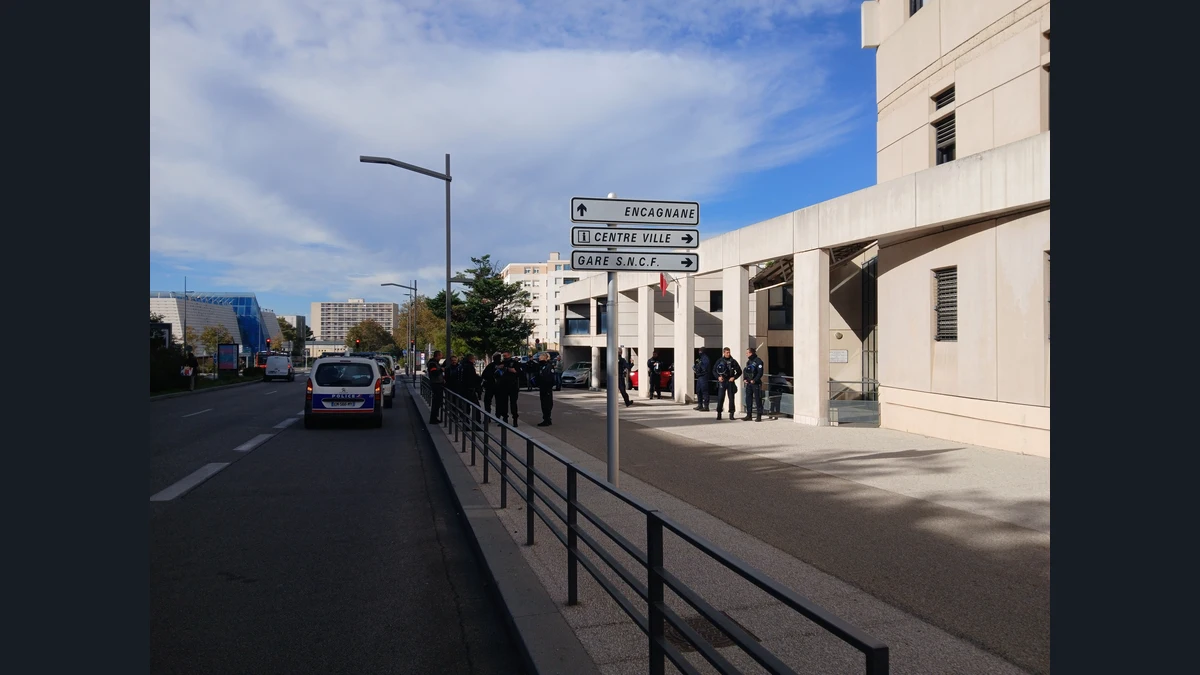
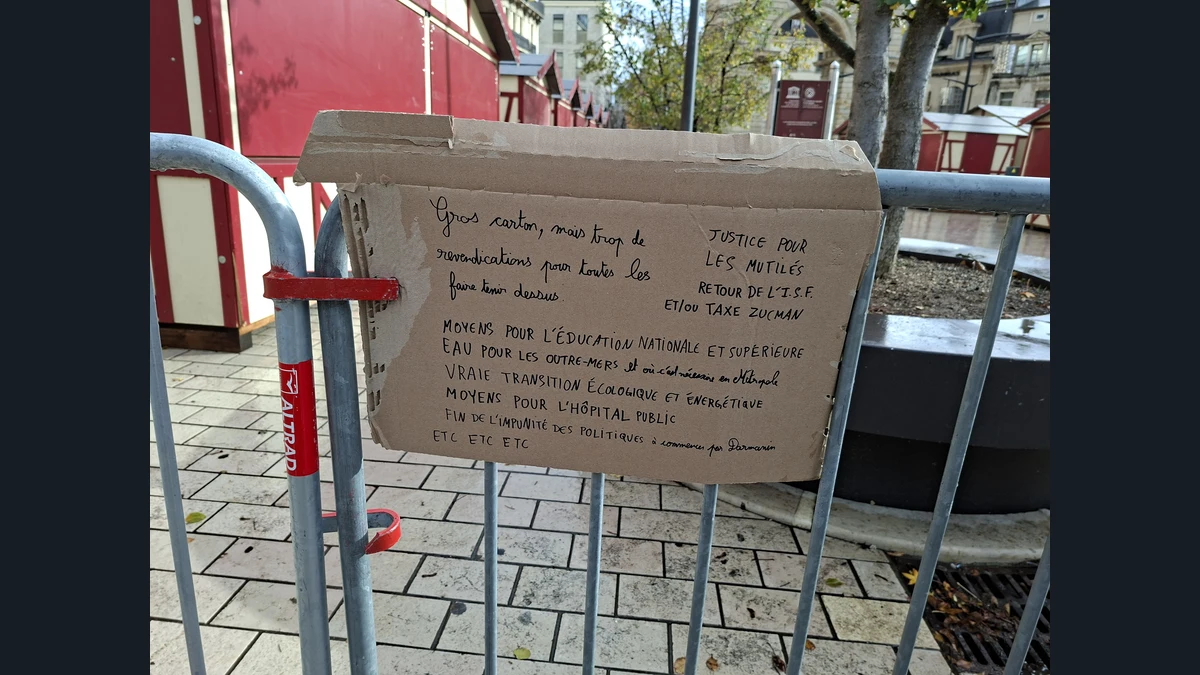
This week's two dates offer different ways to follow the issue. The broadcast is a chance to hear individual participants explain their positions and take questions. The next test for Thursday's call will be what happens in each city, not how many organizations signed the statement. Earlier photographs from Aix-en-Provence on November 3 and Dijon on November 20 document the movement in two places. They do not show either Tuesday's debate or Thursday's events. Keeping those distinctions intact makes it easier to see what changed this week and what remains a proposal.
Image credits. Context photographs resized, framed with margins and converted to WebP without cropping. Gabriel from92 (CC0 1.0); Haldu (CC0 1.0).
Sources for this story
Original documents are linked in the article.
Becoartes - Beco do Batman
99 Gonçalo Afonso Street, Vila Madalena, São Paulo