A caller reads out an order number, hears the automated assistant repeat it and notices a wrong digit. The caller can cut in to correct the number without waiting for the answer to end. That is one example of the interaction OpenAI describes for GPT-Live-1.1, its real-time voice model. The company added the version to its developer changelog on November 19, 2026, and announced its availability in the API the next day.
The November release is for developers
An API lets companies and developers connect the model to an application they build. According to OpenAI’s announcement, GPT-Live-1.1 had already powered voice in ChatGPT Plus and Pro since October 15. The change in November was the option to bring it into other apps, not a new button for people using ChatGPT.
The documentation identifies the model as `gpt-live-1.1`. Developers with an existing Live API session can select that version in their configuration. The announcement does not tell an individual project how many simultaneous calls it can sustain. The model documentation says the two versions have separate limits for concurrent sessions and directs developers to their organization’s limits.
Listening while speaking changes how people make corrections
The model works in both directions at the same time: it can receive speech while sending audio. Rather than waiting for an assistant to pause, a caller can interject to correct an address or switch to another language. The documentation does not present simultaneous listening as exclusive to version 1.1. The improvement OpenAI associates with the upgrade concerns how the model handles multilingual speech.
The company says transcription is more accurate and pronunciation and accent remain more consistent when a conversation changes languages. Those are the supplier’s claims. They are not an independent benchmark of Brazilian Portuguese, and they do not promise that every phone number read out on a noisy street will be captured correctly.
Talking to a customer and retrieving an order are separate jobs
In a store’s support flow, the voice model might ask for an order number. Retrieving the record can then be passed to the system that stores the orders. The documentation describes this as delegation: the application tells the voice model when it needs to ask another service to perform a lookup or another action.
Separating the two jobs helps explain what went wrong. If the caller said seven and the model heard six, the error happened on input. If the number was right but the system returned the wrong order, cleaner speech recognition would not fix it. A useful evaluation records the expected number, checks what the model captured and independently confirms which record was returned.
An open call can cost less during standby
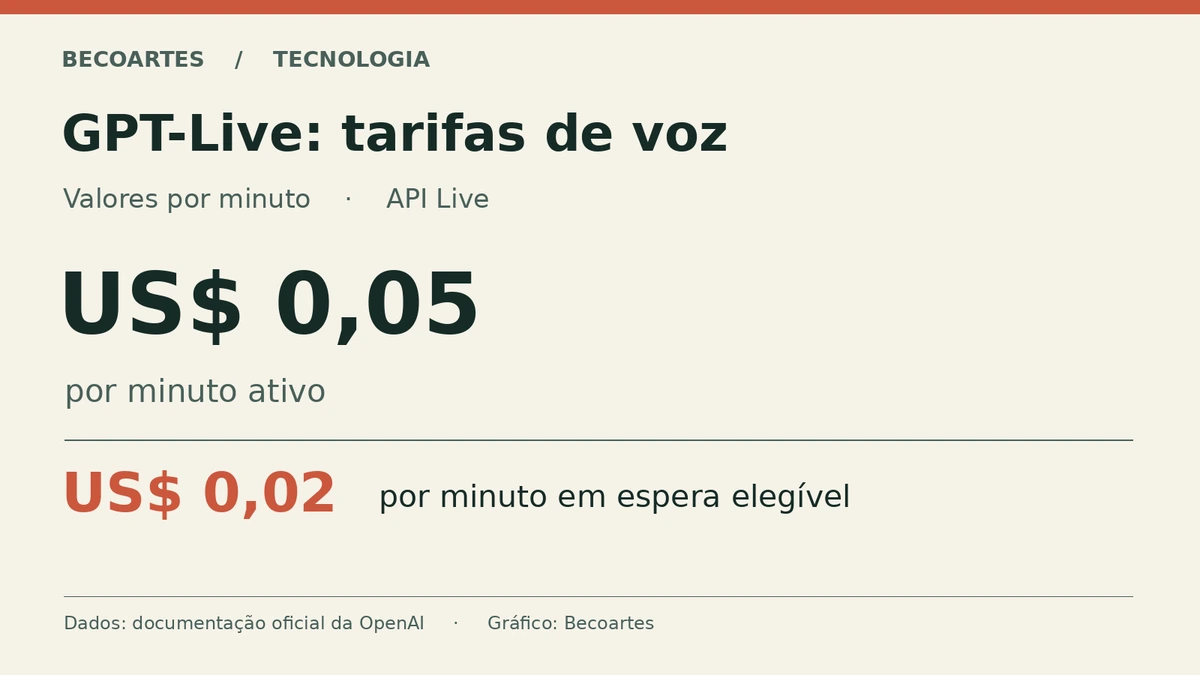
The API lists an active rate of five US cents a minute. The two-cent standby rate applies when processing is paused in a WebRTC session. Standby can be configured for both the previous model and version 1.1. The application sets an idle period of five to sixty seconds before processing pauses. The call stays open, and processing resumes when someone speaks again.
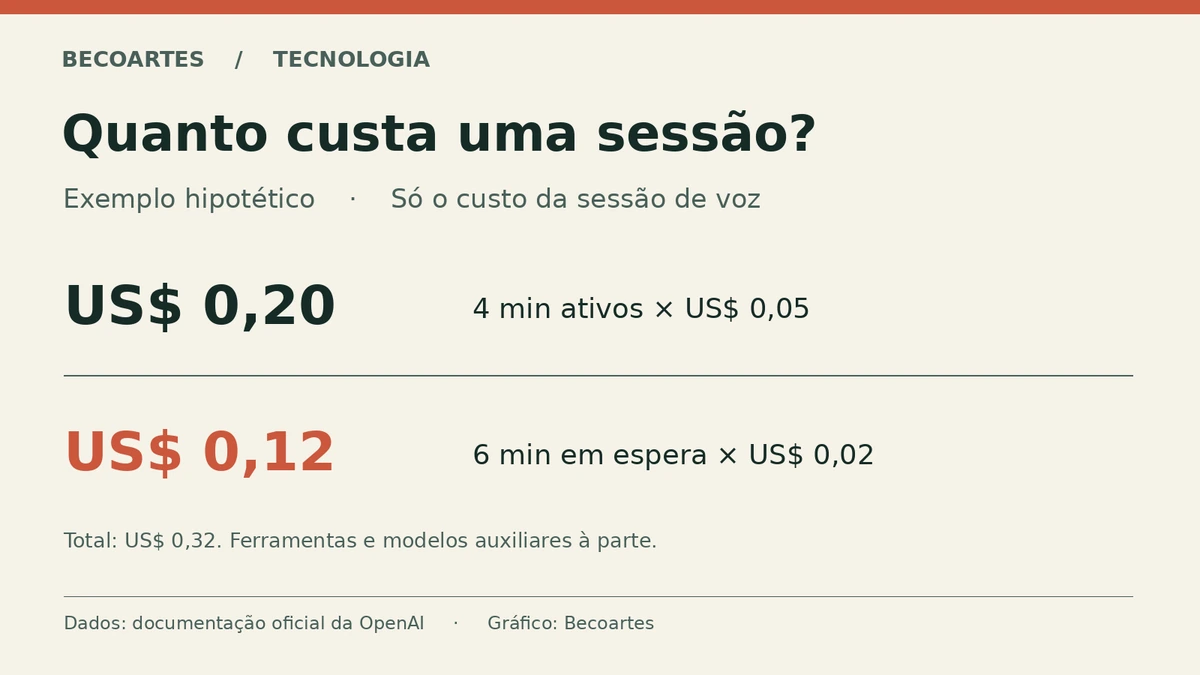
Silence alone does not establish that the session is being billed at the standby rate: processing must already have paused. Consider a hypothetical ten-minute call with four active minutes and six eligible standby minutes. The voice session would cost 32 cents. That does not include any backend models or tools. It is an illustration of how the rates work, not a record from a measured call.
How to find out if the change helps your app
A small pilot could use the same script with both versions and check whether the order number was captured without correction, whether the system found the right record and whether the caller had to repeat a question. It can also include language switches and deliberate interruptions. The point is not to choose the voice that sounds best during a quiet demonstration, but to see whether customers can finish the task.
Call duration alone is not enough to estimate costs. Two ten-minute calls can have different amounts of active time and standby, and one can trigger more lookups than the other. Measuring both gives developers a basis for deciding if the change helps their own service, without treating the supplier’s claims as observed results.
Read the documentation
Check the requirements and billing conditions in the official model reference.
Becoartes - Beco do Batman
99 Gonçalo Afonso Street, Vila Madalena, São Paulo