After one matchday, your club’s position answers only one question: where would it finish if the league phase ended now? To read the table without turning one result into a forecast, consider three things together: the zone occupied, the goal difference separating teams on equal points and the seven opponents still on the schedule.
The opening matchday, played from 8 to 10 September, produced sharply contrasting scores. Paris Saint-Germain beat Slovan Bratislava 6–1; Bayern München defeated Bodø/Glimt 5–0; Barcelona and Manchester United also won by wide margins. Real Madrid, Liverpool and Arsenal, meanwhile, won by a single goal. They all earned three points but began in different positions because of goal difference, as shown by UEFA’s official fixtures and results list.
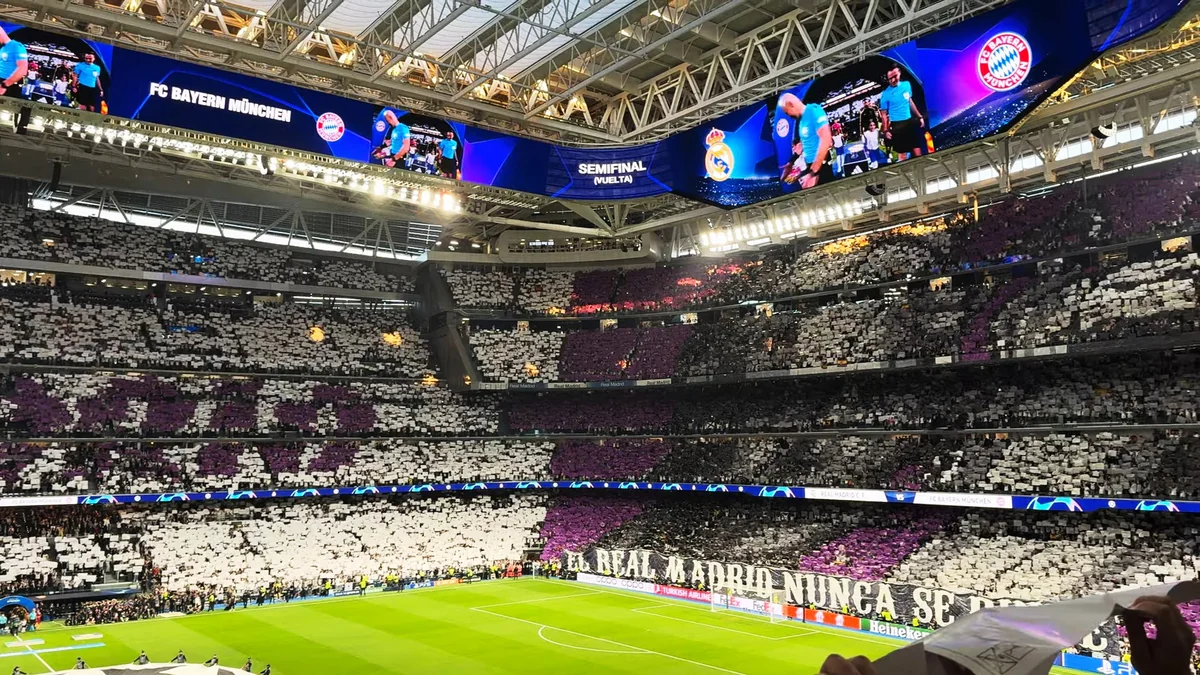
The table’s three zones
The official 2026/27 Champions League regulations define what the positions ultimately mean. Clubs ranked first to eighth advance directly to the round of 16. Those in ninth to 24th enter the knockout phase play-offs. Teams finishing 25th to 36th are eliminated.
There are therefore three zones, separated by two boundaries: eighth/ninth and 24th/25th. Sitting seventh after one game does not mean a direct place is nearly secured; being 26th does not amount to early elimination. With 21 points still available, the standings record a beginning, not a destination.
To answer “would my club qualify today?”, simply identify its zone. To address the more useful question — “does the position accurately represent the campaign?” — the schedule, performances and tiebreakers also need to be considered.
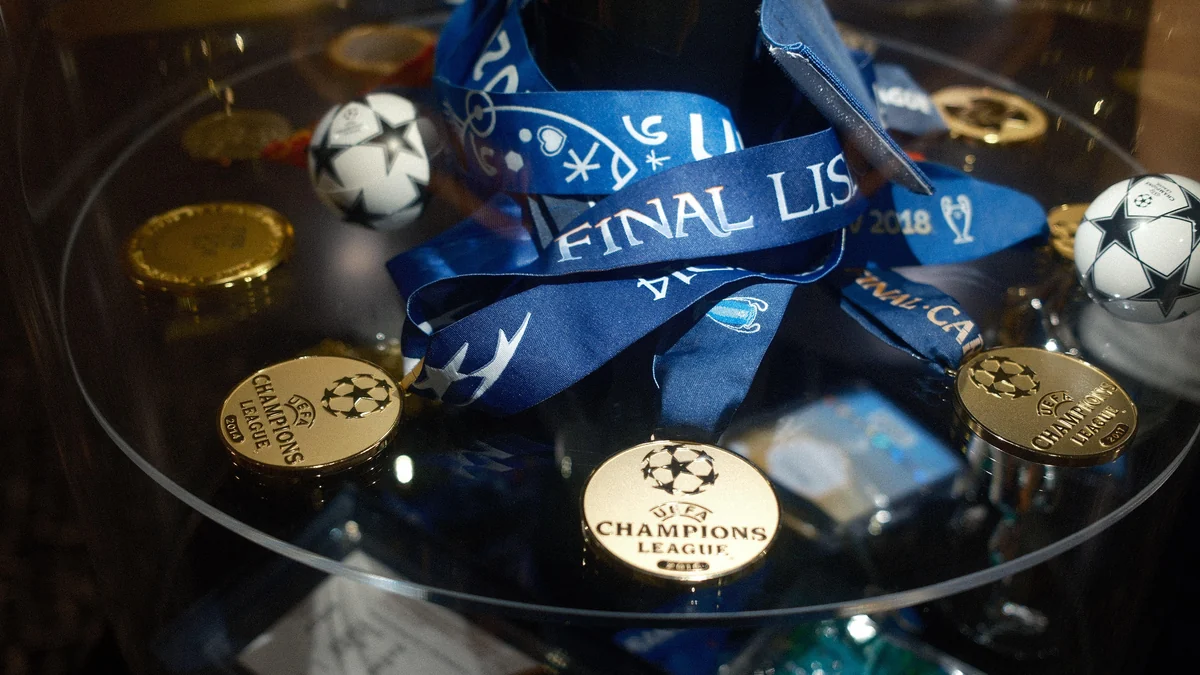
One table, different opponents
The 36 clubs share one table, but they do not contest a round-robin league. Each team faces eight opponents in single matches, playing four at home and four away. The draw divided the participants into four pots and assigned every club two opponents from each pot, one at home and one away. The phase contains 144 matches over eight matchdays, according to UEFA’s explanation of the draw and competition system.
That prevents automatic comparisons. Two teams with three points may have faced very different opening tests and may have equally distinct schedules ahead. Paris Saint-Germain, for example, still has Manchester City, Barcelona, Villarreal, Roma, Aston Villa, Como and Galatasaray to play. Bayern’s remaining opponents are Viking, Arsenal, Atlético de Madrid, Lille, Slavia Praha, Manchester United and Real Betis. The complete routes are available in UEFA’s eight-match list for every team.
Why goal difference dominates so early
After one game, the points column has only a few possible values: three, one or zero. Goal difference therefore creates large visual gaps between campaigns that remain identical on points. PSG’s five-goal winning margin and Real Madrid’s 2–1 win are both worth three points; the rout provides only an initial ordering advantage.
Goal difference is real and may matter at the end, but its proportional influence is exaggerated in a one-match sample. A narrow win on the next matchday could preserve a leader’s points advantage while moving that club several places as other scorelines alter the order. The official tiebreaking sequence appears in the regulations and should not be reduced to goal difference alone: other competition criteria apply when required. Because rules and operational details may be updated, check the official document.
What the scores reveal — and what they do not
Results can describe a performance; they cannot predict seven games. UEFA’s technical group highlighted Michael Olise after two goals and an assist in Bayern’s 5–0 win, while Ferran Torres scored a hat-trick for Paris and Martin Ødegaard created six chances and scored Arsenal’s winner in Naples. The same technical review of Matchday 1 recorded seven saves by Thibaut Courtois as Real Madrid beat Inter 2–1.
The contrast is useful. A rout may reflect broad superiority; a narrow win may contain a decisive goalkeeping display. Neither description, in isolation, measures the difficulty of the next seven fixtures or guarantees that a club will remain in the same zone.
A practical method for following the next matchdays
First, identify the zone rather than focusing only on the position number. Next, compare points and goal difference with the teams around the two boundaries. Then open the individual schedule and examine the remaining opponents, separating home and away fixtures. Finally, repeat the process after each matchday instead of treating the current order as a final projection.
Comparisons become more informative as teams accumulate matches, but their schedules remain different throughout. On Matchday 8, scheduled for 27 January 2027, all 18 games will be played simultaneously. Until then, the most honest reading combines the table, schedule context and distance from the eighth- and 24th-place boundaries — never position alone.
Another conversation after the match
If the football conversation continues around the city, Becoartes is at Rua Gonçalo Afonso, 99, Vila Madalena, São Paulo. Check current information on the official Becoartes website.
Becoartes - Beco do Batman
99 Gonçalo Afonso Street, Vila Madalena, São Paulo