Madring was scheduled to host its first Formula 1 Grand Prix on September 13, 2026. To understand the track before, during or after the race, focus on four elements: the transition between public roads and permanent sections, sharp changes of speed, the banked La Monumental corner and the new aerodynamic and electrical tools used by the 2026 cars. Visitors also need to know one crucial rule: the North and South sectors have separate entrances and no internal pedestrian route connects them.
A hybrid circuit, not a conventional street track
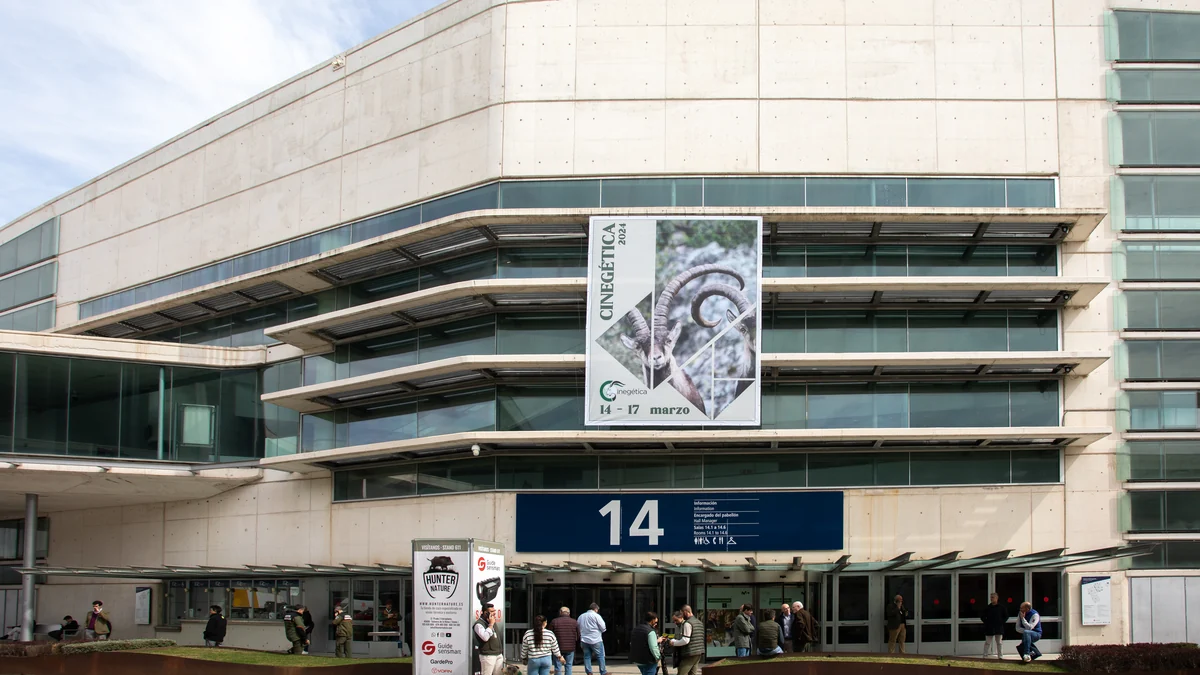
Built around IFEMA Madrid and Valdebebas, Madring combines public roads, private land and sections designed specifically for racing. The official Spanish Grand Prix page compares this blend of street circuit and permanent facility with Miami’s model.
The track is 5.414 kilometres long, has 22 corners and is raced over 57 laps, producing a total distance of 308.399 kilometres. Because 2026 marks its first Grand Prix, no official lap record existed before the debut. Its design is best understood through contrasts: straights and braking zones, climbs and descents, open sections and passages hemmed in by walls.
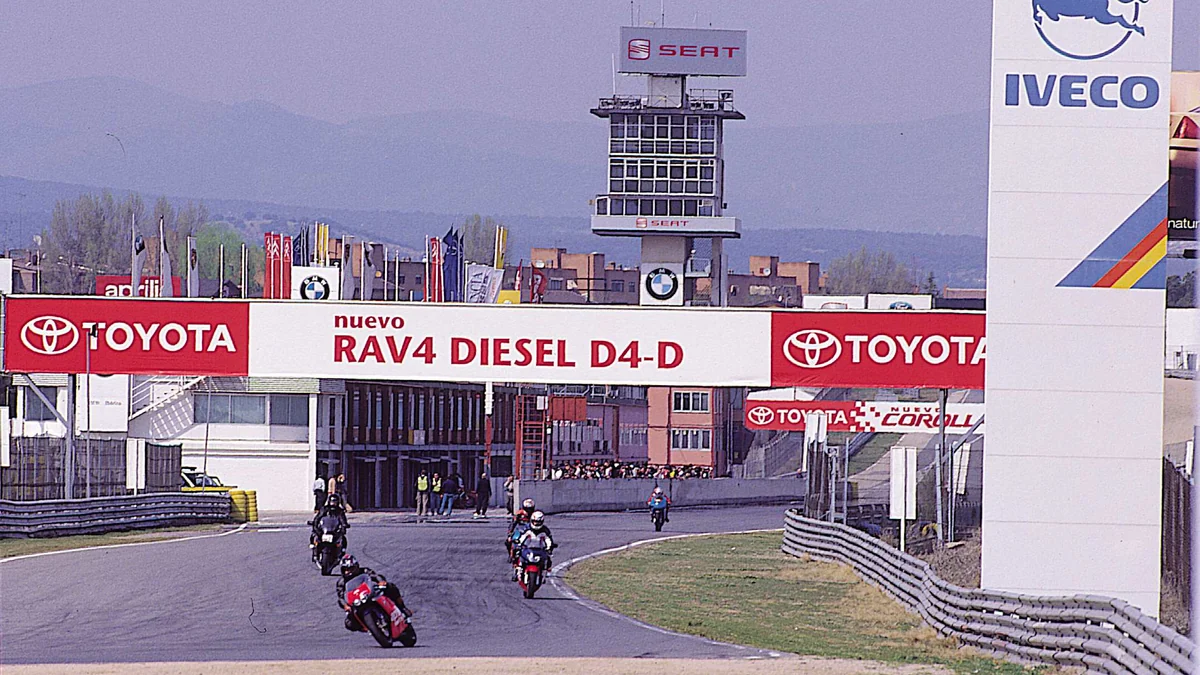
The lap begins with just over 200 metres between the starting line and Turn 1. After Turn 3, Hortaleza, comes the longest straight, measuring 837 metres. According to Madring’s technical description, cars exceed 300 km/h there and reach the projected circuit maximum of 340 km/h at Turn 4, before slowing to about 80 km/h for Turn 5. That sequence identifies one of the main areas in which positions may be contested.
Elevation and braking points structure the lap
The following section demands more than top speed. Subida de las Cárcavas has an 8% uphill gradient, gains ten metres in elevation and culminates at blind Turn 7, the highest point of the circuit. A 5% descent immediately follows, leading towards El Búnker and the fast Valdebebas sector.
For a technical reading of the race, watch what happens before Turns 1, 5, 13, 17 and 20. Circuit documentation identifies them as clear or significant overtaking opportunities because they combine fast approaches with heavy braking. At Turn 17, for example, the projected speed falls from 280 to 100 km/h after Las Enlazadas de Valdebebas.
The final part of the lap changes the rhythm again. Turns 21 and 22 are slow right-handers near IFEMA Halls 14 and 12, with walls alongside the track. A clean exit from the final corner, El Parque, matters both for the main straight and for the overtaking system available on the following lap.
La Monumental is more than a postcard image
A chicane slows the cars before the circuit’s signature feature. Turn 12, La Monumental, forms a semicircle approximately 550 metres long and has banking of up to 24%. The official Formula 1 circuit guide says it offers multiple racing lines; about 45,000 spectators can watch cars travel through it in an estimated six seconds.
Its technical importance lies in the combination of banking, duration and a high-speed exit. Turn 13 then requires drivers to slow from more than 300 to 140 km/h. Rather than watching only for a pass within the banked section, look for a driver changing line, preserving grip and preparing a stronger approach to the following braking zone.
Straight Mode and Overtake Mode: what changed in 2026
The former DRS concept has been replaced by two distinct tools. Straight Mode changes the aerodynamic configuration: elements of the front and rear wings move to reduce drag in designated areas. In dry conditions, it is used on every lap regardless of the gap to the car ahead. Madring has two such zones, on the start/finish straight and between Turns 3 and 4.
Overtake Mode instead gives an eligible driver an additional electrical power profile. There is one detection point per lap, just before the entrance to Turn 22. A driver within one second of the car ahead at that marker may use the feature after the corner on the following lap. Watching the exit from El Parque and the gap between two cars therefore helps anticipate a possible contest along the straight.
Jarama is historical context, not a template for Madring
Madrid previously hosted Formula 1 at Circuito del Jarama, approximately 30 kilometres north of the city. Its first Spanish Grand Prix took place in 1968. Jarama initially alternated with Montjuïc; Madrid then became the permanent host from 1976 through 1979 and staged the event once more in 1981.
This history explains Formula 1’s geographical return to the capital, but it does not imply continuity between the layouts. Jarama was a different circuit, in another location and with its own design. Its maps and memorials document Madrid’s motor-racing memory; they cannot guide a spectator around Madring.
North or South: check the ticket before travelling
The official mobility plan divides the venue into Madring South, mainly associated with IFEMA Madrid and Ribera del Sena street, and Madring North in Valdebebas. There is no direct internal pedestrian connection between the sectors. Someone arriving on the wrong side cannot simply cross the venue on foot; the sector and gate printed on the ticket should determine the entire journey.
Published reference points for the South include Feria de Madrid and Mar de Cristal stations, plus alternatives on Metro Line 4. For the North, the principal reference is Valdebebas station on the C-1 Cercanías line. The plan also mentions EMT buses and special shuttle services. Lines, stops, controls and temporary facilities may change for operational reasons, so check the ticket, the Madring app and the official Metro, Cercanías and EMT channels before travelling.
The circuit lists its institutional address as Avda. del Partenón, 5, 28042 Madrid, Spain, in the IFEMA area. It does not replace the specific entrance shown on the ticket.
From racing lines to urban art
After exploring the circuit’s lines, discover more encounters between cities and culture with Becoartes at Rua Gonçalo Afonso, 99, Vila Madalena, São Paulo.
Becoartes - Beco do Batman
99 Gonçalo Afonso Street, Vila Madalena, São Paulo
Sources and credits
- Vox España — CC0
- Dirección General de Turismo. Consejería de Economía e Innovación Tecnológica. Comunidad de Madrid. — CC BY 3.0 es
- Formula 1 — guia oficial do circuito Madring
- Formula 1 — página oficial do GP da Espanha de 2026
- MADRING — plano oficial de mobilidade e descrição acessível dos mapas
- MADRING — características e conexões oficiais do circuito