The most accurate answer is this: a report published on June 10, 2015, documented a graffiti work attributed to Paulo Ito on Rua Mário de Alencar, near Batman Alley. The source does not provide the work’s title, the date it was painted, or confirmation that it remains there. The proven connection is therefore historical and documentary—not a guarantee that visitors can still see the same image today.
This distinction matters because other works by Ito were also documented in Batman Alley at different times. Treating them as a single permanent piece would obscure a defining feature of street art: walls change, receive new paintings, and preserve their history largely through photographs, dated reports, and other records.
What the 2015 report proves
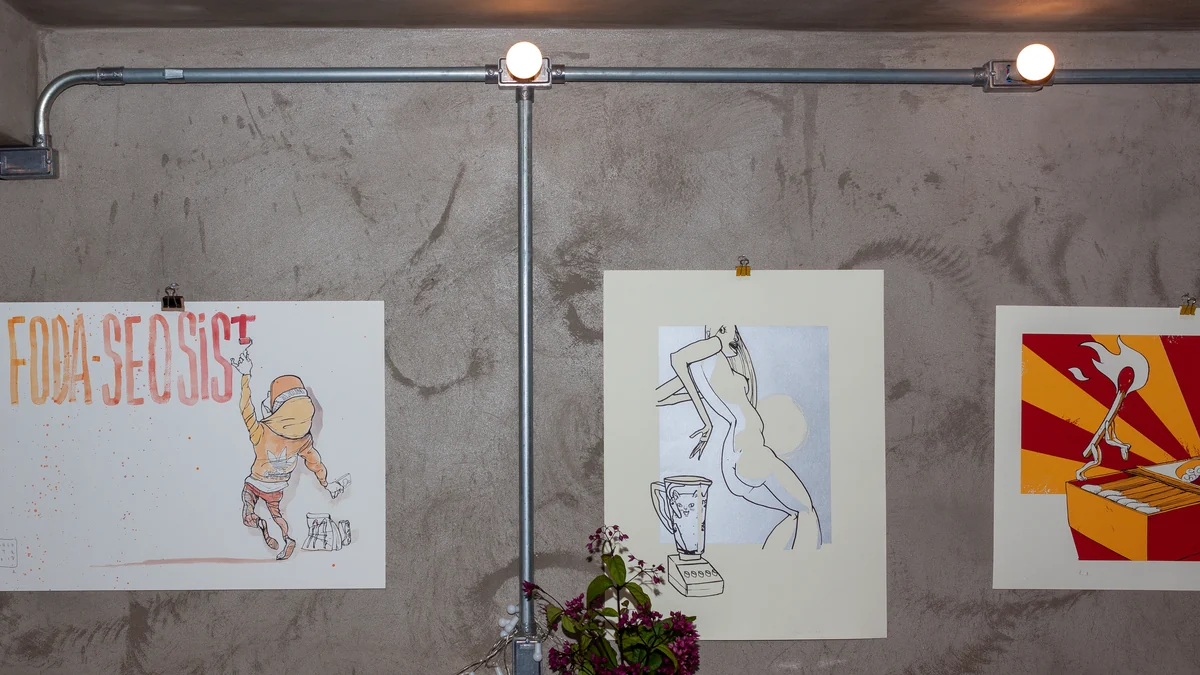
The route published by UOL/BBC describes Batman Alley as an informal gallery formed around Rua Gonçalo Afonso and Rua Medeiros de Albuquerque, emphasizing that it was constantly changing. Expanding the walk into the surrounding streets, the author identifies a Paulo Ito work on Rua Mário de Alencar and includes a photograph of the graffiti.
That is what the report securely establishes: a work attributed to Ito was present at that location in the record published in 2015. It supplies no title, technical information, or painting date. Nor does it say that Ito assigned the image the meaning proposed in the article.
The reflection about a possible human tendency to evolve and adapt while retaining something essential is the route writer’s interpretation. It is a legitimate viewer response, but it should not be presented as a confirmed statement or intention by the artist.
Why there is no confirmed title
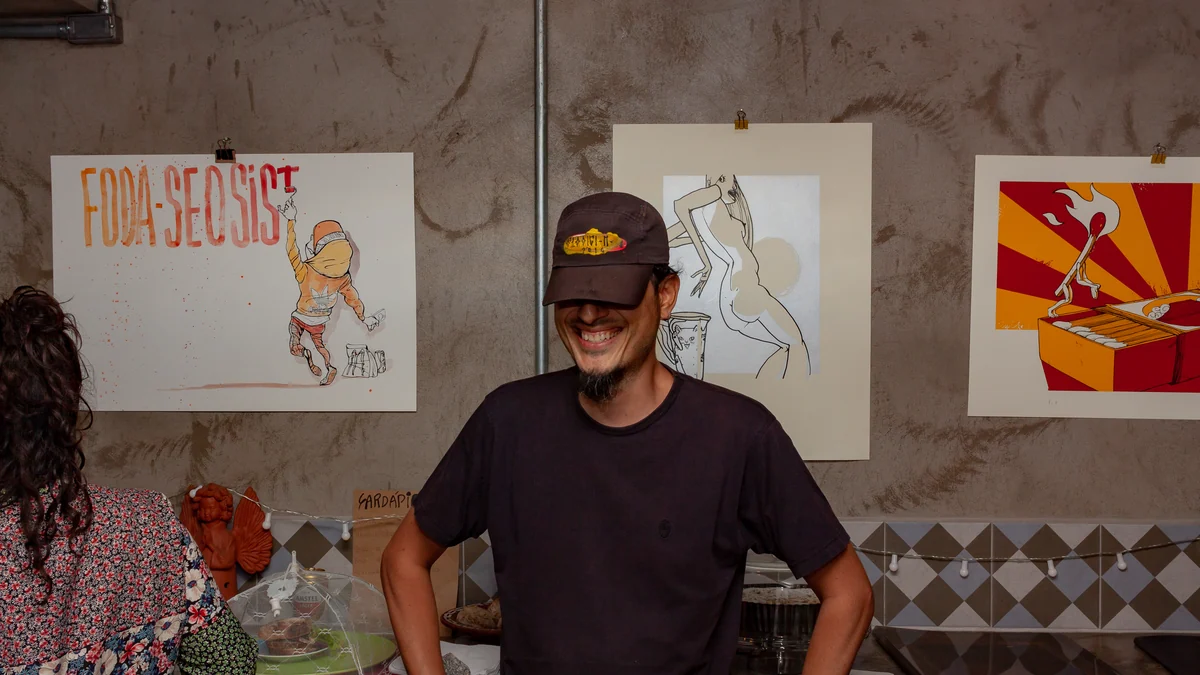
A photograph accompanied by the artist’s name helps establish attribution in a journalistic context, but it does not resolve every cataloguing detail. Without a title supplied by the report or confirmed by the artist, the responsible description is “an untitled—or title unconfirmed—graffiti work photographed on Rua Mário de Alencar.”
There is also insufficient evidence to connect that image automatically to descriptions of works in texts from other years. Unless a source establishes a match through an image, title, or Ito’s own statement, thematic similarities do not prove that two references concern the same painting.
For visitors, the practical rule is straightforward: treat the 2015 location as an archival reference. Do not use the old article as a map to a work assumed to remain visible, and do not transfer its interpretation or an invented title to a present-day mural.
Social criticism in Paulo Ito’s career
Ito’s career provides context for why the report interpreted the graffiti through a social lens, although it does not confirm the intention of that specific work. On Paulo Ito’s official website, the artist states that he was born in São Paulo in 1978 and began painting in public spaces in 1997. His biography also records work in comics, exhibitions, and large-format paintings.
The Fundação Bunge profile divides his production into phases and says that, from 2009 onward, his street work addressed social and behavioral criticism. It also notes the influence of comics and that most of his work is in São Paulo. These details help place his visual language in context, but they are not a retrospective caption for every image he has created.
A different Batman Alley mural
A Veja São Paulo report documents a 2016 mural near the Rua Harmonia entrance to Batman Alley. Measuring about 8 meters high and 14 meters wide, it used imagery inspired by children’s building blocks. On that occasion, Ito explained that the work addressed the exclusion of people who do not fit a standard and bullying from childhood into adult life.
Its date, stated location, dimensions, and the artist’s direct explanation identify it as a separate work, later than the 2015 route. Nothing in the sources reviewed supports identifying the building-block mural as the graffiti photographed on Rua Mário de Alencar.
The environmental mural is a third reference
350.org Brasil also documented an environmental mural by Ito in Batman Alley. It depicted a suited man using the stump of a felled tree as a toilet. Discussing the work, the artist said he sought to prompt reflection without determining how each person should understand it.
The available text confirms the subject, image, authorship, and its creation in Batman Alley, but the extracted page does not provide a publication date that would securely establish the mural’s year. It should therefore be treated as another separate historical record—not as an automatic identification of the work photographed in 2015.
How to approach this changing collection
Paulo Ito’s contribution can be understood through his combination of figurative drawing, comics influence, and the social or behavioral concerns documented throughout his career. In Batman Alley, however, that contribution appears in temporal layers rather than as one fixed, permanent piece.
During a visit, compare what is currently on the walls with dated records, look for signatures when they are legible, and remember that an old photograph may document a work that has since been replaced. This produces a more careful reading of the site: Batman Alley is not merely a collection of pictures but a space where creation, removal, and renewal all form part of its memory.
The sources reviewed do not confirm that any of the historical murals mentioned here remain visible. For current information about the artist, consult his official website.
Visit Becoartes
While exploring Vila Madalena, visit [Becoartes](https://becoartes.com/) at Rua Gonçalo Afonso, 99.
Becoartes - Beco do Batman
99 Gonçalo Afonso Street, Vila Madalena, São Paulo
Sources and credits
- Webysther Nunes — CC BY-SA 4.0
- Webysther Nunes — CC BY-SA 4.0
- Webysther Nunes — CC BY-SA 4.0
- Webysther Nunes — CC BY-SA 4.0
- UOL/BBC — roteiro de grafites publicado em 10 de junho de 2015
- Site oficial de Paulo Ito — biografia
- Thalo — entrevista de 2013 sobre os trabalhos de Ito no Beco do Batman
- Veja São Paulo — mural de blocos pintado em 2016
- 350.org Brasil — mural ambiental de Paulo Ito no Beco
- Fundação Bunge — perfil do premiado Paulo Ito