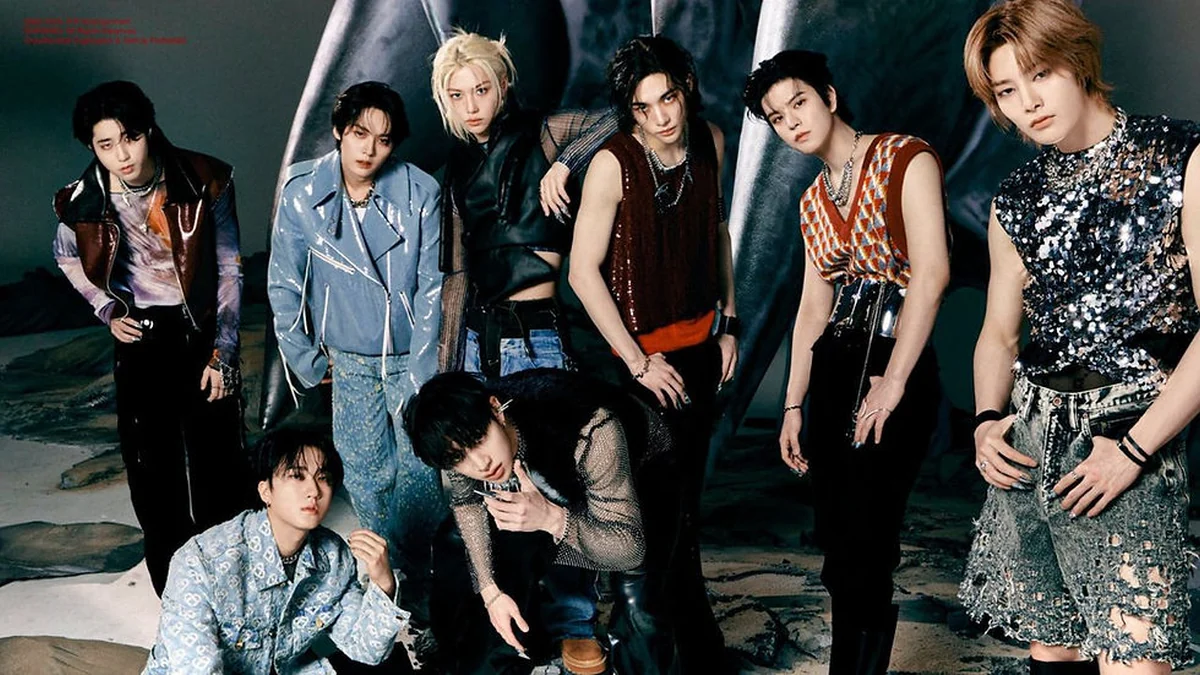
Rock in Rio has always been more than a sequence of concerts. Since its creation, the festival has learned to sell an idea of scale: the crowd, the monumental stage, the temporary city, the meeting of generations and the promise that, for a few days, popular music can feel larger than routine. In 2026, that logic faces a new test. Stray Kids appearing as headliner of the Palco Mundo on September 11 marks K-pop's debut in the history of the festival and forces the event to speak to a fan culture that no longer depends on validation from traditional stages in order to exist.
The confirmed fact is simple and strong: Rock in Rio takes place on September 4, 5, 6, 7, 11, 12 and 13, 2026, at Cidade do Rock, in the Olympic Park, in Rio de Janeiro. The official program places Stray Kids at the top of the Palco Mundo on September 11, the same day Alok, HWASA and NEXZ also perform there. The interpretation begins after that: this is not only about including a genre in a lineup. It is about recognizing that the center of global pop music has changed language, format, choreography and its relationship with the audience.
A debut that weighs more than a novelty
K-pop's arrival at Rock in Rio is not an isolated gesture. The genre already occupies stadiums, digital platforms, awards shows, fashion brands, viral choreographies and fan communities spread across different countries. In Brazil, that audience has long stopped being a niche hidden in internet bubbles. It buys tickets, travels, organizes collective actions, learns the codes of another cultural industry and turns each release into a collective event.
Stray Kids reaches this point with a particular narrative. The group is formed by Bang Chan, Lee Know, Changbin, Hyunjin, HAN, Felix, Seungmin and I.N, and has consolidated itself with an aesthetic that mixes rap, electronic music, rock, choreographic pressure and self-produced work. This detail matters because it helps move away from a lazy reading of K-pop as a merely manufactured product. Like every large-scale pop industry, there is method, training and image engineering. But there is also language, a sonic signature and a dispute over identity.
In the context of Rock in Rio, the debut represents a symbolic update. The festival was born associated with an idea of international consecration: bringing to Brazil artists who seemed distant from the local circuit. Now, it must deal with an audience that already follows its idols in real time, without waiting for radio, television or the music press to grant permission. The news, therefore, is not Brazil discovering K-pop. It is Rock in Rio admitting that this scene has already arrived at full size.
The Palco Mundo as a showcase for cultural dispute
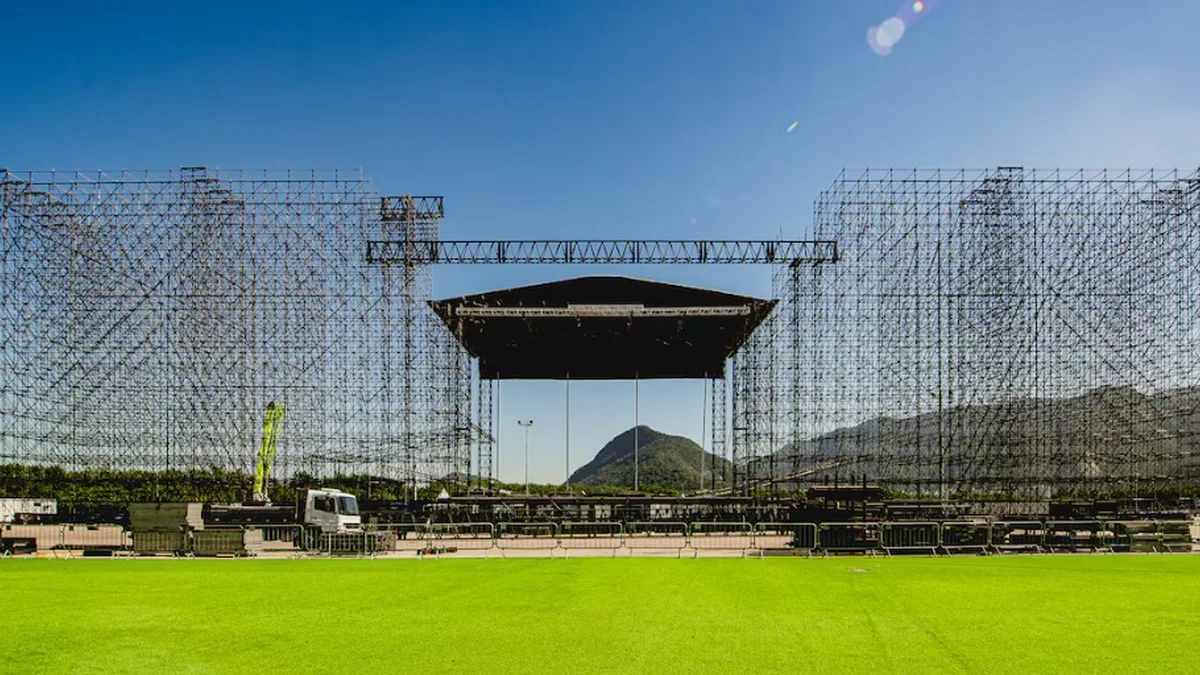
The Palco Mundo is where the festival organizes its own memory. In 2026, it hosts names such as Foo Fighters, Avenged Sevenfold, Calvin Harris, Elton John, Maroon 5, Twenty One Pilots and Stray Kids, as well as Brazilian artists in central positions across the program. That is where Rock in Rio says what it considers large enough to become a monument.
The technical scale reinforces this ambition. According to official material from the organization, the Palco Mundo will have around 2,400 square meters of LED panels, 107 meters in width, 27.5 meters in height and 3.2 million watts of sound power. Those numbers do not replace music, but they help explain the event's grammar. At Rock in Rio, a concert is also architecture, circulation, light, screen, line, broadcast image and shared memory.
It is in this environment that K-pop often operates powerfully. The performance does not depend only on the song; it combines bodily precision, visual design, video, costume, the mental editing of a live music video and fan participation. For part of the more traditional rock audience, this may seem out of place. For a generation used to consuming music as a complete audiovisual experience, it feels natural.
The festival, then, faces a productive tension: preserving its history without turning the past into a fence. The presence of Stray Kids does not erase rock from the edition, just as the presence of Calvin Harris does not erase guitars, and Elton John does not reduce the festival to nostalgia. What appears is a curatorship trying to manage audiences that recognize themselves in different languages but share the search for physical presence in a time dominated by screens.
Brazil at the center, not only in the crowd
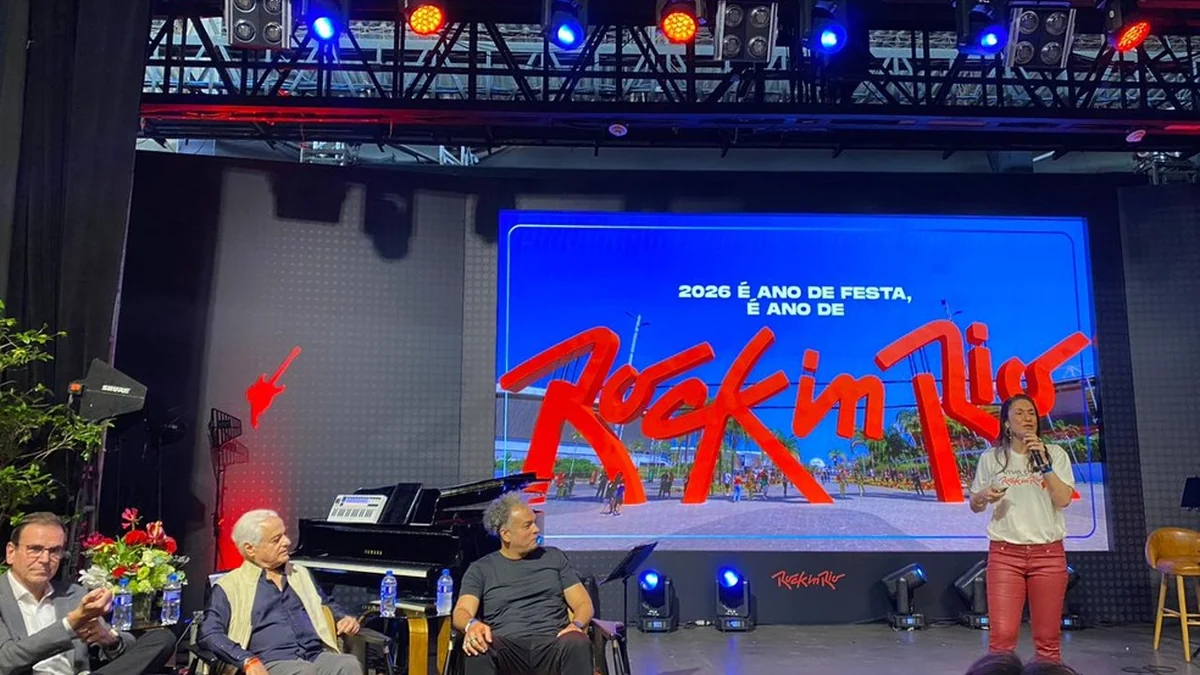
A fair reading of the 2026 edition must avoid the idea that Rock in Rio only becomes relevant when it imports major foreign names. The program also presents an expressive map of Brazilian music. On September 7, Gilberto Gil performs on the Palco Mundo before Elton John. On the Sunset stage, Péricles sings a repertoire connected to Motown, creating a bridge between pagode, soul, R&B and the history of Black music. On other days, names such as Luísa Sonza, Pedro Sampaio, Ivete Sangalo, Criolo, João Gomes, Marina Sena, Céu, Joelma, Viviane Batidão, Cabelinho, MC Carol, Luedji Luna, Duquesa, Dennis and Delacruz appear on different stages.
The factual point is the presence of these artists in the announced lineup. The cultural reading is that the festival seems less interested in separating genre purity and more willing to organize collisions. Péricles with Motown is not a side curiosity: it is a way of affirming that Black Brazilian music has always dialogued with soul, R&B and international pop without losing its accent. Criolo alongside Amaro Freitas and Dino D'Santiago points to another conversation, between rap, jazz, diaspora and the Portuguese language. Os Garotin inviting Duquesa, in turn, brings to Sunset a strand of new Brazilian music that crosses R&B, rap, Bahia, Rio and networks.
This design matters because it prevents K-pop from entering as an isolated exotic attraction. It becomes part of a festival in which cultural circulation is the rule. The question stops being whether a certain genre belongs at Rock in Rio and becomes how each scene occupies the scale offered by the event.
Fandom, city and the economy of presence
Large festivals live with a contemporary contradiction. Almost everything can be seen in clips, broadcasts, short videos and amateur recordings. Even so, physical presence remains valued. The digital ticket, the trip, the outfit chosen for the day, the meeting with friends, the hours of waiting and the collective singing work as a kind of proof of belonging.
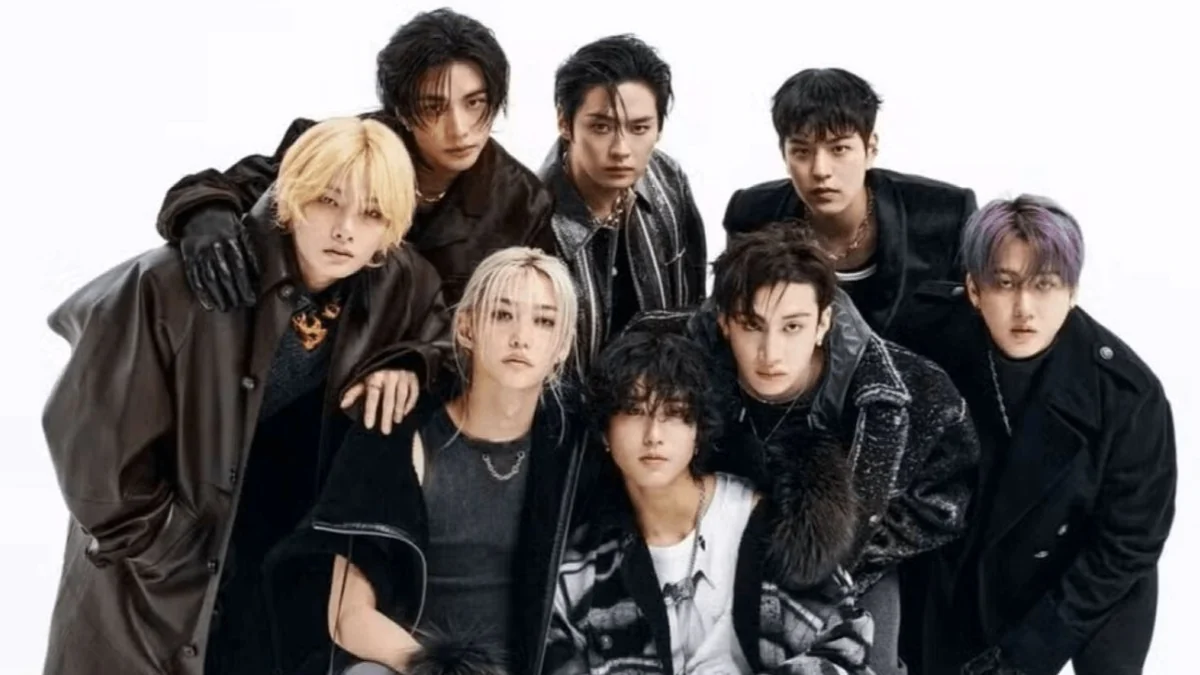
In the case of K-pop, this is even more evident. The fandom is not only an audience; it is an emotional infrastructure. It translates, organizes, promotes, teaches choreography, builds projects, buys in groups and turns the show into a ritual. When this audience enters Rock in Rio, it brings with it a methodology of participation. The festival gains intensity, but it also needs to respond to specific expectations: punctuality, safety, visibility, clear communication and respect for communities that arrive with their own codes.
The organization says Cidade do Rock will have 385,000 square meters, 190 shows and more than 1,300 artists. These numbers give the encounter a logistical dimension. But the temporary city only becomes a cultural experience when it can transform flow into coexistence. That is where a festival differs from a sequence of performances. The audience does not buy only the headliner; it buys the chance to inhabit a musical territory for a day.
Technology as stage language
The 2026 edition also draws attention because of the weight of technology in the experience. Beyond the new design of the Palco Mundo, the organization highlights the return of the New Dance Order with its own scenography and LED panels, and the ECCO show, developed with LightWire, as a sensory arena attraction. The project is described as a 360-degree experience combining light, sound, technology, body, aromas and a narrative inspired by nature.
Here, Rock in Rio touches a central point of current pop culture: technology is not only technical apparatus, it is language. Screens, lights, immersive sound and holography can become empty excess when they replace artistic intention. But when connected to a performance proposal, they expand the audience's perception. K-pop knows this territory well. Electronic music does too. Arena pop, stage funk, rap with scenography and MPB in large events have all learned to negotiate with the image.
The cultural question is how to maintain density within spectacle. A festival of this size needs to be legible to those close to the stage, to those far away, to those watching on television and to those who will only see fragments later. The screen has stopped being an addition; it has become part of the stage. That changes how artists build presence.
The risk of the giant lineup
Not every expansion automatically means depth. A festival with many stages, brands, experiences, restaurants, rides, activations and broadcasts risks turning music into a backdrop for consumption. That is the criticism that accompanies any cultural mega-event. Rock in Rio knows how to operate at scale, but each edition must prove that scale is not the same as dispersion.
The 2026 program offers arguments for and against this model. In favor, there are encounters that can produce real meaning: Péricles and Motown, Gil before Elton John, Stray Kids opening space for K-pop, Brazilian rap and R&B artists circulating through stages of great visibility. Against it, there is always the danger that the experience becomes a catalog, with attractions stacked together and little time for listening.
The difference will be in the curatorship perceived by the public. When the mixture reveals historical connections, it strengthens the festival. When it seems only like an attempt to please every niche at once, it loses force. In 2026, Rock in Rio is betting that the diversity of scenes can be narrative, not noise.
Why this story matters now
A few days before the opening, the conversation about Rock in Rio stops being only a service agenda. It becomes a symptom of how Brazil consumes global culture. The country no longer passively receives foreign trends; it has remixed Latin pop, projected funk, exported artists, created regional rap scenes, sustained giant festivals and formed an audience capable of moving between Gilberto Gil, Péricles, Stray Kids, Alok, Criolo and Halsey without apologizing for the mixture.
The confirmed fact is that the 2026 edition brings this combination together at Cidade do Rock. The interpretation is that the festival is trying to respond to a time in which musical identity is less tied to genre and more linked to community, performance and digital circulation. The audience that sings a Gil classic may be the same one that knows the fan chant of a Korean group. The contradiction exists only for those who still see culture as a drawer.
For São Paulo, this reading also matters. The city lives from encounters between scenes: rap on the edges and in the center, funk occupying parties and stages, Korean culture in neighborhoods, events and cinemas, independent music circulating between Sesc venues, small houses and festivals. Rock in Rio takes place in Rio, but the conversation crosses Avenida Paulista, Liberdade, Vila Madalena and the alleys where image, sound and youth mix. For Becoartes, looking at this debut means looking at how Brazilian urban culture learns to receive the world without ceasing to write its own wall.
Keep Watching
Follow Becoartes for the movements connecting music, city, image and urban culture in Brazil.
Becoartes - Beco do Batman
99 Gonçalo Afonso Street, Vila Madalena, São Paulo
Sources and credits
- Divulgação / Reprodução Cafe com Kimchi — Reprodução editorial com crédito à fonte
- Divulgação / Rock in Rio via Novabrasil — Reprodução editorial com crédito à fonte
- Reprodução / Gshow — Reprodução editorial com crédito à fonte
- Divulgação / Reprodução Vagalume — Reprodução editorial com crédito à fonte
- Rock in Rio - Line-up oficial 2026
- Rock in Rio - Release oficial de 4 de agosto de 2026
- Folha de S.Paulo - Stray Kids lidera estreia do k-pop no Rock in Rio
- CNN Brasil - Headliners mais procurados do Rock in Rio 2026
- Gshow - Rock in Rio anuncia Stray Kids como primeira atração de K-pop da história do festival