Just as the Seville derby was running out of minutes, the action pointed the wrong way for anyone anticipating the equaliser. Real Betis led 1–0. Héctor Bellerín helped start a counterattack and Troy Parrott tried his luck from more than thirty metres. His shot went close to the crossbar. At the other end, in the first of five added minutes, Sevilla defender Kike Salas put the ball in the bottom corner. A point rescued by the home side, and two that slipped away from the visitors, came down to that change of direction.
There is a fresh reason to revisit Saturday’s game at the Ramón Sánchez-Pizjuán. On Wednesday 25 November, LaLiga released a RefCam feature presenting the fixture from the perspective of referee José María Sánchez Martínez. The result is no secret; the attraction is the shift from a seat high in the stand to an eye line on the pitch. For those who caught the clip of Antony scoring but not the rest of the match, start with a question: how many other ways did he find to threaten Sevilla?
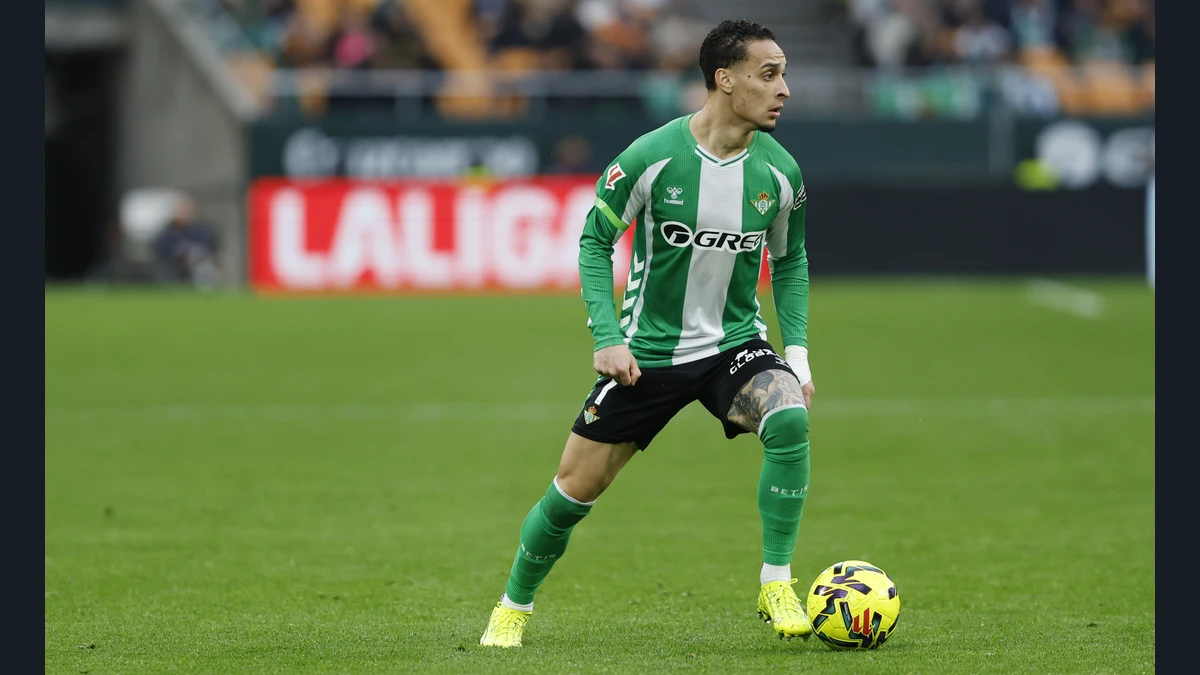
Isco had picked out Antony once before
In the 27th minute, Isco supplied the ball and Antony took aim with his left foot from outside the area. It flew close to the top corner. That was no isolated spell of one-way traffic. Sevilla forward Lucas Stassin had just forced a save, and in the 31st minute Kike Salas headed wide from a corner. The teams went into the interval level at nil, but that score gives a poor sense of who was getting on the ball in dangerous positions.
Antony had a hand in more than one kind of attack. He found Pablo Fornals for a shot from range before the break, turning provider rather than waiting to finish. After the restart it was Stassin who threatened first, shooting just over in the 48th minute. Then the earlier partnership resurfaced. Isco supplied Antony in the 50th; the Brazilian struck left-footed again, this time from the right side of the box. The change in distance is worth noticing. The names on the move were the same, but the finish came from a better foothold inside the defence.
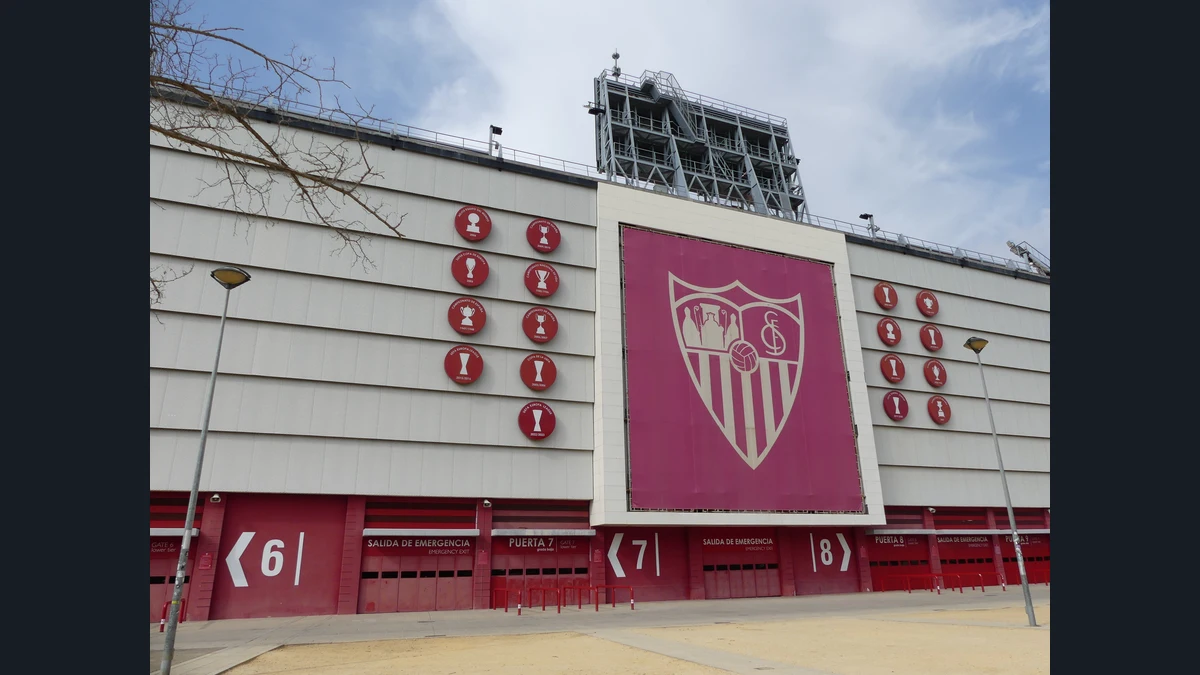
The save missing from a two-goal highlights reel
Seven minutes later there was another chance for Antony, and it looked different from either of his left-footed efforts. Abde Ezzalzouli created it. This time the Brazilian was in the centre and used his right foot. Sevilla’s goalkeeper stopped the shot. A replay confined to the goals leaves the impression of a right winger finding his favourite angle. Add this passage and a second picture emerges: a forward arriving centrally, finishing on his other foot and working with a different teammate.
It would also be wrong to compress the second half into a Betis retreat and a last desperate surge by Sevilla. Parrott’s late effort came on a break with the visitors still in front. At the other end, Salas was not the only defender to appear as a finishing threat. Andrés Castrín had a header saved in the 89th minute. Go back to Salas’s own first-half header and his appearance high up the pitch in added time starts to look less surprising, even if his choice of finish still comes as a jolt.
The centre-back scored, but not from a cross
A late equaliser by a defender calls to mind a packed six-yard box and one last aerial challenge. This one belongs in a different category. Isaac Romero played the final pass and Salas hit a low left-footed shot from outside the area. Rather than attack a ball over his head, he could pick a bottom corner from distance. The official match record separates that strike from the headers that preceded it; the distinction is much more revealing than simply saying Sevilla kept trying.
That is where the referee’s camera makes an interesting companion to conventional coverage. The main broadcast angle offers breadth: a viewer can follow a runner on the far side even while the ball is near the touchline. A camera moving with Sánchez Martínez offers proximity but gives up part of that field of view. What disappears beyond the edge of the frame matters too. The league’s feature is an additional perspective on an already decided match, not a VAR ruling or an account of what the official personally thought about every decision.
Two different fixtures follow the draw
Betis host Rayo Vallecano on Saturday 28 November at 14:00 mainland Spanish time, or 13:00 GMT. Sevilla visit Real Sociedad on Sunday 29 November at 21:00 in Spain, 20:00 GMT. Both matches belong to LaLiga’s fourteenth round. Check local listings for broadcasters: a channel named on the Spanish schedule is not necessarily the rights holder outside Spain.
Those fixtures give the draw two distinct afterlives. For Betis, the question is how to protect a lead without losing the combinations that put Antony in position for a second. For Sevilla, the more useful takeaway is the range of players who got shots away, not an expectation that a defender will find the corner with time running out again. Before either takes the field this weekend, there is a good moment to catch on a second viewing: the ball heading towards Sevilla’s goal just before the score changed at the opposite end.
Image credits. Context photographs resized, framed with margins and converted to WebP without cropping. FotosLaLiga (CC BY-SA 4.0); CarlosVdeHabsburgo (CC BY-SA 4.0).
Sources for this story
Original documents are linked in the article.
Becoartes - Beco do Batman
99 Gonçalo Afonso Street, Vila Madalena, São Paulo