In 2001, Nevenka Fernández called a press conference to explain why she was leaving local government in Ponferrada and bringing a complaint against its mayor. On Tuesday, November 24, 2026, she appeared in another seat of government under very different circumstances. At the Moncloa complex in Madrid, Prime Minister Pedro Sánchez presented her with the Encomienda of Spain's Order of Civil Merit. Twenty-five years separate the two public appearances. Between them came a sexual harassment conviction and several very different accounts of what happened in that northwestern Spanish city.
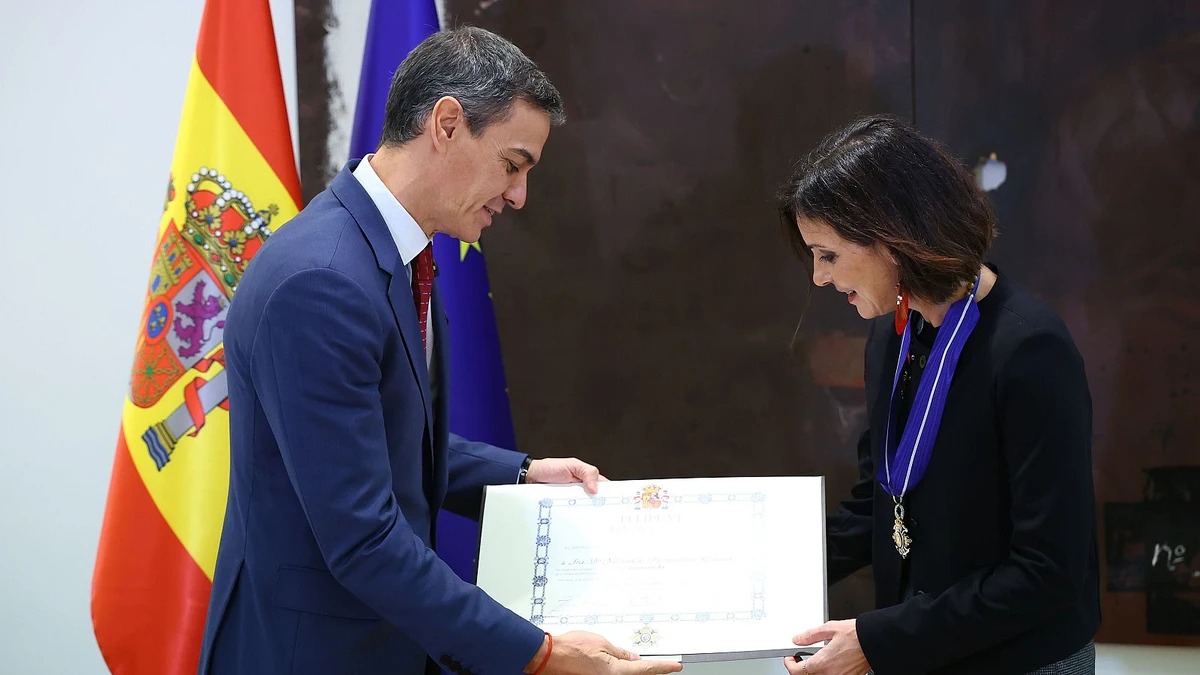
What Spain awarded Fernández
The prime minister's published schedule placed the presentation at 10:45 a.m., after the Council of Ministers meeting, and Moncloa released a recording of the ceremony. The Spanish word *encomienda* has a particular meaning here: it is a rank within an order of honour. It is not a job, a commission to undertake work or an award of financial damages. Fernández herself received the distinction. It was not a prize for either the documentary or the feature film made about her.
The presentation took place one day before November 25, the International Day for the Elimination of Violence against Women. That timing explains part of the renewed attention, but the other dates matter too. Fernández made her complaint public in 2001. A court convicted the mayor in 2002. The film that introduced her story to some younger audiences premiered more than two decades later. Putting those events next to one another shows how different the timescales of a court case and public recognition can be.
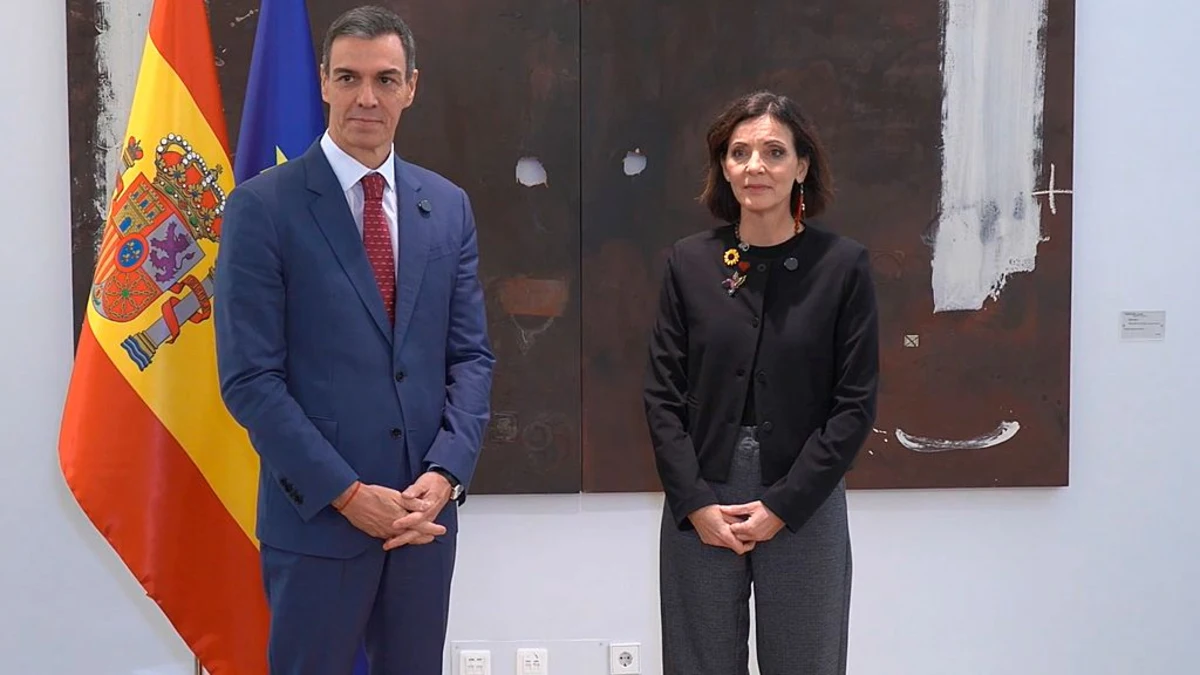
A finance councillor and a mayor
Fernández was the councillor responsible for municipal finances in Ponferrada, in the province of León in the region of Castile and León. The person she accused was Ismael Álvarez, then the mayor. Both belonged to the Popular Party. They were not simply two elected politicians serving the same city: Fernández held a portfolio in an administration that Álvarez headed. When she identified him publicly, she was naming the most powerful figure in the institution where she worked.
It is useful to separate what people learned at her press conference from what the courts subsequently established. In 2001 Fernández was making a complaint. In 2002 the High Court of Justice of Castile and León convicted Álvarez of sexual harassment. In 2003, Spain’s Supreme Court upheld the conviction but removed the aggravating factor and reduced the fine. The case became a landmark in Spain because it resulted in the conviction of a politician for that offence. That does not mean Fernández was the first Spanish woman to experience or report harassment. The distinction concerns the outcome of this case in the political sphere, not the whole history of harassment in Spain.
On the page, on television and on screen
Readers tracing the story encounter works in three different forms. The writer Juan José Millás examined it in his book *Hay algo que no es como me dicen*. The 2021 documentary series *Nevenka* gave Fernández room to tell her own story. Then came *Soy Nevenka*, released internationally as *I Am Nevenka*. Directed by Icíar Bollaín and written with Isa Campo, the feature competed in the official selection at the 2024 San Sebastián Film Festival. Mireia Oriol plays the councillor and Urko Olazabal plays the mayor.
Those differences are more than a matter of titles. When Oriol appears as Fernández, viewers are seeing an actor interpreting a screenplay, not footage of the councillor at work. Spain's film institute identifies Millás's book as an inspiration for the feature. The festival introduces the film through the position of the young municipal finance councillor. Both offer a way into the story, but neither replaces a judgment for a reader trying to establish what a court decided. Equally, it is the Moncloa recording, not a film still, that documents this week's presentation.
The distance between two appearances
Someone who first encountered Fernández through the movie could be forgiven for imagining a fairly straight line from public complaint to court decision to national recognition. Look at the dates and a different picture emerges. The conviction followed the public complaint the next year. This particular honour came nearly a quarter of a century after the conviction. Meanwhile the story moved from municipal politics to books, television and the international film circuit, reaching people who had never seen the original coverage.
The official record gives a straightforward answer to what happened on Tuesday: it identifies the recipient, the distinction, the place and the date. To understand why that brief ceremony matters outside a prime minister's diary, the starting point is Ponferrada. Long before there was a medal or a feature film, the person in charge of a city's finances stood before the press to explain why she could no longer stay in her post.
Image credits. Context photographs resized, framed with margins and converted to WebP without cropping. Pool Moncloa / Fernando Calvo (La Moncloa: reproducción y distribución autorizadas; imágenes firmadas Pool Moncloa de libre acceso); Pool Moncloa / Carlos Herrero (La Moncloa: reproducción y distribución autorizadas; imágenes firmadas Pool Moncloa de libre acceso).
Sources for this story
Original documents are linked in the article.
Becoartes - Beco do Batman
99 Gonçalo Afonso Street, Vila Madalena, São Paulo
Sources and credits
- Pool Moncloa / Fernando Calvo — La Moncloa: reproducción y distribución autorizadas; imágenes firmadas Pool Moncloa de libre acceso
- Pool Moncloa / Carlos Herrero — La Moncloa: reproducción y distribución autorizadas; imágenes firmadas Pool Moncloa de libre acceso
- La Moncloa: vídeo oficial
- Presidencia del Gobierno: agenda
- Festival de San Sebastián: Soy Nevenka
- ICAA: Soy Nevenka
- Tribunal Supremo: Sentencia 1460/2003, ECLI:ES:TS:2003:6950