The death of Tim Curry, confirmed by the actor’s representatives at the age of 80, does not merely close the biography of a brilliant performer. It reopens a larger question: how do certain performances stop belonging only to a film, a play or a generation and become cultural language?
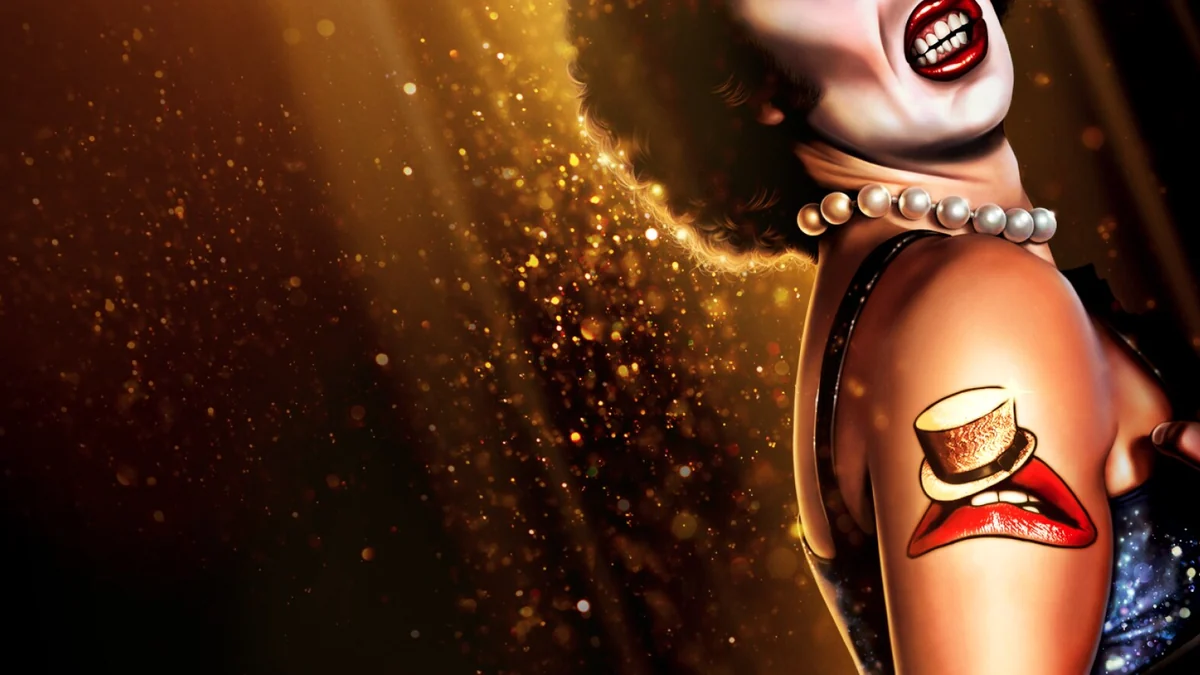
Curry became globally associated with Dr. Frank-N-Furter from The Rocky Horror Picture Show, a character he created onstage in 1973 and brought to film in 1975. But reducing his career to that icon would miss exactly what made his presence so rare. He was a stage actor, singer, comedian, fantasy villain, clown of childhood trauma, absurdist butler, animation voice and cult figure. His talent lay in treating excess not as decoration, but as precision.
News of his death arrives as pop culture revisits its own myths through archive, rerelease, remix and memory. In Curry’s case, remembrance is not simple nostalgia. It is a dispute over meaning. What remains of Frank-N-Furter, Pennywise, Wadsworth and so many other characters is not just a sequence of memorable scenes. It is proof that the body onstage and onscreen can challenge normality, fear, desire and laughter at the same time.
The Confirmed Fact
Tim Curry died at 80 in Los Angeles, according to confirmation from representatives and his team to international outlets. The cause of death was not publicly disclosed. Current reports note that the actor had faced health limitations since a stroke in 2012, an episode that reduced his mobility and led him to focus part of his later work on voice acting, selected public appearances and fan events.
Born in Cheshire, England, in 1946, Curry studied drama and English before building a career onstage. His theatrical training explains much of his signature: projected voice, command of pause, expansive gesture and control of character even when everything seemed to move toward delirium. Onstage, he could appear chaotic; technically, he was rarely imprecise.
Confirmed milestones in his career include The Rocky Horror Show, The Rocky Horror Picture Show, Clue, Annie, Legend, Home Alone 2: Lost in New York, Muppet Treasure Island, the miniseries It, as well as work in animation and games. He also received three Tony nominations for Amadeus, My Favorite Year and Monty Python’s Spamalot. This body of work shows a career less linear than plural: Curry moved through stage, film, television, music and voice with unusual elasticity.
Why Rocky Horror Did Not Age as a Curiosity
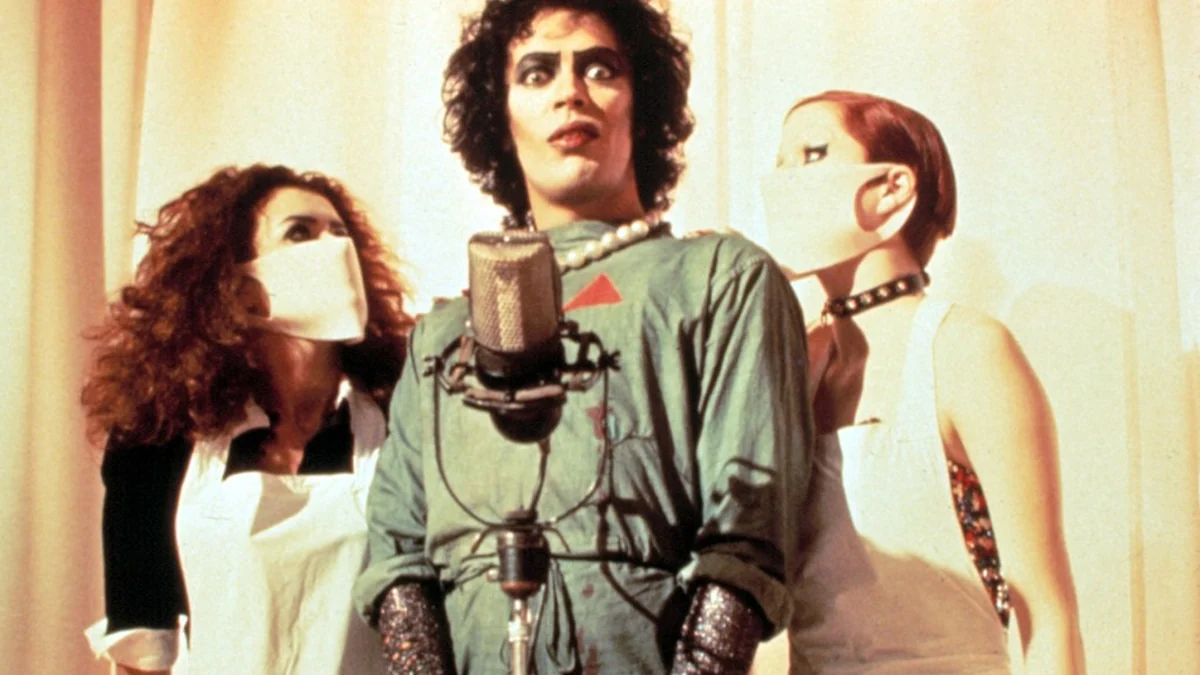
The Rocky Horror Picture Show could have remained trapped in the label of 1970s eccentricity. It did not. The film crossed decades because it invented its own relationship with the audience. Its midnight screenings, with spoken responses, costumes, audience rituals and collective participation, transformed exhibition into performance. The audience did not merely watch the film; it entered it.
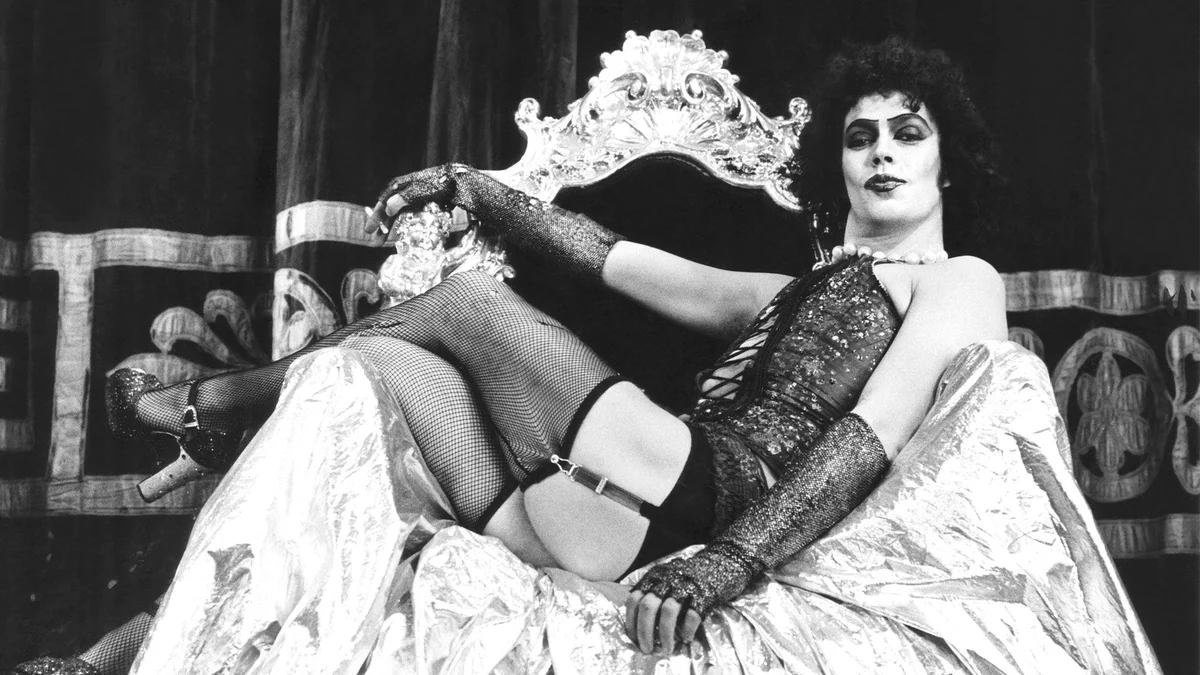
Curry was the magnetic center of that operation. Frank-N-Furter mixed glam rock, cheap science fiction, cabaret, gothic horror, sexual parody and popular theater. The character can be read today through critical layers, including changes in how gender and identity are discussed. Even so, its historical force lies in having offered many people an image of performative freedom when few such images circulated in the mainstream.
The cultural point is not to say that Rocky Horror solved debates over representation. It did not. The point is to see that the film opened space for a collective experience in which strangeness, desire and humor could occupy the theater without apology. Curry did not perform that shift as a thesis. He did it with voice, gaze, makeup, risk and timing.
Fear Also Had Theater
For a generation that did not first meet Curry through the musical, Pennywise was the entry point. In the 1990 miniseries It, based on Stephen King, he turned the clown into a traumatic presence before the era dominated by digital effects. The horror came less from the makeup itself and more from the alternation between play and threat. Curry knew how to make the viewer laugh a second before distrusting the laughter.
That skill placed his villains close to an older theatrical lineage: figures who seduce before attacking, who seem larger than the script, who understand the scene as an arena. In Legend, Clue or even comic roles, Curry rarely disappeared into the character in a naturalistic sense. He did the opposite: he showed that character is also construction, mask, artifice. Paradoxically, that is why he seemed so alive.
Pennywise’s legacy matters because it reveals the actor’s range. Frank-N-Furter became an emblem of aesthetic liberation; Pennywise became an image of dread. Between the two, the raw material was the same: control of voice, gaze, rhythm and pleasure in inhabiting unstable zones. Curry made exaggeration a grammar, not a flaw.

The Career Beyond the Icon
Actors marked by one monumental role often spend the rest of their lives trying to escape it. Curry seems to have lived with that mark ambivalently. He never stopped being remembered for Rocky Horror, but he was not trapped in literal repetition. His later work shows a performer interested in variety: musicals, farces, fantasy, family adventure, suspense, animation, television and video games.
Clue, released in 1985, is a good example. As Wadsworth, Curry drives a mystery comedy that depends on speed, physical precision and ensemble intelligence. In Home Alone 2, his turn as the concierge works in another key: comic villainy, elastic expression, ridiculous elegance. In Muppet Treasure Island, he gives himself to family play without lowering the theatrical energy. In voice acting, his voice carried enough personality to dispense with the whole body.
This path helps separate fact from interpretation. The fact: Curry had an extensive, awarded and recognized career across multiple media. The interpretation: his cultural importance comes from showing that theatricality is not the enemy of cinema. On the contrary, in his best performances it enlarges cinema, makes the frame less domesticated and returns the feeling of an event to the audience.
A Queer, Pop and Imperfect Presence
Curry’s relevance to queer culture does not require turning him into a saint or freezing Rocky Horror outside its time. The work carries the language, terms and frames of the 1970s, and parts of it may sound uncomfortable to current sensibilities. That is precisely why the most honest reading is historical and critical: recognize the impact without erasing the tensions.
Frank-N-Furter became an image of identification for audiences who rarely saw desire, gender fantasy and sexual theatricality at the center of a pop product. The film’s cult status was born not only from the finished work, but from its social use. People gathered, dressed up, answered the screen, repeated lines, created community. Curry became the face of that symbolic authorization to appear differently.
In a digital culture where identities are negotiated through avatars, memes, remix and everyday performance, that inheritance becomes even more visible. What was once a midnight screening now spreads through clips, references, costumes, visual samples and shared memory. Curry belongs to that pop genealogy that understands image as gesture.
What Remains Now
The death of an artist often produces two quick responses: canonization or accelerated consumption of greatest moments. Curry deserves something more attentive. His work asks to be revisited not as a museum, but as a living repertoire. Watching Rocky Horror today is to see an irregular, provocative, dated and still electric work. Rewatching Clue is to understand the mathematics of physical comedy. Returning to It is to notice how a performance can exceed the production limits of its time.
There is also a lesson for contemporary cinema. In an industry often dependent on recognizable brands, Curry reminds us that presence still matters. An actor can shift the center of gravity of a work. He can make a scene feel dangerous without shouting. He can turn costume into argument, makeup into rhythm, voice into architecture.
This is not longing for a supposedly better past. It is the recognition of a way of working that did not separate pop culture from theatrical technique. Curry was popular because he was sophisticated; he was sophisticated because he understood the popular. That combination explains why his images continue to circulate without becoming mere relics.
From Los Angeles to Our Cultural Map
For Brazilian audiences, Tim Curry was also a presence of video stores, television, cult screenings, reruns, dubbing, school musicals, costume parties and film clubs. His work arrived in fragments, as almost all international pop culture does: a film seen late at night, a borrowed tape, a meme recognized before its origin, a song repeated without full context. Even so, those fragments form a sentimental education.
In Sao Paulo, a city where alternative theaters, showcases, theme parties and art spaces coexist with street culture, Curry’s figure finds familiar ground. Vila Madalena knows something about public performance, mixed codes and visual identity contested in space. Beco do Batman, with its walls remade, erased and rewritten, also lives from this tension between permanence and transformation.
Tim Curry leaves a body of work that does not fit a well-behaved tribute. It asks for body, voice, memory and contradiction. And perhaps that is why, from cult cinema to the painted streets of Sao Paulo, his inheritance still speaks to the Becoartes gaze: culture is not only what is preserved intact, but what continues to change the way we appear in the world.
Continue on Becoartes
Read more of our perspectives on cinema, music, urban art and the meetings between pop culture, identity and Sao Paulo.
Becoartes - Beco do Batman
99 Gonçalo Afonso Street, Vila Madalena, São Paulo
Sources and credits
- 20th Century Studios — Reprodução editorial com crédito à fonte
- FM Hits / divulgação de The Rocky Horror Picture Show — Reprodução editorial com crédito à fonte
- Vanity Fair / The Rocky Horror Picture Show — Reprodução editorial com crédito à fonte
- NME / Warner Bros. Television — Reprodução editorial com crédito à fonte
- Associated Press
- The Guardian
- Los Angeles Times
- People