Manchester United and Manchester City are contesting the city’s 199th derby on 13 September 2026. Kick-off was scheduled for 16:30 UK time at Old Trafford, and that time had already passed when this article was published. This guide is therefore designed for following the match in progress or watching it back: notice how City bypass the press, how United accelerate after regaining possession and who controls the space between midfield and defence.
The official Manchester City preview published the starting line-ups. For the latest score, substitutions and broadcast information, consult the official coverage.
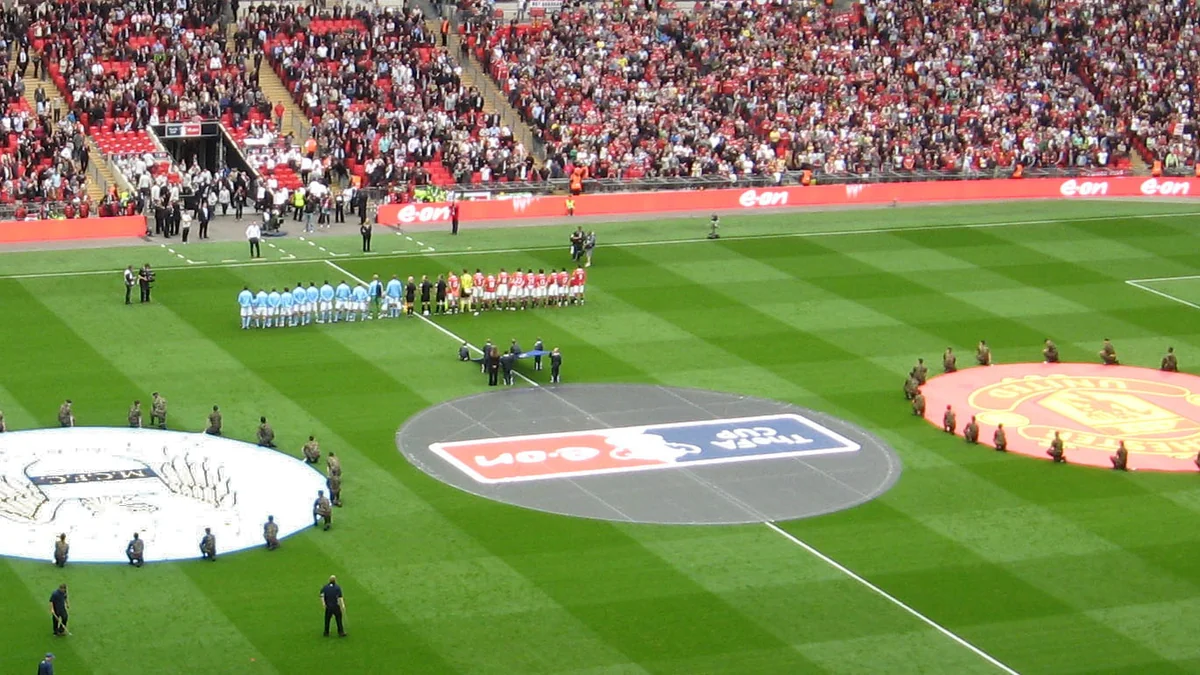
Why this is meeting number 199
The rivalry began long before the Premier League. According to the Football Association’s history, the first meeting took place in 1881, when the future clubs were still called West Gorton (St. Marks) and Newton Heath. The side that became United won 3–0. The FA counted 167 meetings in 2014; the clubs describe the 2026 fixture as the 199th.
The 2026/27 Premier League fixture list placed the game at Old Trafford on 13 September. The league notes that fixtures may change, so updates should be confirmed through official channels.
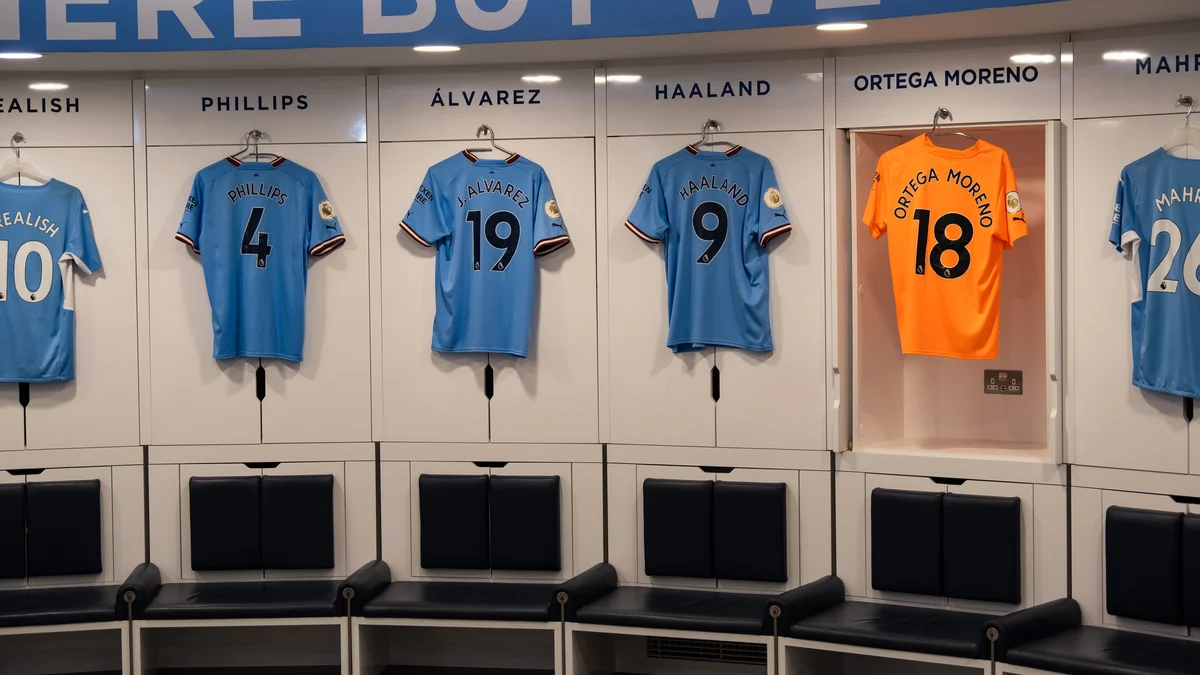
How the teams arrived
City opened the league campaign with three wins, against Bournemouth, Crystal Palace and Coventry City. United recorded one win, one draw and one defeat against Ipswich Town, Everton and Hull City. This is a snapshot of only three rounds, not a prediction.
City’s Opta-assisted analysis recorded 19 shots on target and seven goals for each team over that span. United led the league with 68 total attempts and had scored two Opta-defined fast-break goals. They had also conceded six goals from 4.1 opposition xG, with three arriving in the opening 15 minutes.
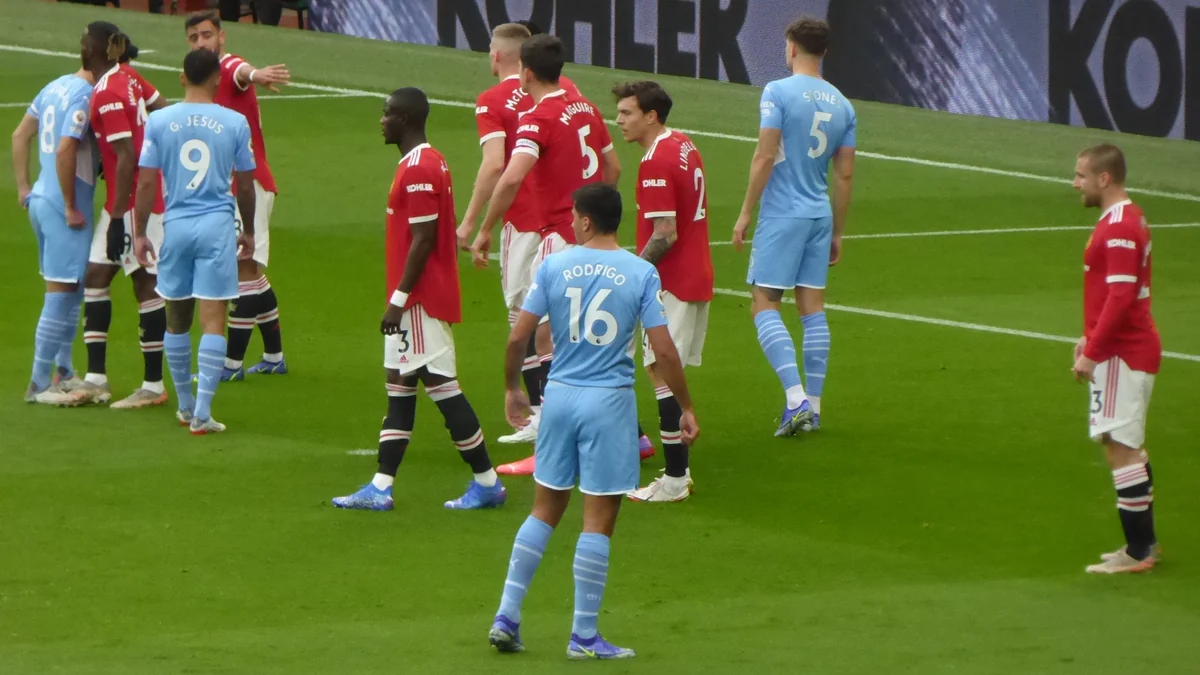
The initial shape
United started with Lammens; Dalot, Maguire, Martínez and Dorgu; Mainoo and Tielemans; Mbeumo, Bruno Fernandes and Rashford; Cunha. The selection matches the 4-2-3-1 used almost exclusively by Michael Carrick, according to the cited analysis.
City named Donnarumma; Nunes, Dias, Guéhi and Gvardiol; Anderson and Enzo Fernández; Foden, Cherki and Semenyo; Haaland. Anderson was the only announced change. Nico O’Reilly was on the bench, while Jérémy Doku was unavailable, according to Enzo Maresca’s update.
A team sheet does not freeze positions. Notice where each player appears in possession and how they recover after losing the ball.
Pattern one: City’s build-up against the press
Carrick prioritises intense pressing at home, while City tend to keep more of the ball. Watch whether the centre-backs split, a midfielder drops as a third outlet and the full-backs advance to stretch the pitch.
The central question is whether United can direct the opening pass towards a flank and block the next option. That may force a long ball or a contest. If Anderson, Fernández, Foden or Cherki receive centrally behind the first line, the defence must retreat or leave position to confront them.
Do not measure the press only through turnovers. A pass back to the goalkeeper, a directionless clearance or a reception with the player’s back to goal can also indicate a defensive advantage.
Pattern two: United’s transitions
The two fast-break goals provide an objective clue. After United regain possession, follow the first pass and the subsequent run. Bruno Fernandes can link the move; Mbeumo and Rashford provide wide outlets, while Cunha occupies or vacates the centre.
Then count City’s protection: how many players stand between the turnover and their own goal? Do Dias and Guéhi have cover from Anderson or Fernández? Can Nunes and Gvardiol close the centre before chasing an opponent wide?
A transition need not end in a shot. If it forces a foul, a disorganised retreat or a loss of territory, it has already created an advantage. An immediate City recovery, meanwhile, reveals sound positioning around the ball.
Pattern three: space between the lines
Foden and Cherki can seek the zone in front of Maguire and Martínez but behind Mainoo and Tielemans. United must decide whether a midfielder follows the receiver or a centre-back steps out, exposing space behind him.
At the other end, Bruno Fernandes can exploit the distance between City’s units. Watch body orientation: receiving while facing goal accelerates the move; receiving with the back to goal lets the defence compress the space.
Haaland adds tension to the last line. The analysis records eight goals in seven Premier League appearances against United, but only two at Old Trafford. That figure does not decide the derby; it helps explain why his movement can push back the defence and release room for the midfielders.
How to read the match
In each period, ask: who bypasses the first press more often? Who controls the action immediately after losing possession? Who receives between the lines while facing goal? Compare the answers before and after substitutions or adjustments.
This separates possession from genuine danger. Circulating near one’s own box does not mean attacking dominance; a counterattack stopped before the shot may reveal an advantage not yet visible on the scoreboard. The derby becomes clearer when each move is part of a repeated contest for space, time and numerical superiority.
Continue the conversation at Becoartes
For conversations about football, images and culture, discover Becoartes at Rua Gonçalo Afonso, 99, Vila Madalena. Check the official website before planning a visit.
Becoartes - Beco do Batman
99 Gonçalo Afonso Street, Vila Madalena, São Paulo
Sources and credits
- Photo by Oldelpaso Cropped and retouched by Danyele — CC BY-SA 3.0
- Christian David — CC BY-SA 4.0
- Ardfern — CC BY-SA 4.0
- Manchester City — prévia, horário, local e cobertura oficial do dérbi
- Manchester City — análise tática e estatística do Manchester United
- Manchester United — informações oficiais das equipes para o 199º dérbi
- Premier League — calendário oficial da temporada 2026/27
- The FA — origem e história do dérbi de Manchester