Manchester City beat Sunderland 5–3, but the scoreline does not represent broad dominance by the home side. Sunderland finished with more shots — 17 to 16 — and a higher expected-goals total, 4.15 to 2.72. The difference lay less in attacking volume than in chance conversion, reactions to defensive errors and City’s ability to score at the moments that separated the teams.
The win put City three points clear at the top of the Premier League, with five victories from their opening five matches. To understand why such a statistically close contest ended with a two-goal margin, the sequence of events matters more than the final score alone.
Two leads, two immediate replies
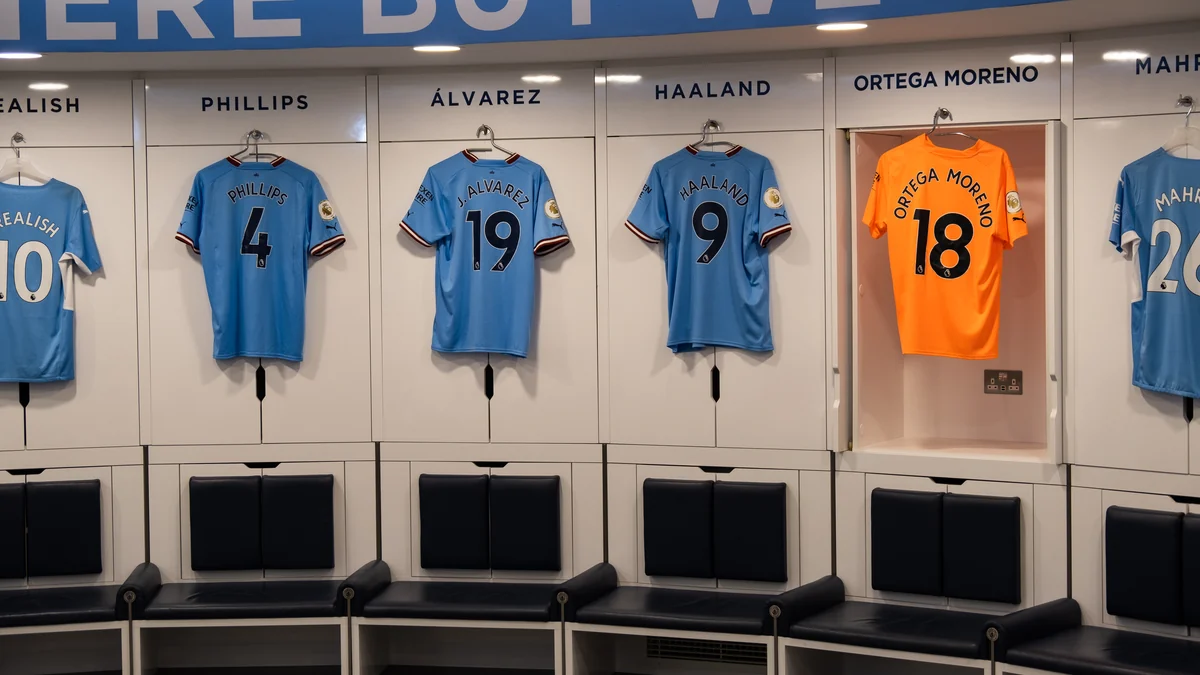
Enzo Fernández opened the scoring on a transition that began after a Sunderland corner. From a tight angle, he surprised goalkeeper Robin Roefs and scored his first City goal. The lead lasted only three minutes: Enzo Le Fee found Brian Brobbey between the defenders, and the striker lifted the ball over Gianluigi Donnarumma.
City went ahead again after their press recovered possession in the final third. Antoine Semenyo supplied Rayan Cherki, who shot low through a crowded penalty area. Once again, Brobbey responded quickly, converting Thomas Meunier’s cross. The move underwent a lengthy VAR review, which confirmed that the forward was onside.
That passage explains much of the balance. City could turn recoveries and transitions into goals, but they did not control the match after taking the lead. Sunderland attacked the available spaces and restored parity before their opponents could slow the tempo.
Semenyo created the first real separation
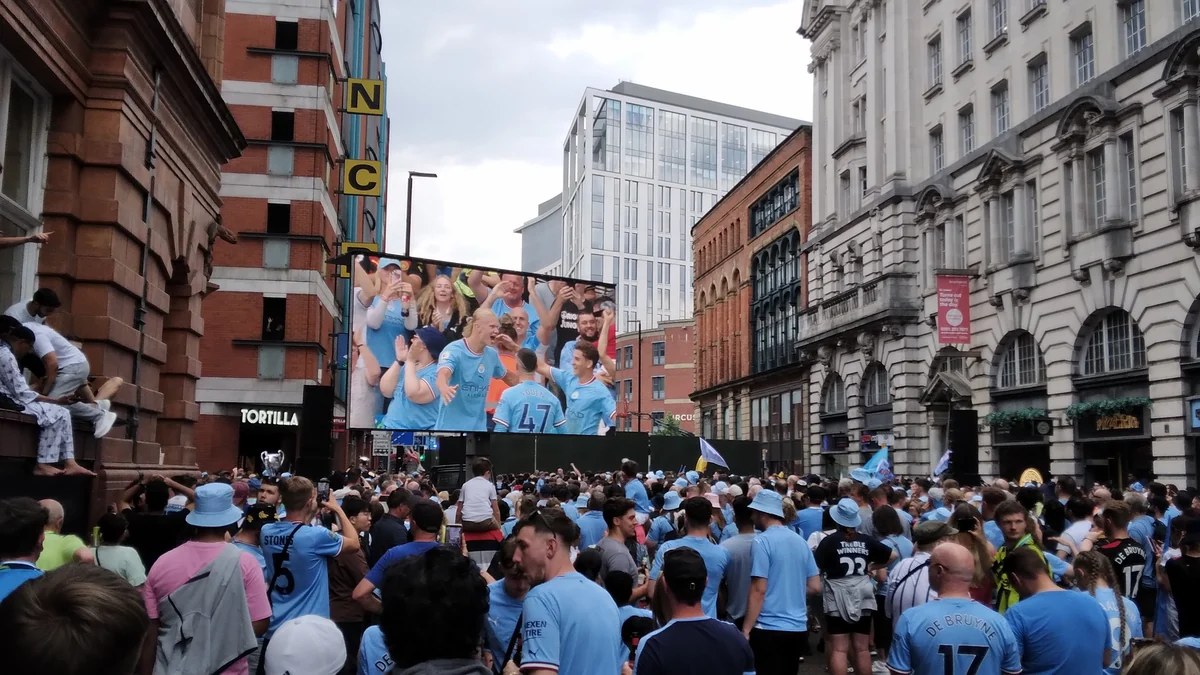
City’s third goal, before half-time, changed the dynamic. Marc Guéhi won the contest at the far post, and the loose ball reached Semenyo, who struck powerfully. After the restart, the winger capitalised on a defensive mistake to score again and make it 4–2.
They were Semenyo’s first goals of the season. He also assisted Cherki and, according to Enzo Maresca’s post-match press conference, his importance extended beyond the two finishes: the coach highlighted the player’s attacking contribution in earlier matches as well.
The two-goal advantage, however, lasted only two minutes. Brobbey completed his hat-trick by turning in Nilson Angulo’s header from close range. The 4–3 score restored the pressure on City and confirmed that Sunderland were still producing enough chances to alter the outcome.
The fifth goal and the VAR intervention
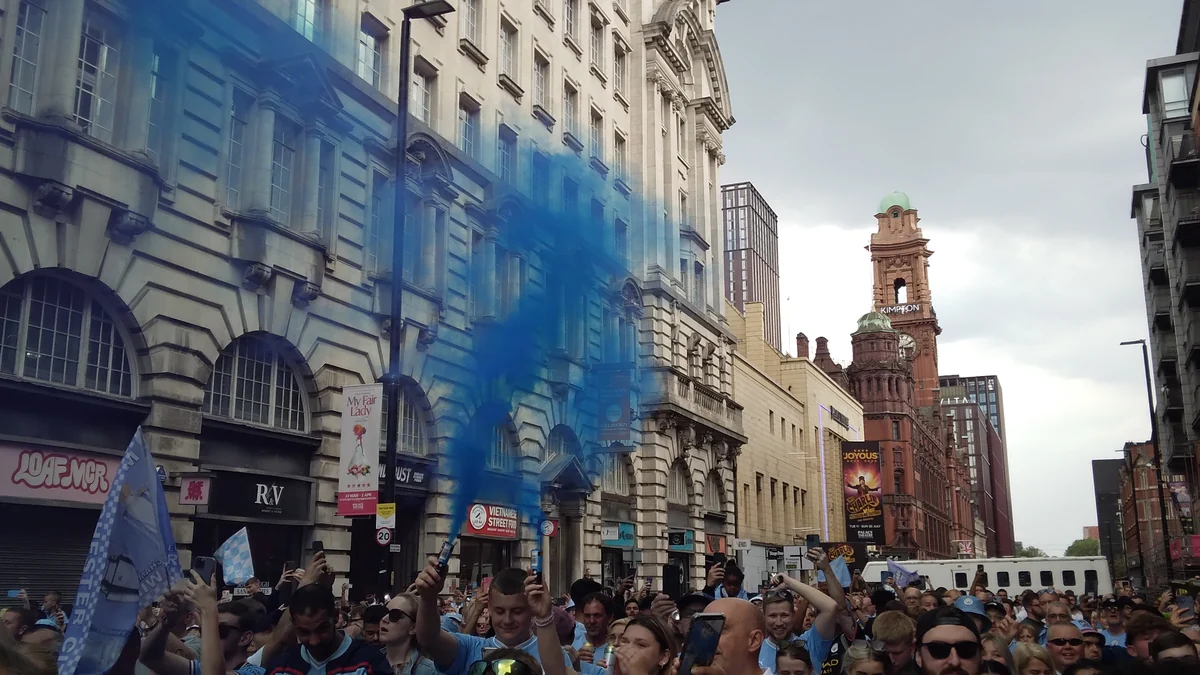
Late in the match, Joško Gvardiol advanced down the left and crossed for Erling Haaland to finish. The on-field officials flagged offside, but the decision was overturned after VAR intervened. The official match report says the replays showed Gvardiol was in a legal position.
The goal gave City some security, but it did not end Sunderland’s attacking production. Dan Ballard later hit the post. Earlier, Rúben Dias had cleared off the line after his own heavy touch. At the opposite end, Roefs prevented Nico O’Reilly from extending the margin.
Haaland also reached a specific milestone: he has now scored against all 25 opponents he has faced in the Premier League. The goal was decisive to the scoreline, but it does not erase the danger City faced until the closing stages.
What shots and xG reveal
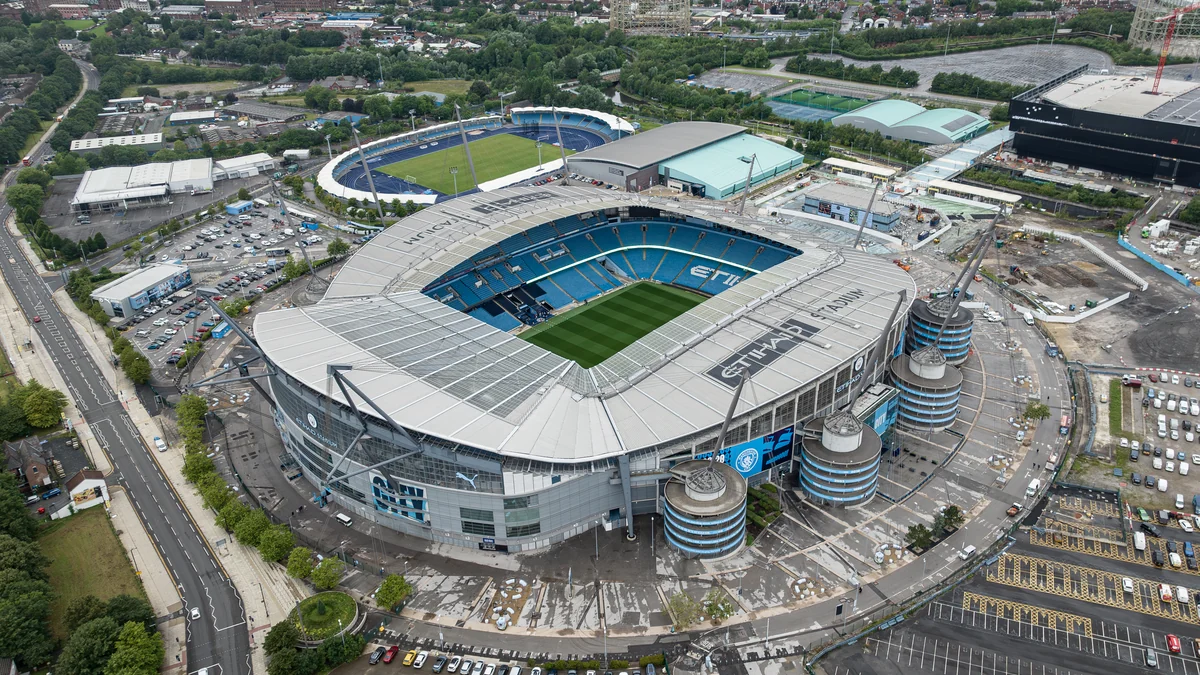
The official match centre records 55% possession and 403 completed passes for City, compared with Sunderland’s 45% and 312. Those figures indicate that the hosts circulated the ball more, not necessarily that they carried the greater threat.
The attacking metrics reverse the impression created by the result: Sunderland took 17 shots, one more than City, and accumulated 4.15 xG against 2.72. Put simply, xG estimates the quality of opportunities from the characteristics of each attempt. On its own, it does not determine who “deserved” to win, but it helps distinguish chance creation from finishing.
This match can be read in three layers: the score shows City’s efficiency; the shot count indicates almost equal volume; and xG points to more valuable opportunities overall for Sunderland. The three measures answer different questions and describe the contest more accurately when considered together.
Set plays and errors kept the match open
Although not every goal came directly from a set play, dead-ball situations and restarts influenced important moments. City’s opener developed from a counterattack after an opposition corner. Guéhi won the far-post contest before Semenyo’s first goal. Maresca also said City’s second and third concessions followed quick restarts and were allowed too easily.
That context prevents an overly simple conclusion. Sunderland did not build their xG merely by keeping the ball or shooting from distance: they reached dangerous positions, scored three times and also struck the post. City, meanwhile, punished disorganisation precisely and had four different scorers.
Leadership without a sense of control
The official short highlights capture the swings: Fernández and Cherki put City ahead, Brobbey equalised twice, Semenyo created separation and Haaland confirmed the win. The result preserved the league’s only perfect record after five matches.
The analysis nevertheless leaves a warning for the leaders. Maresca acknowledged that he would prefer a 1–0 win and identified goals conceded too easily. City collected the three points because they were more efficient; Sunderland showed through the volume and quality of their chances that the 5–3 victory was anything but comfortable.
Football and culture also meet in the city
After the analysis, discover Becoartes at Rua Gonçalo Afonso, 99, Vila Madalena. Check current information on the [official website](https://becoartes.com/).
Becoartes - Beco do Batman
99 Gonçalo Afonso Street, Vila Madalena, São Paulo
Sources and credits
- Christian David — CC BY-SA 4.0
- Ridiculopathy — CC0
- Ridiculopathy — CC0
- Arne Müseler, cropped by Blackcat — CC BY-SA 3.0 de
- Manchester City — relato oficial da vitória por 5 a 3
- Manchester City — central oficial da partida, com estatísticas e comentários
- Manchester City — entrevista coletiva de Enzo Maresca após o jogo
- Manchester City — melhores momentos oficiais de dois minutos