Baseball at the Aichi–Nagoya Asian Games began on September 21 with eight teams, two stadiums and a route that ends with the medal games on September 27. To follow the competition, separate it into three stages: group play, rounds that reorganize the teams according to their standings and, finally, the bronze-medal game and final.
One distinction matters: this is the 2026 Asian Games tournament, not an Olympic competition. Baseball will return to the Olympic program at Los Angeles 2028, but the official sources consulted here neither say that the Asian format will be reproduced nor confirm, on these pages, a numerical comparison between the fields at the two events.
Eight teams in two groups
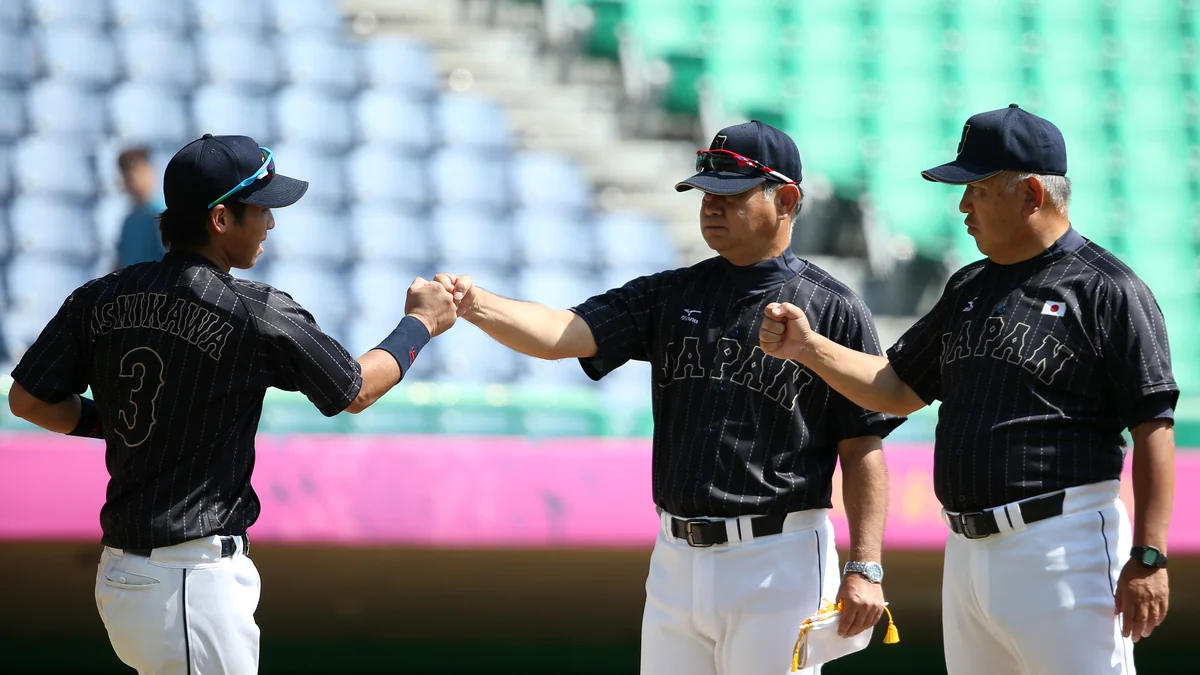
The official matchup schedule identifies two groups of four teams. In Toyohashi, the Philippines, Palestine, Japan and China play one another between September 21 and 23. In Okazaki, Hong Kong, Thailand, Chinese Taipei and South Korea complete the same three-round sequence.
Each team plays the other three in its group once. That makes the opening stage short: there is little room to recover from a poor result, and the final position determines which route a team takes on September 25 and 26.
In the official table, teams are subsequently represented by their group positions—A1 through A4 and B1 through B4. The top two in each group enter the super round; third- and fourth-placed teams proceed to the placement round. This division is the key to distinguishing a classification game from one that can still lead to the final.
How the super and placement rounds work
On September 25, the super round opens with A1 against B1 and A2 against B2. The matchups change the following day: B2 faces A1, while A2 plays B1. The published schedule does not explain, on the page consulted, every tiebreak rule or how previous results contribute to the cumulative standings. Any tie should therefore be interpreted using the updated table and regulations on the official website.
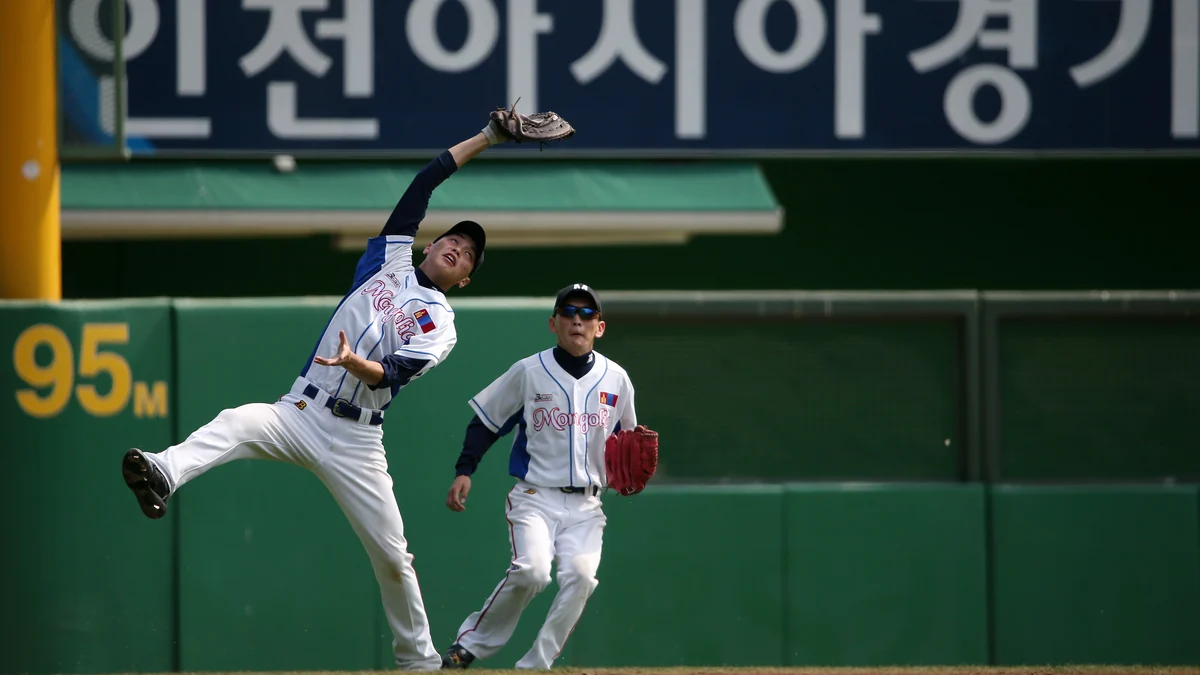
The placement round follows a parallel structure. A3 faces B3 and A4 plays B4 on the first day; A4 then meets B3 and B4 faces A3. These games determine the lower positions and should not be mistaken for knockout semifinals.
There is also an operational detail on September 25: home and visitor designations marked with an asterisk will be decided by coin toss. This is an administrative procedure, not an advantage earned in the opening stage.
When the medals will be decided
Both medal games are scheduled for September 27. The third-place game brings together S4 and S3, the teams finishing fourth and third in the super round. The final matches S2 against S1.
This structure means that the published schedule contains no separate semifinal. Qualification for the medal games depends on the standings built during the super round: first and second reach the final, while third and fourth play for bronze. Because times and sessions may change, the final reference should always be the tournament’s official schedule.
The roles of Toyohashi and Okazaki
Toyohashi Municipal Stadium hosts games in the opening and super rounds, as well as the final. Okazaki Chuo General Park Baseball Stadium hosts preliminary games, later classification rounds and the bronze-medal game, according to the published distribution.
The official Okazaki page says the stadium is inside Chuo General Park in Okazaki, Aichi Prefecture. For the Asian Games, it received a full LED scoreboard and replacement artificial turf. The organizers also provide a dedicated external access-information link on that page.
Gate-opening and game-start times are listed by session, but organizers warn that the schedule may change and finishing times depend on the progress of play. Anyone going to the stadium should check the official page on the day, including its directions.
The correct connection to Los Angeles 2028
The link with LA28 is the sport’s return, not an automatic continuation of this tournament. The International Olympic Committee approved baseball/softball as one of five additional sports proposed for the Los Angeles edition, alongside T20 cricket, flag football, lacrosse sixes and squash. The decision applies to LA28.
The schedule released by LA28 states that the baseball tournament will begin on Day -1, before the opening ceremony, and award its gold medal on Day 5. The competition window was designed to facilitate the participation of Major League Baseball players. All events and sessions remain subject to change.
The supplied pages do not state the number of teams in the Olympic tournament or describe its competition formula. It is therefore not safe to present “eight now, six at LA28” as a comparison confirmed by these sources. What is documented is baseball’s Olympic return and its place in the calendar.
A simple way to follow the tournament
During the first three days, focus on each team’s group position rather than isolated wins. On September 25 and 26, the reference changes to A1–A4, B1–B4 and then S1–S4. On September 27, S1 and S2 play for gold, while S3 and S4 contest bronze.
This vocabulary turns an apparently fragmented schedule into a coherent sequence. For results, tiebreakers and possible changes, always consult the official Aichi–Nagoya 2026 channels; for 2028, rely on updates from LA28 and the IOC.
Sport and culture meet in Vila Madalena
When in São Paulo, visit Becoartes at Rua Gonçalo Afonso, 99, Vila Madalena. Check the institution’s official website before visiting.
Becoartes - Beco do Batman
99 Gonçalo Afonso Street, Vila Madalena, São Paulo
Sources and credits
- Korea.net / Korean Culture and Information Service (Jeon Han) — CC BY-SA 2.0
- Korea.net / Korean Culture and Information Service (Jeon Han) — CC BY-SA 2.0
- Aichi–Nagoya 2026 — confrontos oficiais, grupos e fases do beisebol
- Aichi–Nagoya 2026 — horários e função do estádio de Okazaki
- LA28 — calendário, janela especial e formato olímpico de seis equipes
- COI — confirmação oficial do retorno do beisebol/softbol em LA28