The loudest news around Anitta this week did not begin exactly with music. It came from public records alongside actor Danilo Mesquita, seen at a concert in Rio de Janeiro, and quickly pulled the artist into the familiar territory of curiosity about private life. The confirmed fact is simple: the two were seen together, in an intimate mood, during a night of live music. What was built around it, however, says less about a possible romance and more about the difficulty of looking at a Brazilian pop artist when she tries to move the center of the conversation toward work, faith, body, career and language.
That shift matters because Anitta is in a particularly dense moment. After releasing EQUILIBRIVM II in July 2026, presenting the EQUILIBRIVM Tour in Niteroi on August 22 and taking on an advisory role in the new season of Estrela da Casa, which premieres on August 25, she appears not only as a singer, but as a producer of narrative about herself. The recent project articulates funk, pop, samba, Afro-Brazilian references, collaborations with major names in national music and an explicit attempt to turn spirituality into aesthetic material, not ornament.
Public interest in the artist’s emotional surroundings exists and does not need to be pretended away. But editorially, the more relevant question is different: why, at the very moment Anitta presents an artistic phase built around ancestry, market and image control, does the public agenda try to return her to the role of observed character? The answer helps explain Brazilian pop in 2026.
The Confirmed Fact and the Limit of Curiosity
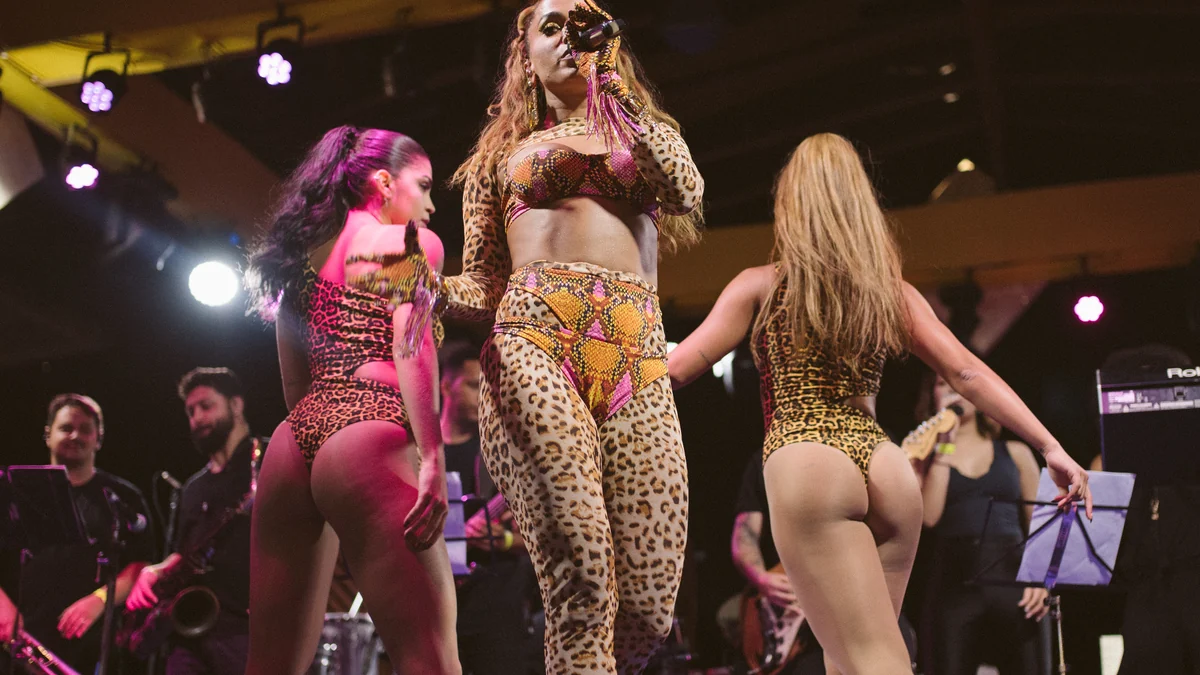
Anitta and Danilo Mesquita were seen together on Sunday, August 23, during a concert by singer Jau at Casa Savana, in downtown Rio de Janeiro. Outlets such as UOL and Folha reported that the two were recorded kissing and leaving the venue hand in hand. The same reports recall that Danilo had already been seen at other events connected to the artist, including performances from the EQUILIBRIVM Tour and cultural programs in Rio.
That is what is publicly known. In the sources consulted, there is no formal statement from either of them defining the relationship. Nor is there confirmed information that authorizes turning the episode into emotional biography, behavioral diagnosis or a serialized soap opera. For a cultural outlet, the point is not to amplify speculation. It is to observe what this repercussion reveals about the way audiences consume women artists, especially when they are also entrepreneurs, performers, songwriters, digital strategists and religious figures on stage.
Anitta had already signaled discomfort with the reversal of priorities. In recent approaches, she preferred to talk about the work, the tour and the album. That choice is part of the cultural event. In an ecosystem where private life often works as promotional fuel, refusing gossip’s centrality is also a gesture of editing one’s own image.
EQUILIBRIVM II as a Manifesto of Brazilian Pop
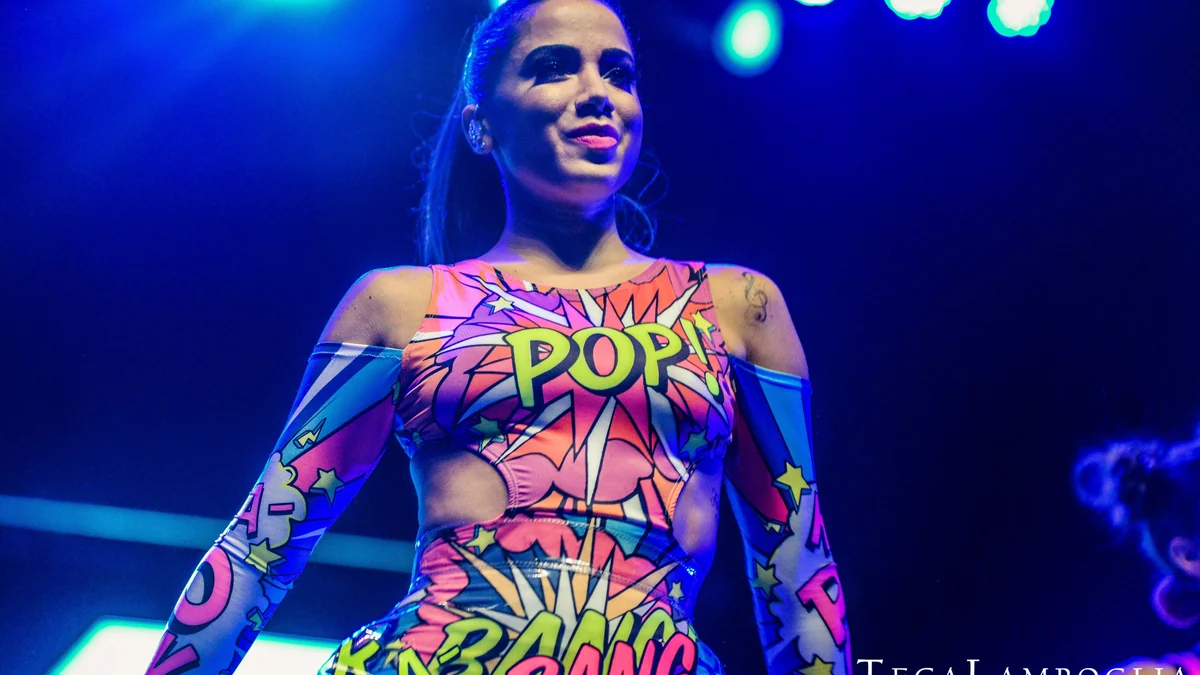
Released on July 24, 2026, EQUILIBRIVM II was presented by Universal Music Brasil as a continuation of the project begun in April. The album features Maria Bethania, Alceu Valenca, Mart’nalia, MC Tha, Alexandre Carlo, Mestrinho, King Saints, Los Brasileros, Katu Mirim, Leticia Fialho, Bro MC’s, Kbrum and Grupo Ofa. The list already signals an ambition: to build a field of conversation among tradition, urban music, Afro-Brazilian religiosity, large-scale pop and regional sounds.
Confirmed facts include tracks such as Eu Nao Sou Santa and Ogum Me Rodeia, the latter with Maria Bethania and Leticia Fialho. The material also came with a musical short film, first shown on Multishow and later made available on the artist’s YouTube channel. According to information published by Gshow, the production involved four days of shooting and a crew of 220 people.
One possible interpretation is that Anitta is trying to reposition her own Brazilianness. Not as an exportable postcard, but as a dispute over symbols. When Carmen Miranda, Djavan, Indigenous peoples, candomble, samba-pop and funk enter the same project, the result is not a neutral collage. It is an attempt to say that contemporary Brazilian pop does not need to choose between global market and local density.
There is risk in this path. Projects that deal with faith and ancestry can be received as sincere affirmation, aesthetic exploitation or an attempt at rebranding, depending on who is watching. But that risk is part of the work. Instead of hiding contradictions, EQUILIBRIVM II seems to organize them as method: the sacred and the danceable, the club and the terreiro, the international persona and the artist who returns to dispute meanings in Brazil.
Funk Does Not Disappear When Spirituality Enters
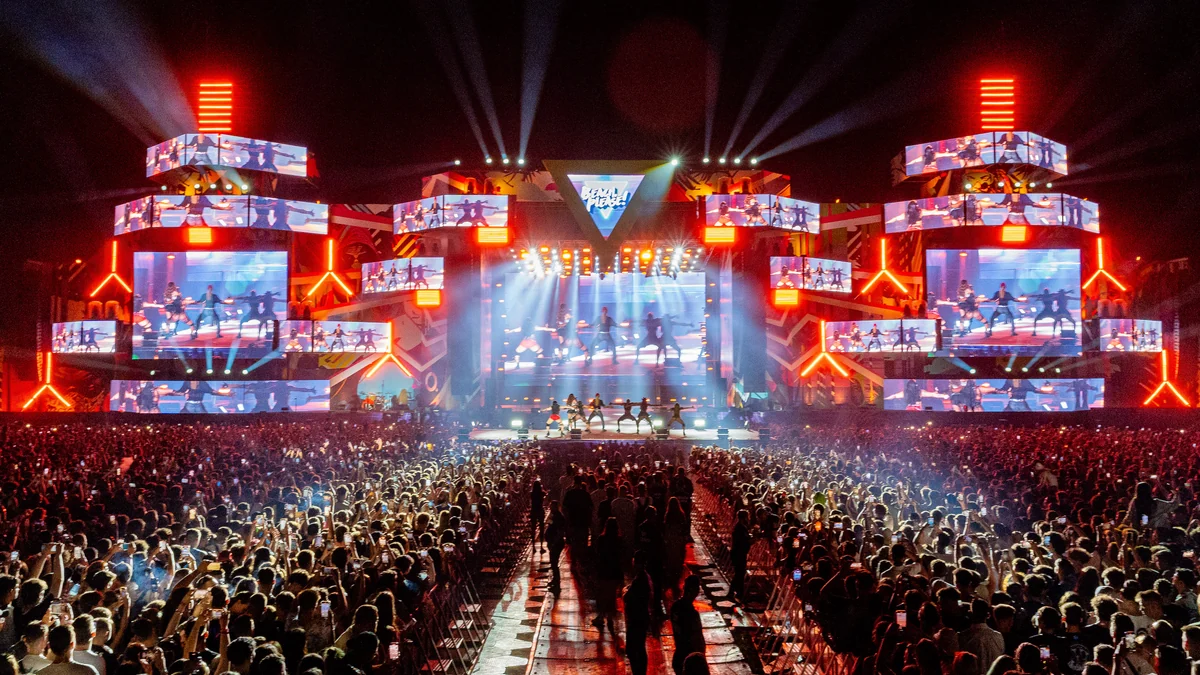
In the interview with Conversa com Bial, reported by Folha, Anitta argued that this new phase does not mean abandoning her origins in funk or pop. This point is central. Many readings of Brazilian popular women artists still treat maturity as synonymous with moving away from dance, the body and peripheral music. As if a singer could only be taken seriously once she exchanged beat for solemnity.
Anitta’s case disrupts that expectation. She does not seem to ask permission to turn spirituality into an album theme without giving up sensual performance, humor, provocation and the logic of the hit. This coexistence is culturally relevant because Brazilian funk has always been more complex than the moralistic caricature imposed on it. There is party, market, eroticism, technology, favela, choreography, entrepreneurship and symbolic dispute in the same field.
When an artist with international reach insists on putting these layers together, she forces criticism to abandon lazy categories. It is not enough to say she became more mature. It is also not enough to say she returned to her roots. The movement is more unstable: Anitta seems interested in making her own repertoire a kind of crossroads, where identity appears not as fixed essence, but as public negotiation.
Television as an Extension of Strategy
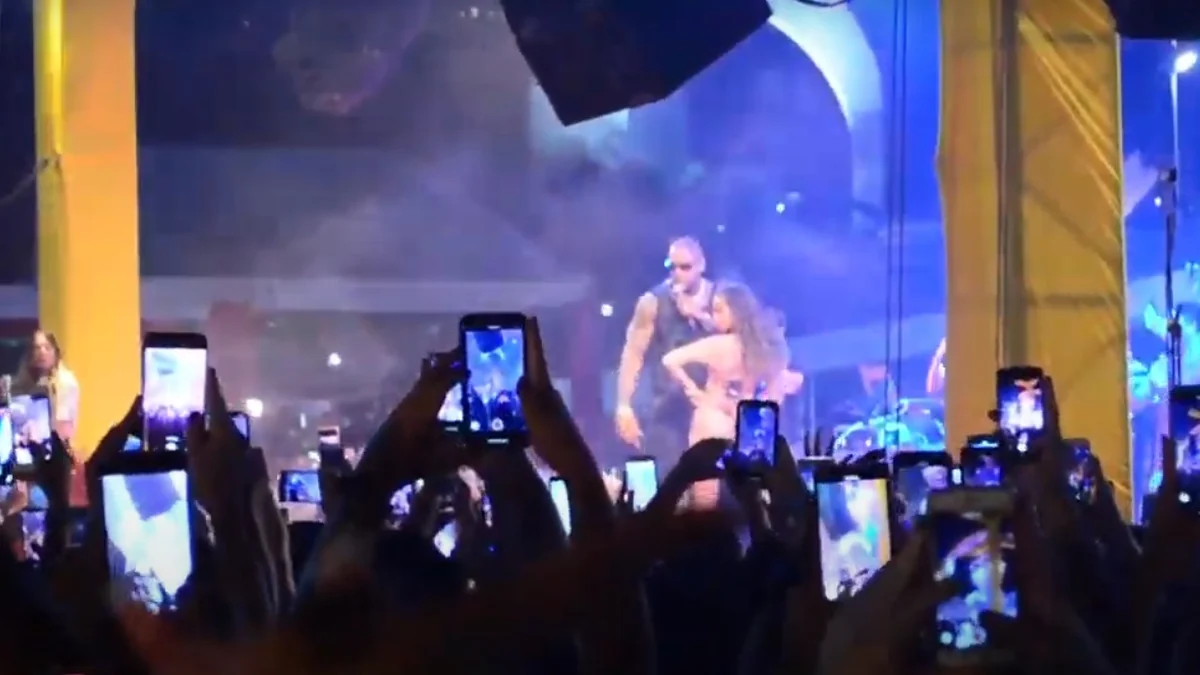
Anitta’s presence in Estrela da Casa expands this discussion. According to Gshow, the artist joins the new season as an adviser, working alongside mentors Belo and Junior. The announced dynamic involves teams connected to two styles, pop and pagode, and the singer is expected to act at important moments in the participants’ paths.
The most interesting point is not just her participation in a reality show. It is the kind of authority Anitta brings to the program. She represents a generation that learned to build a career across radio, TV, platforms, social networks, music videos, tours and international markets. For young artists, this changes the standard. Singing well is no longer enough; one must understand positioning, audience, repertoire, image, timing and circulation.
Television, in this context, stops being merely a showcase. It becomes a public negotiation room about what it means to train a popular artist today. The simultaneous presence of pop and pagode in the program is also significant. They are two genres with mass strength, their own communities and different performance codes. Anitta, who has crossed funk, reggaeton, international pop and projects of Brazilianness, works as a figure capable of talking about borders without pretending they disappeared.
The Public Body and the Artist Who Edits Her Own Exposure
Every pop artist lives with a contradiction: she needs to appear, but does not necessarily want to be reduced to what appears outside the stage. In Anitta’s case, this tension is sharper because her career was built with intense command of visibility. She understood early the internet, cycles of provocation, international circulation and the power of image. Now, by insisting on talking about spirituality, health, religion, work and artistic direction, she tries to shift the focus without abandoning the language that made her recognizable.
That is why the repercussion around Danilo Mesquita should be read carefully. The public encounter is entertainment news, but it does not exhaust the cultural agenda. The real friction lies between two forms of consumption: one wants the artist as an available sentimental character; the other tries to hear what she is building as work.
This distinction does not mean shielding Anitta from criticism. On the contrary. A project such as EQUILIBRIVM II demands rigorous analysis: what images it uses, what traditions it summons, what bridges it builds, what tensions it simplifies, what market it reaches. But that criticism only becomes interesting when it stops confusing private life with a universal interpretive key.
What This Phase Says About Brazilian Pop
Brazilian pop in 2026 is less interested in purity than in transit. Artists move among genres, screens and communities; labels sell audiovisual narrative; platforms turn concerts into content; reality shows try to manufacture trajectory in real time. Anitta occupies this environment with a rare awareness of scale. She knows every appearance becomes a fragment of public interpretation.
Confirmed fact: there is a new album, a recent tour, platform exhibition, entry into a TV program and public records alongside an actor. Interpretation: together, these elements form a dispute over the artist’s framing. The public can choose to look only at the possible couple, but the recent work offers stronger material: Afro-Brazilian faith at the center of a pop project, collaborations among generations of national music, debate about the market and an attempt to expand what is expected from a singer who came from funk.
That is the agenda that matters to Becoartes: not celebrity for celebrity’s sake, but the moment when a pop figure exposes the contradictions of a country that consumes religion, body, peripheral music and fame with fascination and discomfort. In Sao Paulo, where urban culture turns walls, stages, bars and screens into a daily dispute over identity, Anitta’s new phase speaks naturally to Becoartes’ gaze: following what vibrates at the center of culture without losing sight of the street.
Read Slowly
At Becoartes, pop culture enters when it helps explain music, city, public image and the living conflicts of contemporary Brazil.
Becoartes - Beco do Batman
99 Gonçalo Afonso Street, Vila Madalena, São Paulo
Sources and credits
- Gabi De Morais — CC BY-SA 2.0
- Teca Lamboglia from São Paulo, Brasil — CC BY 2.0
- PinkBeachPlanet — CC BY-SA 4.0
- AGITO Mais - TVA — CC BY 3.0
- UOL Splash - Anitta e Danilo Mesquita são flagrados aos beijos no Rio
- Folha F5 - Anitta participa de entrevista com Bial e fala de novo álbum
- Universal Music Brasil - EQUILIBRIVM II
- Gshow - Anitta como conselheira do Estrela da Casa
- Globoplay - Anitta: Equilibrivm Tour