Anitta has always known how to turn a release into an event. With EQUILIBRIVM II, however, the most interesting point is not only the project’s scale, nor the guest list, nor the audiovisual work built to expand the experience. What makes the album culturally important is the decision to reposition a global artist inside a Brazilian vocabulary without treating Brazil as a tourist ornament.
This is a pop subject, but it is not only about celebrity. EQUILIBRIVM II arrives in 2026 as a direct continuation of EQUILIBRIVM, released in April, and deepens themes already at the center of this phase: spirituality, ancestry, love, the body, healing, and belonging. The album brings together samba, Brazilian funk, reggae, forró, bossa nova, MPB, Afro-Brazilian references, and voices from different generations. It is a risky move because it takes Anitta away from the more obvious zone of international pop and places her in dialogue with traditions that demand care, context, and listening.
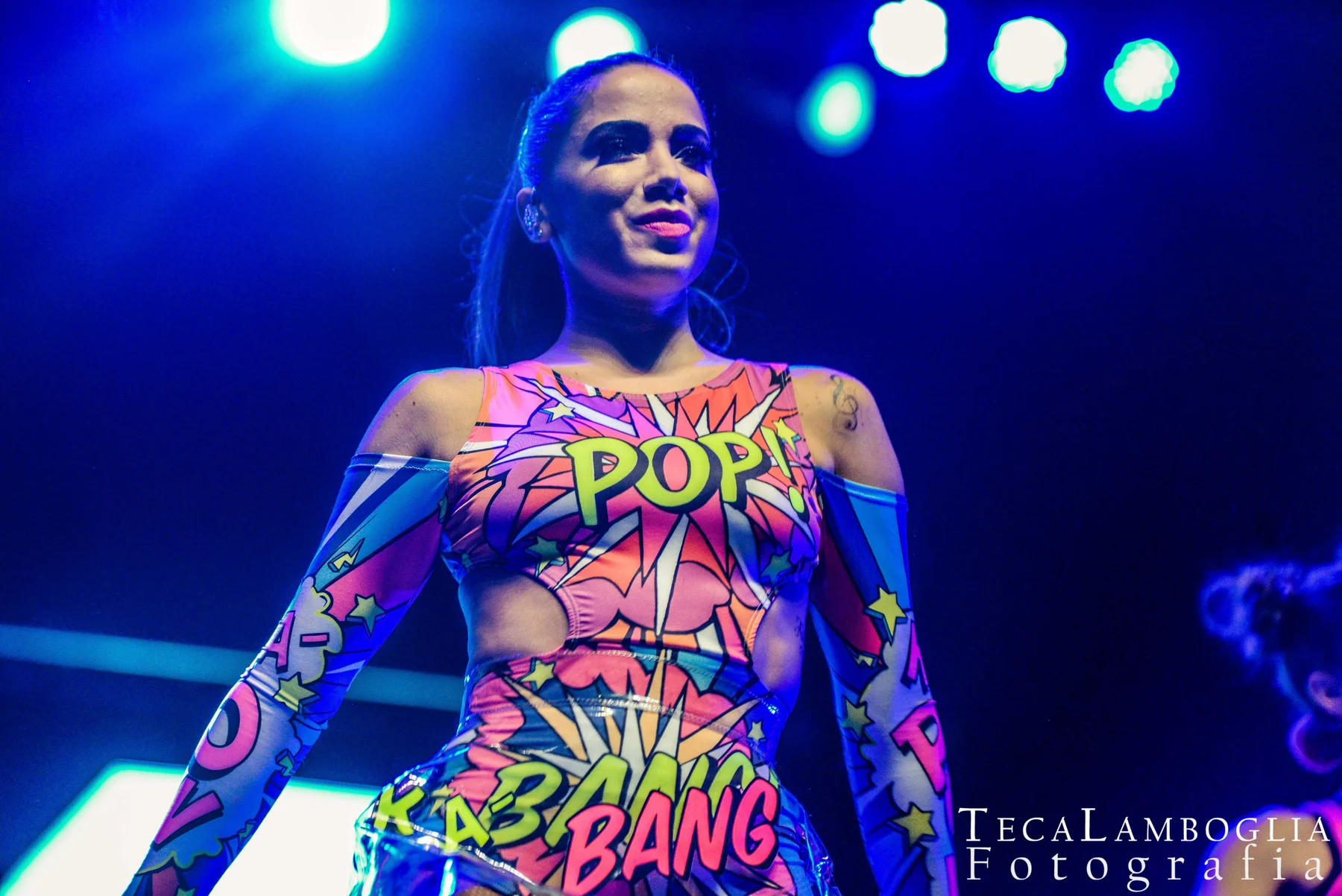
What Is Confirmed
Universal Music Brasil’s official announcement presents EQUILIBRIVM II as Anitta’s ninth studio album and as the continuation of the project released in April 2026. The same source states that the new set of tracks includes Maria Bethânia, Alceu Valença, Mart’nália, MC Tha, Alexandre Carlo, Mestrinho, King Saints, Los Brasileros, Katú Mirim, Letícia Fialho, Brô MC’s, Kbrum, and Grupo Ofá.
There is a small difference in presentation between platforms and publicity. Universal treats the release as arriving on Thursday, July 23, 2026, with audiovisual material made available overnight into Friday, July 24. Apple Music lists EQUILIBRIVM II on July 23, 2026, as a 32-song package lasting 1 hour and 33 minutes, bringing together discs 1 and 2. The new tracklist highlighted by Universal has 17 tracks: Você Já Sabe, Sal Grosso, Não Me Cutuca, Eu Não Sou Santa, Feitiço, Ponta do Pé, Abre Caminho, Tudo Isso, Sem Pressa, Deus Mãe, Ogum Me Rodeia, Contemplação, Pra Você Gostar de Mim, Divino Sexual, Azul, Respira, and OKE.
It is also confirmed that the project came with a musical short film. gshow reported that the special Esquenta TVZ EQUILIBRIVM II premiered on Multishow on July 23 at 9:30 p.m., followed by availability on Globoplay and a release on the artist’s YouTube channel at midnight. Any cultural reading must begin with these facts, without inflating the release with audience figures, awards, or rankings that have not been confirmed.
A Brazilianness Beyond the Airport Display
The word Brazilianness is often used shallowly in pop: a funk beat, a tropical reference, a colorful outfit, a nod to carnival. EQUILIBRIVM II attempts something denser. The presence of forró, samba, reggae, funk, bossa nova, and MPB does not appear as an export menu, but as a field of tension between tradition and industry.
The difference matters. Anitta built part of her international career negotiating with languages, markets, and global formats. Here, the strategy seems reversed: instead of diluting Brazil so it can fit global pop, the album asks global pop to accept a work more strongly marked by Brazilian signs. That does not mean everything is experimental. The record is still interested in hooks, dance, platform circulation, and strong imagery. But the pop packaging serves an attempt to center Brazilian matrices, not merely cite them.
This choice speaks to a moment when Brazilian artists are once again disputing the narrative of what it means to be modern without abandoning territory. The Brazil of EQUILIBRIVM II is not a neutral landscape. It appears in crossroads, terreiros, gafieira dance halls, baile sounds, popular devotion, Indigenous voices, and Black traditions that commercial music often consumes without naming.
Faith, Body, and Ancestry as Pop Language
The spiritual axis is the album’s most delicate element. The official announcement connects tracks such as Você Já Sabe, Feitiço, Contemplação, Ogum Me Rodeia, and OKE to references from candomblé, umbanda, orishas, Exu, Pombagira, Ogum, Oxum, traditional chants, Indigenous peoples, and ancestral knowledge. This requires separating fact from interpretation: the fact is that the project assumes these references; the interpretation is that Anitta is trying to move historically marginalized symbols into the center of a highly visible pop product.
This operation has power and risk. It has power because Afro-Brazilian religions still face prejudice in Brazil, and the presence of these symbols in a mass-reach work can broaden vocabularies of respect. It has risk because pop can turn everything into aesthetics, emptying out foundation. EQUILIBRIVM II’s strongest defense against that risk lies in its collaborations: Grupo Ofá, Brô MC’s, Katú Mirim, MC Tha, Mart’nália, Maria Bethânia, and Letícia Fialho do not enter merely as decorative names. They carry histories, timbres, belongings, and fields of memory.
The body is also treated as a place of language. Sal Grosso, Divino Sexual, and Ponta do Pé connect dance, sensuality, protection, desire, and movement. For an artist who has always been judged through the body, reclaiming that body as a territory of healing and authorship carries symbolic weight. The issue stops being only sensual performance; it becomes who controls the meaning of that performance.
Collaborations Across Generations and Territories
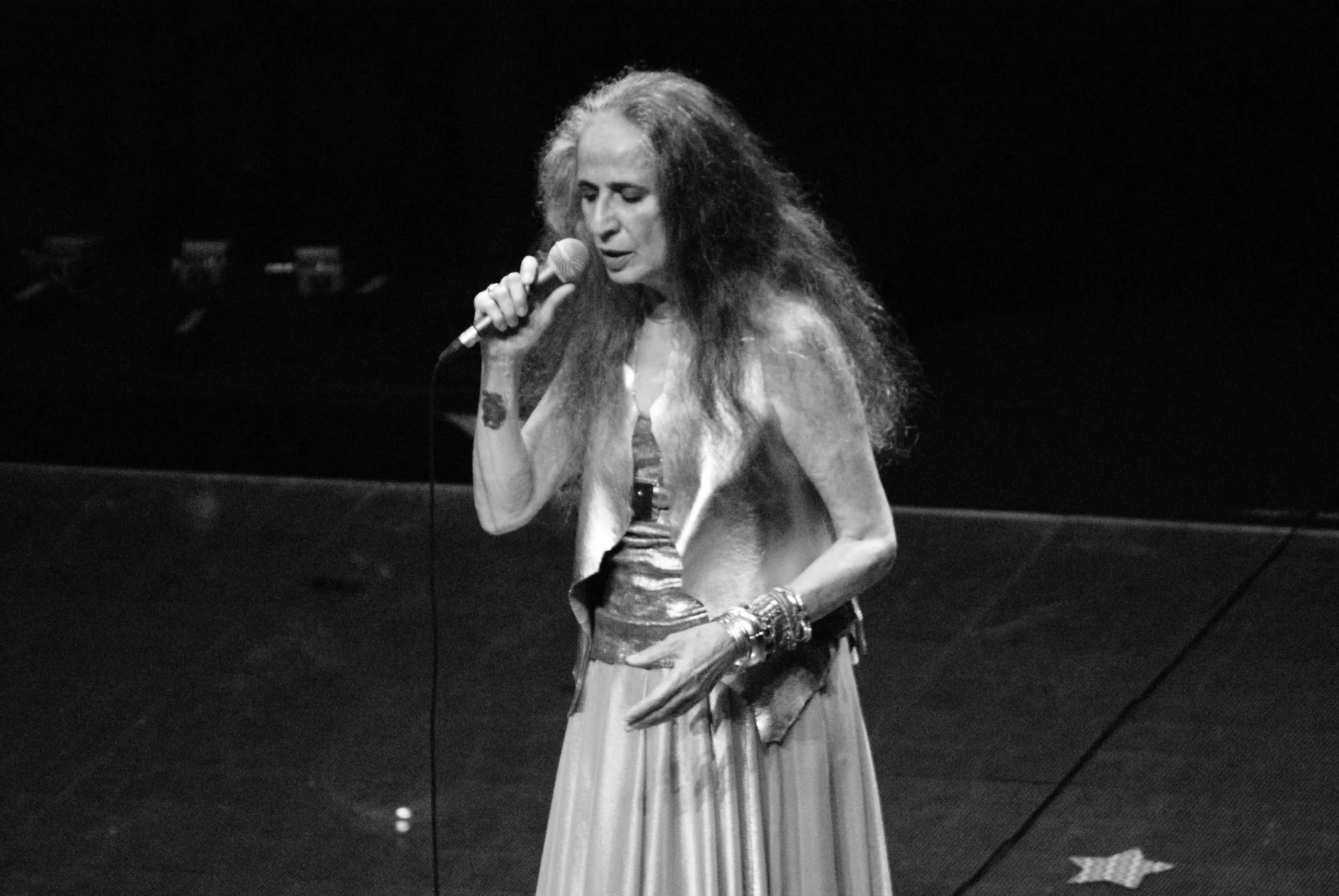
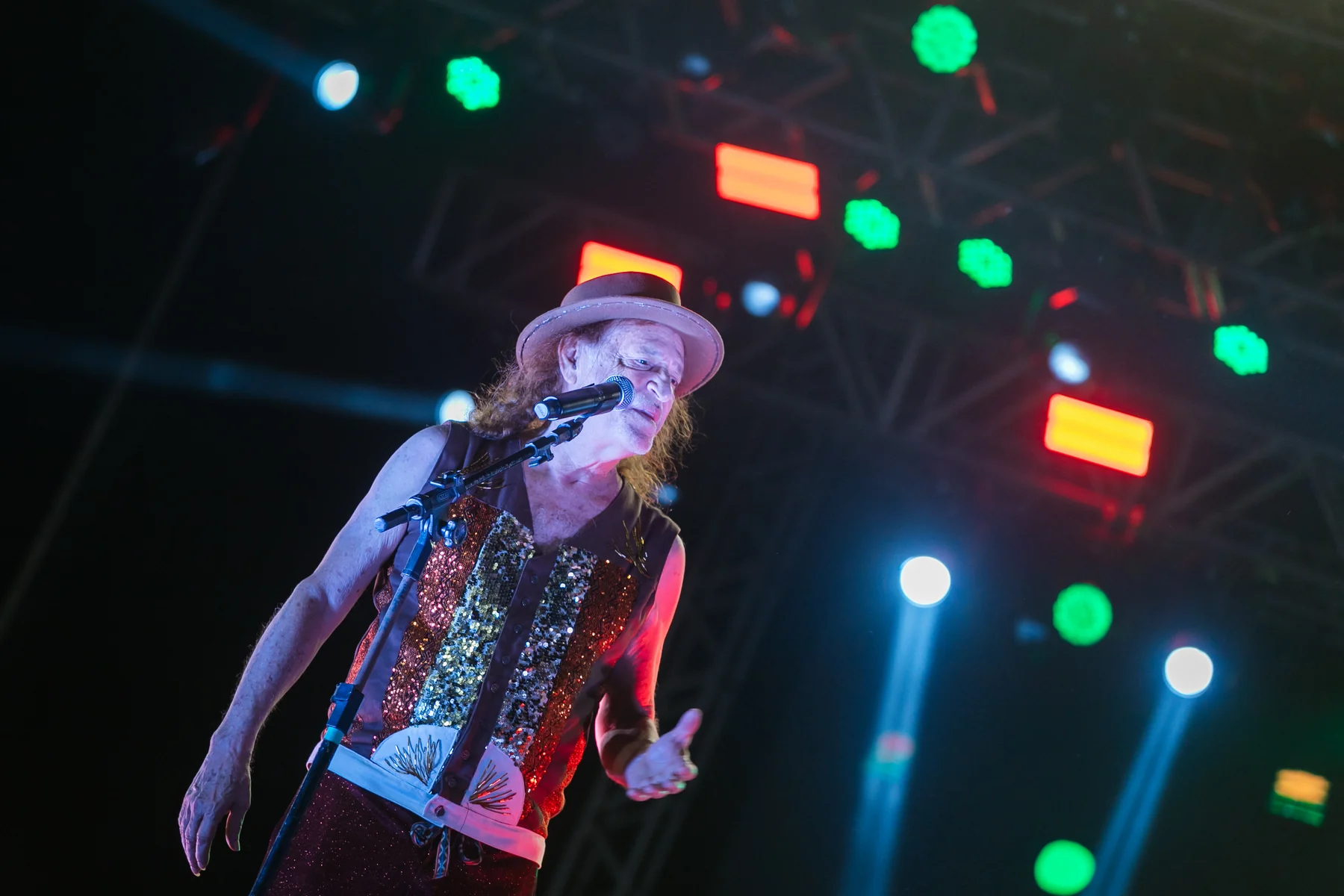
The guest list is a map of the album’s cultural argument. Maria Bethânia, Alceu Valença, and Mart’nália bring Anitta closer to established lineages of Brazilian music. Alexandre Carlo brings the memory of Brazilian reggae popularized by Natiruts. Mestrinho activates the forró universe. MC Tha reinforces a link between urban music, spirituality, and São Paulo. Brô MC’s and Katú Mirim shift the listening toward Indigenous artists. Kbrum points to peripheral scenes and dialogues with dancehall and ragga. Los Brasileros operate as a production force tied to contemporary Brazilian pop.
The result should not be read only as an album packed with features. There is a curation of positions. By singing with Bethânia on Ogum Me Rodeia, Anitta approaches a vocal and poetic tradition of enormous symbolic authority. By sharing OKE with Brô MC’s and Katú Mirim, she opens space for an Indigenous presence that Brazilian pop rarely treats as central. By recording Sem Pressa with MC Tha, she connects the project to a São Paulo artist who has long worked Afro-Brazilian spirituality with delicacy and aesthetic firmness.
Not every collaboration needs to carry the same weight. Some function more as sonic color; others reorganize the album’s interpretation. As a whole, however, they help EQUILIBRIVM II feel less like an individual adventure and more like a conversation led by Anitta within a broad Brazilian ecosystem.
Reception: Enthusiasm, Criticism, and Caution
The reception available as of August 19, 2026 indicates strong interest, but it still does not allow us to speak of a historical consensus. Folha de S.Paulo published a review by Felipe Maia on July 24 and described the record as one of the singer’s best works, highlighting the way Anitta places the stage in dialogue with Afro-Brazilian songs of prayer and ritual. The review also noted reservations about less inspired moments, especially when the album moves closer to sambas and more predictable solutions.
On Album of the Year, the EQUILIBRIVM II page shows a user score of 75 based on 600 ratings and, at the same time, indicates the absence of an aggregated critic score. This information is useful for measuring reaction from a specific community, but it should not be confused with the general reception of the market or specialized criticism. gshow, meanwhile, covered the audiovisual release and framed the project as an expansion of Anitta’s new era, with anticipation for the tour.
The most honest reading is this: EQUILIBRIVM II was received as a relevant, discussed, and ambitious release, with praise for its Brazilian cohesion and punctual criticism of unevenness in some tracks. That is already enough to place it among the Brazilian pop albums of 2026 that deserve analysis beyond the fast cycle of social media.
The Cultural Meaning of EQUILIBRIVM II
The album’s meaning lies less in proving that Anitta is now more Brazilian, as if that needed certification, and more in showing how an artist with global reach can return to Brazil without making that return a regression. Instead of abandoning pop, she uses pop as a technology of circulation for repertoires that come from other matrices: terreiro, baile, radio, circle, street, family faith, ballroom dance, oral tradition.
In that sense, EQUILIBRIVM II speaks to the history of artists who turned identity into method, not fantasy. The comparison does not need to be literal with Racionais MC’s, Kanye West, or The Weeknd, but it helps us think through an idea: great pop moments happen when image, sound, biography, and social context organize themselves into a recognizable language. Anitta tries to do that from Brazil, not in spite of it.
There is also a dispute over maturity. For years, part of the criticism treated Anitta as more strategist than artist. EQUILIBRIVM II does not erase that strategic dimension; on the contrary, it shows that strategy and authorship can coexist. The difference is that now the question is not only which market she wants to reach, but which Brazil she wants to take to that market.
Why It Matters in São Paulo
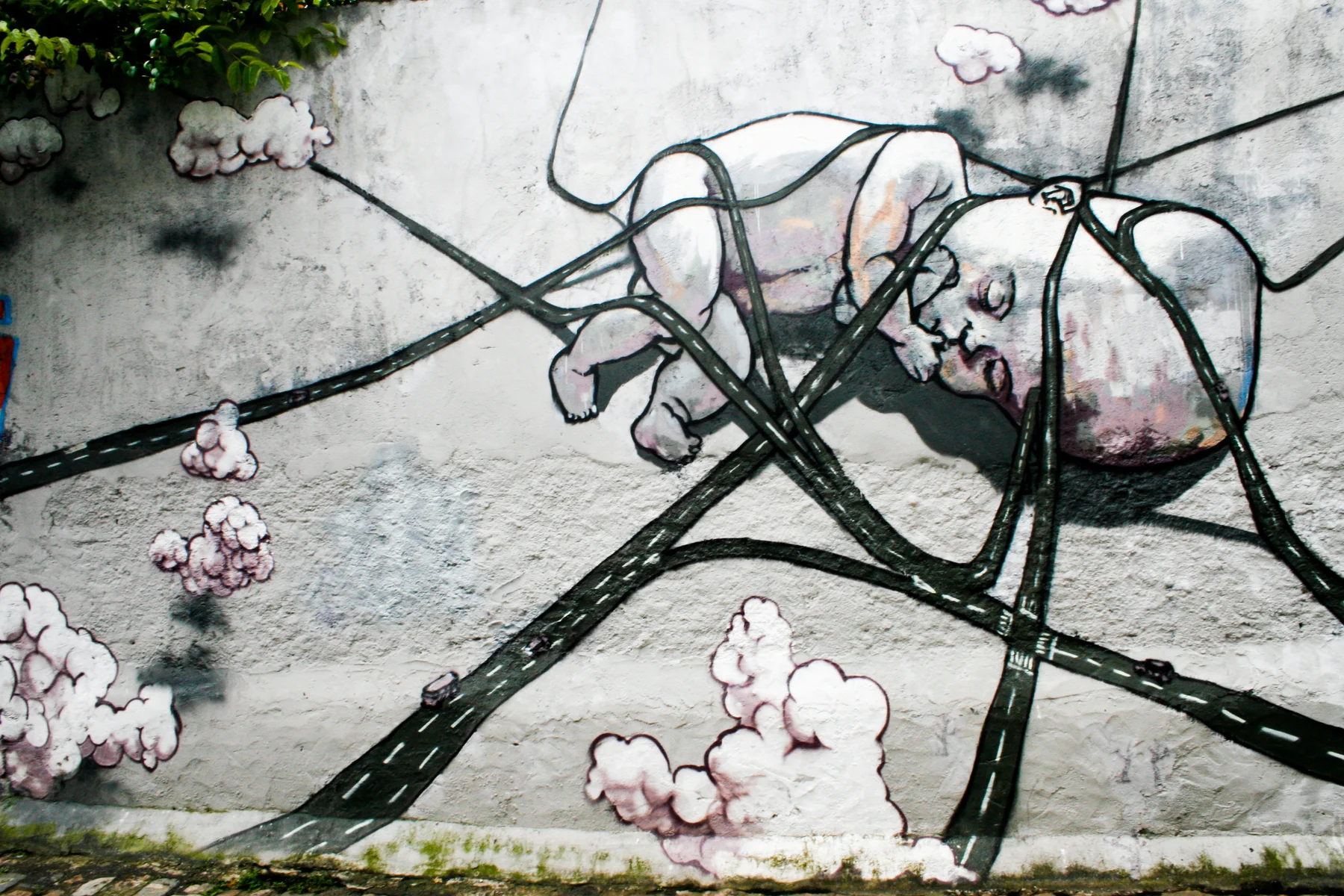
São Paulo understands this kind of mixture well because it lives from it daily. The city receives funk from Rio, rap from the peripheries, reggae circulating through universities and popular spaces, samba de roda, theater-based MPB, forró from northeastern migration, terreiro parties, electronic dance floors, and streets painted by artists fighting for visibility on concrete. An album like EQUILIBRIVM II does not belong to São Paulo, but it finds here an audience capable of perceiving its layers.
In the end, Anitta’s release matters to the Becoartes Cultural Guide because it treats pop culture as a territory of conflict, memory, and invention. Between Vila Madalena, the walls of Beco do Batman, and the nights when the city turns music into encounter, EQUILIBRIVM II reminds us that contemporary Brazil is also heard in passages: between the sacred and the dance floor, between the global and the local, between the artist everyone knows and the roots that still ask for attention.
Follow the cultural route
Continue with the Becoartes Cultural Guide for Brazilian music, cinema, urban art, and cultural experiences in São Paulo with context and curation.
Becoartes - Beco do Batman
99 Gonçalo Afonso Street, Vila Madalena, São Paulo
Sources and credits
- Teca Lamboglia from São Paulo, Brasil — CC BY 2.0
- Sebástian Freire from Rio de Janeiro, Brasil — CC BY-SA 2.0
- Prefeitura de Olinda — CC BY 2.0
- Arte Fora do Museu — CC BY 2.0
- Universal Music Brasil - EQUILIBRIVM II: Anitta transforma brasilidade em poesia em novo álbum
- Apple Music - EQUILIBRIVM II by Anitta
- gshow / Multishow - Anitta estreia EQUILIBRIVM II com exclusividade no EsquentaTVZ
- Folha de S.Paulo - Disco Equilibrium 2 brilha com Anitta nas encruzilhadas afro
- Album of the Year - Anitta, EQUILIBRIVM II