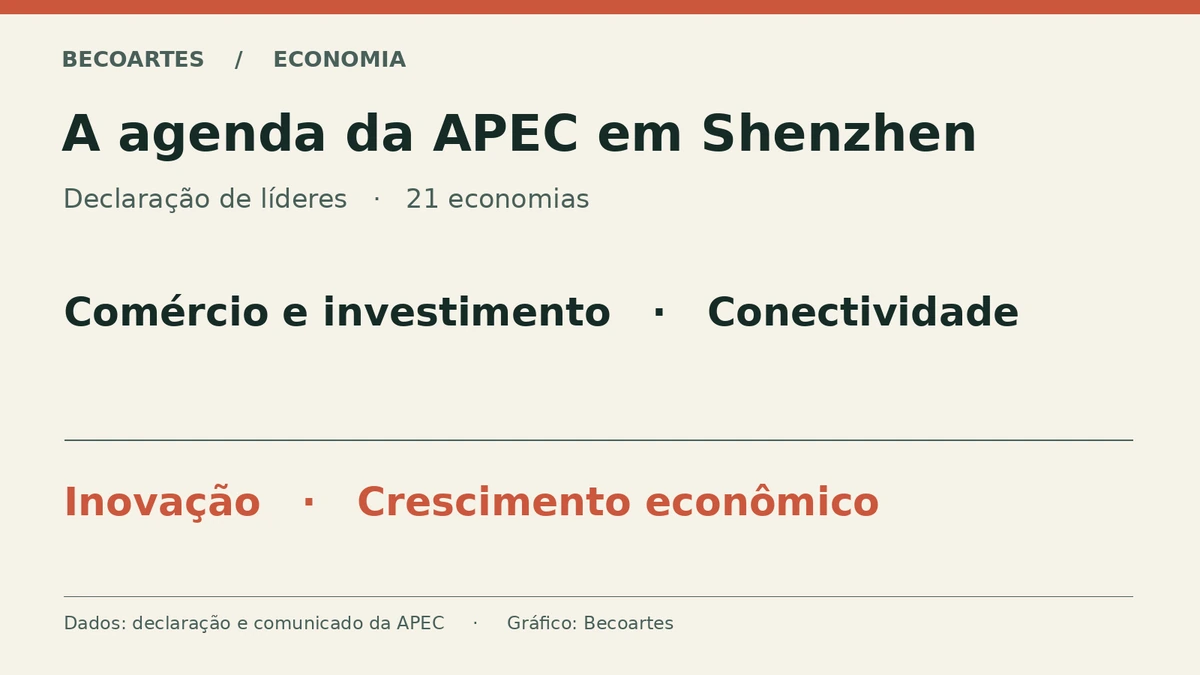
The Asia-Pacific Economic Cooperation forum’s November 21 declaration sets out work for 21 economies on trade, investment, connectivity, innovation and growth. The leaders met in Shenzhen, China. Their declaration calls for further regional integration, digital trade procedures and cooperation on artificial intelligence. For a business that exports goods, however, a practical point remains unchanged: publication of the declaration does not by itself change what a shipment pays at customs.
Why APEC counts 21 economies, not 21 countries
APEC is a regional economic forum. It calls its members economies and describes its work as voluntary, non-binding and based on building consensus. The declaration records shared positions and gives officials a direction for work on specific subjects. It does not have the same function as a trade treaty, a national law or a customs regulation.
That distinction helps explain the verbs in the document. Encouraging members to share experience, endorsing a framework and enacting an enforceable rule are three different things. The Shenzhen document mainly does the first two. When an administration does change a requirement, the relevant measure in that economy will be the place to check when it starts and which shipments it affects.
A regional free trade area is still on the agenda
The leaders back continued work on the Free Trade Area of the Asia-Pacific, known as FTAAP. The declaration presents that work as a way for economies to develop the capacity to take part in regional trade initiatives. It does not say that the area has been established or list goods that qualify for preferential tariffs.
An exporter considering a shipment would still need to identify the product’s customs classification and check the rules in force at its destination. The reference to freer trade in the declaration does not show whether that product meets a rule of origin, what duty would be due or whether a preference applies. Those details come from the instruments that govern the transaction, not from the forum’s statement of intent.
Connectivity includes the documents that travel with goods
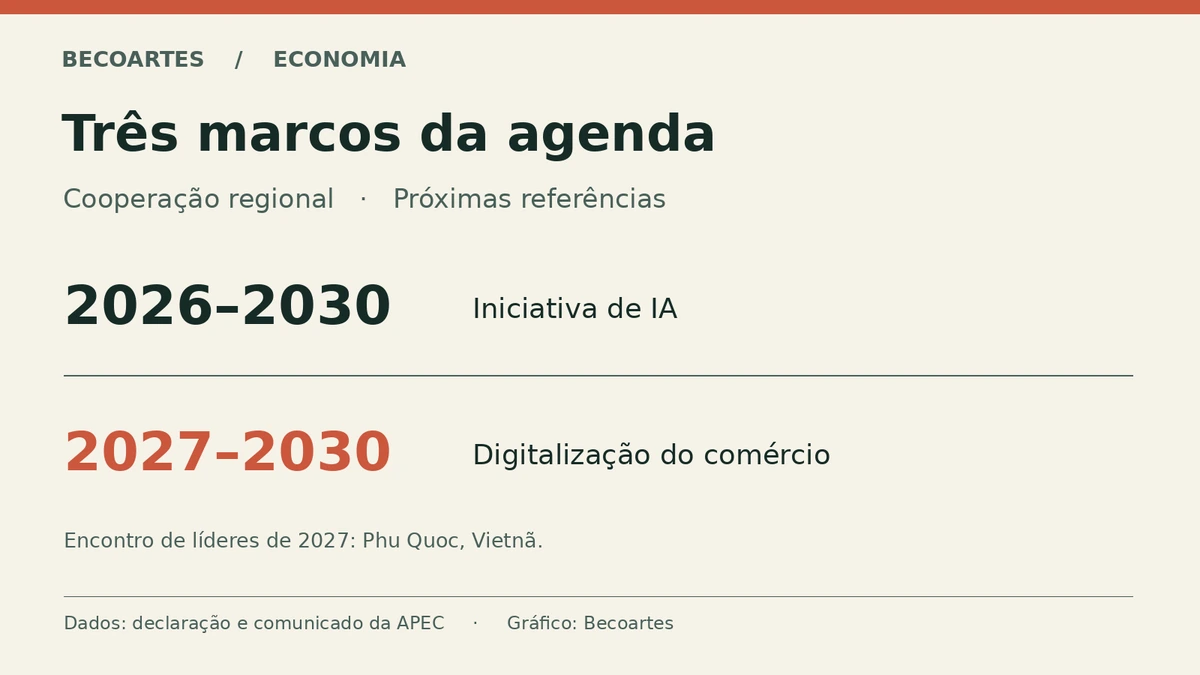
APEC uses connectivity to cover supply chains, flows of essential goods and procedures that facilitate trade. The declaration calls for sharing experience in customs digitization and tackling bottlenecks that disrupt supply chains. APEC’s report on the meeting also points to a separate trade digitization cooperation framework for 2027–2030.
An electronic form can make a process easier without changing the duty a shipment pays. Similarly, putting one step online does not establish that the authorities on both sides already accept the same documents or that every port can process a shipment automatically. To show that an initiative has reached a particular route, useful evidence would be a published procedure or a documented arrangement for accepting records between the relevant authorities.
On AI, the emphasis is cooperation
The declaration refers to APEC’s 2026–2030 AI initiative and endorses another document on digital technologies, employment and prosperity. Its priorities include skills, access to digital tools for smaller firms and continued work on data flows and trust in digital transactions. It also mentions risks like data breaches and online fraud.
These priorities do not amount to an AI law for all 21 economies. A firm using an AI service to process customer data, for example, does not gain permission to transfer that data abroad simply because the forum supports cooperation. The declaration describes areas for joint work. The obligations that apply to an individual service still depend on where and how it is used.
The next leaders’ meeting will be in Vietnam
APEC says Vietnam will chair the forum and host the 2027 leaders’ meeting in Phu Quoc. In the meantime Shenzhen provides a reference for following the work. Published digital procedures, training initiatives and connectivity projects would show what has happened beyond the broad language of the declaration.
The APEC declaration is also separate from the statement the United States, Russia and China issued in Shenzhen. The fact that both came from the same city does not make them decisions by the same group. For a reader interested in customs, digitization and AI across the 21 APEC economies, the relevant references are the forum’s own declaration and the later measures that show how particular initiatives were put into effect.
Read the declaration
See the text and related documents in APEC’s sources.
Becoartes - Beco do Batman
99 Gonçalo Afonso Street, Vila Madalena, São Paulo