The first World Athletics Ultimate Championship ended on 13 September 2026 without being an edition of the Olympic Games, the traditional World Championships or the Diamond League. Its central difference was concentration: leading athletes, 28 events and decisions spread across only three nights at Budapest’s Nemzeti Atlétikai Központ. It was a championship in its own right, created to turn each session into a short sequence of semifinals and finals—and to treat the track, equipment, broadcast and music as parts of the same show.

A separate tournament with an elite field
The final entry list brought together 381 athletes from 65 federations. According to World Athletics, the meeting combined Olympic champions, world champions, Wanda Diamond League winners and some of the season’s best-performing athletes.
That composition explains why the event resembled several familiar competitions without replicating any of them. It did not have the extensive programme of a World Championships or Olympic Games, nor the sequence of meetings that defines the Diamond League. It was an autonomous, selective contest. Unlike championships that limit national representation in each event, the published rules placed no cap on how many athletes from one country could compete in a discipline.
Three nights and almost no waiting
The programme compressed the entire competition into 11–13 September. In the 100m, 200m, 400m, 800m and hurdle events, two semifinals of eight athletes sent the first four in each race to the final. The 1500m, 5000m and relays were held as straight finals. Every field event also began directly in its decisive format.
The design reduced qualifying stages and narrative pauses: anyone watching a session saw titles decided from beginning to end. The published schedule and competition rules clarify the logic, although the organisers note that operational details are subject to change and should be checked through official channels.
The 8-8-6-4 system in field events
In horizontal jumps and throws, eight athletes were guaranteed two attempts. After the second round, only the leading six received a third opportunity; in the final round, the top four took one more attempt. That is the origin of the 8-8-6-4 formula.
It is an important change for viewers. Instead of the six rounds associated with major championships, the field narrows quickly. Every attempt carries more weight, while the event’s duration becomes more predictable for broadcasters. Vertical jumps, such as the high jump and pole vault, retained their own progression through heights and eliminations.
Prize money and relays as identity markers
The announced prize fund totalled US$10 million, with US$150,000 for each individual champion—described by World Athletics as the largest purse ever offered at a single track and field event. The sum does not make the Ultimate a replacement for Olympic or world titles, but it creates an exceptional financial reward within a three-day competition.
The two mixed relays were another defining feature. Alongside the 4x400m, already familiar in international athletics, the programme included a mixed 4x100m. In the official results, the United States won that race in 39.64, ahead of Jamaica in 39.72 and Great Britain and Northern Ireland in 40.26. The format placed men and women in the same competitive narrative among the event’s championship decisions.
Duplantis: champion and part of the soundtrack
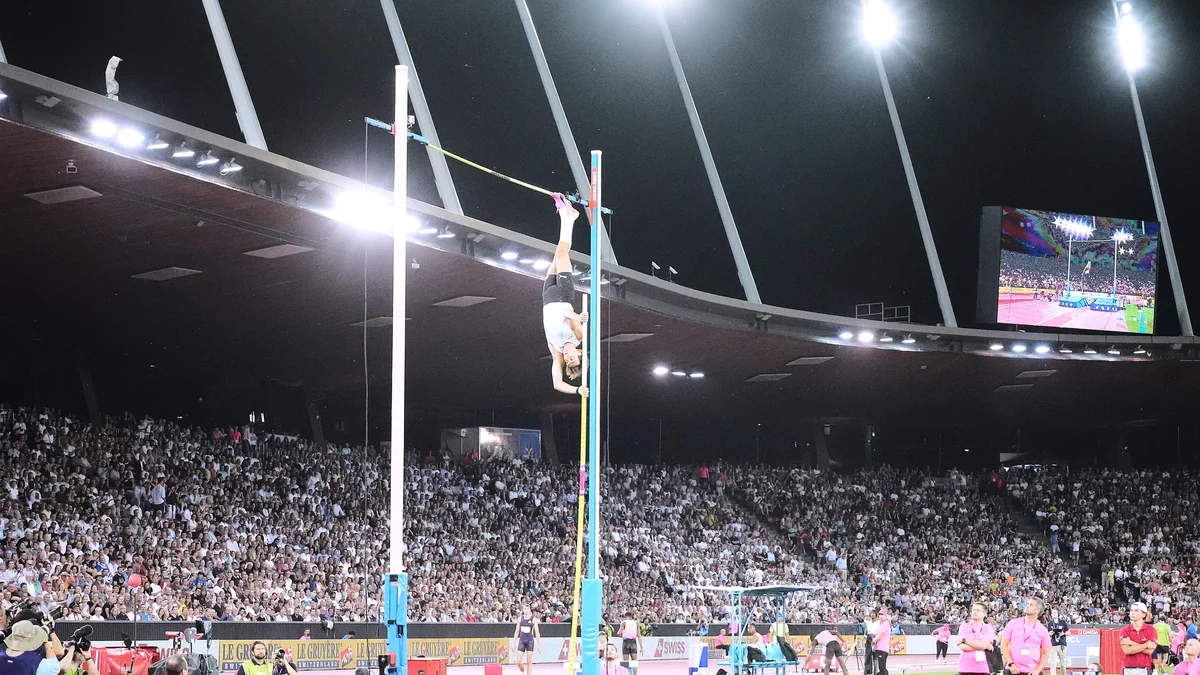
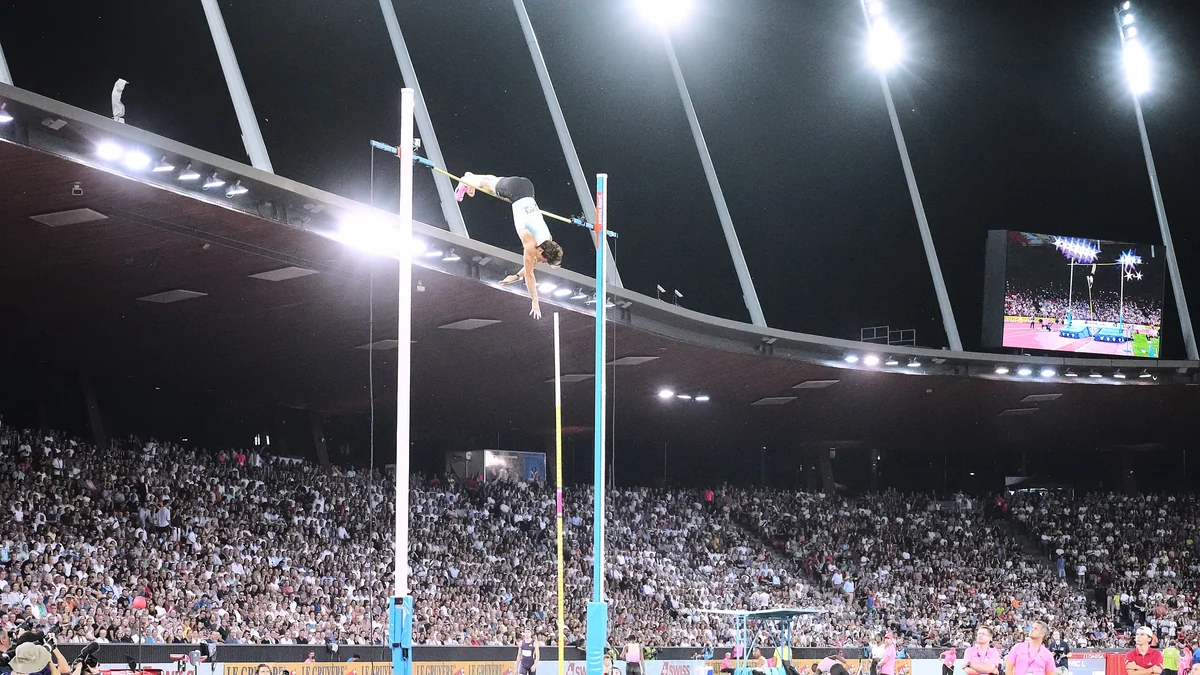
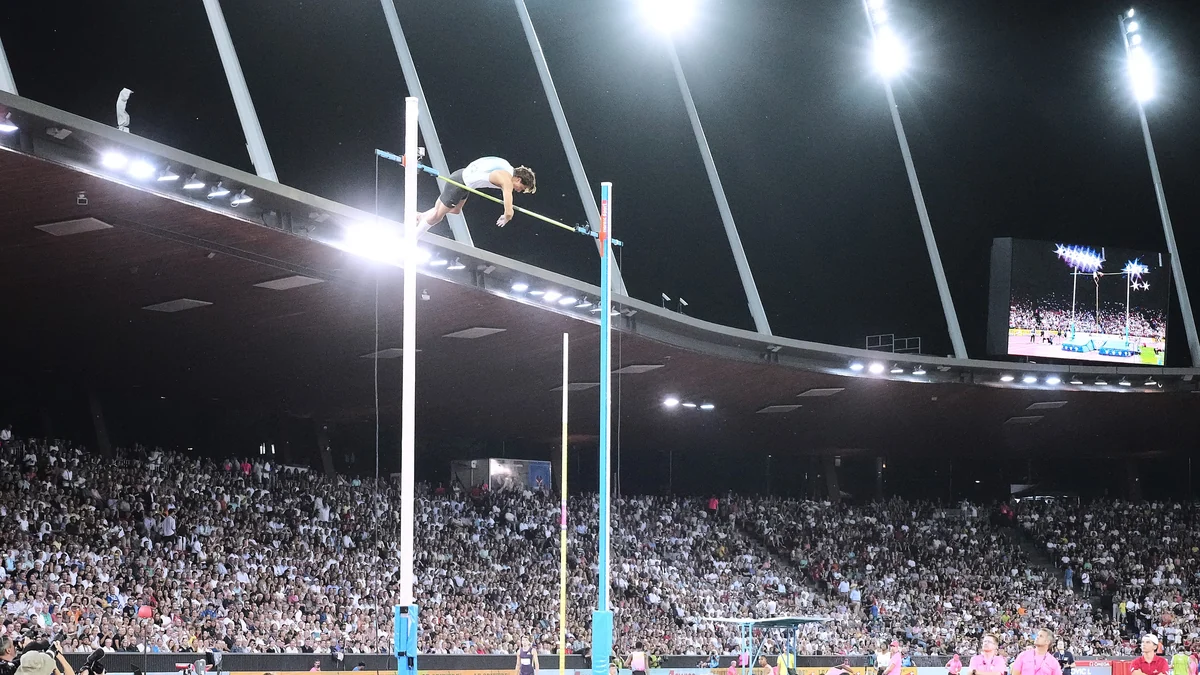
Mondo Duplantis embodied the concept. The Swede won the pole vault by clearing 6.20m, with Emmanouil Karalis second at 6.15m and Sondre Guttormsen third at 5.95m. After securing the title, Duplantis attempted 6.32m, which would have been a world record, but did not clear it. The report on the final also records five athletes clearing 5.95m or higher—an outdoor first, according to the governing body.
Duplantis also recorded “Gold”, presented as the championship’s official anthem. The track was integrated into the stadium and broadcast experience, with a performance scheduled for the final day, according to the song announcement. The champion was no longer only a participant in the contest: his voice became part of the product’s cultural identity.
The track became a stage too
The audiovisual ambition extended to the most functional objects. Hurdles, landing systems, distance indicators, implement carts, technical supports and benches with LED screens received visual customisation. The production concept description shows that the field of play was conceived as a stage, with surfaces and equipment also designed for television images.
That may be the debut’s clearest legacy: not a reinvention of athletics’ fundamental rules, but a deliberately compact, audiovisual edition. The model’s value will depend on how future editions balance clarity, pace and sporting merit. In Budapest, the first answer was to turn fewer events, rapid decisions and major names into a language of its own.
Continue the conversation about sport and culture
After exploring how athletics is moving closer to music and visual spectacle, visit Becoartes at Rua Gonçalo Afonso, 99, Vila Madalena. Confirm current information on the [official website](https://becoartes.com/).
Becoartes - Beco do Batman
99 Gonçalo Afonso Street, Vila Madalena, São Paulo
Sources and credits
- Quejaytee — CC BY-SA 4.0
- Peter Arnold — CC BY-SA 4.0
- Peter Arnold — CC BY-SA 4.0
- Peter Arnold — CC BY-SA 4.0
- World Athletics — resultados oficiais do Ultimate Championship
- World Athletics — lista final de 381 atletas e 65 federações
- World Athletics — formato das sessões, semifinais e provas de campo
- World Athletics — título de Duplantis no salto com vara
- World Athletics — conceito visual, equipamentos e produção do evento
- World Athletics — Gold, hino do campeonato gravado por Duplantis