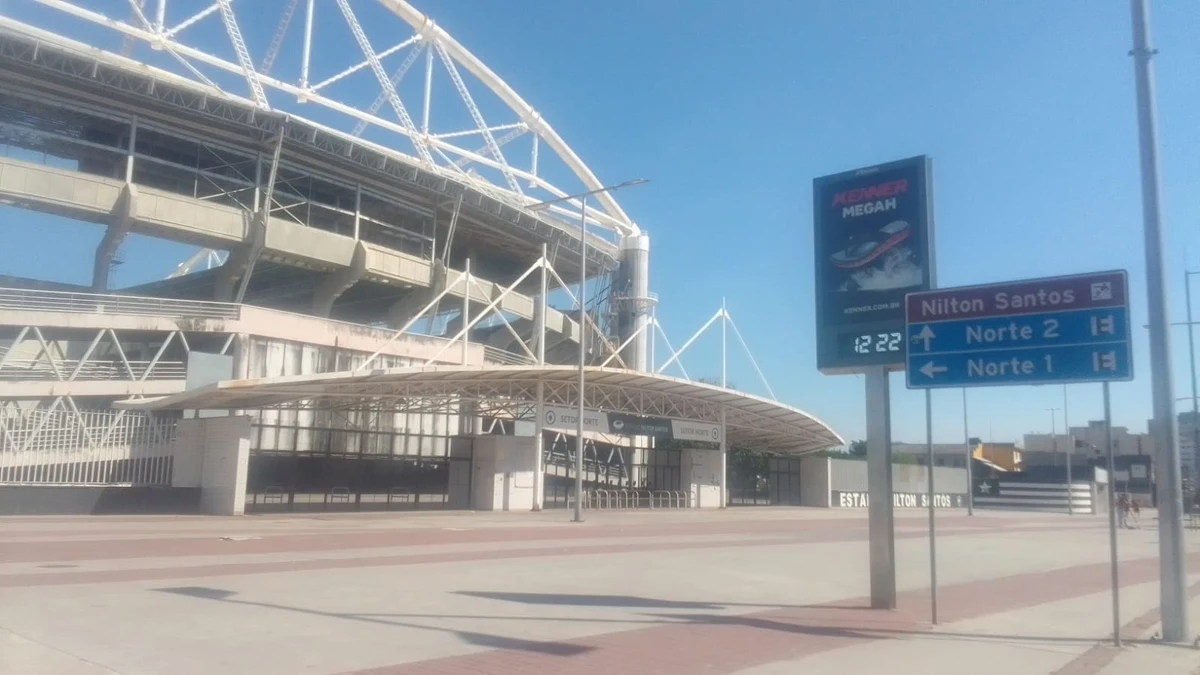
Six months apart, in two different stadiums, Botafogo and São Paulo found their way to the same score by a remarkably similar route. São Paulo led at half-time. Botafogo replied late. On Monday, November 23, at Rio de Janeiro’s Nilton Santos stadium, the goals belonged to Pedro Lima, a right-back finishing with his left foot, and Tiquinho Soares, a centre-forward whose 80th-minute equaliser earned the hosts a point on matchday 36 of Brazil’s Série A.
The finest chance between the two goals helps explain why the visitors left disappointed. An hour into the game, São Paulo substitute Danielzinho crossed for Jonathan Calleri. His header struck the woodwork and the ball dropped for Damián Bobadilla. Goalkeeper Gabriel Batista stopped the follow-up. Within seconds Botafogo had escaped twice. Instead of a two-goal deficit to chase, Tite’s team still needed only one good finish.
When the striker supplies the right-back
Luciano had already tested Batista himself. Eight minutes into the match, Bobadilla picked out the forward, who shot across goal. Pablo Maia tried his luck ten minutes later. The breakthrough came in the 27th minute with Luciano in a different role: this time he played the pass behind the defence rather than trying to beat the goalkeeper. Pedro Lima arrived on the end of it and scored one on one.
Pedro Lima’s run is worth a second look because it reversed the expected relationship between wide defender and central attacker. Instead of the right-back delivering a ball for Luciano or Calleri, Luciano supplied the pass and the defender took responsibility for the finish. It was not an isolated appearance in attack for a player filling in for the night. According to his club, Pedro Lima had featured in every São Paulo match since his debut against Internacional on September 19. Monday took him to two goals and one assist in that stretch.
A change the visitors could feel
After the match, Calleri described why the second half had felt different. In his assessment, Botafogo changed shape and São Paulo struggled to get their press right. That distinction matters. A team can keep trying to press while losing its grip on a game: if the next opponent is free to receive a pass, an effective first sprint is no longer enough. Calleri’s assessment was about how the two teams matched up, rather than about how hard his team-mates ran.
Even then, São Paulo had the opening to put the match beyond a single reply. Danielzinho had been on for only about a minute when he delivered the cross for Calleri’s header. Bobadilla’s effort from the rebound was not the first time the Paraguayan had forced Batista into action; he had tested the keeper in first-half stoppage time as well. Coach Dorival Júnior later singled out his team's chances to extend the lead as a reason the final score was frustrating.
Two red cards, both after the equaliser
The order of events is important. Both teams still had eleven players when Tiquinho made it 1–1, ten minutes from the end of regulation time. Marçal was sent off for Botafogo in the first minute of stoppage time. Wendell, who had replaced Iago for São Paulo midway through the half, followed in the fifth. Neither dismissal created the numerical advantage behind a goal.
On Tuesday morning the Brazilian Football Confederation published its explanation of a video review involving a visiting player. The referee had initially shown yellow. After the video assistant recommended a review, he withdrew that card and showed red. The refereeing commission backed the decision: in its assessment the player caught his opponent’s shin with the sole of his boot and used excessive force while challenging for the ball. The federation’s explanation concerns that tackle, not both dismissals.
The first meeting offers a telling comparison
At the MorumBIS on May 23, Luciano himself opened the scoring after just three minutes. Barrera equalised for Botafogo in the 89th. The scorers and venues changed, but in both league meetings São Paulo took a lead into the dressing room and failed to protect it to the end. Botafogo took two points from the pair of matches without leading either one. Luciano had a direct hand in both of São Paulo’s goals.
Where the point leaves the two teams
São Paulo stood eleventh on 45 points after the draw; Botafogo were fourteenth on 43. With Corinthians on 40 in seventeenth, having played a game fewer, the position immediately after Monday’s game mattered more than any assumption about what total would guarantee survival. São Paulo have the earlier chance to add to their tally, at home to Remo on Thursday, November 26, at 8 p.m. Botafogo stay in Rio for Bahia’s visit on Saturday, November 28, at 9 p.m. Both kick-off times are local.
Image credits. Context photographs resized, framed with margins and converted to WebP without cropping. Famacruz / Wikimedia Commons (CC0 1.0) (CC0 1.0); Thayga Gil / Wikimedia Commons (CC BY-SA 4.0) (CC BY-SA 4.0).
Sources for this story
Original documents are linked in the article.
Becoartes - Beco do Batman
99 Gonçalo Afonso Street, Vila Madalena, São Paulo
Sources and credits
- Famacruz / Wikimedia Commons (CC0 1.0) — CC0 1.0
- Thayga Gil / Wikimedia Commons (CC BY-SA 4.0) — CC BY-SA 4.0
- CBF: ficha oficial de Botafogo x São Paulo
- São Paulo FC: relato do jogo
- São Paulo FC: análise de Calleri
- São Paulo FC: análise de Dorival Júnior
- CBF: análise do VAR
- São Paulo FC: retrospecto do primeiro turno
- CBF: classificação da Série A
- FFERJ: relato do jogo