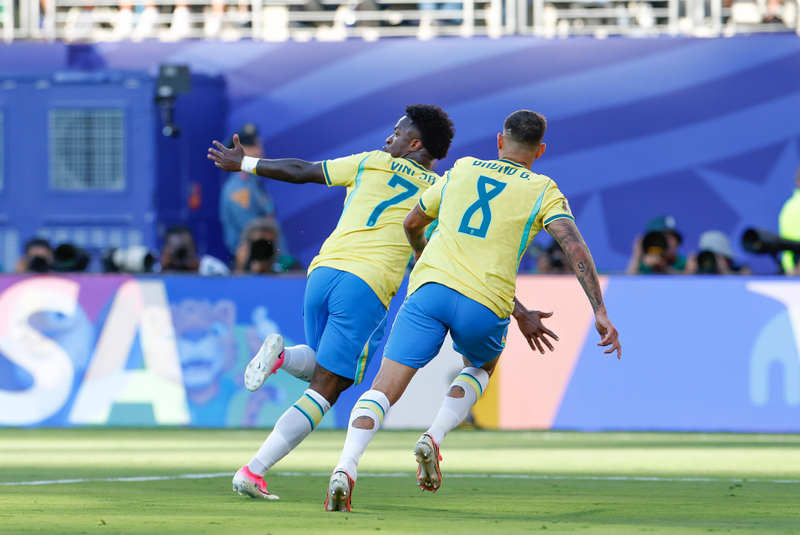
Brazil did not lose. That is the cleanest sentence, the one that keeps panic from taking over the room. But anyone who watched the 1-1 draw with Morocco on June 13, 2026, also knows that Brazil's World Cup opener left a taste that was hard to name. It was not disaster, not celebration, not relief. It was the kind of result that sits on the table while everyone tries to explain the same match in a different language of feeling.
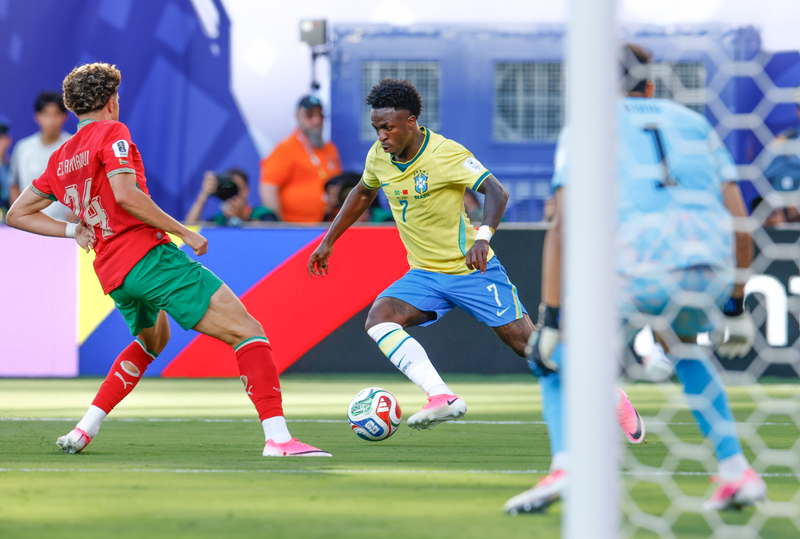
Morocco went ahead through Ismael Saibari in the 21st minute, and it did not feel accidental. They started with energy, pushed Brazil into discomfort, and treated the yellow shirt with little reverence. Brazil answered in the 32nd minute through Vinicius Junior, the player who carries so much of this team's attacking imagination. The equalizer saved the scoreline, but it did not erase the question that began moving around before halftime: can this Brazil manage the weight of its own expectation?
At a World Cup, an opening match is never just an opening match. It carries qualifiers, old memories, promises of a generation, past wounds, bar arguments, highlight reels, and a collective hunger to believe. Brazilian supporters do not enter a match only to watch eleven players. They enter with a whole inheritance. That is why the 1-1 felt bitter: the team was not only trying to earn points; it was trying to convince a crowded table that dreaming was still allowed.
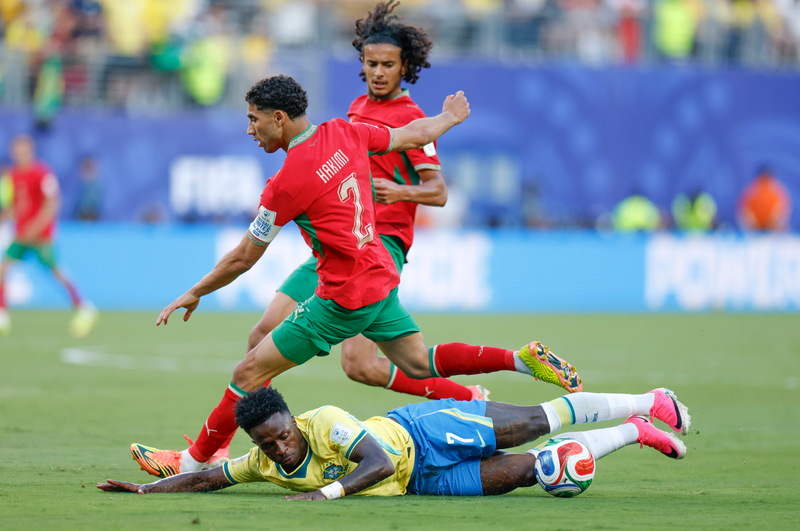
The difficulty is that Morocco arrived with history, ambition, and football of its own. This was not an opponent there to decorate Brazil's story. Morocco's early pressure, midfield courage, and ability to keep the match uncomfortable gave the afternoon a tension Brazil struggled to settle. Saibari's goal changed the mood of the opener. Suddenly the conversation was no longer about how much Brazil might win by, but about reaction, maturity, and nerve.
Vinicius Junior's equalizer gave Brazil air. A goal like that changes the volume of any room. Quiet people begin to speak; early critics demand more of the ball at his feet; pessimists find a reason to wait. But the equalizer did not become a comeback. And when the comeback does not arrive, the table changes tone. The analysis leaves the shout and becomes slower: was it rhythm? Was it connection? Was it calm? Was it the missing bridge between possession and control?
At Becoartes, football lives exactly in that space between the play and the conversation. The match ends in the stadium, but it continues on the plate, in the glass, on the sidewalk, in the memory of people who have seen other Brazils and in the expectation of those who still want this Brazil to find its shape. The game becomes a subject because nobody truly watches alone. Even someone watching on a phone carries an imaginary crowd inside.
That is why a draw can produce more conversation than a simple win. A win can close the discussion with a smile. A draw opens drawers. Some see a warning sign, some see only a tight first match, some remember that World Cups are won by teams that grow into them, and some insist that a major team must impose respect from the first minute. All those readings can fit around the same table, as long as the conversation does not erase the other side's merit. Morocco earned the discomfort it created.
There is also a very Brazilian anxiety in this kind of match. We want spectacle, but we distrust it. We ask for patience, but demand an immediate answer. We want the national team to play lightly, but place a weight on it that no single move can solve. When Brazil draws an opener, the whole country seems to look for a diagnosis before dessert.
Maybe the most interesting part of this 1-1 is exactly that: it refuses to offer a finished conclusion. The result leaves everything open. One point in the standings, many questions on the table. Brazil showed talent, but still needs continuity. Vinicius appeared, but the collective needs to appear with him. The defense survived, but the scare remains written down. Morocco left respected, and Brazil left questioned.
For anyone who experiences football as culture, that matters. Not because tactical analysis has no place, but because the game is also a social ritual. In Vila Madalena, in the heart of Beco do Batman, a Brazil match speaks to the street, to graffiti, to Brazilian food, and to the urge to be near other people when the country holds its breath. The score becomes a reason to gather. Criticism becomes affection spoken out loud. Hope, even when suspicious, asks for another round.
The draw felt bitter because it carried expectation. But bitter does not mean final. A World Cup is short enough to punish repeated mistakes and long enough to change mood in a few days. Brazil still has a road, still has the ball, still has pressure, still has supporters. And the table remains set for the next conversation.
Here, the question stays open: was the 1-1 against Morocco a warning sign, or only the first chapter of a World Cup still trying to find its tone?
After the final whistle, the conversation continues at Becoartes
Brazilian food, urban art, and a full table in the heart of Beco do Batman. Reserve your table on WhatsApp and come follow the next chapters of Brazil's campaign.
Reserve a Table