Bugre is the artistic name of Kleberson Menezes, an urban artist whose career began on the streets of central São Paulo in 1996. His documented connection to Beco do Batman comes through Beco Expandido: in November 2021, an untitled mural by him was included among five works activated by an augmented-reality experience. The available sources, however, do not say when he painted the mural or confirm that either the work or the app remains available in 2026.
Who Bugre is
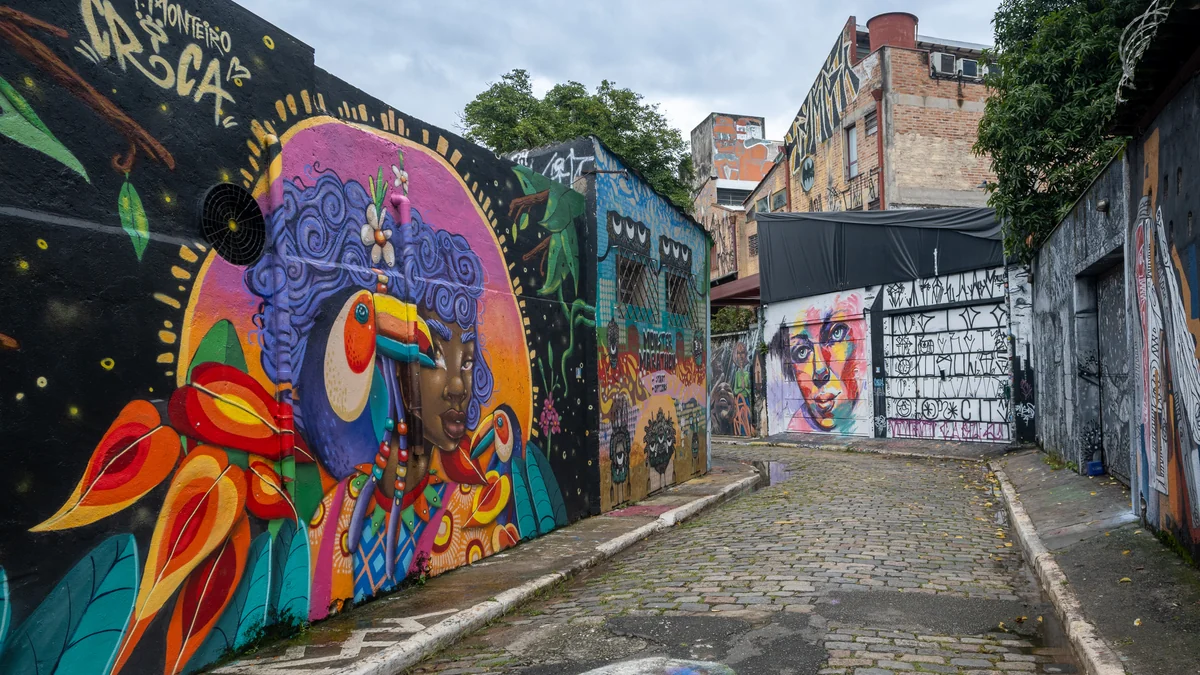
The profile published by Lar Galeria identifies Bugre as Kleberson Menezes and dates the beginning of his activity to 1996, in central São Paulo. This identification matters because the nickname may appear in other contexts: here, Bugre is the artist connected to urban typography, São Paulo graffiti and the Beco Expandido project.
According to the gallery, Menezes is self-taught. His formation grew from the streets and everyday experience, but that does not mean his visual language has remained static. The profile describes a practice developed over nearly three decades and relates his production to both personal expression and the tensions of the city.
The same source says that he comes from the far eastern area of São Paulo. Nothing in the pages reviewed supports claims that he was born, lived or maintained a studio at Beco do Batman. The verifiable link is artistic and tied to a specific project.
From abstract letters to organic forms
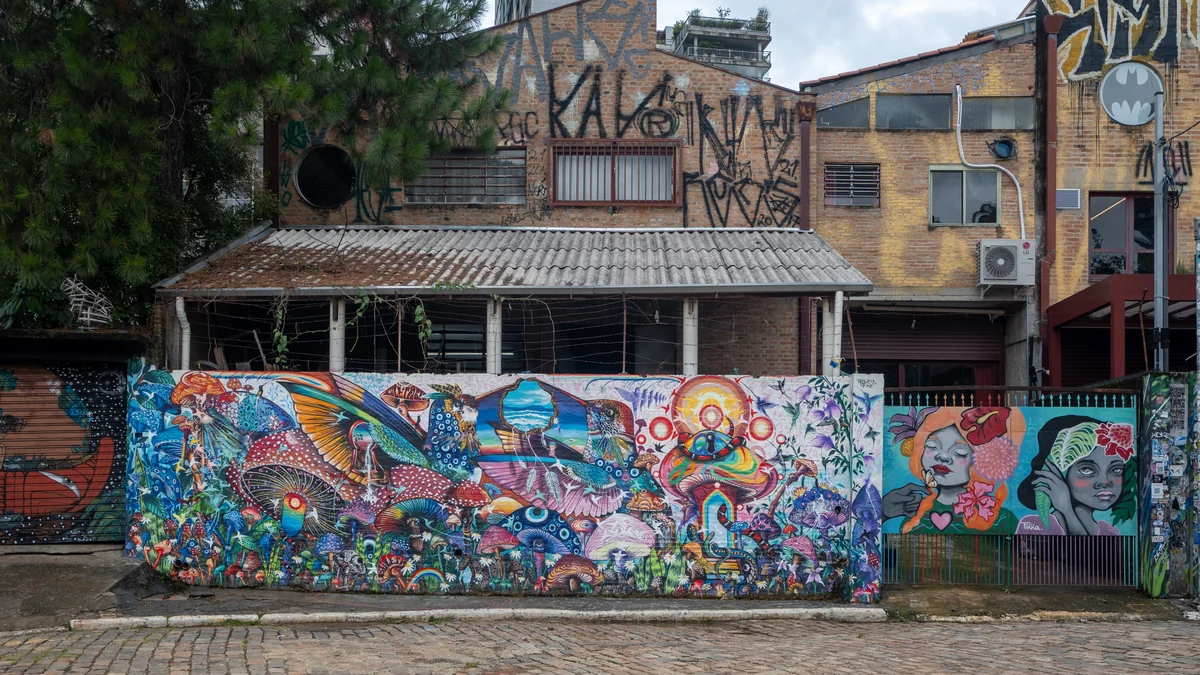
The typography of the São Paulo metropolis appears as an early influence. According to the artist’s profile, Bugre’s abstract letters gradually evolved into organic drawings and characters, some associated with Greek and Roman mythology.
That transition helps reveal a logic of transformation in his work. A letter does not operate only as a message to be decoded: it can bend, gain volume and approach the appearance of bodies or figures. Pulsing forms, contrasting colors and mythological references become ways of addressing personal and universal conflicts.
This approach is more useful than searching for one fixed visual signature on every wall. Murals are made at different times and under different conditions, and an artist’s language changes too. With Bugre, it is worth observing how calligraphy, abstraction and figures intermingle, without automatically attributing every organic image along the route to him.
The link to Beco Expandido
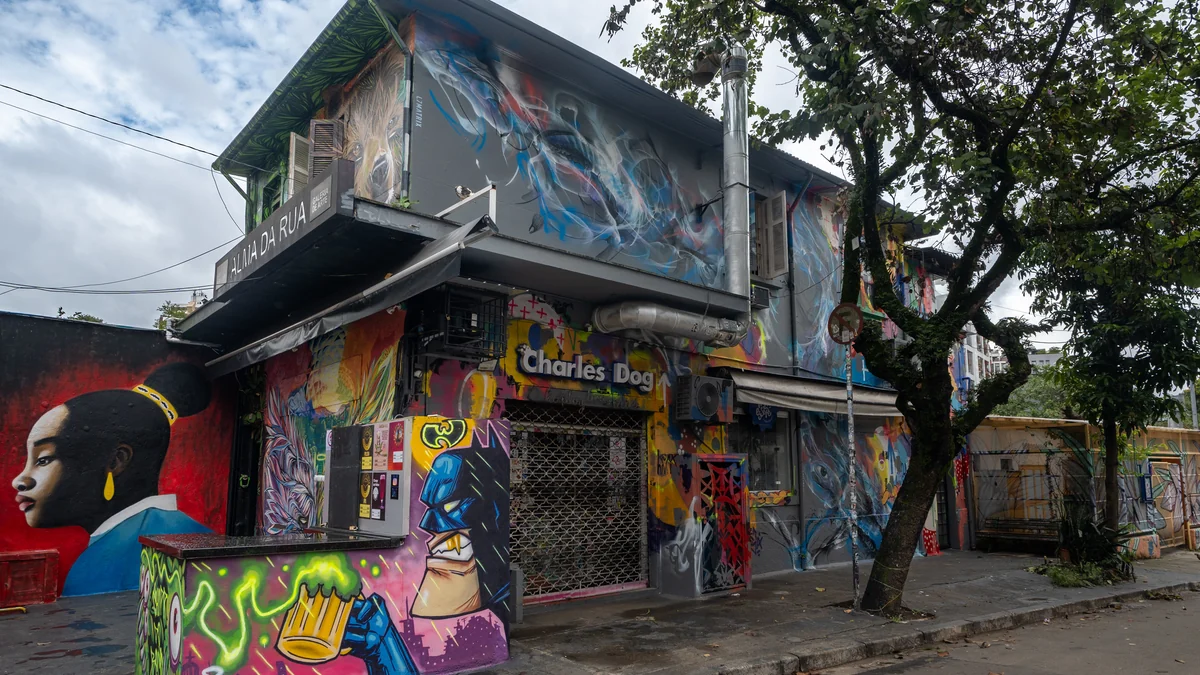
The clearest connection between Bugre and Beco do Batman appears in a Veja São Paulo report published on November 25, 2021. It introduced Beco Expandido, an app developed by the Midiadub studio to apply augmented reality to five existing works in the alley.
Among those contributions, the report identifies an untitled mural by Bugre. By pointing a phone camera at works recognized by the app, visitors could see animated volumes and colors on screen and access information about the works and artists. The article also said that off-site access was possible, although its own test encountered problems with that feature.
The record supports three facts: Kleberson Menezes participated in Beco Expandido; his contribution was a mural; and the work was presented without a title. It does not establish the exact painting date, its current position or how long it remained on the wall.
What augmented reality added
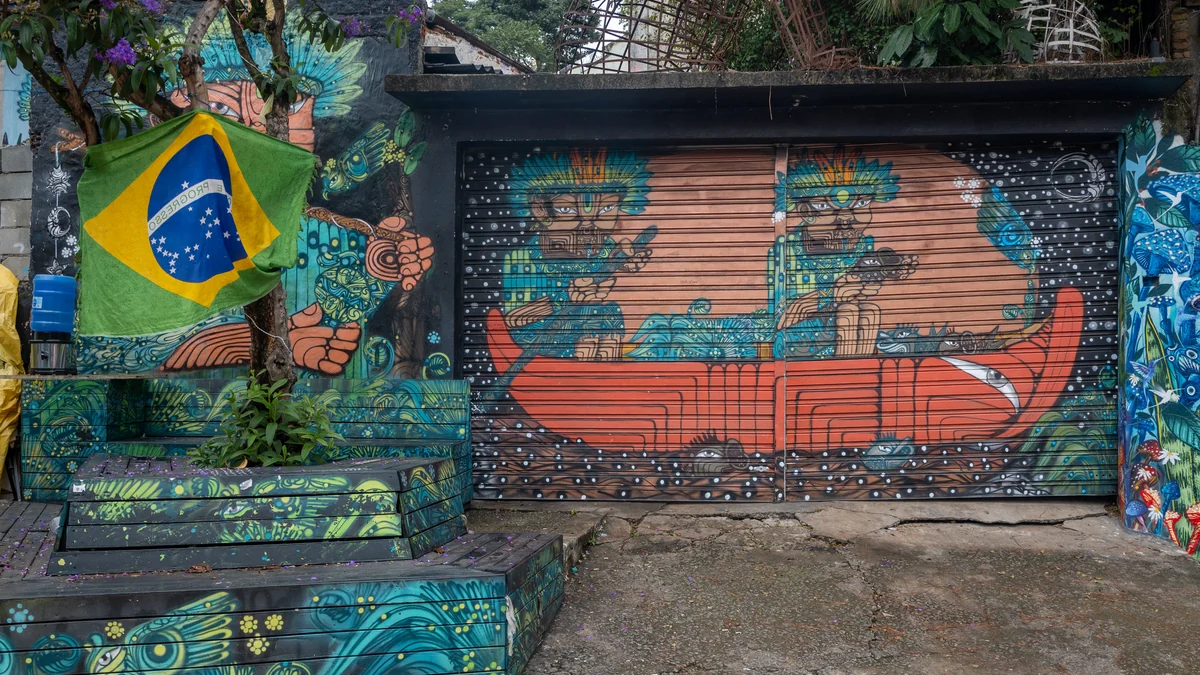
The project created a second layer for the physical painting. Instead of replacing the mural, the phone screen rearranged its elements through animation, volume and color. For an artist whose language turns letters into organic forms, the feature offered a coherent extension: what already suggested movement on the wall could acquire digital motion.
That does not mean Bugre created the app or all of the animations by himself. The report credits development to Midiadub and presents the mural as one of the activated works. This distinction preserves both the authorship of the painting and the collaborative nature of the technological experience.
Beco Expandido also served as interpretation. In addition to the visual effect, it provided information about the artworks and their creators. A phone could therefore become an entry point for learning who made a particular image—an especially relevant issue in a place where many visitors photograph murals without knowing their authorship.
A historical record, not a promise for a visit
Wikimedia Commons identifies Beco do Batman as a São Paulo street known for graffiti. Its collection brings together photographs from different moments, demonstrating the site’s visual variety but not proving that any particular mural has remained in place.
Bugre’s work in Beco Expandido should therefore be understood within the documented context of November 2021. The reviewed sources do not provide enough evidence to announce that the untitled mural is still visible or that the app works on current systems. Recent photographs of the alley should not be used to identify that work without confirmation of authorship.
For visitors, this caution improves the reading of the space: a wall seen today may have replaced the composition once incorporated into the app. Bugre’s link to the alley remains relevant as the memory of an experience connecting graffiti, information and digital resources, even without guaranteed access today.
Where Becoartes fits into the route
Becoartes is at Rua Gonçalo Afonso, 99, Vila Madalena, São Paulo. For updated institutional information, consult the official Becoartes website. It can complement an urban-art visit, but the reference does not imply that Bugre’s mural or Beco Expandido is currently available.
Discover Becoartes
Visit Becoartes at Rua Gonçalo Afonso, 99, Vila Madalena, and check the official website for updated information.
Becoartes - Beco do Batman
99 Gonçalo Afonso Street, Vila Madalena, São Paulo
Sources and credits
- xiquinhosilva — CC BY 4.0
- xiquinhosilva — CC BY 4.0
- xiquinhosilva — CC BY 4.0
- xiquinhosilva — CC BY 4.0
- Veja São Paulo — lançamento e relação das cinco obras
- Lar Galeria — perfil de Kleberson Menezes, o Bugre
- Wikimedia Commons — categoria de grafites em São Paulo
- Wikimedia Commons — categoria Beco do Batman