A jaguar hunting caiman in the Pantanal is natural, documented behavior. In one southern Pantanal study, caimans accounted for 24.4% of identified prey. That establishes their importance in the sample, but the proportion cannot be extended to the entire wetland. Following a hunt from beginning to end, meanwhile, requires a difficult coincidence of presence, place and timing—and the 2026 sequence was unexpected for the people who witnessed it.
The distinction matters: visual evidence establishes that one particular event occurred; field research, by accumulating many events, helps identify ecological patterns.
The northern Pantanal sighting
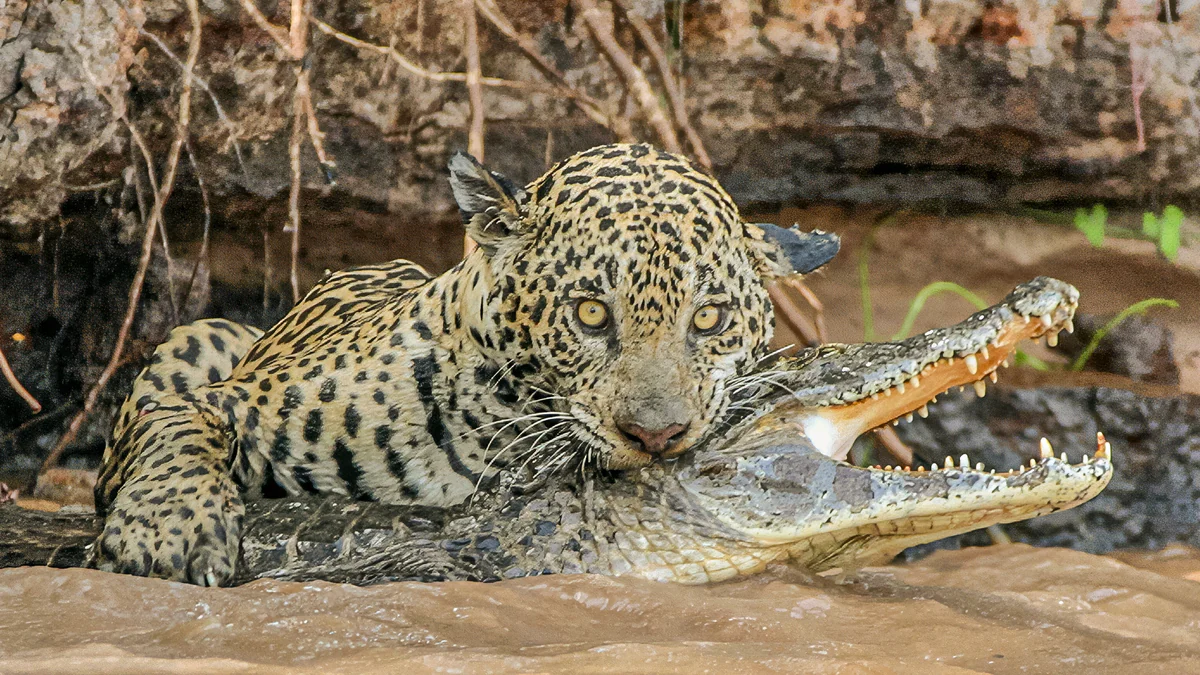
According to g1’s report, photographer Amanda Samways recorded a jaguar named Kyyavera capturing a caiman on October 24, 2026. The event occurred during an expedition in Porto Jofre, in the Poconé area of the northern Pantanal in Mato Grosso.
The group watched from boats and at a distance. According to the account, the jaguar walked through vegetation, stopped near the river and sniffed the surroundings. It then leapt into the water, caught a caiman hidden near the vegetation and climbed the bank with the animal in its mouth. Amanda took the photographs; Lara Nicolletti recorded the video.
The sequence documents that encounter, but it does not reveal how many previous attempts failed, how long the jaguar searched or how often other individuals make similar attacks.
What the research found
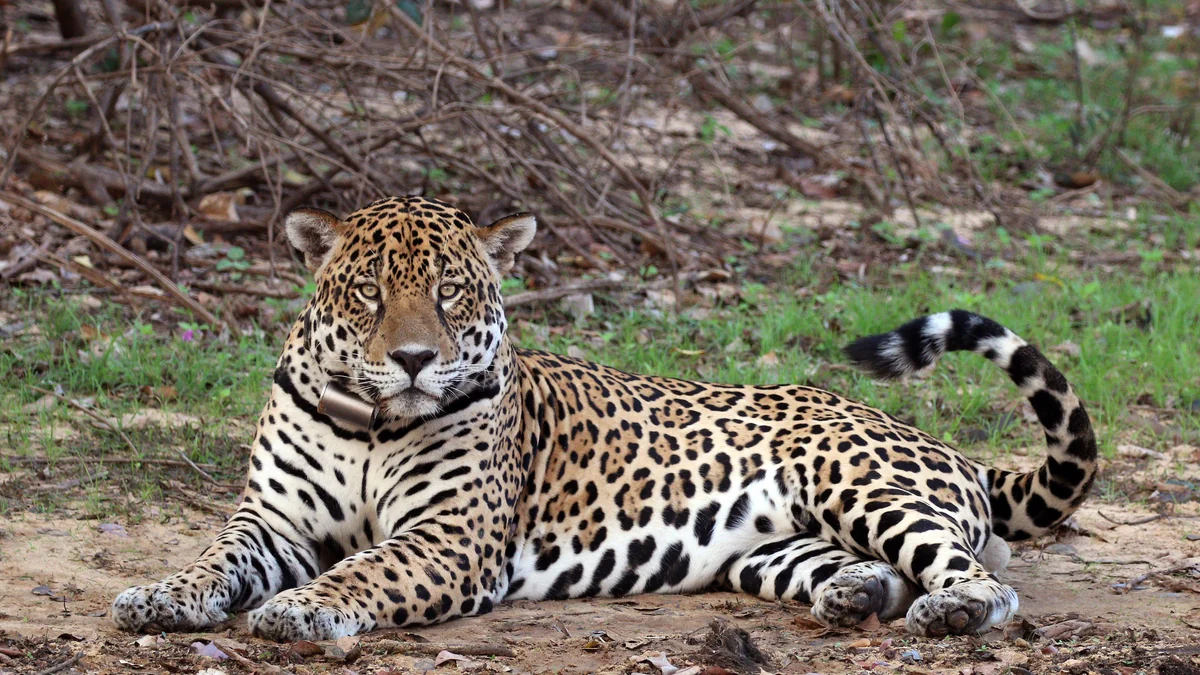
The available quantitative evidence comes from a different place and period. Between October 2001 and April 2004, researchers monitored ten GPS-collared jaguars in the southern Pantanal. They collected 11,787 locations, found prey remains at 415 kill sites and documented 438 prey items.
In this sample, 24.4% of prey were caimans identified as *Caiman crocodilus yacare*. Cattle accounted for 31.7%, while peccaries represented 21%. The results appear in Sandra Cavalcanti and Eric Gese’s paper on jaguar kill rates and predation patterns.
The figure supports a limited conclusion: caimans represented a substantial share of identified kills in that southern Pantanal study area. It does not show that every Pantanal jaguar has the same diet or that 24.4% remains constant in other regions or years.
Individuals, water and prey availability
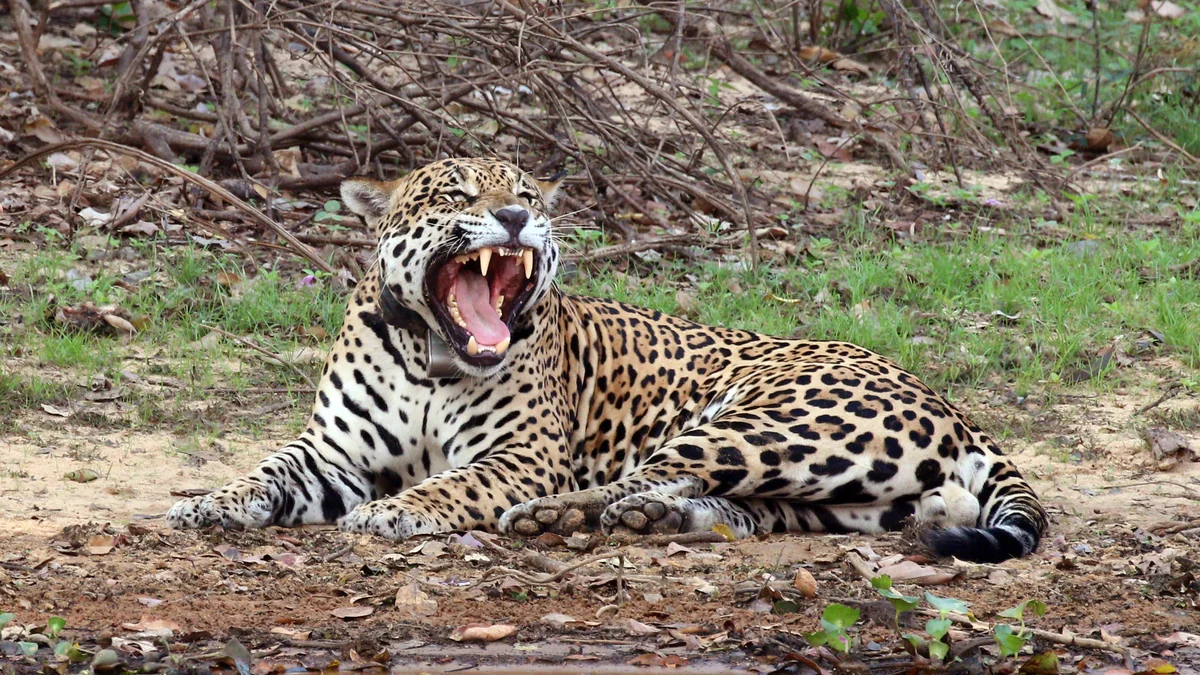
The same research found differences among the monitored jaguars. Individuals consumed species in different proportions; within the sample, females killed more caimans than males. Environmental conditions also affected the results: as rainfall and water levels rose, caiman predation increased, in association with the reptiles becoming more widely distributed across the landscape.
Sandra Cavalcanti’s dissertation provides the broader research context and characterizes the studied jaguars as highly opportunistic predators. Their diet is therefore not a fixed menu. It reflects available prey, environmental conditions and variation among individuals.
Nor should those percentages be transferred directly to Porto Jofre. The research was conducted in the southern Pantanal, in an area containing native prey and livestock; the 2026 sighting occurred in the northern Pantanal.
Why a complete sequence attracts attention
Finding prey remains, locating concentrated-use sites with GPS and watching a capture are different forms of evidence. Research can assemble numerous events over several years. An observer in a boat must coincide with the jaguar at the place and moment when the action becomes visible.
In the recent episode, the group followed the signs preceding the leap, the entry into the water, the capture and the climb up the bank. Amanda’s account indicates that even finding a jaguar was not guaranteed during the expedition; witnessing the entire predation event was still more unexpected for her.
That supports describing the observation as unusual for this group, but not calculating its general rarity. The sources used here provide no rate for complete hunts seen by visitors or researchers. A behavior that is difficult to film is not necessarily rare in nature.
What the images establish—and what they do not
The images and account establish that Kyyavera captured a caiman at that place and on that date and emerged from the water carrying the prey. They cannot provide a population-level frequency or reconstruct everything that happened outside the cameras’ field of view.
There is also no basis for assigning human intentions to the jaguar, such as displaying a “trophy” or consciously posing. Such wording conveys a witness’s impression, not a conclusion about the animal’s motivation.
The Instituto Onça-Pintada describes jaguars as solitary, territorial, strong swimmers and capable of hunting aquatic prey. It also identifies the species as a top predator with a role in regulating prey populations. This context explains why a capture in the water is consistent with jaguar ecology without filling gaps in the footage with assumptions.
The most accurate answer
Hunting caimans is a documented part of jaguar ecology in the Pantanal. In the southern Pantanal research, these reptiles represented a substantial share of identified prey, although that percentage cannot be generalized across the wetland.
The 2026 sighting provides an exceptionally continuous illustration for those present, but it does not measure how often the behavior occurs. The defensible conclusion is this: the predation is known; witnessing a complete sequence requires an unpredictable opportunity whose observational frequency has not been quantified by the sources presented here.
Discover Becoartes
Art, culture and new ways of observing the world at [Becoartes](https://becoartes.com/), Rua Gonçalo Afonso, 99, Vila Madalena, São Paulo.
Becoartes - Beco do Batman
99 Gonçalo Afonso Street, Vila Madalena, São Paulo