Want to learn a fan chant without memorizing an outdated version? Start with the artist’s official channel, verify the song and publication date, read that guide’s own key, and return to the same source shortly before the concert. This is safer than treating fan videos, transcripts, or translations as definitive instructions.
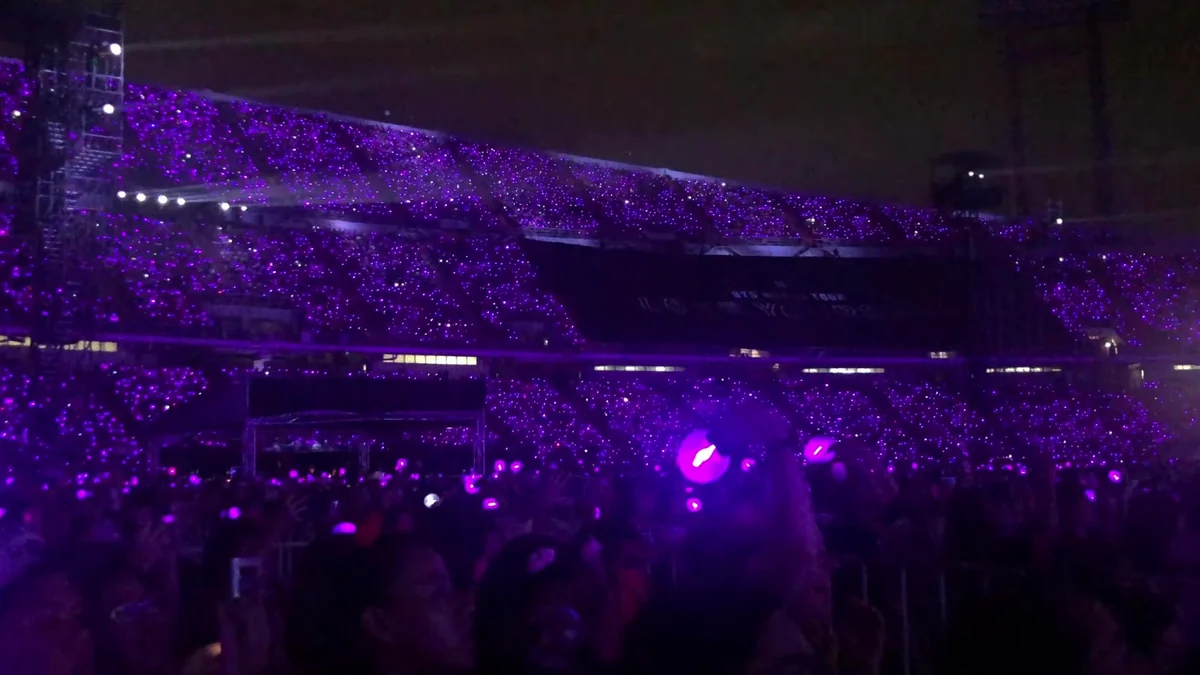
Fan chants are part of collective participation at K-pop performances, but they are not simply the entire song sung by the audience. A report published by Korea.net describes guides released on BTS’s official fan website and says that fans repeat parts of a song at specific moments. The exact format, however, belongs to each track’s guide and may be revised.
Where to find the official version
Begin with channels linked to the artist or company: an official community, fandom website, notice page, or an account whose authenticity can be confirmed through those spaces. Find the post using the full song title, then check the artist, heading, date, and any update notice.
A professional-looking image is not enough. Confirm that the page belongs to an official channel and look for a newer notice concerning the same track. Links shared by fans can lead you to the source, but the chain should end at a publication from the responsible team.
This distinction has practical consequences. A community transcript may rearrange colors, romanize Korean, add pronunciation help, or merge details from different versions. Such aids can be useful for study, but third-party editorial choices do not replace the officially published direction.
How to read colors, highlights, and keys
Find the key before following the lines. Colors, bold type, parentheses, brackets, arrows, and blank spaces have no universal meaning: one team may use a color for the audience’s part while another follows a different convention. The valid meaning is the one defined in the publication at hand.
Next, separate four kinds of action. Sung passages follow a musical section; calls or shouts tend to be short interventions; pauses tell the audience to wait; and gestures or light-stick directions belong to the visual component. Assign one of these meanings only when the official key or demonstration supports it.
If a video is provided, use it with the written guide: slow it down, watch the count, and mark the entry points. Do not fill silence by intuition; an interval can itself be an instruction. To study without reproducing full lyrics, use notes such as “after the chorus” or “response after the lead vocal.”
How to check for a revision
Save the publication URL, displayed date, and any version number or label. Before the concert, return to the official channel and search later notices using the track title and terms such as “fan chant,” “guide,” “change,” or “update.” If two official pages differ, favor the newer instruction when it explicitly replaces or corrects the earlier one.
Compare structure rather than copying lyrics: entry points, names called, repetitions, pauses, and movements. This reveals a change without republishing protected material. A screenshot can be a personal note, but it does not establish that the content remains current; the original link retains context and possible corrections.
A fan chant does not replace venue rules
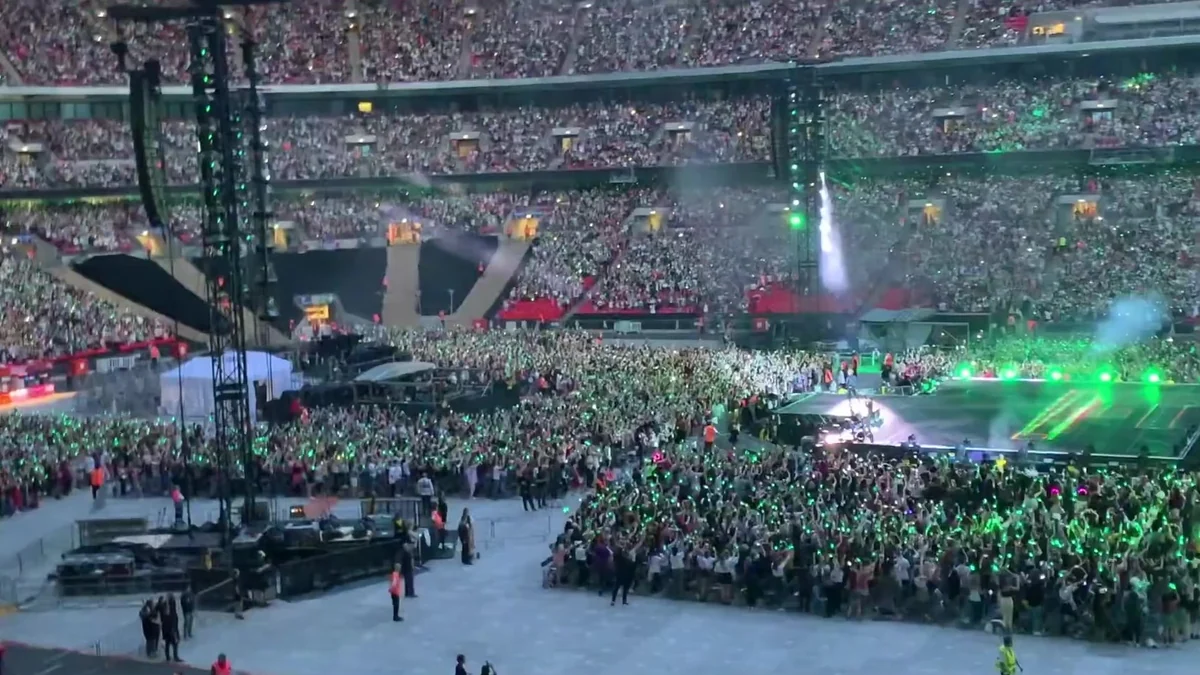
A song guide and concert rules answer different questions. The first organizes participation in a track; event instructions govern conduct in the space. The Korea.net account says fans avoided raising light sticks and banners above their heads so they would not obstruct other people’s view, and stood only when asked. It also reports that noise was not allowed at Seoul performances in March 2022 and clappers were used—a condition specific to those concerts, not a permanent rule for every show.
Check organizer and venue notices separately. Even if a guide includes a vocal call or movement, a later local rule may restrict it. Do not automatically transfer customs observed in one country, tour, or date to another setting.
A short rehearsal method
Use the first listen to recognize the song’s structure. On the second, follow the official guide and identify the entries. Then practice only the audience responses while preserving the silences. Finally, try the complete recording without constantly watching the screen.
On the day before or the day of the event, check the official page and concert notices again. When an instruction remains unclear, paying attention to the performance is better than forcing a response based on doubtful material. Coordinated participation also means respecting the people around you.
Brazil’s interest in the genre has a concrete institutional presence: in May 2026, Virada Cultural hosted the first K-pop performance in its history, in partnership with the Korean Cultural Center in Brazil, according to the City of São Paulo. That context reinforces the value of consulting sources specific to each artist and event rather than assuming that every organization follows the same convention.
Discover Becoartes
Visit [Becoartes](https://becoartes.com/) at Rua Gonçalo Afonso, 99, Vila Madalena, São Paulo.
Becoartes - Beco do Batman
99 Gonçalo Afonso Street, Vila Madalena, São Paulo