If a light stick will sit unused between concerts, the sources reviewed do not establish a universal rule requiring the removal of batteries that still work. Check the device manual and markings. The EPA’s documented guidance is that removable single-use batteries can generally be taken out when they stop powering the device. Once removed, their chemistry determines how each battery should be stored, prepared, and managed.
Start with the label, not the shape
Light sticks may use removable batteries, but size and appearance are not enough to identify their chemistry. According to the EPA, chemistry should be identified through battery markings and labels. AA and AAA cells, for example, may be disposable alkaline batteries or different types of rechargeable batteries.
Look for terms such as “alkaline,” “lithium,” “Li-ion,” “Ni-MH,” or “Ni-Cd” on the battery, compartment, packaging, or manual. Do not recharge a battery simply because it fits in a charger. Nor should the chasing-arrows symbol be read as permission to use curbside recycling: on a Li-ion battery, it indicates that specialized battery recycling is available.
Before storing a light stick, turn it off and follow the manufacturer’s instructions on removing, combining, and replacing batteries. The available sources do not demonstrate that leaving batteries installed always causes leakage, corrosion, or a short circuit, so that claim should not be treated as a rule for every model.

Keep removed batteries organized
A battery that appears depleted may still hold enough energy to spark or start a fire when its terminals touch metal or another battery. The EPA recommends nonconductive tape over the terminals or a separate plastic bag for Li-ion batteries headed to recycling. Electrical tape is the agency’s preferred option, though adhesive tape without metallic material can also work.
The Battery Network requires individual bags or terminal protection for Li-ion, Ni-Cd, Ni-MH, and sealed lead-acid batteries. It says disposable alkaline batteries do not need terminal protection unless the battery is marked “Lithium.” Keeping the brand and chemistry visible helps a drop-off site identify the material.
Do not leave loose batteries beside coins, keys, or other metal objects. This separation is particularly relevant after taking batteries out of a light stick and before transporting them to a collection site.
Alkaline and lithium batteries follow different routes
In the United States, the EPA says alkaline and zinc-carbon batteries can be placed in household trash in most communities. Even so, the agency recommends sending them to battery recyclers or checking with the local or state solid-waste authority because local requirements may differ.
Single-use lithium cells, button or coin cells, and rechargeable batteries should not go in household trash or municipal recycling bins. Depending on their chemistry and local rules, they should be taken to specialized battery recyclers, participating retailers, or household hazardous-waste programs.
The distinction matters because Li-ion batteries can be damaged or crushed while facilities sort paper, plastic, glass, and metal. This can create a fire hazard in facilities not equipped to process them. Specialized recycling also allows the recovery of materials including cobalt, nickel, and manganese. Lithium may also be recovered, although further processing can be necessary before reuse.
Extreme heat and cold do not help
For Li-ion batteries, the EPA recommends storage at room temperature. Refrigeration is unnecessary. Long exposure to extreme cold or heat—such as inside a car in direct sunlight—can damage a battery.
This guidance is not permission to attempt repairs or dismantle packs that were not designed for user servicing. If a battery is not readily removable, follow the product’s safety markings and contact its manufacturer. For a light stick with an integrated battery, the whole device may need to go through an electronics recycler or household hazardous-waste program, depending on local guidance.
Separate swelling and damage from alkaline leakage
The Battery Network calls for special handling of damaged or defective batteries, including swollen, punctured, or overheating units. They should not be placed in trash, curbside recycling, or the network’s standard collection boxes. The organization advises isolating the battery in a nonflammable material such as sand or kitty litter and contacting the manufacturer or an appropriate service for directions.
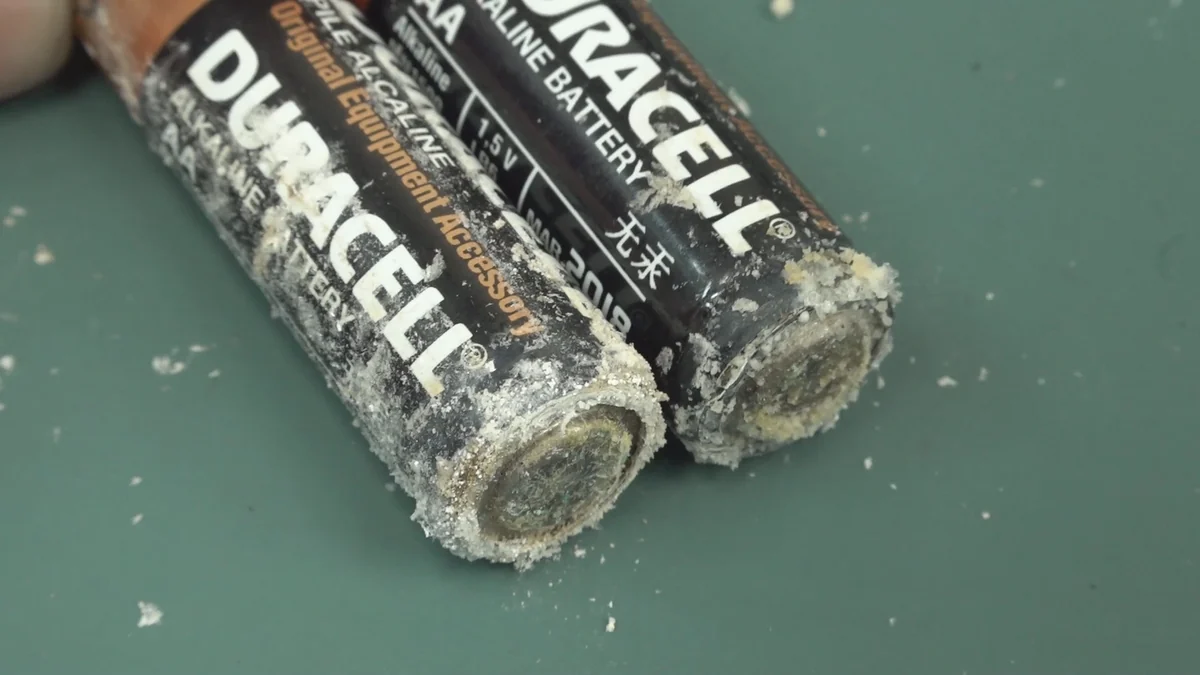
There is an important exception: the program specifically says corroded or leaking alkaline batteries are not classified as damaged or defective under its system. Do not automatically apply the route for swollen or punctured batteries to them, and do not put them in a collection box without confirming acceptance. Ask the local waste authority or collection site for instructions. Do not touch residue without suitable protection or continue using an altered battery.
If a Li-ion battery presents an imminent fire risk, the EPA says it may be necessary to call 911. Outside an emergency, the manufacturer, retailer, state waste agency, or local household hazardous-waste program can provide management instructions.
Finding recycling in the United States
The Battery Network drop-off locator searches for sites by ZIP code. Its page warns that accepted materials vary: some locations take common household and rechargeable batteries, while specialty materials depend on the site. Check the location’s details before visiting, especially for disposable alkaline, damaged, or unidentified batteries.
A practical sequence is to sort batteries by chemistry, keep labels legible, protect terminals when required, and then find a compatible destination. These cited services and rules concern the United States. In another country, consult the local public waste service and applicable regulations.
After the concert
At home, switch off the light stick, inspect its compartment and batteries for visible changes, and read the model’s manual. Remove depleted batteries when the device permits it, keep different chemistries separate in storage, and prepare each type for its proper recycling route. For working batteries left between performances, the manufacturer’s instructions control: the reviewed sources do not impose a general requirement to remove them from every light stick.
Discover Becoartes
Visit [Becoartes](https://becoartes.com/) at Rua Gonçalo Afonso, 99, Vila Madalena, São Paulo.
Becoartes - Beco do Batman
99 Gonçalo Afonso Street, Vila Madalena, São Paulo