Marcos Penido died on Saturday, August 29, 2026, at the age of 74, in Rio de Janeiro, after heart failure. The information was recorded by sports press organizations and by outlets that followed his career. The immediate fact is simple and hard: a football reporter, shaped by the routine of newsroom, pitch, training camp, airport and archive, has left the scene. What remains is broader than a note of mourning.
Penido worked for 32 years at O Globo, had previously worked at Jornal do Brasil, covered nine consecutive World Cups from 1982 to 2014, and received two Esso Prizes. He also presided over the Rio de Janeiro Association of Sports Chroniclers from 2014 to 2017, after taking part in its institutional rebuilding. These confirmed facts are enough to establish his professional importance. But the cultural relevance appears when we look at the kind of journalism he represented: sports reporting as a method for reading Brazil.
The Confirmed Fact
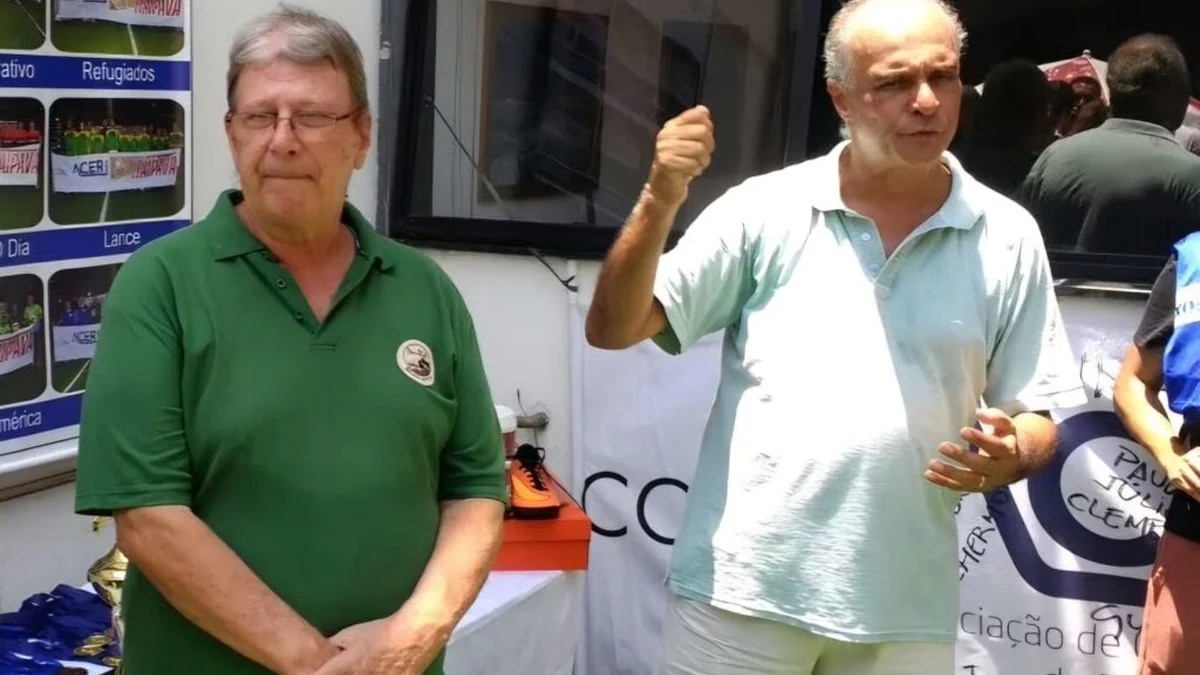
Public sources converge on the main points. Marcos Penido died at 74. The Rio de Janeiro State Football Federation reported that he was known as Penidão, worked 32 years at O Globo, passed through Jornal do Brasil, won two Esso Prizes and covered nine World Cups. ACERJ recorded his role in the organization, including the vice presidency from 2008 to 2014 and the presidency from 2014 to 2017. Jornal do Brasil and Lance also highlighted the World Cup sequence and the award-winning investigation into match manipulation in Rio football in 1994.
There is, therefore, a clear factual base: Penido was not only a backstage name. He crossed a long period in which Brazilian football was told by professionals who depended on physical presence, sources cultivated over years, patient checking and the ability to turn the game into narrative without abandoning the news.
Reporting Before Permanent Speed
Interpretation begins here: Penido belonged to a school in which the sports reporter had to compete with fan passion without becoming hostage to it. Football has always produced excess, rivalry and myth. The difference is that print coverage demanded a specific kind of responsibility. A sentence had to survive the next day. Reporting had to survive the closed dressing room, the interested director, the pressured referee, the protected star and the club trying to control the version.
Today, part of sports debate is born and dies in minutes. Instant comment occupies the space once held by context. Penido came from another technical and cultural time: the time of the story closed at night, the assignment built by telephone, the international trip without the digital structure that now seems natural, the reporter who needed to know where the news was before it became an official statement.
This does not mean idealizing the past. Old newsrooms also had flaws, closed hierarchies and blind spots. But Penido's career helps us remember that sports journalism, when taken seriously, was never just entertainment. It deals with money, power, labor, territorial identity, cultural industry, symbolic violence, collective memory and popular language.
Nine World Cups as a National Archive
Covering nine consecutive World Cups is not only a number. Between 1982 and 2014, football changed, television changed, the fan's relationship with the national team changed and Brazil changed with it. Spain 1982 still lives in the Brazilian imagination as a symbol of beauty and frustration. 1994 put the country back on top of the sport at a moment of economic and media reorganization. 2002 consolidated Ronaldo, Rivaldo and Ronaldinho as global images. 2014, in Brazil, opened a public wound mixing celebration, mega-event, urban cost, expectation and sporting trauma.
Penido followed that arc as a reporter. The fact matters because the World Cup, for Brazil, was never only a tournament. It was television on in classrooms, shops closing early, shirts in the street, bar talk, sticker albums, criticism of the coach, dreams of ascent and disputes over what the country imagines itself to be.
Sports reporting, in this context, works as a popular archive. It does not always receive that name. But it records lineups, backstage scenes, injuries, crises, airports, training sessions, crossed phrases, titles and defeats. Without that work, football memory is left only to the clip, the slogan and the emotional cut.
The Prize and the Investigation
A central point in Penido's career is the 1994 award-winning investigation, when an O Globo report revealed a scheme to manipulate results in Rio football. According to records from Jornal do Brasil, ACERJ and Lance, that work earned him and the team an Esso Prize for Sports Information.
That fact separates sports coverage from the limited idea of light backstage material. Investigating match manipulation means treating football as an institution crossed by interests, not as an innocent spectacle. It means recognizing that the game moves reputations, revenue, emotional stakes, careers and local power. It also means accepting that the reporter may contradict clubs, federations, referees and fans when the news demands it.
This is where the cultural relevance of the subject becomes clearer. Brazilian football culture is not made only of beautiful goals. It is also made of disputes over truth around the game. The sports reporter, when investigating, forces the spectacle to account for itself.
Rio Football and the Press as Public Scene
Penido was a Botafogo supporter, a fact mentioned in different records, but his professional biography was associated with the demand to separate personal preference from reporting. This tension is one of the marks of sports journalism in Brazil. The reporter covers a world in which everyone wants to know his team, but the work depends on not reducing the news to that belonging.
In Rio de Janeiro, this tension gains special force. Flamengo, Vasco, Fluminense and Botafogo are not only clubs; they are networks of family memory, imagined neighborhoods, radios left on, inherited rivalries and ways of occupying the city. Rio sports writing helped turn matches into public conversation. Penido's journalism was born in that environment, but it was not limited to it.
When an organization such as ACERJ records his participation in its institutional reconstruction, the portrait expands. This is not only the professional who signed stories. It is someone who also acted to preserve a professional category at a time when sports media faced economic, technological and labor changes.
What His Career Says to the Present
The present of sports journalism is fragmented. There are independent creators, alternative broadcasts, clubs turning into their own media, podcasts, video clips, betting houses, influencers and fans producing analysis in real time. This ecosystem has real gains: more voices, more formats, more access. But it also increases the risk of turning everything into reaction.
Marcos Penido's history reminds us that reporting remains an irreplaceable cultural technology. It does not depend only on platform. It depends on method. Asking, confirming, returning to the subject, listening to those outside the center of the scene, distrusting the press release, preserving context and taking responsibility for what is published remain modern gestures.
Brazilian football needs that practice because it remains one of the country's greatest narrative machines. Every game produces belonging. Every crisis produces interested versions. Every title becomes emotional heritage. Every scandal tests the press's willingness to go beyond the score.
Between the Game and the City
Speaking of Marcos Penido from São Paulo may, at first, seem displaced: his professional history is deeply tied to Rio and Rio football. But São Paulo also knows that football and urban culture move together. The city has bars where matches change the sound of the street, newsrooms that formed generations of reporters, fan bases crossing neighborhoods and a cultural life that understands sport as social language.
In Vila Madalena, where street art lives beside bar tables, music, tourism and public conversation, football also appears as shared memory. Penido's death does not ask for empty nostalgia. It asks for attention to the value of those who turned the game into reporting and helped register, with method, an important part of Brazilian culture. For Becoartes, that is the point: every city needs people who know how to tell its passions without giving up the truth.
Read More
In Guia Cultural Becoartes, follow other perspectives on music, cinema, television, football, street art and Brazilian cultural memory.
Becoartes - Beco do Batman
99 Gonçalo Afonso Street, Vila Madalena, São Paulo
Sources and credits
- ACERJ — Reprodução editorial com crédito à fonte
- Federação de Futebol do Estado do Rio de Janeiro - Nota de pesar: Marcos Penido
- Jornal do Brasil - Morre o jornalista esportivo Marcos Penido, Prêmio Esso do Jornal do Brasil, aos 74 anos
- Lance! - Morre Marcos Penido, jornalista que cobriu nove Copas do Mundo