To discover Patrick Stewart beyond *Star Trek* and *X-Men*, start with three records built around very different challenges: *Macbeth*, with the actor at the center of a tragedy; *Hamlet*, a television adaptation of a Royal Shakespeare Company production; and *A Christmas Carol*, a solo interpretation in which he plays every character. The official pages below establish what each work is, although video and audio availability must be checked in the reader’s territory.
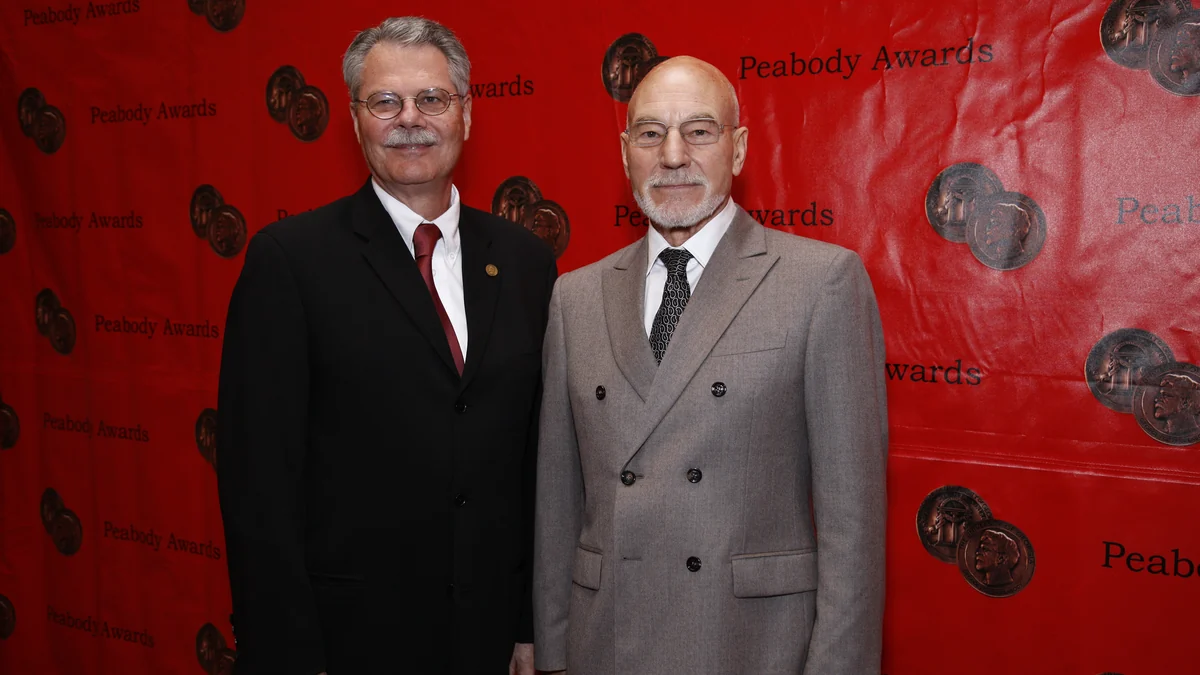
1. Macbeth: Stewart carrying the leading role
Rupert Goold’s version of *Macbeth* is the most direct choice for watching Stewart lead a Shakespeare tragedy. According to the Great Performances page on PBS, the stage production had a London West End run in December 2007, a limited engagement at the Brooklyn Academy of Music in March 2008 and an eight-week Broadway run.
The production was filmed for television in late 2009. Stewart plays the ambitious general of the title in a Tony-nominated performance; Kate Fleetwood, also nominated, portrays the wife involved in his pursuit of power. PBS lists the complete recording at 2 hours, 39 minutes and 1 second, published as episode 7 of season 42 of *Great Performances*.
This is the strongest first choice for viewers interested in how Stewart shapes a character across a long work: authority, desire and collapse must register as parts of one continuous arc. It rewards attention to the dramatic progression rather than to the actor’s familiar screen persona.
There is, however, a clear limitation: PBS currently displays a notice saying that the video is unavailable. The page remains useful as an official record, but it should not be read as a promise that the production can be streamed in the United States or elsewhere.
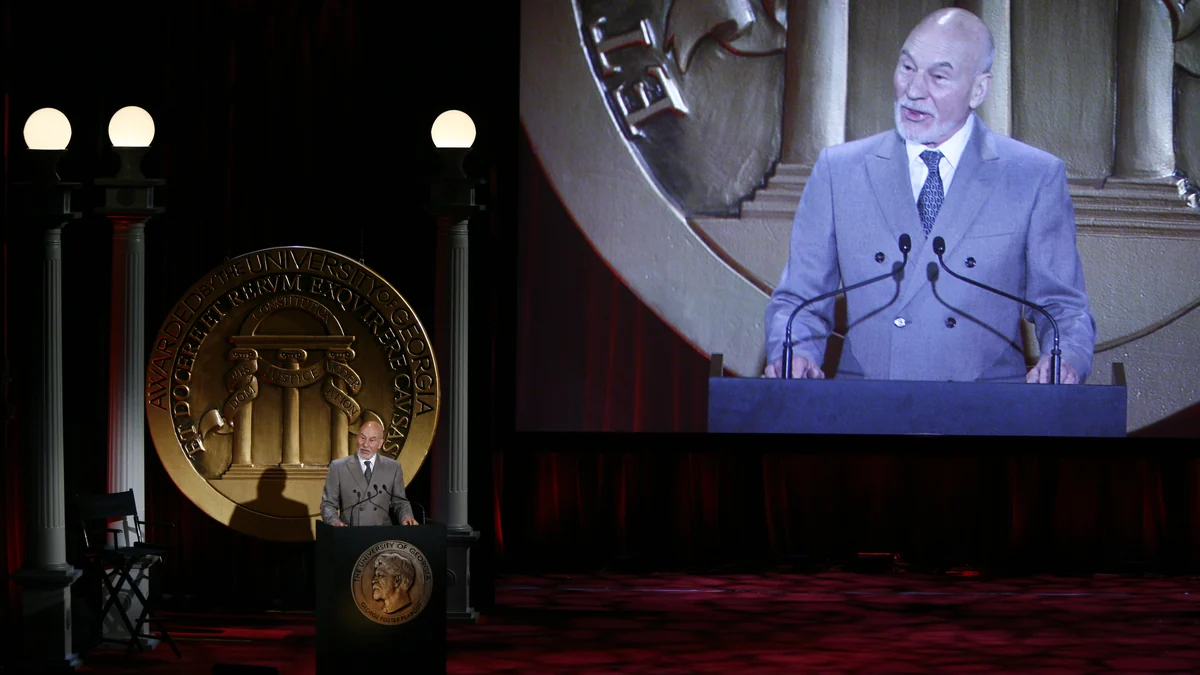
2. Hamlet: presence within an ensemble
The perspective changes in *Hamlet*. The official PBS page names David Tennant and Patrick Stewart as the stars of a television adaptation based on the Royal Shakespeare Company’s 2008 production. The actors reprised their roles in the filmed version, which uses modern dress.
The program runs 3 hours, 3 minutes and 31 seconds, belongs to season 37 of *Great Performances* and was published on April 27, 2010. Its place in an introductory route comes from its contrast with *Macbeth*: instead of taking the title role, Stewart works within a dramatic structure led by another protagonist. It offers a chance to watch listening, reaction, stage authority and tension formed in relation to other performers.
It is also important to distinguish this recording from other productions called *Hamlet*. The relevant work is the 2008 RSC production adapted for television with Tennant and Stewart; finding the same title in a digital catalog is not enough to establish that it is this version.
PBS likewise says that the video is unavailable at present. In the United States, access conditions can vary by program, station, membership status or time. Readers should use the page to identify the production and check its current status rather than assuming free or permanent access.
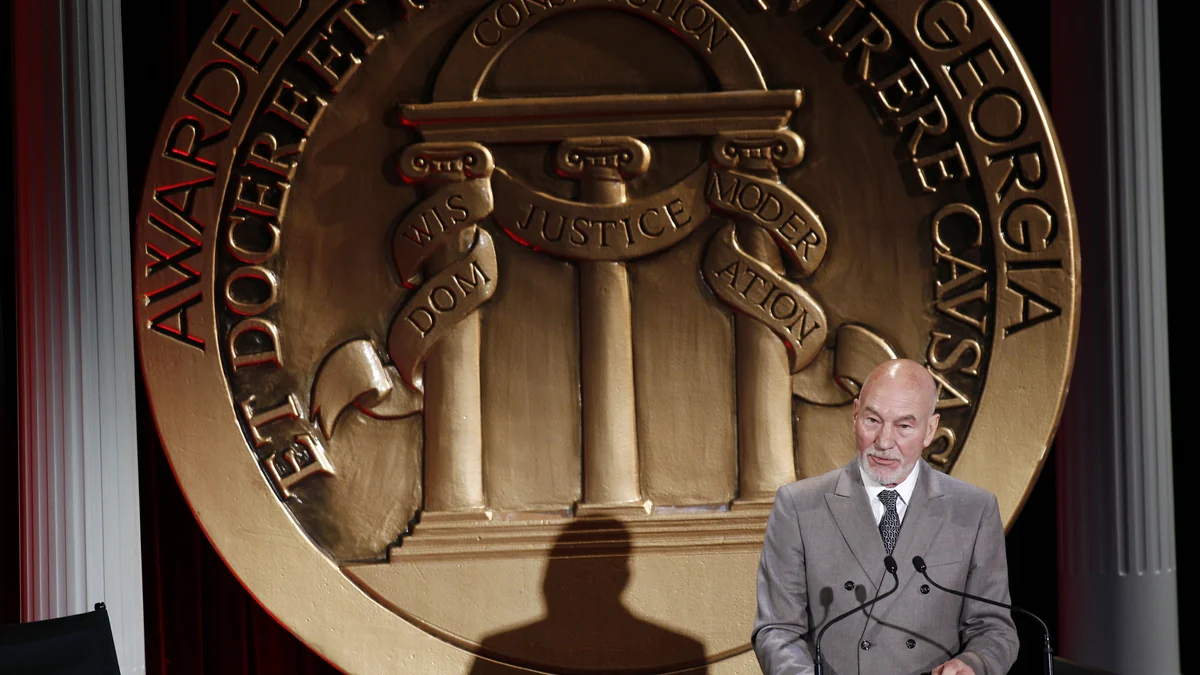
3. A Christmas Carol: one actor, every voice
The third work reduces the company to one person. In his solo interpretation of *A Christmas Carol*, Stewart performs all the roles in Charles Dickens’s story. The official StarTrek.com page provides an excerpt from the studio recording and names Ebenezer Scrooge, Bob Cratchit and Tiny Tim among the figures brought to life by the actor.
Published on December 25, 1999, the page connects the audio to Stewart’s one-man show and says that the studio recording received a Grammy nomination. In separate statements, it notes that the stage production played to sold-out audiences and that the interpretation thrilled audiences in New York and Los Angeles; it does not specifically place the sold-out performances in those two cities.
The useful exercise here is one of listening: noticing how pace, tone and vocal shifts separate characters without the support of a cast. The excerpt is not the complete recording, but it is an official sample of Stewart’s approach.
The source does not confirm permanent worldwide access, a transcript or current availability of a full edition. Treat the link as a place to check and verify its present conditions instead of assuming that other services or versions are available.
A simple order for starting
The sequence *Macbeth*, *Hamlet* and *A Christmas Carol* creates a useful progression. First comes Stewart’s responsibility for a protagonist’s complete arc; next, his contribution to an ensemble production; finally, his ability to create an entire cast alone through voice.
Readers with less time can reverse that order: begin with the Dickens excerpt, continue to *Hamlet* and save the lengthy *Macbeth* for last. The key is to verify the title, production and date, because search results can combine different stagings. The PBS pages still document both television records even while marking them unavailable.
How to check without confusing a record with access
These three pages primarily provide reliable identification. An official listing establishes that a recording exists and explains its origin; it does not guarantee that viewers can play it today in every location. Catalogs, memberships and territorial restrictions change.
Before paying for a work with a similar title, compare its director, cast and production year. That precaution matters particularly with Shakespeare, whose plays have many stage and screen adaptations. PBS availability may also depend on the program, local station, membership status or timing, so the current official page is the appropriate place to verify conditions.
The result is a short route rather than a definitive ranking: three works that make different skills visible and provide a concrete foundation for further exploration of Patrick Stewart’s stage career.
Discover Becoartes
Visit [Becoartes](https://becoartes.com/) at Rua Gonçalo Afonso, 99, Vila Madalena, São Paulo.
Becoartes - Beco do Batman
99 Gonçalo Afonso Street, Vila Madalena, São Paulo