What would you draw in Batman Alley if you couldn't copy a single piece of graffiti? At first it sounds like a way to miss the point of visiting. Then a sliver of sky appears between two roofs. A bend in the lane cuts a wall short. A strip of paving runs into a patch of shadow at an angle that makes very little sense until you try to put it on paper. A notebook is a good way to discover the street around the murals in São Paulo's Vila Madalena. A pencil and one sheet will do.
This is a walk you can take on your own, not a scheduled art class. The São Paulo state tourism guide gives Rua Gonçalo Afonso and Rua Medeiros de Albuquerque as reference streets and notes that the paintings change. There is no particular wall you have to find and nothing to miss if a picture you remember has gone. Divide a page into three small boxes. Each is a different answer to the question of what makes this street look like itself.
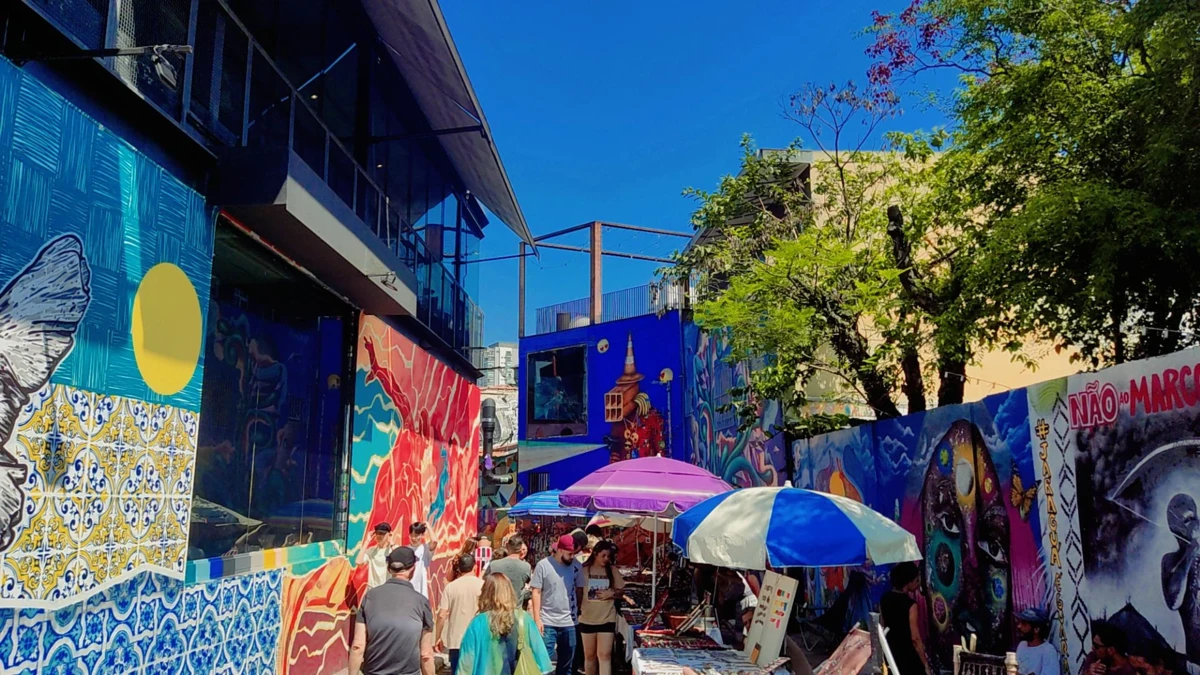
Box one: where does the lane turn?
Walk a short distance before you start. Look for a spot where you can see the lane narrow or turn a corner, and where other people can pass comfortably. Leave entrances clear, even if a door is closed. In a box about the size of a bank card, mark where the paving meets the wall on each side. Put the pencil down. Can you tell which way you would have to walk? If so, you have already drawn something that a close-up of a painting cannot show.
Now find the upper edge of one wall. Does it climb across your page or slope down? Instead of drawing all the things you recognise, compare the distance between the upper and lower lines at two places. If you have made the alley too broad, add another line and keep the old one. The correction is useful. Tomorrow it will remind you exactly where you had to stop drawing the street you expected to see and look again at the street in front of you.
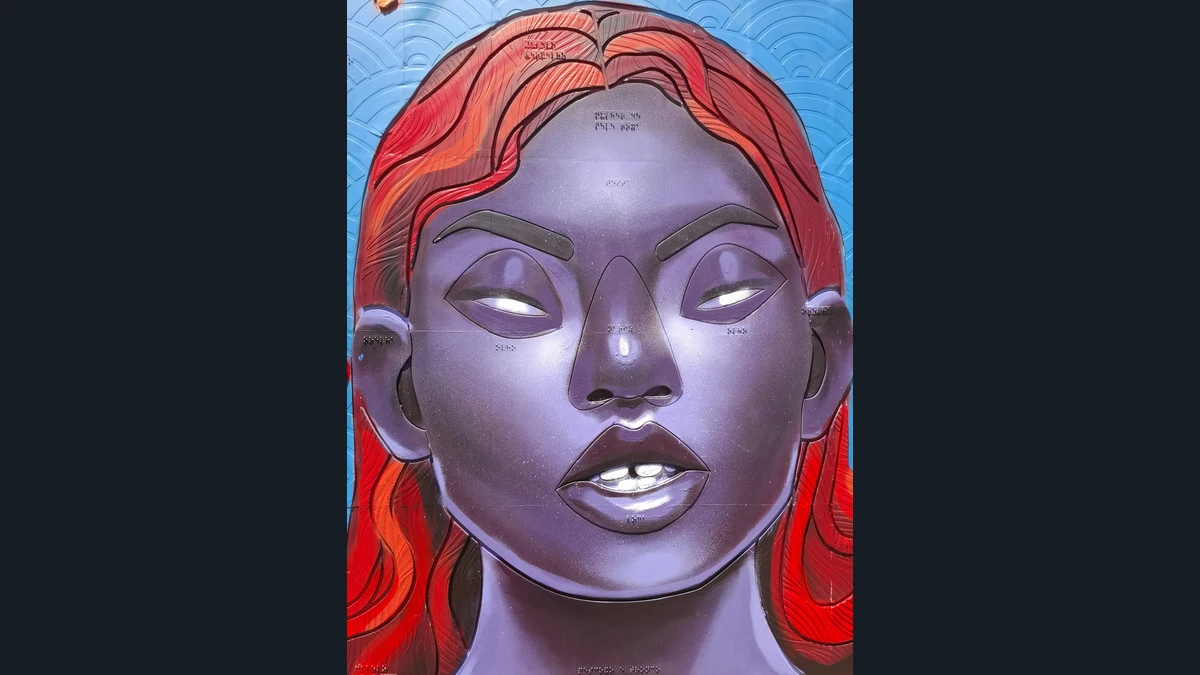
Box two: draw the bit that isn't a building
Pick a small piece of sky between facades, or a piece of ground caught between two objects. Draw that empty shape rather than the objects themselves. What looked like a rectangle at first may have a bite taken out of one corner by the edge of a roof. Try to put that notch in the right place without drawing the whole roof. Two people can draw the same patch and compare the outlines before moving on. There is no need to agree about which one looks better.
Take that way of looking back to a mural. Instead of starting with a face or a word, follow a single patch of colour until it ends. Does the paint stop at a corner? Does it run over a gate? The shape of a work that looked rectangular in a photograph may turn out to depend on the shape of the building. If a signature is visible and legible, make a note of it. There is no need to guess an artist's name to notice how the wall and the painting fit together.
Box three: a detail that belongs to this moment
Forget the long view and look for something small enough to hold inside your thumb and forefinger at arm's length. A hinge might meet the edge of a painted shape. A shadow might make a second line across a joint in the paving. Start with the outline; shade only the darkest part. If you have a coloured pencil, choose a single colour to add. If you don't, write its name beside the drawing. A word can jog your memory as effectively as a swatch of paint.
The manifesto of Urban Sketchers describes drawing from direct observation, using whatever materials and style suit the person holding the pencil. You don't have to belong to a group to try it. If someone crosses the scene, let them cross. Wait a moment, or draw the movement as a single stroke rather than asking them to stand where they were. The passing figure may end up explaining how big a wall is far better than another brick or window would.
The caption your future self will need
Write the date, the street and a landmark that tells you which way you were looking. Add one thing the lines could not catch: a change of light, perhaps, or what disappeared behind the bend. The Pinheiros district authority describes successive paintings as part of the alley's history. If you come back, those few words will help you tell whether a wall has changed or whether you are simply looking from the opposite direction.
If it is too busy to stand still, start with a detail wherever there is room and save the long view for the return walk. With five minutes to spare you can leave two of the boxes blank. A good page doesn't need to reproduce someone else's mural in miniature. It can be two crooked lines you recognise the following day, without a photograph or a map, as the exact spot where the street turned.
Image credits. Images resized, framed with margins and converted to WebP without cropping. Agent010 / Wikimedia Commons (CC BY-SA 4.0); N1ny4 t / Wikimedia Commons (CC BY-SA 4.0).
Sources for this story
Original documents are linked in the article.
Becoartes - Beco do Batman
99 Gonçalo Afonso Street, Vila Madalena, São Paulo