South Africa and Australia are playing two different series on the same tour. The three ODIs on September 24, 27 and 30 are 50-over matches serving as preparation for the 2027 Men’s Cricket World Cup. The three October Tests, by contrast, belong to the 2025–27 World Test Championship (WTC) cycle. None of the ODIs therefore earns points in the Test championship.
As of this article’s publication date, September 24, 2026, the first ODI was already listed as live on the Cricket Australia page. The other two remained classified as upcoming. Because results and match conditions can change during the day, readers should check the official Match Centre for the latest score and series status.
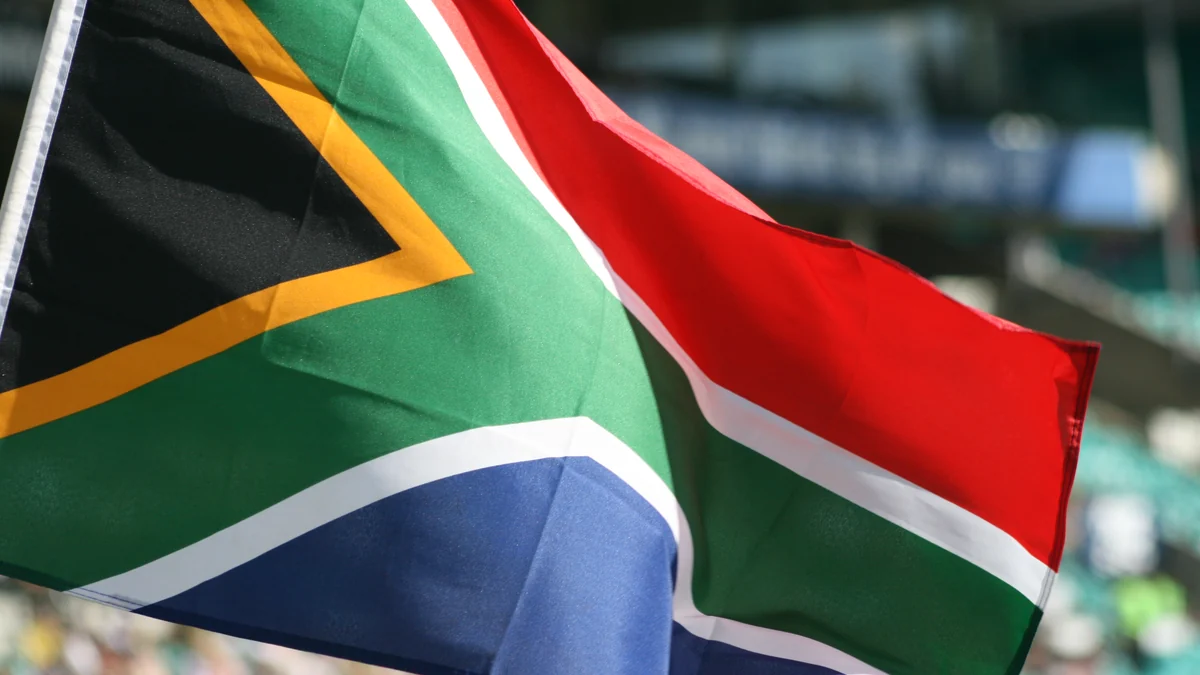
The schedule separates two competitions
The ODI leg consists of three games: the first at Kingsmead, Durban, on September 24; the second at the Wanderers Stadium, Johannesburg, on September 27; and the third at NWC Oval, Potchefstroom, on September 30. Cricket Australia’s official page confirms the dates, grounds and men’s ODI format.
There is then a break before the Test leg. According to the ICC, the matches are scheduled for October 9–13 in Durban, October 18–22 in Gqeberha and October 27–31 in Johannesburg. Those three contests—and only those three on this tour—form part of the 2025–27 World Test Championship.
The simplest way to avoid confusion is to look at the format. An ODI is limited to 50 overs per side; a Test is played over as many as five days. Sharing opponents and some host cities does not turn the two series into a single competition.
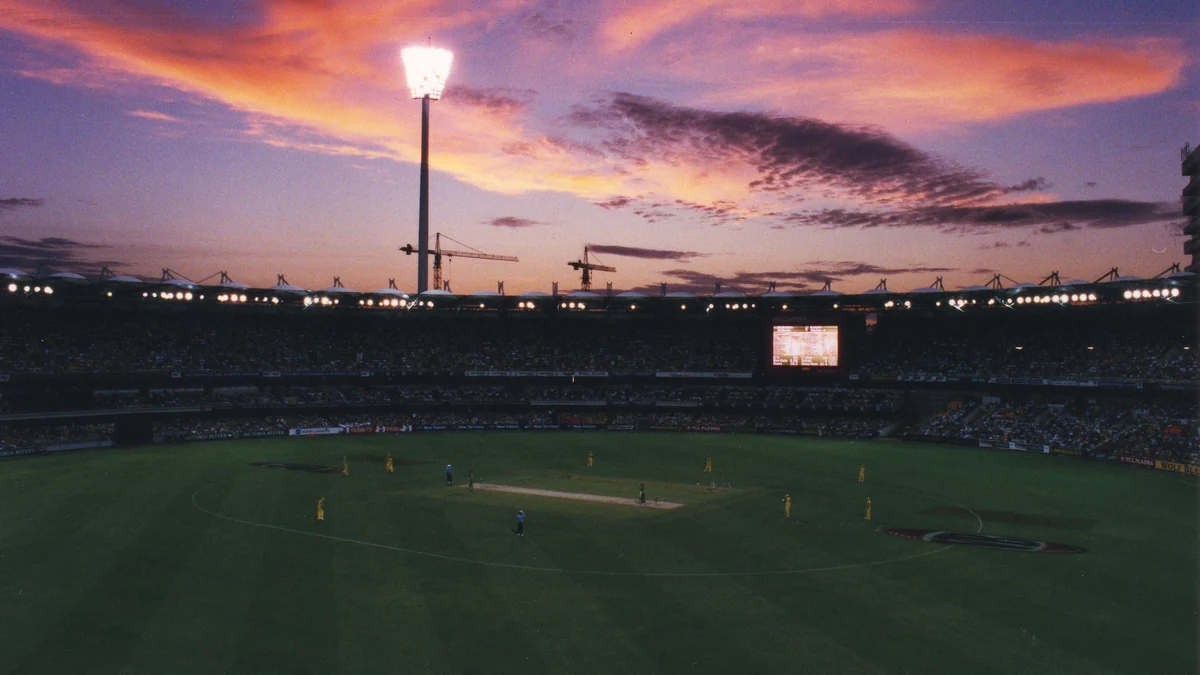
Why the ODIs point toward 2027
Australia are the reigning world champions in the format and have treated their series against Zimbabwe and South Africa as preparation for the next World Cup. When the initial squad was announced, the ICC explained that Australia would play six ODIs in countries hosting the 2027 event: three against Zimbabwe and three against the Proteas.
That gives the Southern African trip competitive value without making these games part of the World Cup itself. Their purpose lies in facing international opposition and experiencing conditions in host countries. This is preparation, not a qualifying round or an early stage of the tournament.
Mitch Marsh and Travis Head returned to the initial squad after missing the 50-over series in Pakistan and Bangladesh. Pat Cummins and Mitchell Starc were named only for the South African portion. Marnus Labuschagne was left out of that original list, while Joel Davies and Ollie Peake retained their places.
An initial squad is not the match-day XI
The previously published Australian list contained 17 players, but it should not be treated as a final snapshot of the first ODI. On September 24, Cricket Australia’s series page highlighted an update saying Alex Carey was out and Edwards, Cameron Green and Mitchell Starc were in for the opening match. The page also displayed an earlier report that Edwards had been added to the squad and that two pace players had headed home.
Because the supplied sources do not contain a later consolidated roster, the accurate description is initial squad, not final touring party or starting XI. The official Match Centre, which is subject to updates, is the appropriate reference for each game’s actual line-up.
For South Africa, Marco Jansen took on greater responsibility in the pace attack because Lungi Ngidi and Kagiso Rabada were not part of the ODI group due to injuries, according to the ICC’s September 21 report. Losing two experienced bowlers changes the sporting context, but it does not change the series classification: these remain bilateral ODIs.
The 2027 World Cup has a different structure
The 2027 Men’s Cricket World Cup will be jointly hosted by South Africa, Zimbabwe and Namibia. The ICC announced 12 venues: eight South African cities, three sites in Zimbabwe and the Namibian capital, Windhoek. Kingsmead and the Wanderers, both used during this ODI series, are also confirmed World Cup grounds; Potchefstroom’s NWC Oval is not on the published list.
The tournament will feature 14 teams and 57 matches across three stages. First, the teams ranked 12th to 14th will contest a Super Series, with one progressing. Twelve teams will then be divided into two groups of six. Seven sides will advance to the Super 7, whose top four will reach the semi-finals.
These details underline the distinction: playing now in a future host country—and even at future World Cup grounds—provides preparation, but does not place South Africa and Australia inside that tournament structure.
The Tests carry their own consequence
The World Test Championship connects Test series to a cycle-long table. Jansen described the system as giving every match additional meaning and said South Africa still had ten Tests remaining before the final. In that context, the ICC also had South Africa and Australia in the top two positions, although Jansen declined to project a repeat of the 2025 final.
The accurate reading of the tour is therefore both chronological and sporting: September brings three World Cup-oriented ODIs; October brings three Tests that affect the 2025–27 WTC. Check the official links for results, line-ups and possible schedule changes, as those details are updated.
In São Paulo, Becoartes is located at Rua Gonçalo Afonso, 99, Vila Madalena. The address can be confirmed on its official website.
Cricket and culture at Becoartes
To continue the conversation about sport and culture, find Becoartes at Rua Gonçalo Afonso, 99, Vila Madalena.
Becoartes - Beco do Batman
99 Gonçalo Afonso Street, Vila Madalena, São Paulo
Sources and credits
- self — CC BY-SA 2.5
- Talisen — CC BY 2.0
- ICC — Marco Jansen e contexto atualizado das séries ODI e Test (21 set. 2026)
- Cricket Australia — página oficial da série ODI, partidas e locais
- ICC — elenco australiano e objetivo de preparação para a Copa de 2027
- ICC — sedes e formato da Copa do Mundo masculina de 2027