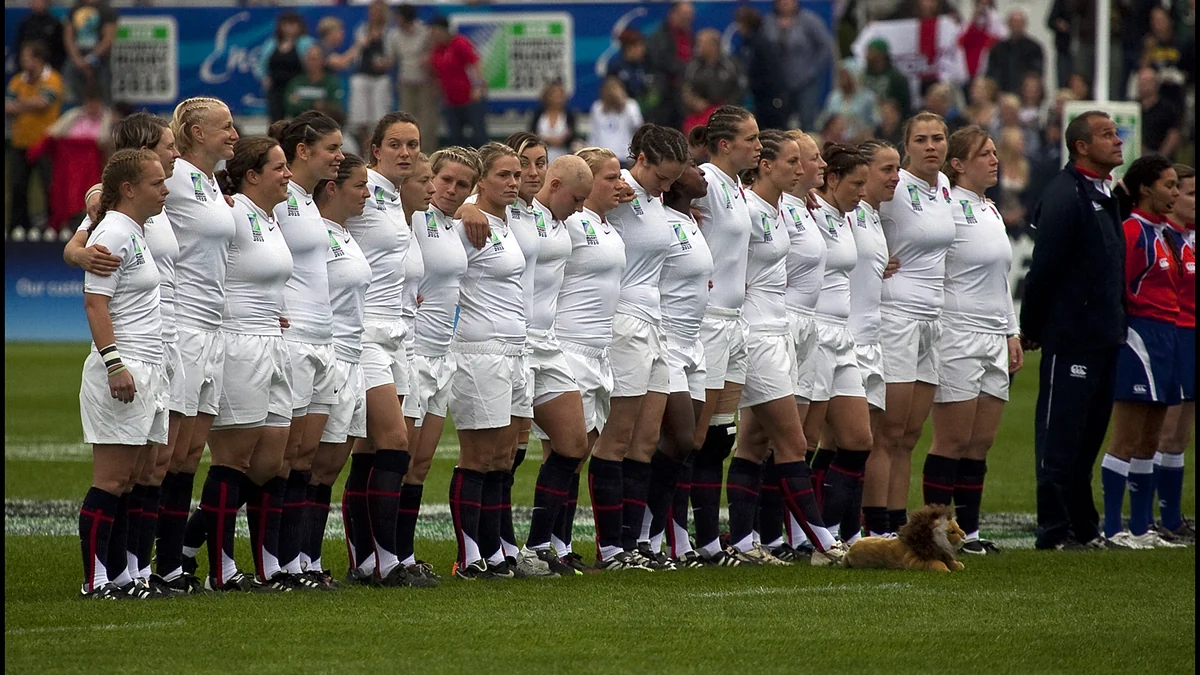
England v Canada on 19 September 2026 is neither a final nor a round in a conventional championship with one table. It is a WXV Global Series match, part of an international circuit in which the 12 teams in the leading group play intercontinental home-and-away series. The match at Sandy Park in Exeter is also a rematch of the 2025 Rugby World Cup final and begins a run of three meetings between the teams during this period.
That distinction prevents two common misunderstandings: the main WXV competition does not operate as a round-robin league, and the Challenger being played simultaneously in Hong Kong is a centralised competition within the same structure—not a lower round of the same table.

Why England v Canada is a rematch
Rugby Canada describes the match as the teams’ first meeting since the 2025 world final, played before 82,000 people at Allianz Stadium in London. They now meet at Sandy Park, followed by further games on 16 October in Toronto and 23 October in Ottawa.
Canada’s sporting context has also changed. Sophie de Goede returns to the starting side at lock and as captain, leading the country for the 25th time in her international career. Charity Williams retains her place after making her 15s debut the previous week, while Asia Hogan-Rochester—scorer of Canada’s two tries in the 2025 final—starts on the opposite wing.
The three-match sequence illustrates the logic of the new circuit: rivalries can develop through reciprocal visits and series without every game needing to lead immediately to a final.
How WXV’s leading group works
The structure announced by World Rugby places 18 teams in two groups. The 12 in the touring model are Australia, Canada, England, France, Ireland, Italy, Japan, New Zealand, Scotland, South Africa, USA and Wales.
From 2026 to 2028, they play four to six matches annually in an aligned September–October international window. Rather than gathering at one venue or having every team face every other side, the schedule combines cross-regional tours with home fixtures. The positions used to determine the groups were fixed at the end of WXV 2024 and remain in place through the cycle.
“Circuit” is therefore a better key than “league” when reading the results. England v Canada counts as a WXV test match, but an isolated score should not be interpreted as movement in one overall standings table.

The Challenger is a separate competition in the same system
Brazil, Fiji, Hong Kong China, the Netherlands, Samoa and Spain make up the second group. In 2026, they meet at Kai Tak Youth Sports Ground in Hong Kong from 13 to 26 September. The official Challenger schedule has three rounds, three matches on each match day and nine games overall.
Each team plays three matches, not five. Brazil faces Hong Kong China, the Netherlands and Spain, so not every possible pairing takes place in this edition. A single venue and compact calendar distinguish the Challenger from the home-and-away travel of the leading 12.
World Rugby says it funds the centralised tournament, a solution intended to give the six teams more regular international fixtures. The format will be held again in 2028.

What is actually at stake before 2029
WXV is also part of qualification for the 2029 Women’s Rugby World Cup, but the routes are not identical for every team. Australia already has a place as host. Canada, England, France and New Zealand qualified by reaching the 2025 semi-finals.
In 2027, eight teams will qualify through regional competitions. At the end of that year’s international window, the two highest-ranked teams not already qualified will also secure places. Finally, the 2028 Challenger will serve as the final qualification tournament and award the last available berth, according to the team and qualification guide.
This also clarifies the role of the rankings: they are not the WXV table. They are separate world rankings used at a specific stage of the qualification process for 2029.
How to watch without mixing up the coverage
The official broadcast page says matches are available on RugbyPass TV unless a host broadcaster is listed for a specific market. In Latin America, ESPN and Disney+ are listed for every main WXV match and Brazil’s three Challenger games. In Canada, TSN carries Canada’s home and away matches; in the UK, BBC iPlayer carries England and Wales fixtures, with BBC Alba also listed for Scotland games.
Because rights and schedules can change, check the official page and local listings before the match. For England v Canada, Rugby Canada confirms TSN5 and the TSN app in the Canadian market.
A simple way to read WXV
When you see a result, ask three questions: is the team among the touring 12 or the six Challenger sides? Is the match part of a home-and-away series or the centralised Hong Kong rounds? Does the context refer to the circuit, the world rankings or qualification for 2029?
For England v Canada, the answer is straightforward: it is a world-final rematch inside the touring group, with further meetings already scheduled in Canada. It is an important rivalry in the cycle—but not a contest for the lead in a single table.
Continue the conversation at Becoartes
After following the circuit, visit Becoartes at Rua Gonçalo Afonso, 99, Vila Madalena. Check the official website for current information before visiting.
Becoartes - Beco do Batman
99 Gonçalo Afonso Street, Vila Madalena, São Paulo
Sources and credits
- JHock93 — CC0
- Steve — CC BY 2.0
- Pierre-Yves Beaudouin — CC BY-SA 4.0
- Pierre-Yves Beaudouin — CC BY-SA 4.0
- World Rugby — lançamento e estrutura da WXV Global Series
- Rugby Canada — convocação para Inglaterra x Canadá em 19 de setembro
- World Rugby — calendário e formato do WXV Global Series Challenger 2026
- World Rugby — guia das seis seleções do Challenger e vínculo com a Copa de 2029
- World Rugby — emissoras oficiais por território