The Festa do Peão de Barretos ended its 71st edition on August 30, 2026, leaving behind an image broader than that of a major rural event. What appeared on stage, on television and in the announcement for 2027 was the consolidation of sertanejo as a national festival language: able to bring together popular memory, the audiovisual industry, tourism, local business and a symbolic dispute over what Brazil recognizes as mass culture.
The confirmed fact is straightforward: Gusttavo Lima returned to Barretos as the 2026 ambassador, performed twice on the Palco Estádio and authorized Globo to broadcast his show. The festival also announced Chitãozinho & Xororó as 2027 ambassadors, using a line from "Evidências" as the slogan for the next edition. The interpretation begins there: Barretos is no longer only the place where sertanejo celebrates its own tradition; it is behaving like a national platform for cultural narrative.
Gusttavo Lima back at the center of the arena
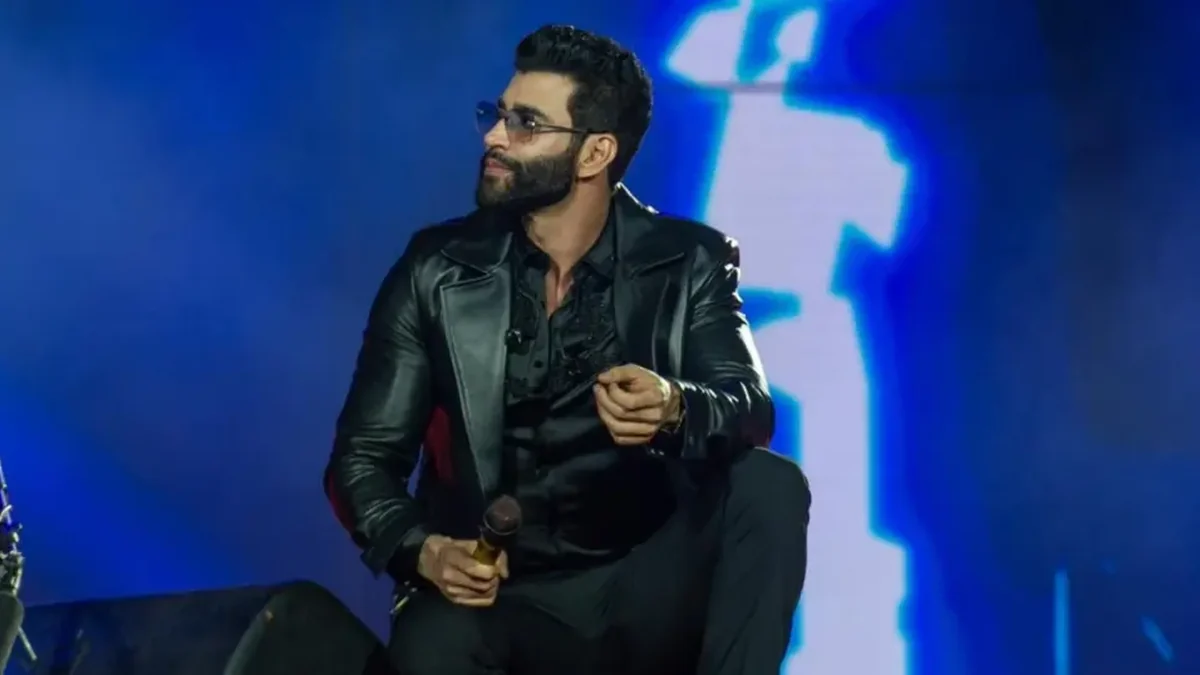
Gusttavo Lima returned to the Festa do Peão de Barretos after three years away. According to gshow, he was the ambassador of the 71st edition and his previous appearance had been in 2022. The comeback mattered because Barretos helped establish the "ambassador" title associated with him since 2017, when he first took on that symbolic role at the festival.
Billboard Brasil reported that his August 22 performance gathered more than 40,000 people at the Palco Estádio and was built around a repertoire of hits. Jeninho, MC Peão, appearing with "Peão Todo Tatuado," added another important point: arena sertanejo now speaks to internet language, viral characters and a popular aesthetic that no longer fits only inside the genre’s traditional label.
At the close of the event, the press recorded a long show that crossed the early morning and reaffirmed a historic feature of Barretos: the spectacle does not end according to the usual schedule of concert venues. It is designed as a collective rite, with waiting, endurance, dawn and staying power. Culturally, that brings the festival closer to other major Brazilian events where audiences do not merely listen to music, but take part in a scene.
Television as an expanded stage
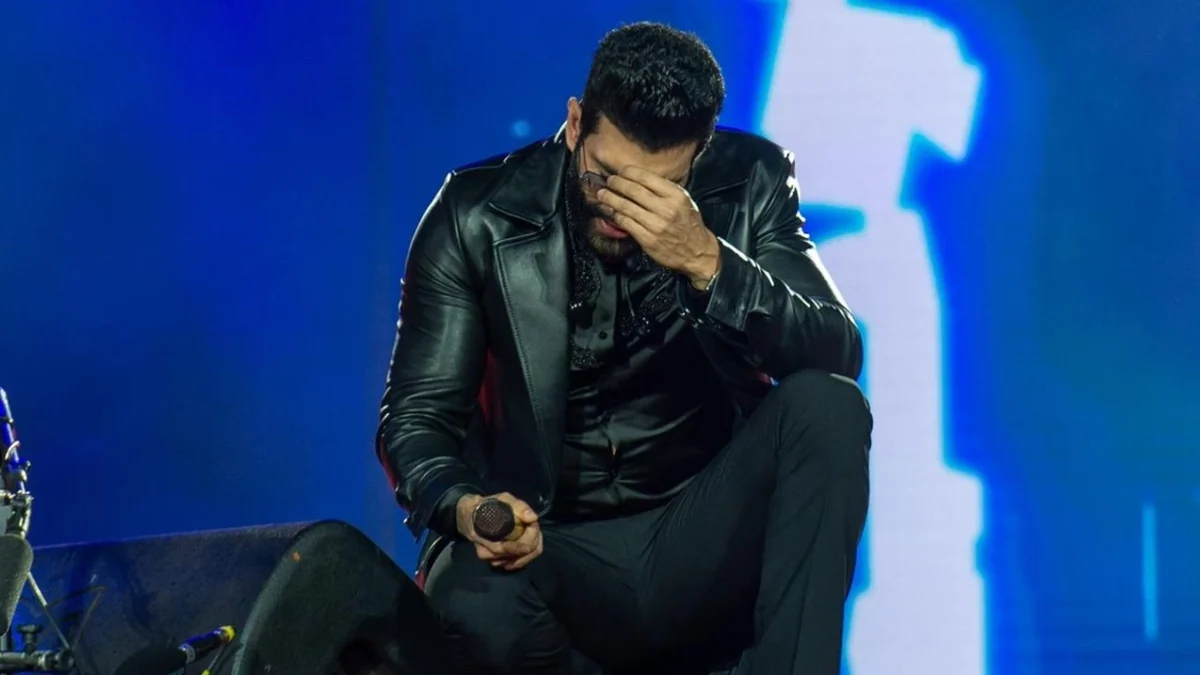
Globo brought Barretos to broadcast TV, Multishow and Globoplay. The information is public: the multiplatform coverage aired Gusttavo Lima’s show and prepared content about characters, backstage moments and behavior linked to the festival. This is not only a technical detail. When a regional event enters a national screen strategy, it changes scale and function.
The broadcast turns the arena into a shared image. Those inside Parque do Peão experience heat, delay, travel and physical presence. Those watching from home receive another experience: edited, framed, narrated and connected to the habit of television. Barretos gains reach; television gains a popular spectacle already tested by the public; sertanejo gains another showcase of legitimacy.
UOL reported that, according to Pedro Muzetti, the festival’s artistic director, the organization spoke with Gusttavo Lima to authorize the broadcast. He said the singer asked whether the transmission would be important for the festival and agreed. That detail matters because it reveals the relationship among artist, festival and media: not merely a scheduling negotiation, but an alliance of image.

Barretos as a cultural machine
Folha de S.Paulo reported that the 2026 edition ended after 11 days of rodeo events and 150 shows. It also registered R$30 million in infrastructure investment, an expected R$600 million in revenue and an audience close to 1 million visitors. These figures help explain why Barretos cannot be read only as a themed party.
The event operates as a cultural machine. There is music, rodeo, commerce, lodging, broadcast coverage, sponsorship, tourism and calendar. The festival organizes a temporary city around an imaginary: hat, arena, classic sertanejo, giant stage, VIP boxes, camping and early morning. It is an aesthetic of belonging, but also an economy of circulation.
According to UOL, curation begins almost as soon as the previous edition ends. With around 150 shows, the lineup must accommodate veterans, new names and artists from other genres. This confirms a productive tension: Barretos needs to preserve its sertanejo roots while opening itself to audiences arriving through pop music, electronic music, piseiro, forró, social-media humor or simply the festival experience.
"Evidências" as public memory
The announcement of Chitãozinho & Xororó as 2027 ambassadors has force because it shifts focus from the artist of the present to the genre’s collective memory. Folha reported that the slogan chosen for the next edition will be a line from "Evidências," written by José Augusto and Paulo Sergio Valle and recorded by the duo in 1990.
The choice works because "Evidências" has moved beyond the sertanejo circuit. It is sung in karaoke rooms, weddings, bars, college parties, stadiums and television programs. When Barretos turns it into a motto, the festival acknowledges that its heritage is not only in rodeo or on stage, but in its ability to produce shared refrains.
There is a gesture of continuity: Gusttavo Lima occupies 2026 as an ambassador of arena, body and scale; Chitãozinho & Xororó enter 2027 as ambassadors of affective archive. Sertanejo therefore presents itself in two temporalities. One looks to the show as a mass event; the other looks to the song as social memory.
Sertanejo between roots, pop and market
The conversation about Barretos often swings between celebration and prejudice. On one side, some see the festival as a symbol of powerful popular culture. On the other, some reduce it to market, sponsorship or ruralized entertainment. Taken alone, both readings are insufficient. Barretos is precisely where roots and market stop being simple opposites.
Contemporary sertanejo has learned to operate as pop: strong image, direct chorus, digital circulation, collaborations, huge stages and narratives of overcoming. But it has not fully abandoned its codes of origin. Boots, the horn, the horse, dawn and the old-style song still organize recognition. The new element is that these signs now coexist with LED screens, streaming, multiplatform coverage and brand strategy.
When Pedro Muzetti told UOL he would like to bring international country-pop names such as Luke Combs, Morgan Wallen and Ella Langley to future editions, he signaled an ambition to build a bridge. The confirmed fact is the stated desire; the cultural reading is that Barretos is aiming at selective internationalization, bringing American country closer to Brazilian sertanejo without dissolving the event’s identity.
What this edition leaves for São Paulo
Barretos is in the interior of São Paulo state, hundreds of kilometers from the capital, but its repercussion crosses São Paulo directly. The festival moves tourism, media, cultural conversation and the perception that the state’s symbolic production is not limited to the capital’s axis of museums, theaters, galleries and concert venues.
For those who observe urban culture from São Paulo, Barretos matters because it shows another way of occupying territory. While neighborhoods such as Vila Madalena condense street art, bars, tourism and nightlife into a few blocks, Barretos expands the logic of gathering across an entire park, with extended duration and a dominant musical identity. They are different models, but both depend on presence, movement and belonging.
The 2026 balance is clear: the Festa do Peão reinforced Gusttavo Lima as a figure of national scale, repositioned television as an ally of the sertanejo spectacle and prepared 2027 with Chitãozinho & Xororó and "Evidências" as sung memory. Becoartes looks at this movement without replacing Vila Madalena with Barretos, but understanding that Brazilian culture is also measured by the way its audiences occupy streets, arenas and screens.
Stay on the cultural radar
Follow Becoartes for stories where music, city and behavior intersect to explain Brazil in motion.
Becoartes - Beco do Batman
99 Gonçalo Afonso Street, Vila Madalena, São Paulo
Sources and credits
- Eduardo Martins/Brazil News via Billboard Brasil — Reprodução editorial com crédito à fonte
- Hospital de Amor — CC BY 3.0
- UOL Splash - como Barretos acertou com Gusttavo Lima o show na Globo
- Gshow - Gusttavo Lima faz show em Barretos após três anos longe da Festa do Peão
- Gshow - TV Globo, Multishow e Globoplay levam Barretos ao vivo para todo o país
- Folha de S.Paulo - Barretos adota trecho de Evidências como slogan da Festa do Peão de 2027