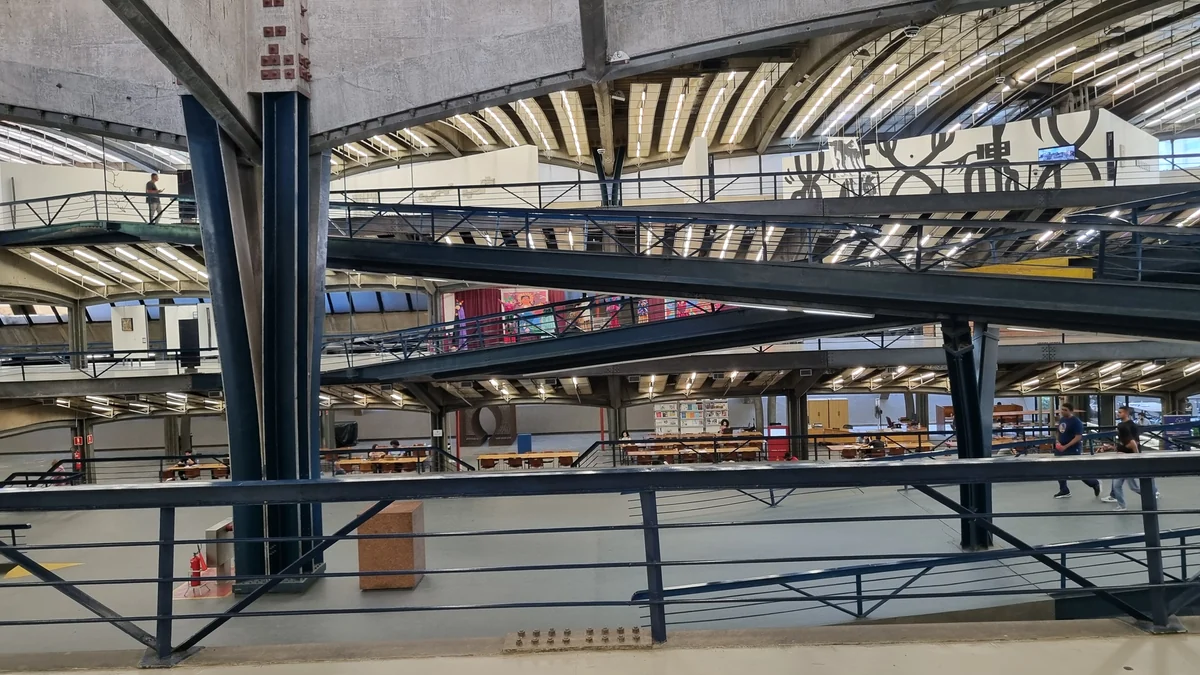
Centro Cultural São Paulo can be read as a small city: it has routes, places to linger, libraries, gardens, and spaces with their own names. Visitors seeking directions should distinguish two things, however. Municipal documentation confirms indoor thoroughfares associated with Tarsila do Amaral, Adoniran Barbosa, Flávio de Carvalho, Paulo Emílio Sales Gomes, and Oneyda Alvarenga, but the public sources consulted do not provide a current floor plan matching each name to an exact location. This guide gathers what can be stated, explains how to use these references without guessing a route, and indicates where to check information before visiting.
The idea of a city inside the building
The urban reading is more than an editorial metaphor. In 2025, the anniversary exhibition A Cidade CCSP highlighted indoor thoroughfares dedicated to the five figures above, using maps, routes, and symbolic references to encourage visitors to rediscover the building. The City Hall article about the exhibition confirms the list, but does not publish a complete correspondence between honoree, type of thoroughfare, floor, and access point.
That creates an important limitation: the list cannot safely be converted into directions such as “turn onto Tarsila Street” or “go upstairs to the Oneyda area.” The sources also do not confirm that every name remains visible on signage in 2026. Here, they serve as a documented cultural key, not as a replacement for a current official plan.
The confirmed cultural key
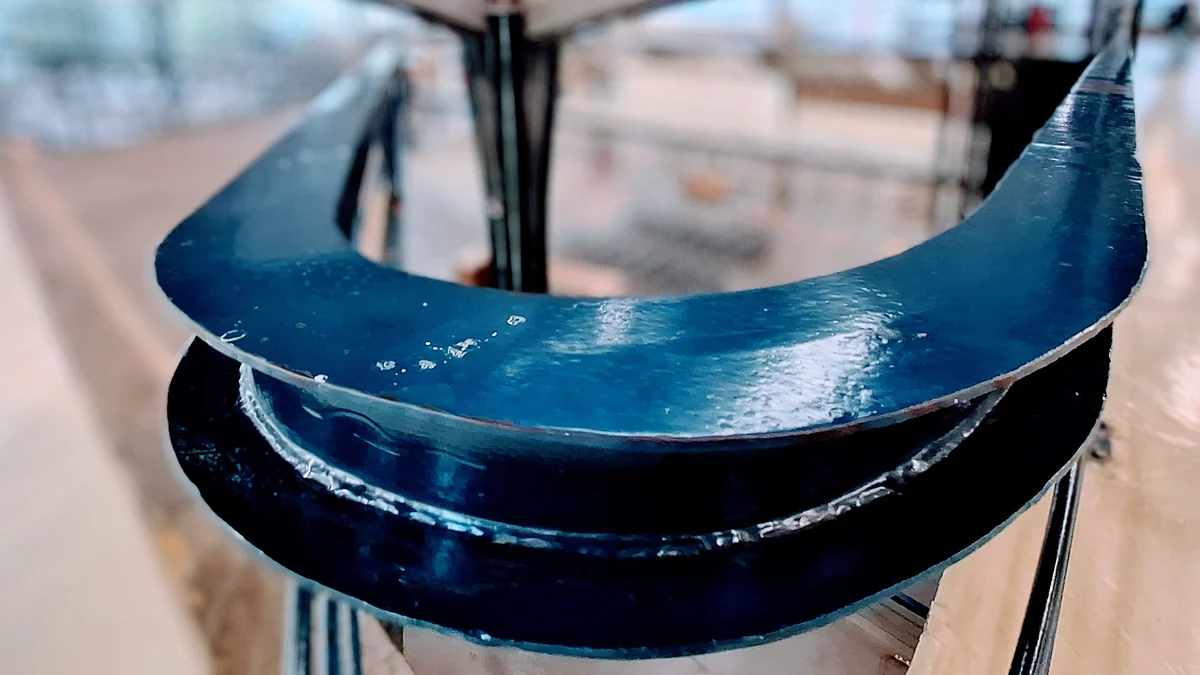
The five documented honorees are Flávio de Carvalho, Tarsila do Amaral, Adoniran Barbosa, Paulo Emílio Sales Gomes, and Oneyda Alvarenga. The municipal source describes them collectively as major names in Brazilian culture, without supplying individual biographies, reasons for each choice, or locations for the tributes. This article therefore does not assign specific artistic fields to them or invent a match between a name and the use of a space.
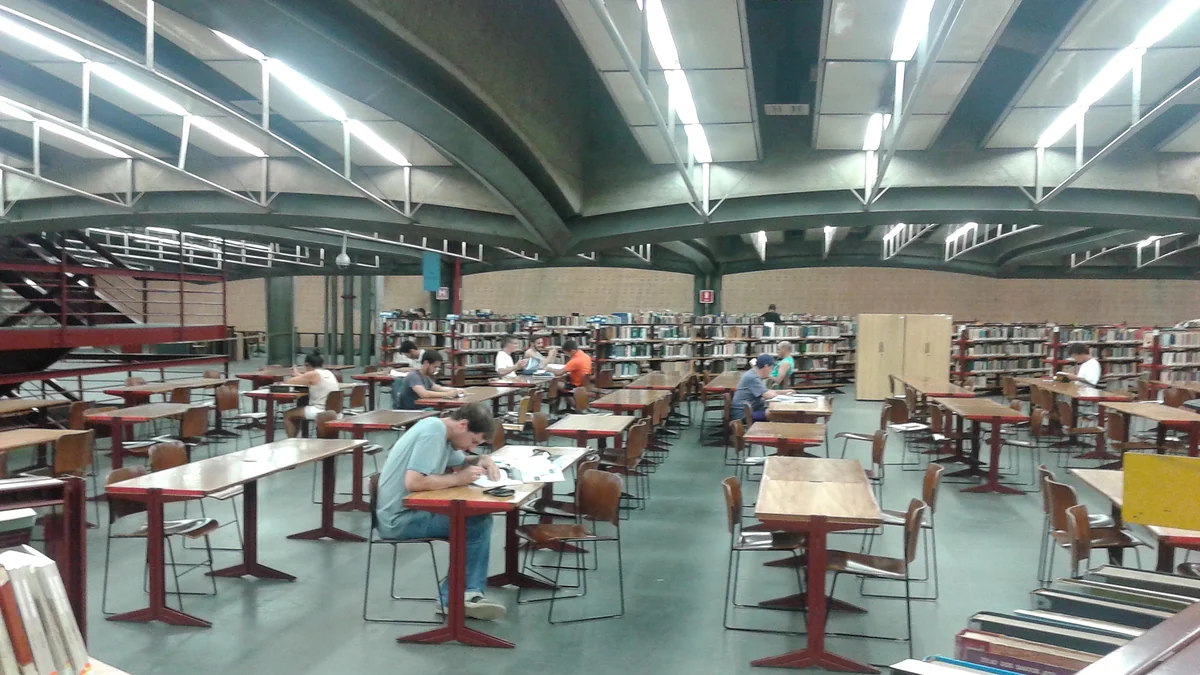
One institutional association is verifiable for Oneyda Alvarenga: the official visit page lists the Discoteca Oneyda Alvarenga among CCSP’s collections. It also confirms spaces including Biblioteca Sérgio Milliet, Biblioteca Louis Braille, Gibiteca Henfil, Coleção Alfredo Volpi, Hemeroteca, and Banco de Textos Teatrais. These names help distinguish facilities and collections from the five thoroughfares recalled by the exhibition. The official CCSP website provides an overview of this ensemble.
The garden with a legally documented name and location
One reference has a formally defined position. Municipal Decree 44,732/2004 names the landscaped area at the building’s northern end, with access to Vergueiro metro station, Jardim Eurico Prado Lopes. The decree justifies the tribute through Eurico Prado Lopes’s role as an architect of the CCSP project.
This does not allow the garden to be equated with other names currently used on the visit page. The website mentions Jardim Suspenso Vergueiro e 23 de Maio and Jardim Sul, but does not establish which, if either, corresponds to Jardim Eurico Prado Lopes. Nor can notices about closure on rainy days automatically be applied to it. Check the official visit page for current conditions.
Why the building encourages this reading
Eurico Prado Lopes and Luiz Telles conceived the building as an open, integrated space without barriers. According to the municipal history, the proposal began as a library expansion and changed direction between 1978 and 1982, incorporating an art collection, record library, research center, multimedia archive, and print shop. The complex is now protected heritage. The architectural history published by the Municipal Culture Department helps explain why circulation, social life, and cultural institutions appear interconnected.
This structure gives the “city” image its force: visitors do not merely cross isolated corridors but encounter different languages and uses in continuity. Fluid architecture does not guarantee automatic wayfinding, however. On arrival, consult the available signs and confirm the destination with staff using the facility’s specific name—a library, record library, auditorium, or floor—rather than relying exclusively on the historical thoroughfares.
Planning an arrival without assumptions
The official address is Rua Vergueiro, 1000, Liberdade, São Paulo, SP, 01504-000. CCSP says it is near Vergueiro station on Metro Line 1–Blue, whose ramp provides direct access to the cultural center. The Visit page brings together rules, access information, hours, and operating conditions; these may change and should be checked on the day of the visit.
Use the current name of the intended department as the destination. For libraries, gardens, collections, or auditoriums, check beforehand for dedicated hours, appointments, or restrictions. Historical photographs likewise do not establish that a space is open now.
A map that keeps moving
On September 17, 2026, CCSP’s homepage featured Estranhos Encontros — Festival Internacional de Cinema de São Paulo, an example of contemporary programming layered onto the building’s memory. Consult the official page to confirm screenings, access, and availability; do not assume admission is free or infer a time.
Reading CCSP as a city is more rewarding when the map acknowledges its gaps: five names preserve a symbolic layer; Jardim Eurico Prado Lopes has a legal name and position; libraries and collections possess identities of their own; and practical navigation depends on current information. Afterward, anyone wishing to continue exploring São Paulo’s cultural landscape can visit Becoartes at Rua Gonçalo Afonso, 99, Vila Madalena, checking current information on the Becoartes website.
Continue across São Paulo’s cultural map
Visit Becoartes at Rua Gonçalo Afonso, 99, Vila Madalena, and check current information on its official website.
Becoartes - Beco do Batman
99 Gonçalo Afonso Street, Vila Madalena, São Paulo
Sources and credits
- Mauro Cateb — CC BY-SA 4.0
- Boaventuravinicius — CC BY-SA 4.0
- Dornicke — CC BY-SA 4.0
- CCSP — página institucional, arquitetura, bibliotecas e visão geral
- CCSP — informações atuais de visita, espaços, serviços e horários
- Prefeitura de São Paulo — A Cidade CCSP e os logradouros internos homenageados
- Prefeitura de São Paulo — história arquitetônica, transformação da biblioteca em centro cultural e tombamento
- Legislação municipal — denominação oficial do Jardim Eurico Prado Lopes
- Wikimedia Commons — categoria com 79 imagens e subcategorias do CCSP