Centro Cultural São Paulo can be visited as one continuous urban library: first decide whether you want to research, read comics, use assistive technology or simply spend time there, then use the ramps, integrated areas and gardens to move between activities. This approach does not depend on an exhibition or performance. In the building designed by Luiz Telles and Eurico Prado Lopes, architecture and collections work together to connect people, knowledge and the city.
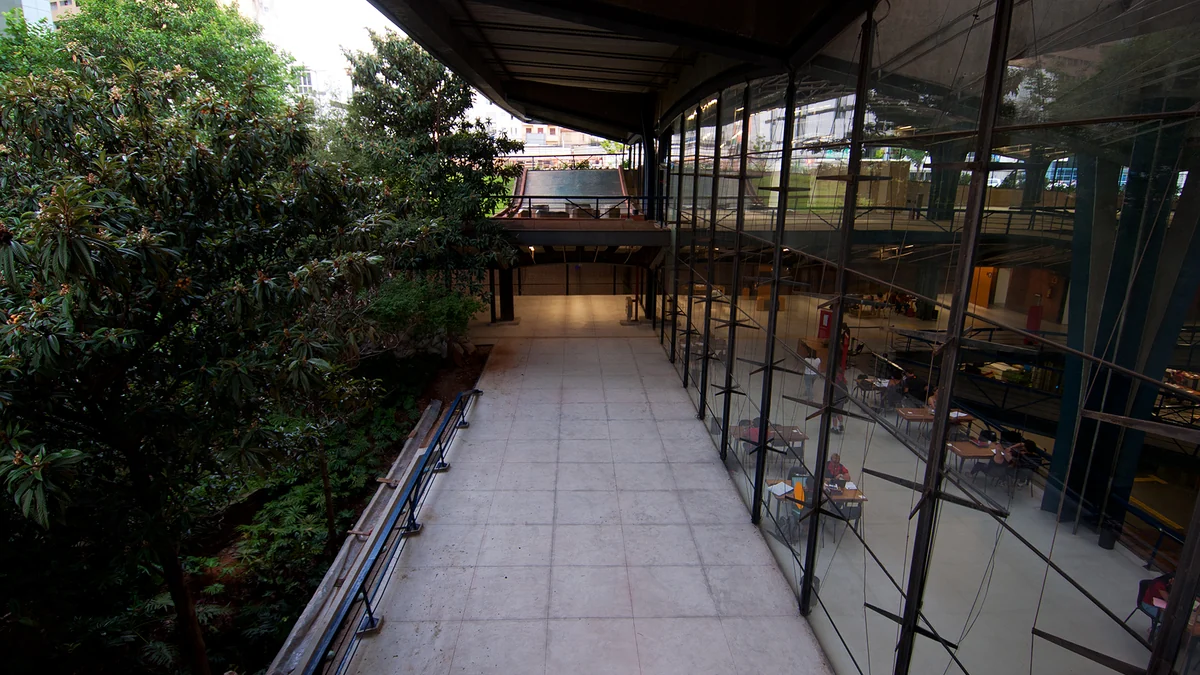
A building that became more than a library
The CCSP site was originally intended for an expansion of the Municipal Library, now Biblioteca Mário de Andrade. The plan moved forward again in 1975, and the design by the firm led by Eurico Prado Lopes and Luiz Benedito Castro Telles won the competition in 1976. During construction, between 1978 and 1982, its program expanded: the building changed from a library into a cultural center, incorporating an art collection, record library, research center, multimedia archive and print shop. This history helps explain why reading remains central to a multidisciplinary institution. The building is now protected heritage, according to the history published by the Municipal Department of Culture.
Openness is more than a metaphor. The official CCSP presentation describes its architecture as open, integrated and without barriers, designed to connect art, knowledge, people and city. Ramps and internal sightlines reveal simultaneous activities; instead of isolating the library in a solemn room, the project places it within a flow of movement and lingering.
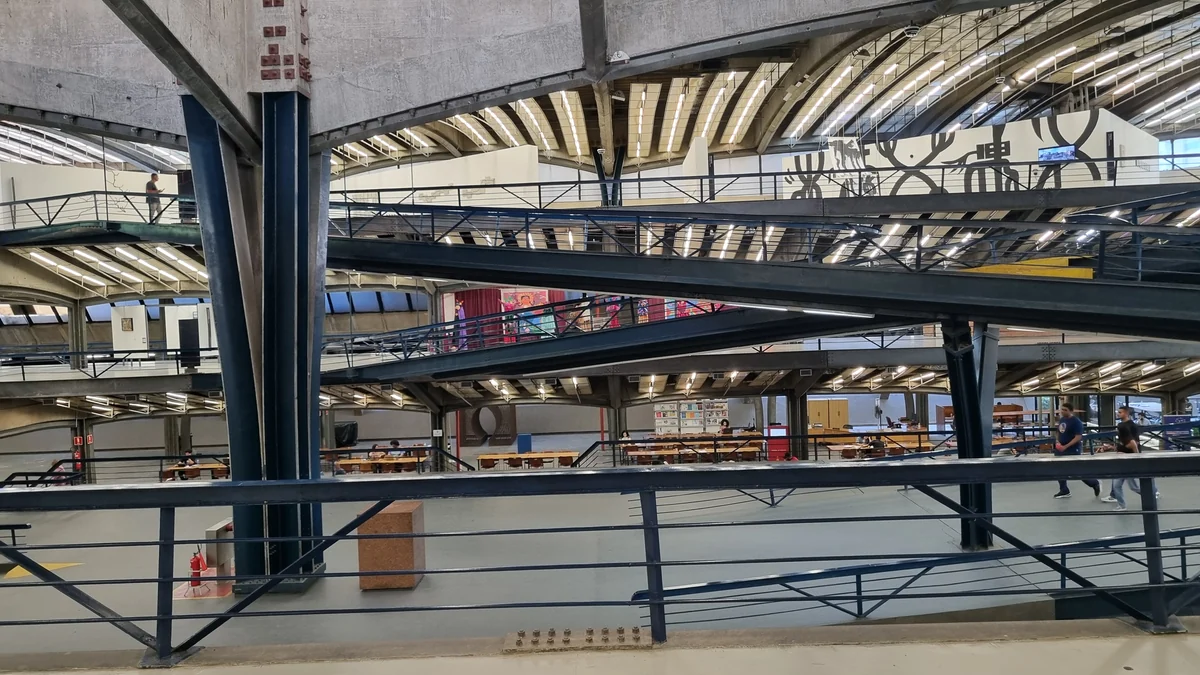
Sérgio Milliet for research and broad reading
For literature, study and research across several fields, Biblioteca Sérgio Milliet is the main reference. A municipal announcement published on September 8, 2026 says it holds 112,500 items and organizes collections in Literature, Social Sciences, Arts, Exact Sciences, Journalism and Computing. It is the most versatile starting point for visitors who do not yet have a specific title but know which field they want to explore.
The library complex also includes Coleção Alfredo Volpi, Hemeroteca e Periódicos, Banco de Textos Teatrais and Sala de Leitura Infantil. These specializations matter: rather than searching shelves at random, identify the section that best matches the material you need.
Louis Braille: specialized access
Biblioteca Louis Braille serves blind and low-vision users. The same municipal source lists 15 assistive-technology devices, including four OrCam MyEye units, electronic magnifiers, computers with the NVDA screen reader, a scanner, Braille displays, an adapted printer and tactile typewriters. Children’s books combining Braille characters and enlarged print also support shared reading.
The special home-loan service described by the city allows in-person borrowing of up to three titles for 30 days, with one renewal for the same period by phone or email. Services, equipment and conditions may change, so confirm availability and requirements through the official link before visiting.
Gibiteca Henfil and pop culture
For comics, manga and publishing history, head to Gibiteca Henfil. Its catalogue contains more than 24,000 titles covering adventure, action and science fiction, as well as manga on subjects ranging from the history of mathematics to the origins of hip-hop. The historical collection preserves publications from Brazilian publishers, issues of *O Pasquim* and a first edition of *A Turma da Mônica* signed by Mauricio de Sousa.
This range places pop culture inside a public library without treating it as a lesser repertoire. A visit can begin with the pleasure of following a series and lead into graphic history, political satire or manga’s international connections. Do not assume that occasional programming will be available: check official channels for events on your chosen date.
Ramps, tables and gardens as part of the route
Between collections, the building provides places for circulation and lingering. Tables in the libraries and gardens are available for use, but the areas follow different rules. In libraries, collections, performance rooms and exhibition spaces, only water in a transparent bottle is allowed; food and other drinks are restricted to authorized areas. Visitors are also asked to keep sound and conversation under control in study and reading zones.
Gardens are not guaranteed to open every day: Jardim Suspenso Vergueiro e 23 de Maio and Jardim Sul close when it rains. Personal photographs taken with a phone or small camera are permitted in open areas when they do not obstruct circulation or activities; professional shoots and recordings require authorization. Check full hours and rules on the official Visit page.
Building a useful visit
A straightforward sequence is to begin at Sérgio Milliet for general research, continue to Louis Braille when specialized assistance or assistive technology is needed, and reserve Gibiteca for comics and pop culture. Ramps and transparent areas are more than connectors: they reveal the center’s simultaneous rhythms and help visitors choose between concentration and social activity. If your only aim is to stay for a while, seek out tables and authorized spaces while respecting each area’s intended use.
CCSP is at Rua Vergueiro, 1000, Liberdade, São Paulo, postcode 01504-000, near Vergueiro Station on Metro Line 1–Blue; the institutional website says the station ramp provides direct access to the center. Libraries and gardens have different schedules and entry limits, subject to holidays, rain and operational changes. Check the official website on the day of your visit.
Wikimedia Commons gathers visual records of the building and subcategories for Sérgio Milliet and Gibiteca, useful for studying its architecture without mistaking historical photographs for evidence of current operations.
Continue your cultural route through São Paulo
After exploring CCSP, you can also visit Becoartes at Rua Gonçalo Afonso, 99, Vila Madalena.
Becoartes - Beco do Batman
99 Gonçalo Afonso Street, Vila Madalena, São Paulo
Sources and credits
- Marcio De Assis — CC BY-SA 3.0
- Mauro Cateb — CC BY-SA 4.0
- Prefeitura de São Paulo — circuito de leitura do CCSP, publicado em 8 de setembro de 2026
- Centro Cultural São Paulo — apresentação oficial de arquitetura e bibliotecas
- Centro Cultural São Paulo — horários, regras e espaços de convivência
- Prefeitura de São Paulo — história do projeto arquitetônico e transformação da biblioteca em centro cultural
- Wikimedia Commons — categoria do CCSP, com subcategorias da Biblioteca Sérgio Milliet e da Gibiteca Henfil