Want to study quietly, immerse yourself in comics or simply meet people? Centro Cultural São Paulo lets you shape a visit around your preferred level of interaction instead of trying to complete a checklist of attractions. This route proposes three ways to inhabit the building—focus, discovery and gathering—and shows how libraries, ramps, transparent surfaces and gardens contribute to each experience.
The choice gained a timely starting point on September 8, 2026, when the city published a free reading circuit through the CCSP. The route connects the Sérgio Milliet and Louis Braille libraries with Gibiteca Henfil. Together, their collections contain more than 140,000 works.
Before the route: read the building
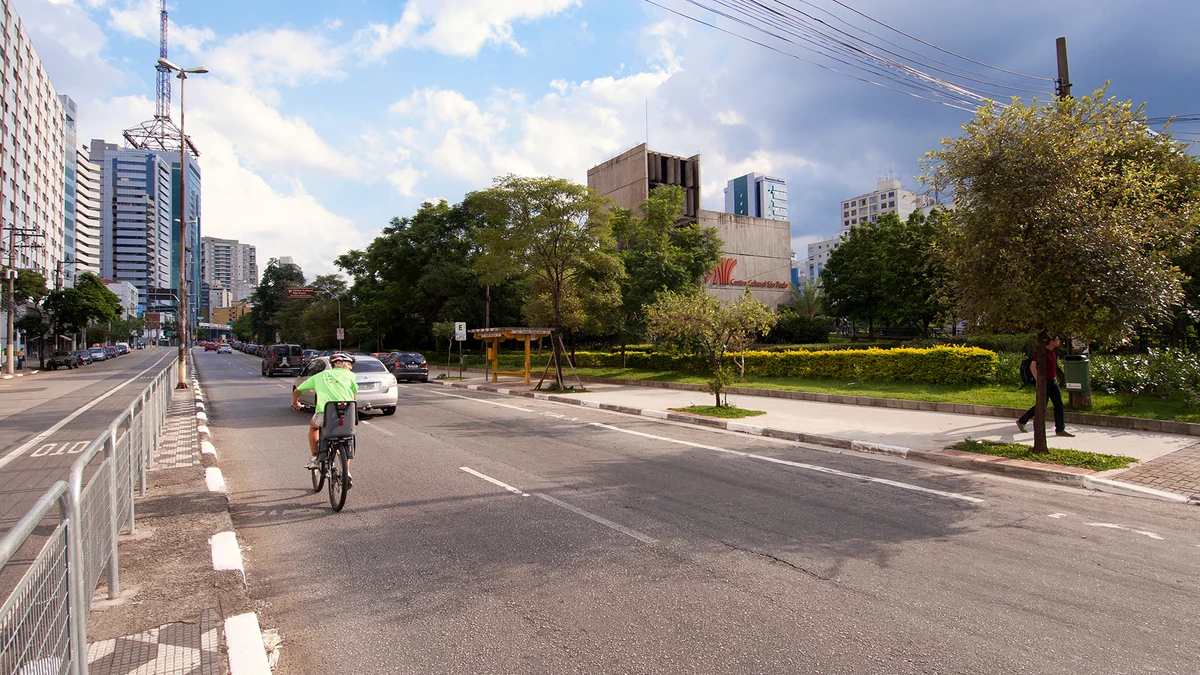
The CCSP began as a public-library project and was later expanded into a multidisciplinary cultural center. The building’s official history explains that its design sought to bring users and information together through generous dimensions, multiple entrances and different paths. Glass, steel, concrete, acrylic, brick and fabric were combined in a building begun in 1978 and inaugurated on May 13, 1982.
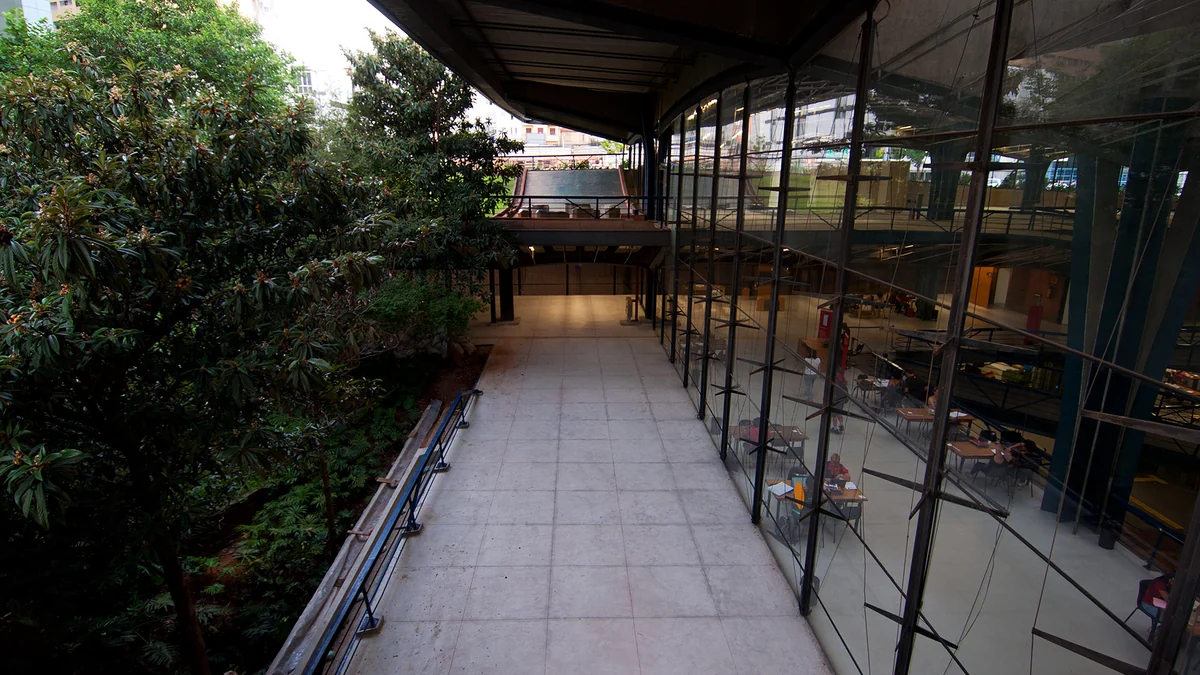
That changes how you visit. Rather than thinking only about separate rooms, notice how a ramp leads to another use, how a transparent wall keeps distinct activities in visual contact and how the routes allow you to alternate between retreat and movement. Integration is not simply scenery: it reflects the institution’s mission to bring together theater, music, dance, cinema, exhibitions, literature, learning, collections and social space, as described in the CCSP overview.
Mode 1 — focus at Sérgio Milliet
Start at Biblioteca Sérgio Milliet if sustained reading, study or research is your priority. According to the municipal circuit, it holds 112,500 items—the second-largest collection among city libraries, behind only Biblioteca Mário de Andrade—and organizes material in Literature, Social Sciences, Arts, Exact Sciences, Journalism and Computing.
This is the stop that calls for less movement and a longer stay. Choose a table, set a specific task and save the architectural exploration for a break. That strategy respects the coexistence that defines the building: activities happen simultaneously, but study areas require care with conversations and sound levels.
According to the official page consulted, Sérgio Milliet opens Tuesday through Friday from 10 a.m. to 8 p.m., and Saturdays and Sundays from 10 a.m. to 6 p.m. Entry to the libraries is allowed until 30 minutes before closing. Because operating conditions may change, confirm the times on the CCSP’s official Visite page before setting out.
Mode 2 — discovery between Braille and pop culture
For a visit guided by curiosity, place two very different collections side by side. Biblioteca Louis Braille provides specialized service for blind and low-vision visitors. The municipal source lists 15 assistive-technology devices, including smart glasses, electronic magnifiers, computers with screen readers, a scanner, Braille displays, an adapted printer and tactile typewriters. It also has children’s books combining large print, printed text and Braille characters.
The library opens Tuesday through Friday from 10 a.m. to 7 p.m. and Saturdays from 10 a.m. to 6 p.m.; it closes on Sundays and weekday public holidays. It also handles loans and returns by cecogram. Confirm specific service needs with the institution through its official channel beforehand.
Then switch languages at Gibiteca Henfil. Its catalogue includes more than 24,000 adventure, action, science-fiction and manga titles, with publications on subjects ranging from mathematics to the origins of hip-hop. Manga turns a worldwide pop-culture trend into an entry point for reading, publishing history and discovering creators. The historical collection includes issues of O Pasquim and a first edition of A Turma da Mônica signed by Mauricio de Sousa.
Mode 3 — gathering, circulation and gardens
If your purpose is to talk, observe the building or take a shared break, use the social areas without carrying noise into the libraries. The foyer opens Tuesday through Sunday from 10 a.m. to 10 p.m. The Vergueiro and 23 de Maio suspended gardens have listed hours of 11 a.m. to 6 p.m., also Tuesday through Sunday, and close on rainy days. Jardim Sul follows its own schedule and also closes when it rains.
This third mode best reveals the idea of public space: staying is also a legitimate form of participation. Still, sharing space requires shared care. Food and drinks may be consumed only in designated areas; in libraries, collections, exhibition spaces and performance halls, only water in a transparent bottle is permitted. Smoking is prohibited, including in the suspended gardens. Pets are not admitted, except guide dogs.
How to combine the three modes
With little time, choose one tempo: a study session, an excursion into comics or a pause in the foyer. On a longer visit, begin with focus, move into discovery and finish in a garden or another social area. This sequence reduces interruptions: the phase requiring the most concentration comes before circulation and conversation.
Do not assume every space follows the same clock. Libraries, gardens, collections and performance halls have different rules; some departments require appointments, and gardens may close because of rain. Personal photography with small equipment is allowed in open areas provided it does not obstruct circulation, activities or other visitors; professional shoots and recordings require authorization.
Arrival and a practical decision
The CCSP is at Rua Vergueiro, 1000, Liberdade, São Paulo, postal code 01504-000, near Vergueiro metro station. A municipal article also places it beside Vergueiro station on Line 1–Blue. Check the official website for opening information and possible changes on the day of your visit.
The best choice is not to see everything, but to match space to purpose: quiet at Milliet, accessible discovery and pop culture between Louis Braille and Henfil, or gathering in the common areas. The building itself lets you change tempo without leaving the cultural experience.
Continue through the city
After the CCSP, visit Becoartes at Rua Gonçalo Afonso, 99, Vila Madalena—another address where art and the city remain in conversation.
Becoartes - Beco do Batman
99 Gonçalo Afonso Street, Vila Madalena, São Paulo
Sources and credits
- Marcio De Assis — CC BY-SA 3.0
- Marcio De Assis — CC BY-SA 3.0
- Prefeitura de São Paulo — circuito de leitura do CCSP, publicado em setembro de 2026
- CCSP — história e concepção arquitetônica oficial
- CCSP — horários, regras, bibliotecas e espaços de convivência
- CCSP — apresentação institucional e integração entre cultura, conhecimento e cidade
- Wikimedia Commons — categoria do Centro Cultural São Paulo, com fotografias reutilizáveis e licenças indicadas por arquivo